













8 Parahelp alternatives, from one shared inbox with AI inside to agents on your help desk. Rates and what each counts as billable, compared.
Table of contents
- What this guide covers
- Parahelp alternatives compared at a glance
- Why teams look for Parahelp alternatives
- Pricing comparison: what 300 AI resolutions a month cost
- What each tool counts as a billable resolution
- Parahelp competitors by type
- Drag: best Parahelp alternative for teams on Google Workspace
- Fin: best for teams that run support on Salesforce
- eesel AI: best for a fixed monthly AI price
- Kayako: best for white-glove setup of a new help desk
- Featurebase: best for support and feedback boards in one tool
- Fini: best for a written resolution-rate guarantee
- Gorgias: best for Shopify stores
- Lorikeet: best for fintech, health and insurance support
- Other Parahelp competitors people ask about
- When Parahelp is still the right choice
- How to switch from Parahelp
- How to choose between Parahelp alternatives
- Sources
- Frequently asked questions
The short version: The best Parahelp alternatives are Drag, Fin, eesel, Kayako, Featurebase, Fini, Gorgias and Lorikeet. Pick Drag for one shared inbox with an owner on every email and Varley, Drag's AI, inside it: it drafts replies on Plus ($18 per user) and resolves routine conversations on Pro ($24). Fin, eesel and Fini are agents for the help desk you keep. Kayako, Featurebase and Gorgias are help desks with their own agent. Lorikeet suits regulated support.
Drag is our product, so it is first on this list and you should weigh that. If you only want Drag against Parahelp, our Parahelp alternative page puts the two side by side.
We read Parahelp, Fin, eesel, Kayako and Gorgias prices on their own sites on November 14, 2026, and Featurebase, Fini and Lorikeet on November 16, 2026. The AI agents bill per resolved ticket, per outcome or per credit. Drag is priced per user per month on annual billing. AI pricing changes often, so check each vendor's page before you buy.

Founder’s Take
A personal note from Nick, co-founder of Drag
Most teams shopping for an AI agent are really shopping for fewer emails landing on people. An agent priced per resolved ticket gets more expensive exactly as it gets better, and it still needs a help desk underneath for everything it hands back.
My view: for a team that answers a few hundred conversations a month, the win is AI working inside the inbox the team already shares, drafting and closing the routine ones, with one price that follows headcount, not ticket count.
What this guide covers
- Parahelp alternatives compared at a glance
- Why teams look for Parahelp alternatives
- Pricing comparison: what 300 AI resolutions a month cost
- What each tool counts as a billable resolution
- Parahelp competitors by type
- 1. Drag
- 2. Fin
- 3. eesel AI
- 4. Kayako
- 5. Featurebase
- 6. Fini
- 7. Gorgias
- 8. Lorikeet
- Other Parahelp competitors people ask about
- When Parahelp is still the right choice
- How to switch from Parahelp
- How to choose between Parahelp alternatives
- Sources
- Frequently asked questions
Parahelp alternatives compared at a glance
Rates were read on each vendor's own site on November 14 and 16, 2026.
| Tool | What it is | What the AI costs | The billable unit | Best for |
|---|---|---|---|---|
 Drag | A shared inbox with AI inside, on Gmail and in its own apps | In the per-user price: drafts on Plus ($18), resolves routine conversations on Pro ($24) | A user | Teams on Google Workspace that answer support@ together |
 Fin | An AI agent, on its own help desk or yours | $0.99 per outcome, 50 a month minimum on another help desk | An outcome, one per conversation | Teams that run support on Salesforce |
 eesel AI | An AI agent on your help desk, chat, Slack or mailbox | $299 a month for 500 credits, then $0.80 each | A ticket or chat the agent works on | A fixed monthly AI price |
 Kayako | A help desk with its agent, Kay | $1 per resolved ticket; help desk by quote | A ticket Kay resolves with no human | White-glove setup of a new help desk |
 Featurebase | Support, help center and product feedback in one | $0.49 per resolution, plus seats from $29 | A conversation its AI resolves | Support and feedback boards in one tool |
 Fini | An AI agent on your help desk | $0.89 per resolved ticket on Growth, $0.69 on Scale | A ticket solved end to end | A written resolution-rate guarantee |
 Gorgias | An ecommerce help desk with AI Agent | $0.90 per automated interaction in its AI tier, $1.50 beyond it | A ticket AI Agent resolves with no human in 72 hours | Shopify stores |
 Lorikeet | An AI agent for chat, email, SMS and voice | $2,100 a month on Start, plus $0.99 per resolution ($1.50 voice) | A ticket it resolves | Fintech, health and insurance support |
| Parahelp | An AI agent, on its own or in your ticketing system | $1 per auto-resolved ticket, plus tokens | A ticket its customer agent resolves on its own | Software companies with engineers on support |
Why teams look for Parahelp alternatives
Parahelp is an AI support agent built, in its docs' words, for fast-moving software companies. Its site names Cursor, Replit, Parallel and Kit among its customers. It is a serious product. Teams look elsewhere for three reasons, and none of them is that the agent fails.
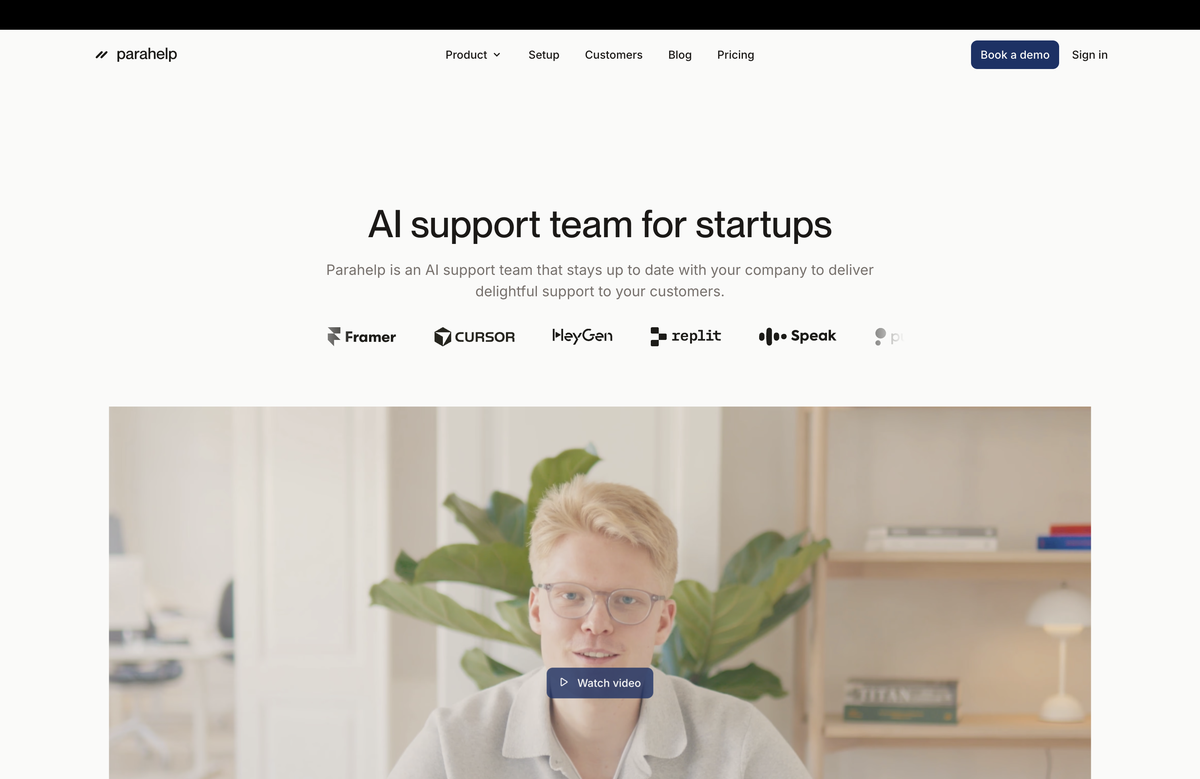
Your team still needs somewhere to work. Parahelp's agent resolves what it can and hands the rest back. Its docs connect it to one ticketing system per workspace: Intercom, Zendesk, Front, Plain or Pylon. That system is where your team answers customers, and its seats are a separate bill. Parahelp's own inbox is for tasks and approvals.
The bill moves every month. Parahelp charges $1 for each ticket its customer agent resolves on its own. Chats with its internal agent and automations you set up are billed at the public token price, and its pricing page gives no dollar figure for those. A busy month costs more, and so does an AI that gets better.
It rewards engineering time. Parahelp's internal agent builds and tests tools, such as a refund in Stripe or a bug in Linear, and you hard-code approval rules for each action. Teams with engineers on support value that. A support lead working alone may want something simpler. Signup is still by request for early access.
Parahelp's price has also moved. When we first wrote this guide in July 2026, it listed $1.25 per resolved ticket on a Start plan and $1.00 on Scale. On November 14, 2026, its page shows one rate: $1, month to month, with no seat or platform fees.
Pricing comparison: what 300 AI resolutions a month cost
Rates per resolution hide the rest of the bill. So here is one team: five people answering 1,000 conversations a month, with AI resolving 300 of them on its own. Every tool gets the same job. Drag is priced on Pro, the plan where Varley resolves routine conversations, so the comparison is like for like.
| Tool | AI cost for 300 resolutions | What else is on the bill | Monthly bill we can confirm |
|---|---|---|---|
| Drag | In the Pro price: 5 × $24 | Nothing: the shared inbox, live chat and help center are in the plan | $120 |
| Fini | 300 × $0.89 = $267 | A help desk for the other 700 conversations | $267, plus your help desk |
| Featurebase | 300 × $0.49 = $147 | 5 seats × $29 = $145 | $292 |
| Fin | 300 × $0.99 = $297 | A help desk, or Intercom seats from $29 | $297, or $442 on Intercom |
| Parahelp | 300 × $1 = $300 | Tokens for internal AI work, and a ticketing system if you use one | $300, plus tokens and any ticketing system |
| Kayako | 300 × $1 = $300 | Kayako One, priced by quote | $300, plus the help desk quote |
| eesel AI | $299 if the agent works on up to 500 conversations; $499 if it works on all 1,000 | A help desk for what it hands back | $299 to $499, plus your help desk |
| Gorgias | $171 for 190 in the Pro AI tier, then 110 × $1.50 = $165 | The Pro help desk, $300 for up to 2,000 tickets | $636 |
| Lorikeet | 300 × $0.99 = $297 | The Start plan, $2,100 a month paid annually | $2,397 |
Three notes on the math. eesel charges a credit for every ticket its agent works on, resolved or not, so the bill depends on how many conversations you send it, not how many it closes. Fin bills a procedure handoff as an outcome too, so its line can run above the resolution count. Fini's page prints no base plan fee, so confirm the total in writing.
The meter wins in one case, and it is worth saying once. A large team whose AI resolves few tickets can pay less on Parahelp: ten people with 200 resolved tickets pay $200 there, before tokens and any ticketing system, against $240 on Drag Pro.
To try your own numbers, use the shared inbox cost calculator. Our State of AI Support Pricing report tracks every vendor's published rate.
What each tool counts as a billable resolution
Two vendors can print the same rate and send different bills, because they count different things. This is the part most lists skip.
| Tool | What you are billed for | What is not charged |
|---|---|---|
| Drag | Each user, per month. Varley is part of the Plus and Pro plans | Varley's drafts and resolutions are in the plan price |
| Parahelp | A ticket its customer agent resolves on its own, $1. Internal agent chats and automations at the public token price | Tickets that end up with your team |
| Fin | One outcome per conversation, $0.99: a confirmed resolution, an assumed one (the customer leaves without asking for more help), a procedure handoff, a disqualification or self-serve routing. A sales qualification is $9.99 | Only one outcome is charged per conversation |
| eesel AI | 1 credit for each ticket the agent wakes on, however many replies; 1 per chat; 1 per minute of a phone call | Unused credits do not roll over |
| Kayako | A ticket Kay solves with no human, by taking an action or giving an answer the customer confirms | Escalations to people and simple deflections |
| Featurebase | A successful resolution, once per conversation: the customer confirms or leaves without asking for more | Human handovers |
| Fini | A ticket solved end to end with no human handover | Escalations to your team |
| Gorgias | An automated interaction: AI Agent fully resolves a ticket with no human in 72 hours. It also counts as one help desk ticket | Tickets a person answers (they count as help desk tickets) |
| Lorikeet | A ticket it resolves, by channel. Triage and automated QA are metered separately at $0.30 each on Start | Escalations to a person and unresolved tickets |
The definition that matters most is the assumed resolution. Fin and Featurebase count a customer who leaves without asking for more help, and some of those customers simply gave up. Our AI support resolution rates analysis shows how far real rates fall below the advertised ones. Whatever you pick, ask for the definition in writing.
Parahelp competitors by type
Parahelp competitors fall into four groups, and knowing which one you want cuts the list fast.
- A shared inbox with the AI inside: Drag. The team and the AI work in one place, priced per user.
- Agents that sit on your help desk: Fin, eesel, Fini, and Parahelp itself. You keep and pay for a help desk underneath.
- Help desks with their own agent: Kayako, Featurebase and Gorgias. One vendor, two lines on the bill.
- Agents for regulated support: Lorikeet, with a monthly plan and a rate per resolution.
1. Drag: best Parahelp alternative for teams on Google Workspace
Best for: teams whose support address, like support@, is on Gmail or Google Workspace, and who want the people and the AI working in one inbox.
Drag is a shared inbox for teams, used by more than 240,000 people since 2017. Where Parahelp is an agent you add to a help desk, Drag is the inbox itself, with the AI working inside it. Every email has an owner, teammates leave notes beside it, and collision detection shows when someone is already replying.
Varley works where your team works. Varley, Drag's AI, tags and summarizes email and drafts replies on the $18 Plus plan. On the $24 Pro plan it also resolves routine conversations on its own. It answers questions about your inbox, helps you set Drag up, and learns from your team's replies and the documents you give it. What Varley hands on lands in the same queue, with an owner.
One bill, the same every month. Five people pay $120 a month on Pro, and the price follows the size of your team, not your ticket count. There is no help desk underneath to pay for, because Drag is the help desk. There is no seat minimum and no cap on team size.
It works on Gmail and in its own apps. Your team can answer on Gmail, or in Drag's web app, Mac and Windows apps, and iPhone and Android apps. Everyone sees the same inboxes, owners and notes either way.
More than email. Live chat for your website, a public help center, boards, rules and reporting come with every plan. A shared WhatsApp inbox is on Pro.
It works with the AI assistant you already use. Pro connects Drag to Claude, ChatGPT, Gemini, Microsoft Copilot and Cursor. Your assistant can read the queue, assign email, draft replies and send them.
- Pricing: Starter $12, Plus $18, Pro $24 per user a month on annual billing ($16, $22 and $30 monthly). Non-profits get 50% off.
- Trial: 7 days, no card.
Drag · with Varley
Paying for an AI agent and a help desk?
Drag is one shared inbox for the whole team, with an owner on every email and Varley, Drag's AI, working inside it. Varley drafts replies on Plus at $18 and resolves routine conversations on Pro at $24 per user on annual billing, so the bill follows your team, not your ticket count. On Gmail and in its own apps. 7-day free trial, no card.
2. Fin: best for teams that run support on Salesforce
Best for: teams whose support already runs on Salesforce, or on another help desk they plan to keep.
Fin is the most widely known AI support agent, and the closest like-for-like swap for Parahelp. Intercom renamed itself Fin in May 2026, and Salesforce completed its purchase of the company on September 10, 2026. Fin answers email, live chat and phone, on Intercom's own help desk or on yours.
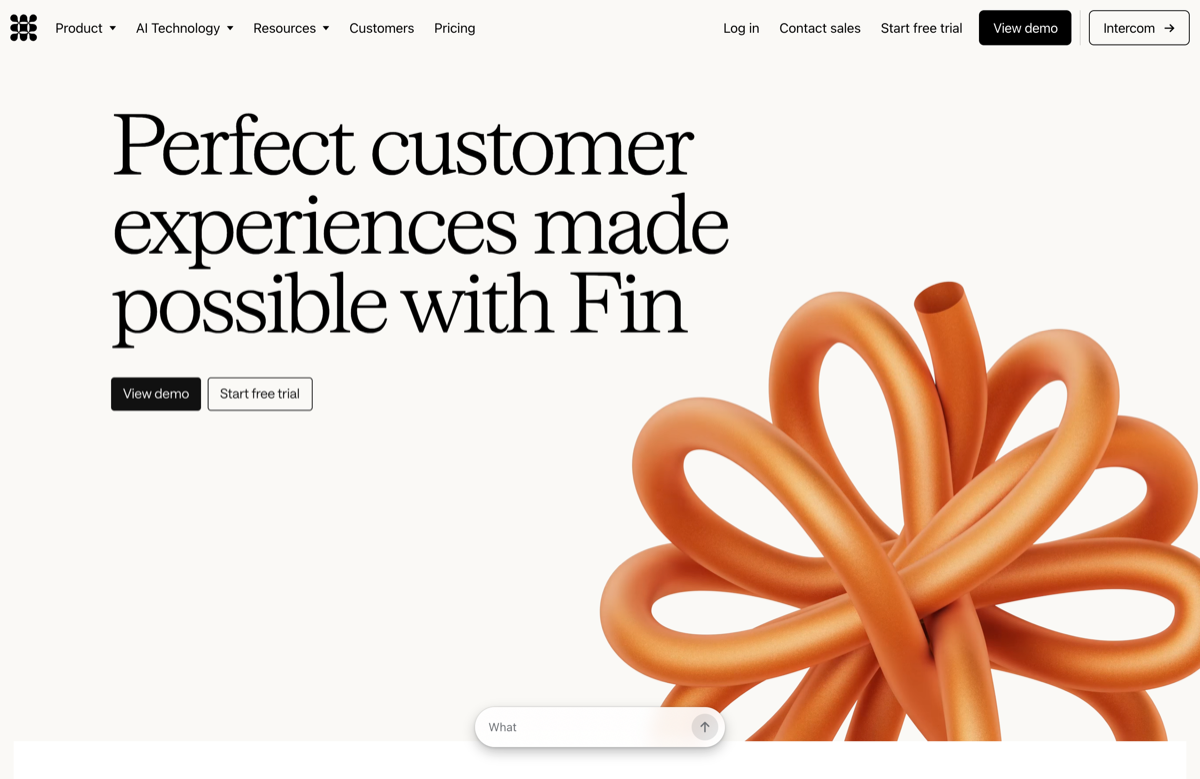
Fin bills $0.99 per outcome, one per conversation. On another help desk there is a 50-outcome monthly minimum, so the line never reads zero. On Intercom's help desk, seats start at $29 on annual billing.
- Pricing: $0.99 per outcome; sales qualifications $9.99. Intercom seats $29, $85 and $132 on annual billing. Free trial, no card.
- Worth knowing: an assumed resolution, where the customer leaves without asking for more help, is billed like a confirmed one.
For Fin's own rivals, see the best Fin AI alternatives.
3. eesel AI: best for a fixed monthly AI price
Best for: teams that want to know the AI bill before the month starts, and can live with a credit cap.
eesel is an AI agent you add to a help desk, website chat, Slack, Microsoft Teams or a mailbox. Its docs list Zendesk, Freshdesk, Intercom, Front, Gorgias, Help Scout, Salesforce, HubSpot, Zoho Desk, Re:amaze and Jira Service Management. It can reply, tag, route and close tickets, or save drafts for a person to send.
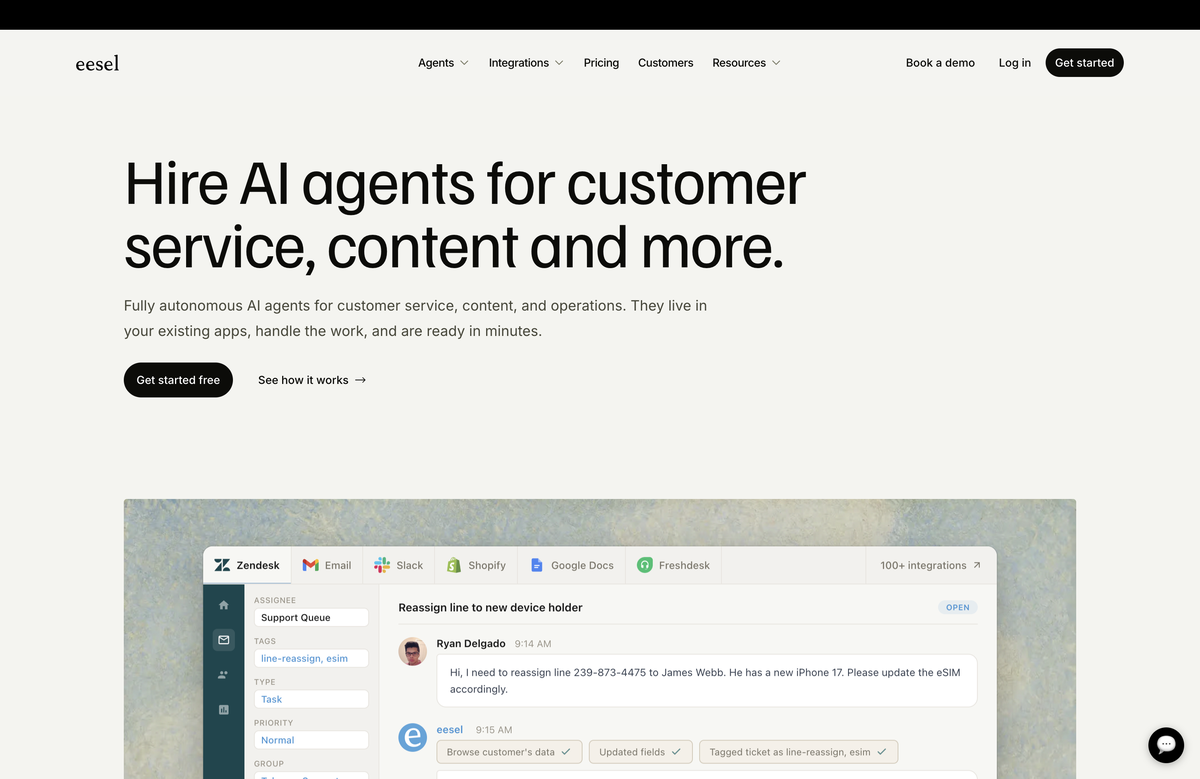
eesel sells credits, not resolutions. A ticket the agent works on is 1 credit, however many replies it takes. That makes the bill predictable, but you pay for tickets it hands back too.
- Pricing: $299 a month for 500 credits, $499 for 1,000, up to $1,749 for 5,000. Extra credits $0.80 each, up to a cap you set. No per-seat price. Yearly billing gives two months free.
- Trial: 7 days with 100 credits, no card.
- Worth knowing: unused credits do not roll over, and the help desk underneath is a separate bill.
If eesel is on your shortlist, see the best eesel alternatives.
4. Kayako: best for white-glove setup of a new help desk
Best for: teams ready to move to a new help desk and want the vendor to set it up for them.
Kayako sells Kayako One, a help desk with its AI agent, Kay, built in. Email, live chat, social messages and WhatsApp land in one inbox, with assignment, collision detection, a knowledge base and reporting. Onboarding is white glove.
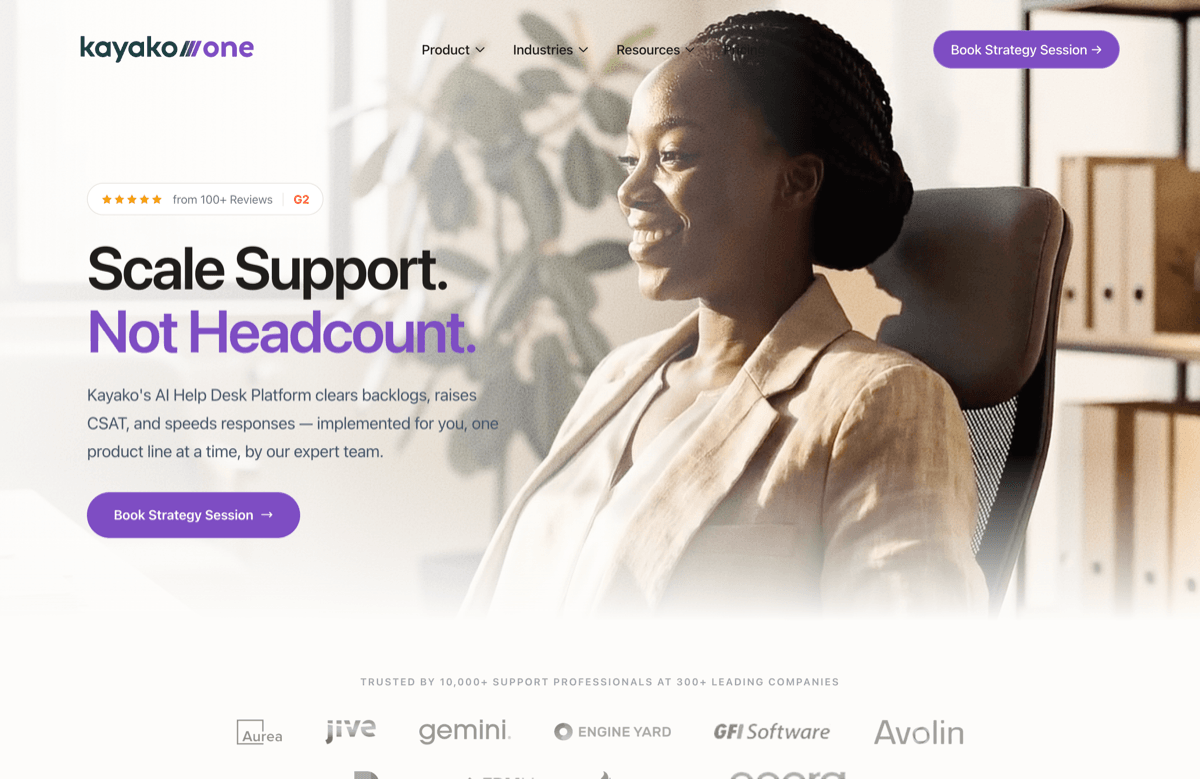
Kay is $1 per resolved ticket, the same rate as Parahelp, with no seat or setup fees for Kay. A resolution is when Kay solves the issue with no human involved. Escalations and simple deflections do not count.
- Pricing: Kay $1 per resolved ticket. Kayako One is custom pricing, by quote. Kay can also run on a help desk you already have.
- Worth knowing: there is no free plan, trial or self-serve signup; you start with a product tour.
5. Featurebase: best for support and feedback boards in one tool
Best for: software teams that want customer support, product feedback boards and a public roadmap from one vendor.
Featurebase is a support platform with live chat, an inbox, a help center, feedback boards, a roadmap and surveys. Its AI agent, Fibi, answers on every paid plan.
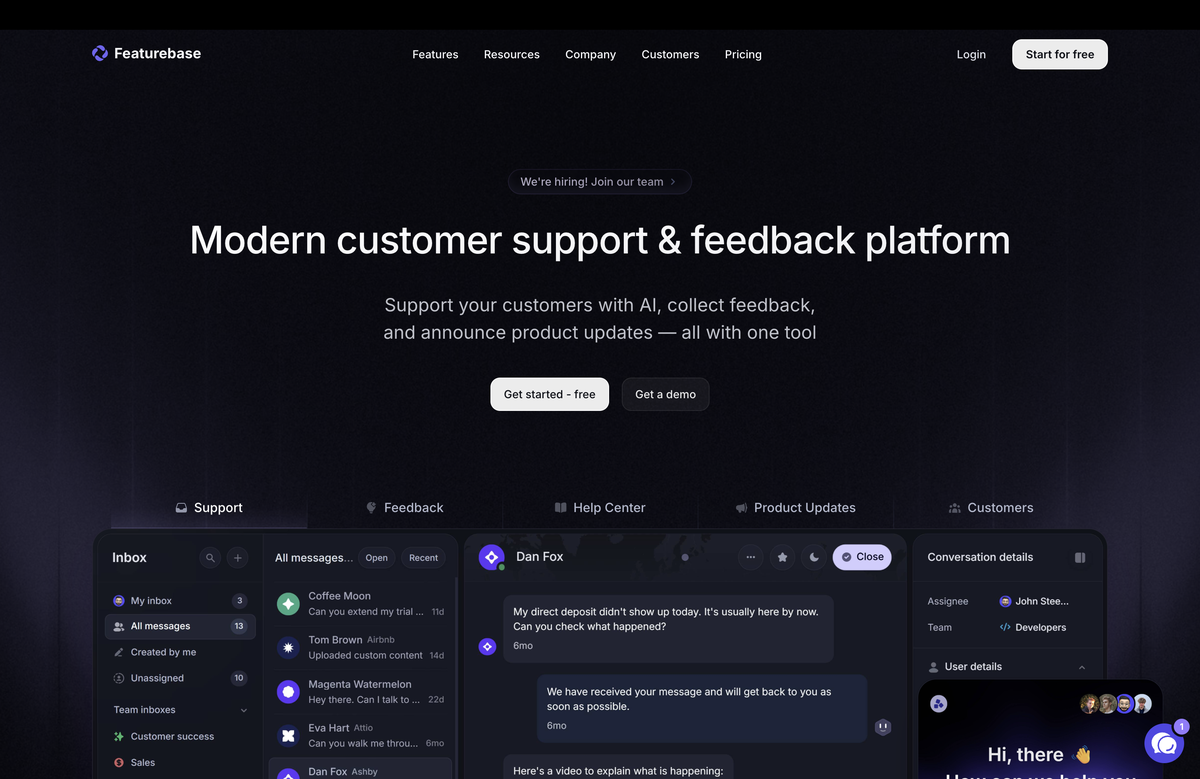
Fibi is $0.49 per successful resolution, charged once per conversation, and human handovers are free. A resolution counts when the customer confirms the answer or leaves without asking for more help.
- Pricing: Free for 1 seat. Growth $29, Professional $59 and Enterprise $99 per seat a month, with 20% off on annual billing. Fibi $0.49 per resolution on top.
- Trial: 10 days, no card.
- Worth knowing: Fibi is on paid plans only, so a team using AI pays for seats and resolutions.
6. Fini: best for a written resolution-rate guarantee
Best for: fintech support teams on an enterprise plan that want the vendor to stand behind a resolution rate before they pay.
Fini calls itself a self-learning AI support agent for enterprise fintech. It works on Zendesk, Intercom, Salesforce, HubSpot, Front, Freshdesk, Gorgias and others, and takes actions such as refunds and account updates in your own systems. On Enterprise, eligible new customers get a written guarantee: 90% resolution in 90 days, or they pay $0.
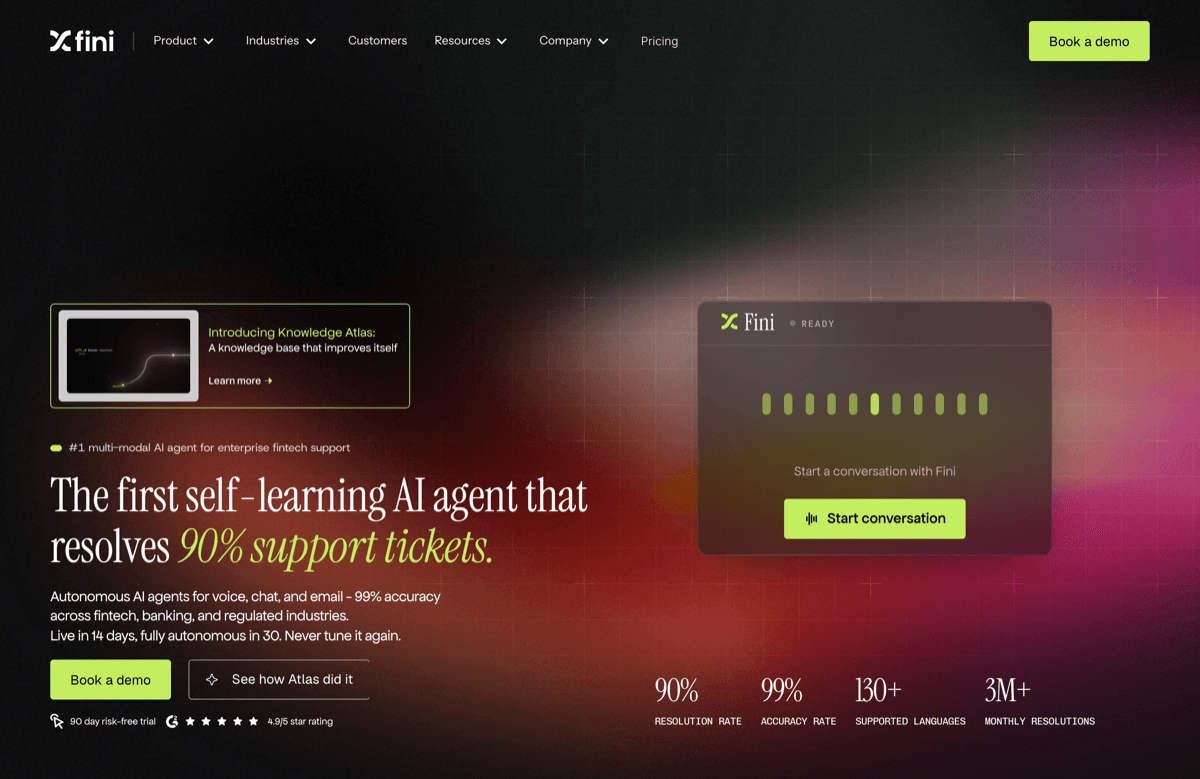
Fini bills a resolved ticket only when the issue is solved end to end with no human handover. Escalations to your team are free.
- Pricing: Growth $0.89 per resolved ticket (up to 3,000 tickets a month), Scale $0.69 (up to 10,000), Enterprise $0.49 by quote. Implementation is included. No seat fees and no usage minimums.
- Trial: Enterprise starts with a 90-day free pilot on live traffic. Growth and Scale list no free period.
- Worth knowing: the page prints no base plan fee, so ask what the plan itself costs.
7. Gorgias: best for Shopify stores
Best for: online stores whose tickets are mostly orders, refunds and delivery questions.
Gorgias is an ecommerce help desk. It shows each customer's order history beside the ticket, and its AI Agent can cancel or change an order for a shopper. It is priced by tickets per month for the whole account, not per user.
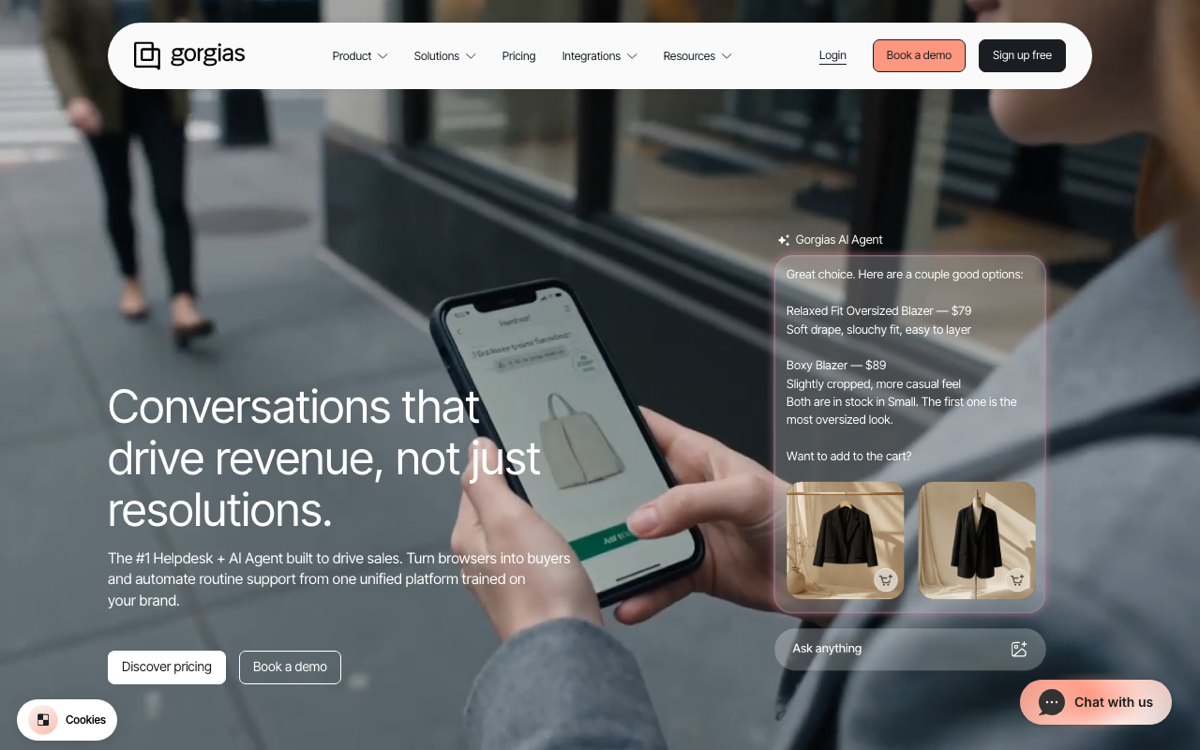
AI Agent is sold in tiers. On annual billing, each tier's included automated interactions work out to $0.90 each, and every interaction beyond the tier is $1.50.
- Pricing: help desk Starter $10 (monthly only, 50 tickets), Basic $50 (300 tickets), Pro $300 (2,000), Advanced $750 (5,000) a month on annual billing. AI Agent tiers from $27 for 30 interactions.
- Worth knowing: an automated interaction also counts as a help desk ticket, so busy months use both allowances.
If Gorgias is the tool you are weighing, see the best Gorgias alternatives.
8. Lorikeet: best for fintech, health and insurance support
Best for: fintech, health and insurance teams whose support follows long, strict procedures, including on the phone.
Lorikeet is an AI agent for chat, email, voice and SMS. It follows your standard procedures, works in your own systems, and loops in your team when it cannot solve an issue. Its site names fintech, healthtech and insurance customers.

Lorikeet charges an annual plan plus a rate for each resolved ticket. Escalations to a person and unresolved tickets are not charged.
- Pricing: Start $2,100 a month and Scale $5,100 a month, paid annually, with the platform included. Resolutions $0.99 on Start and $0.90 on Scale for chat, email and SMS; voice $1.50 and $1.20. Signature is custom, with a $75,000 platform fee.
- Trial: 30 days on every plan.
- Worth knowing: triage and automated QA are billed per ticket too, at $0.30 each on Start.
Other Parahelp competitors people ask about
Three enterprise agents come up on most lists, and none of them publishes a rate card. A third-party estimate puts Sierra's outcome-based contracts at around $1.50 per resolution, with contracts typically from about $150,000 a year. Ada sells annual contracts by conversation volume; reported purchasing data puts the median buyer at $71,115 a year. Decagon publishes no usage rates at all. Our guides to Sierra alternatives, Decagon alternatives and Ada alternatives cover each one.
Zendesk also comes up, for teams already on it. Its AI agents include 5 or 10 resolutions per agent a month, then $1.50 to $2.00 each. For the wider field, see our best AI agents for customer support.
When Parahelp is still the right choice
Parahelp is the better pick when your tickets need actions in your own systems, such as refunds in Stripe or bugs filed in Linear, and you have engineers who want to build and test those tools. Its internal agent does that work, and you can hard-code an approval rule for each action.
How to switch from Parahelp
Parahelp is an agent, so switching is mostly about where tickets go next. The steps are much the same whichever tool you pick.
- Check where your conversations live. If Parahelp works in a ticketing system, past conversations stay there. If your support address is a Google Workspace mailbox, your email is already in Gmail.
- Copy your agent's knowledge and policies. Knowledge snippets, policies and tools live in Parahelp and do not move across, so export what you need first.
- Start a trial on one real address, such as support@, and give the new AI the same help articles and documents.
- Turn off whatever sends tickets to Parahelp once the new tool is answering, so customers get one reply.
If you move to Drag, connect your support address as a shared inbox and email already in that Gmail account loads in. Drag has ready-made Claude prompts that carry out the migration in your browser, and onboarding help comes with Plus and Pro.
How to choose between Parahelp alternatives
- Your team is on Google Workspace and wants one inbox with the AI inside it: Drag.
- You run support on Salesforce or another help desk you will keep: Fin.
- You want a fixed monthly AI price: eesel.
- You want a new help desk set up for you, with an agent at $1 a resolution: Kayako.
- You want support and feedback boards in one tool: Featurebase.
- You want a resolution-rate guarantee on an enterprise plan: Fini.
- You run a Shopify store: Gorgias.
- Your support is fintech, health or insurance, with voice: Lorikeet.
- Your engineers want to build the agent's tools themselves: stay on Parahelp.
Whatever you shortlist, test it on a week of real tickets and count what you would be billed for, not just what it resolves. If your team is on Google Workspace, Drag's trial runs 7 days and needs no card.
Sources
Rates and plan details were read on these pages on November 14 and 16, 2026: Parahelp's pricing page, home page, connections page, customers page and docs; Fin's pricing page and Intercom's help articles on plans and Fin outcomes; eesel's pricing page and docs; Kayako's pricing and product pages; Featurebase's pricing page; Fini's pricing and home pages; Gorgias's pricing page; Lorikeet's pricing and home pages; and Drag's pricing page.
Enterprise figures for Sierra and Ada are a third-party estimate from Value Add VC's investor analysis (published July 23, 2026) and Vendr purchasing data across 104 Ada purchases (last updated February 2026, read November 16, 2026).
Frequently asked questions
What are the best Parahelp alternatives?
Drag, Fin, eesel, Kayako, Featurebase, Fini, Gorgias and Lorikeet. Drag gives a Google Workspace team one shared inbox with an owner on every email and Varley drafting or resolving inside it. If you keep your current help desk, Fin, eesel and Fini add an agent on top of it. Kayako, Featurebase and Gorgias bundle an agent into their own help desk, and Lorikeet serves fintech, health and insurance teams.
How much does Parahelp cost in 2026?
Parahelp charges $1 for each ticket its customer agent resolves on its own, read on its pricing page on November 14, 2026. Tickets that end up with your team are free. Chats with its internal agent and automations are billed at the public token price. There are no seat or platform fees, it is month to month, and any ticketing system it works in is billed separately.
Which Parahelp alternative has the lowest rate per resolution?
Among published self-serve rates, Featurebase's Fibi is $0.49 per resolution, though seats from $29 come on top. Fini is $0.69 on its Scale plan and $0.89 on Growth. Fin is $0.99 per outcome. eesel's credits work out lower per unit on larger sizes, but a credit is charged for every ticket the agent works on, resolved or not.
Does Parahelp need a help desk?
Not always. Parahelp's pricing page says it can handle email, live chat and Slack directly, or work inside a ticketing system you already use. Its docs list Intercom, Zendesk, Front, Plain and Pylon, one per workspace. In practice, your team needs somewhere to answer the tickets the agent hands back, and that tool has its own price.
Do I need an autonomous AI agent at all?
Often not. If AI-suitable volume is a few hundred conversations a month, AI that drafts replies for your team to send covers most of the value, and Drag includes that on Plus at $18 per user. An autonomous agent earns its meter when volume would otherwise mean hiring. Drag Pro, at $24 per user, adds Varley resolving routine conversations on its own.
Is there a free trial of Parahelp?
Parahelp has no free plan listed. You request early access, and it sets you up on your own tickets so you can see how many its agent resolves before you commit. Among the alternatives, Drag and eesel run 7-day trials with no card, Featurebase 10 days and Lorikeet 30 days. Fini runs a 90-day free pilot on its Enterprise plan.
Is Fin still part of Intercom?
Intercom renamed itself Fin in May 2026, after its AI agent, and Salesforce completed its purchase of the company on September 10, 2026. Fin still bills $0.99 per outcome and still runs on Intercom's own help desk or on yours, including Salesforce. If you are signing a long contract, check what the new owner plans for pricing.

Co-founder
Building Drag for nearly ten years: shared inboxes, boards, and now the AI and agent layer, all on Gmail, plus HeyHelp for the personal inbox. Writes the honest versions of the comparisons.


