












Fin resolves tickets at $0.99 each, and success gets expensive. The best Fin AI alternatives for 2026, from per-task to seat-included.
Key takeaways
- Fin bills $0.99 per outcome on every plan, and an 'outcome' includes a customer who simply stops replying, so teams shop for alternatives on price predictability as much as capability.
- Real alternatives split into three tiers: budget self-serve agents (Hugo at ~$0.05 per conversation, Fibi at $0.29 per resolution, eesel at $0.40 per task), specialist agents (Parahelp for technical SaaS, Lorikeet for regulated teams), and enterprise platforms (Sierra, Decagon, Ada) at $50K+ a year.
- The market is consolidating: Salesforce is acquiring Fin and Zendesk acquired Forethought in 2026, worth weighing before signing a multi-year AI agent contract.
- Some teams evaluating Fin do not need a customer-facing bot at all; they need a shared inbox where AI helps the team and is included in the seat, which is a different product category entirely.
Table of contents
- Fin alternatives compared at a glance
- First, understand what you are being charged for
- Budget self-serve agents (the Fin model, for less)
- Specialist agents
- Enterprise platforms
- The consolidation backdrop (read before signing multi-year)
- A different approach: the whole inbox, not just a bot
- When Fin is still the right choice
- How to choose
- Frequently asked questions
The best Fin alternative in 2026 depends on the tier: Hugo at roughly $0.05 per conversation is the cheapest published rate, eesel and My AskAI keep your helpdesk and swap the AI layer, and Sierra, Decagon, and Ada play at enterprise scale. And if you do not need a customer-facing bot at all, a shared inbox with AI included in the seat, like Drag, is a different and cheaper path.
Fin is the default name in AI customer support agents, so much so that Intercom renamed the whole company after it in May 2026, shortly before Salesforce agreed to acquire it for approximately $3.6B. It is a genuinely strong agent. What sends teams looking for alternatives is usually the bill: $0.99 for every outcome on every plan, where an "outcome" includes a customer who simply stops replying, so cost scales with volume in ways that are hard to forecast. This guide covers ten real Fin alternatives grouped by tier, plus the different approach, and where Fin is still the right call. For the wider field beyond per-outcome agents, see our best AI agents for customer support roundup, segmented by buyer.
Our Intercom pricing breakdown shows how the outcome fee stacks on seats and add-ons.
If you are looking to leave the Intercom platform entirely rather than just replace the AI agent, see our Intercom alternatives guide and the Drag vs Intercom comparison. Our co-founder's honest read on the Salesforce acquisition opens the full Fin comparison.
A note on pricing: verified July 2026 from vendor pages and published analyzes. AI agent pricing changes fast; confirm on each vendor's site.
Fin alternatives compared at a glance
| Tool | Tier | Pricing model | Best for |
|---|---|---|---|
| Hugo (Crisp) | Budget self-serve | ~$0.05/conversation (credits in Crisp plans) | Small teams wanting the cheapest published rate |
| Featurebase Fibi | Budget self-serve | $0.29/resolution + $29/seat | SaaS teams consolidating support + feedback |
| My AskAI | Budget sidecar | $0.10/ticket flat | Keeping your helpdesk, replacing just the AI layer |
| eesel AI | Budget sidecar | $0.40/task; simulation mode | Testing on historical tickets before paying |
| Parahelp | Specialist | Published: $1.25/resolution (Start), $1.00 (Scale) | Technical SaaS with complex tickets |
| Lorikeet | Specialist | Custom | Regulated industries (fintech, health) |
| Sierra | Enterprise | ~$150K+/yr | Large enterprises, deep customization |
| Decagon | Enterprise | ~$50K platform fee + usage | Enterprise reliability + testing focus |
| Ada | Enterprise | Custom | High-volume containment/deflection |
| Salesforce Agentforce | Enterprise | ~$2/conversation + licensing | Salesforce-standardized service orgs |
| Fin (baseline) | Category default | $0.99/outcome, 50/mo min, seats $29-$132 | Teams wanting the proven default, incl. standalone on other helpdesks |
| Drag | Different approach | $12 to $24/seat, AI included | Teams that need AI in the team's inbox, not a customer-facing bot |
(Drag is intentionally not numbered among the agents: it is not a per-outcome bot. Its row is the different approach, covered in its own section below.)
First, understand what you are being charged for
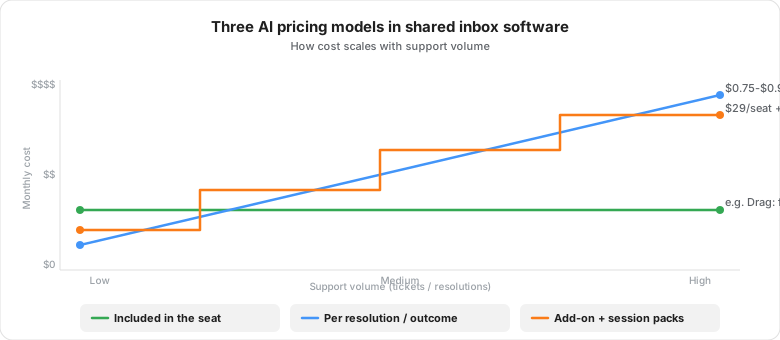
Per-outcome and per-resolution pricing only charges when the AI closes a conversation, which sounds fair until you read each vendor's definition. Fin counts an "assumed resolution" when a customer exits without asking for more help, which in practice includes customers who gave up. Per-conversation pricing (Hugo, Agentforce) charges for every exchange the AI touches, resolved or not, but at much lower rates. Flat per-task or per-ticket pricing (eesel, My AskAI) is the most predictable. And one honest number to plan around: vendors advertise 65 to 86 percent resolution, but production data clusters at 40 to 70 percent, with Fin's own case studies at 42 to 50. Whatever you choose, model your real volume at a realistic resolution rate before signing. For the wider picture of how AI is priced across support tools, see the AI pricing models section of our shared inbox guide. Model all of this at your own team size in the cost calculator.
Budget self-serve agents (the Fin model, for less)
 1. Hugo - cheapest published rate, built on MCP
Hugo is Crisp's AI agent (launched 2026, at hugo.ai) and currently the cheapest published rate in the category at roughly $0.05 per conversation, twenty times below Fin's per-outcome price. It connects to your tools through MCP, is model-agnostic (Claude, ChatGPT, Llama), and resolves autonomously with human handoff.
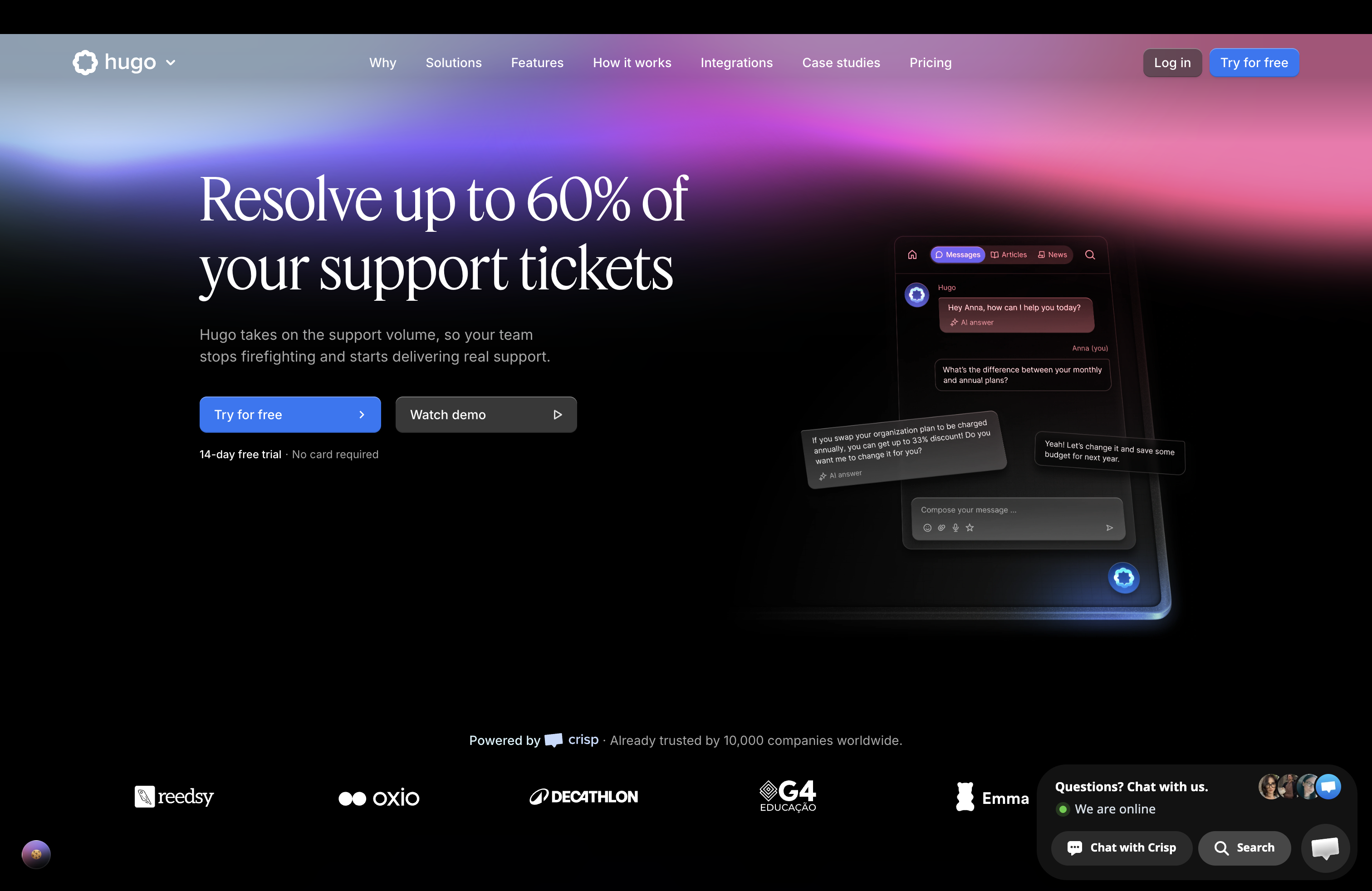
- Pricing: ~$0.05/conversation via credits bundled in Crisp plans (Mini $45 includes $5, Essentials $95 includes $25, Plus $295 includes $75). Credits expire monthly; Hugo stops answering when they run out unless Pay-As-You-Go is on.
- Watch-outs: only lives inside Crisp (platform commitment), chat-first heritage, and the credit model needs monitoring.
Full comparison: Drag vs Hugo.
 2. Featurebase Fibi - lowest per-resolution rate
Fibi charges $0.29 per AI resolution plus $29 a seat, the lowest published per-resolution rate, inside a platform that bundles support, help center, and product feedback.
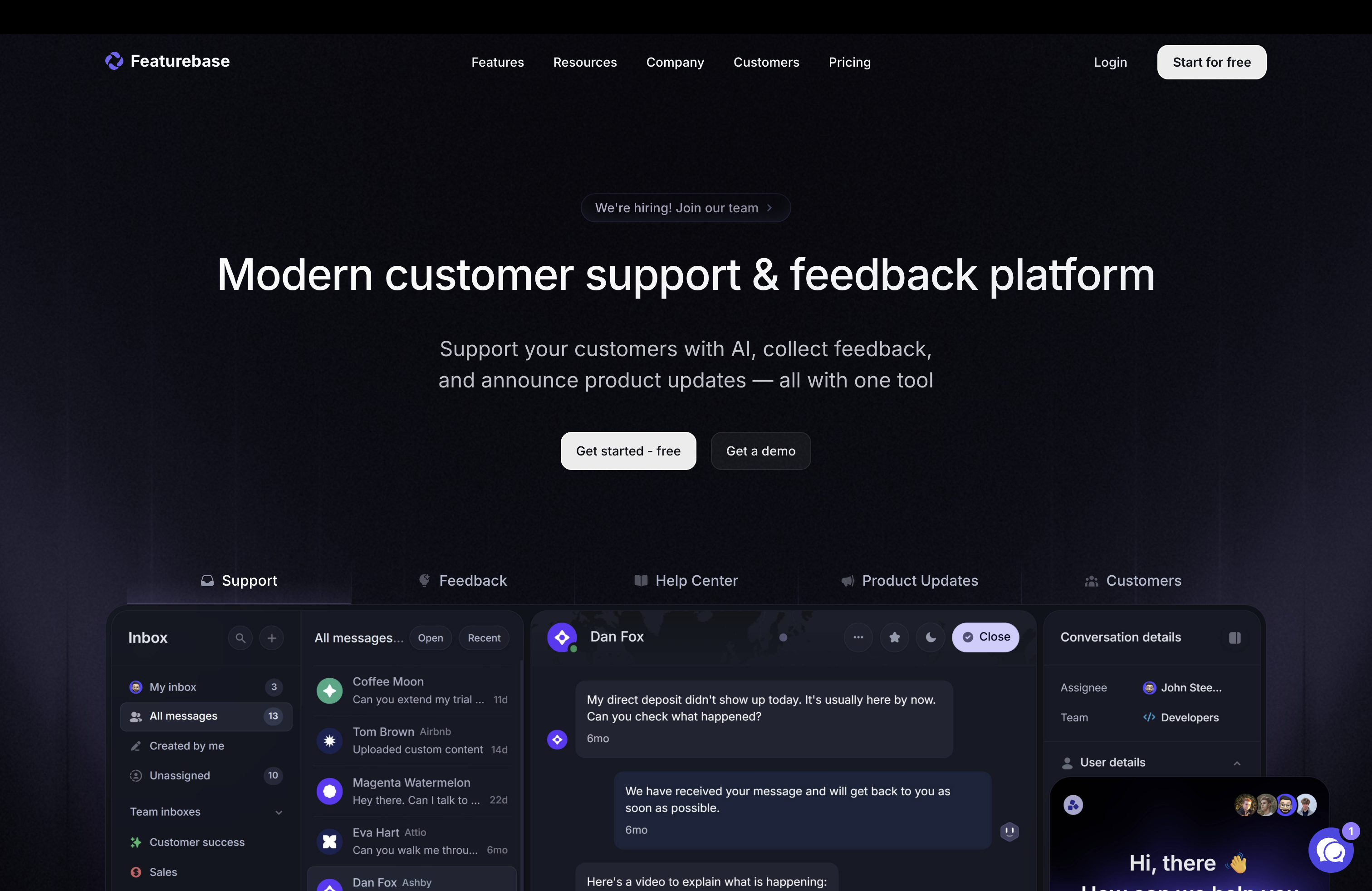
- Pricing: $0.29/resolution + $29/seat; free plan available.
- Watch-outs: a full platform switch, not a bolt-on; younger product than the enterprise tier.
 3. My AskAI - flat-rate sidecar on your existing helpdesk
My AskAI plugs into Intercom, Zendesk, and others and replaces just the AI layer at a flat $0.10 per ticket, the "keep your helpdesk, swap the AI bill" play.
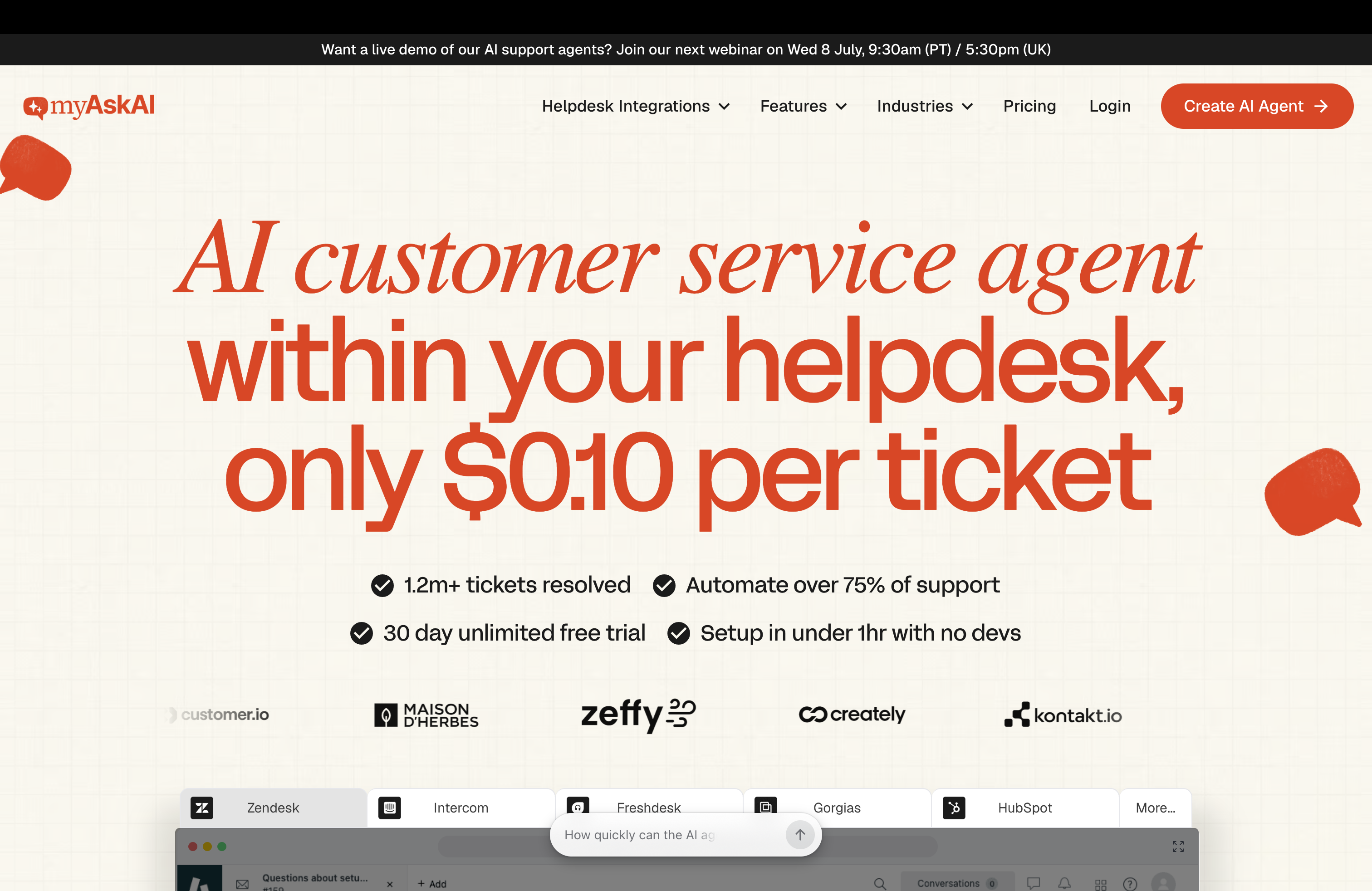
- Pricing: $0.10/ticket.
- Watch-outs: you still pay for the helpdesk underneath; lighter platform than the agents above.
 4. eesel AI - test it on your history before paying
eesel plugs into 14+ helpdesks at $0.40 per task and its simulation mode runs the agent against your historical tickets so you can measure your real resolution rate before spending anything, a genuinely useful de-risking step in a category full of optimistic benchmarks. For where its switchers go, see the full eesel alternatives roundup.
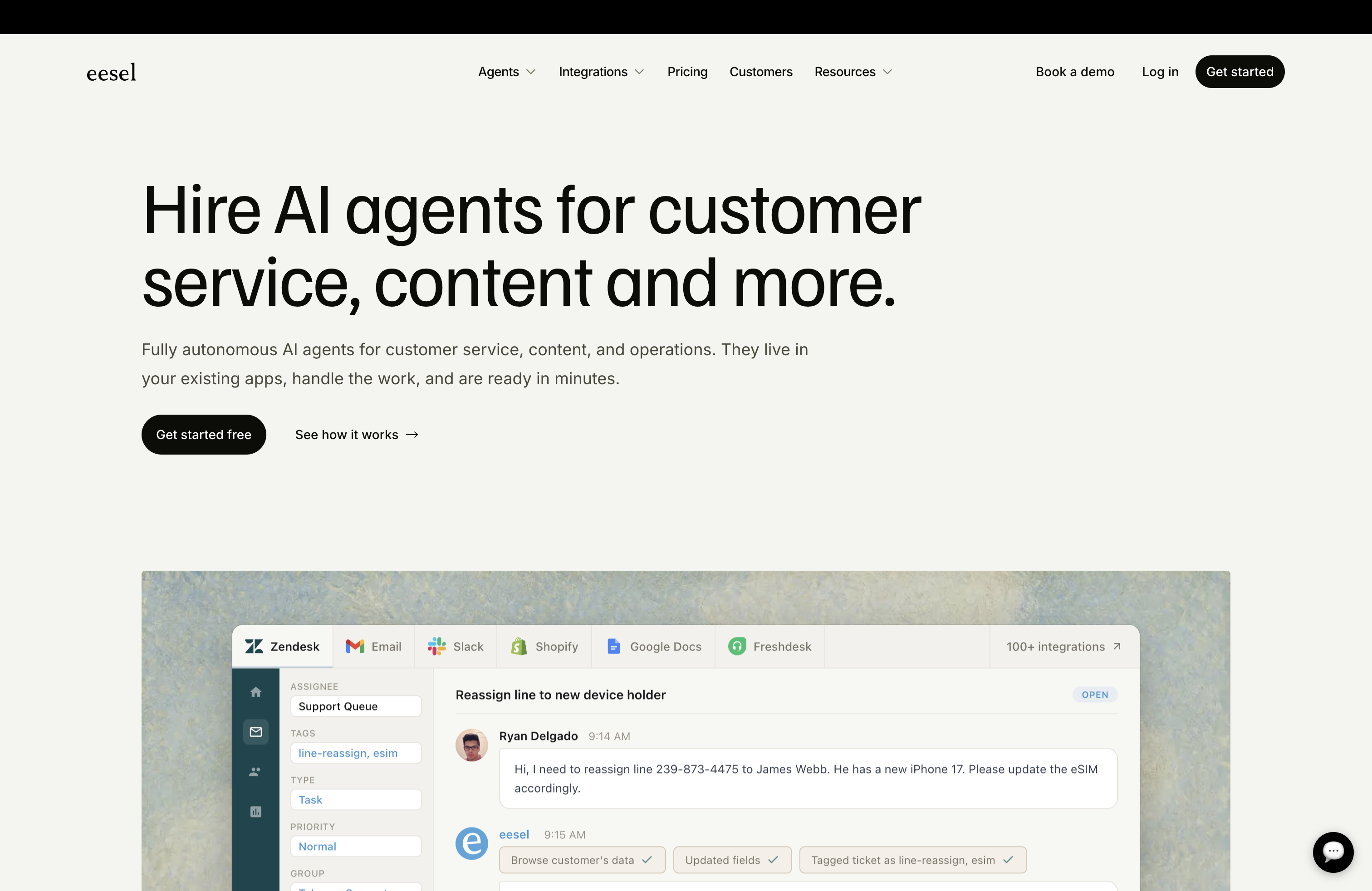
- Pricing: $0.40/task (pay-per-task since early 2026); Enterprise from $2,100/mo.
- Watch-outs: thin independent review base relative to claimed customer count; double-platform cost applies here too.
Drag · with Varley
The inbox your team and Varley work in together
Shared inbox and live chat for Gmail teams, with Varley, Drag’s AI, included from $18. Plus an MCP server your own AI tools can drive.
Specialist agents
 5. Parahelp - for technical SaaS with complex tickets
Parahelp (YC-backed, used by Perplexity and Replit) is built for hard, technical, multi-step tickets and is vendor-managed rather than self-serve, closer to a deployed engineering service than a widget.
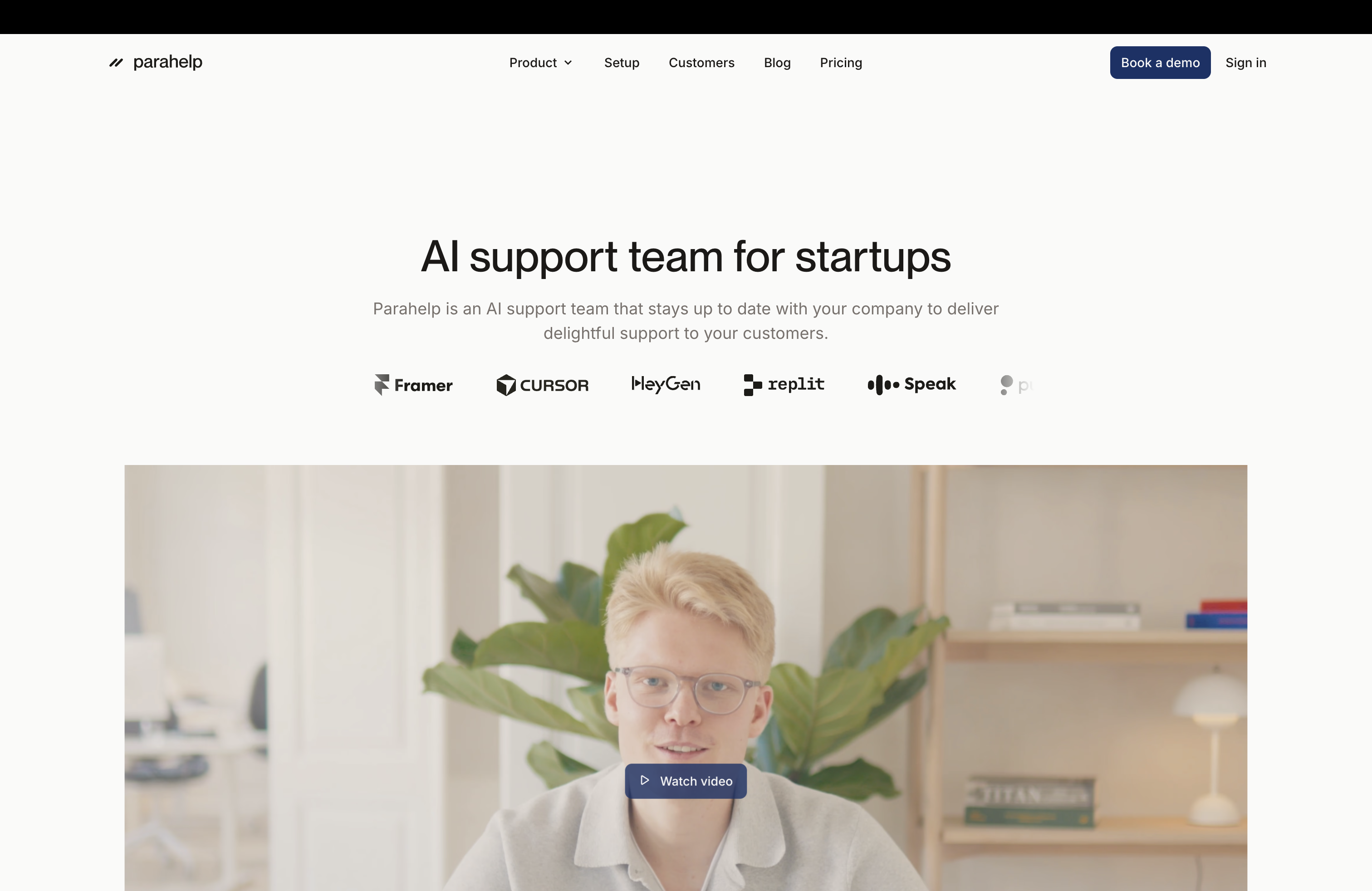
- Pricing: unpublished; market estimates $0.50 to $1.00 per resolution with contracts starting in the low five figures.
- Watch-outs: demo-gated pricing, vendor dependency for configuration, and you still need a helpdesk underneath.
 6. Lorikeet - for regulated industries
Lorikeet targets regulated scale-ups (fintech, health) with an escalate-rather-than-guess design stance and audit-friendly operation, the right instinct where a wrong answer is a compliance event.
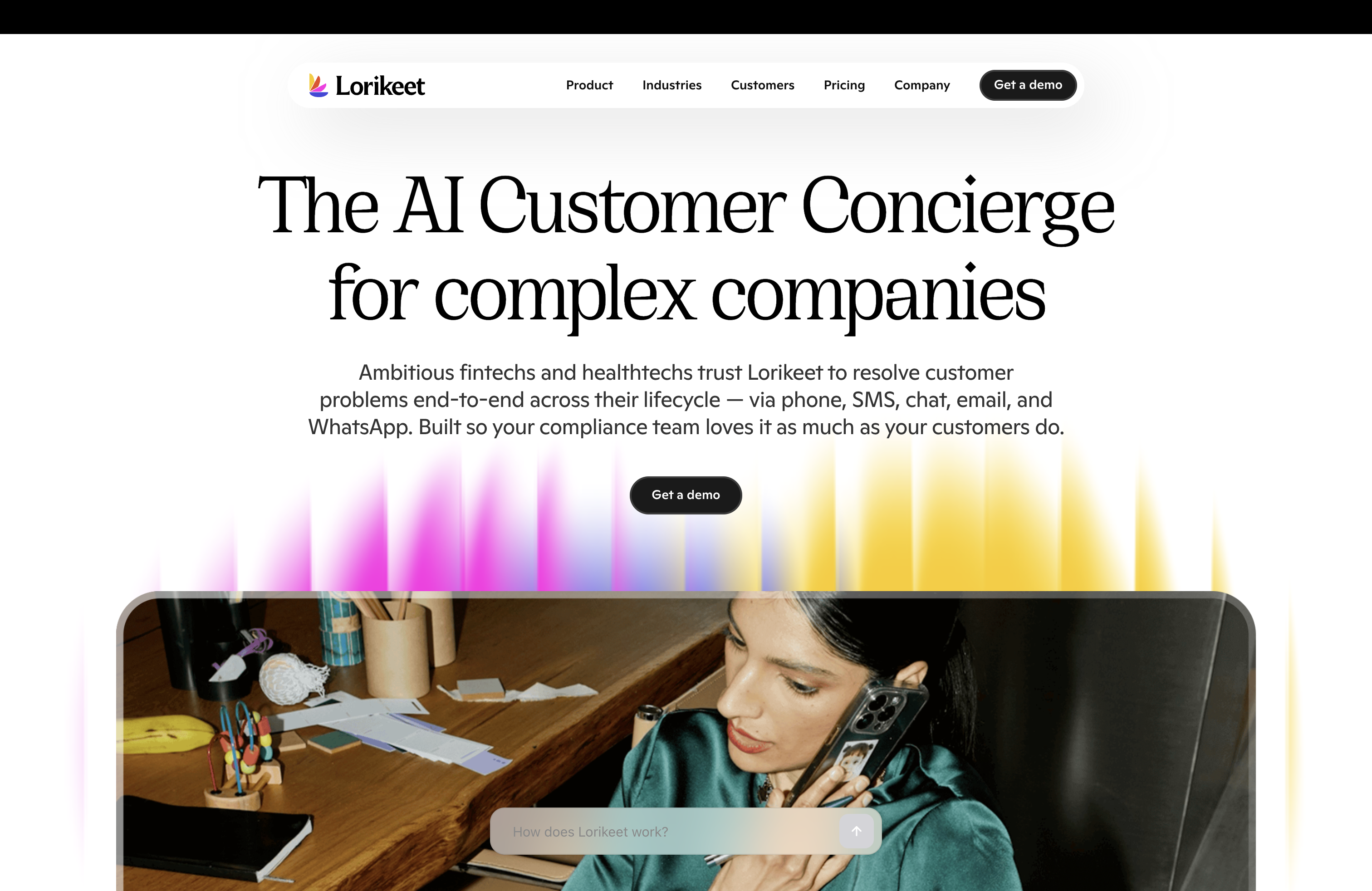
- Pricing: custom.
- Watch-outs: aimed at regulated scale-ups; overkill for a simple FAQ load.
Enterprise platforms
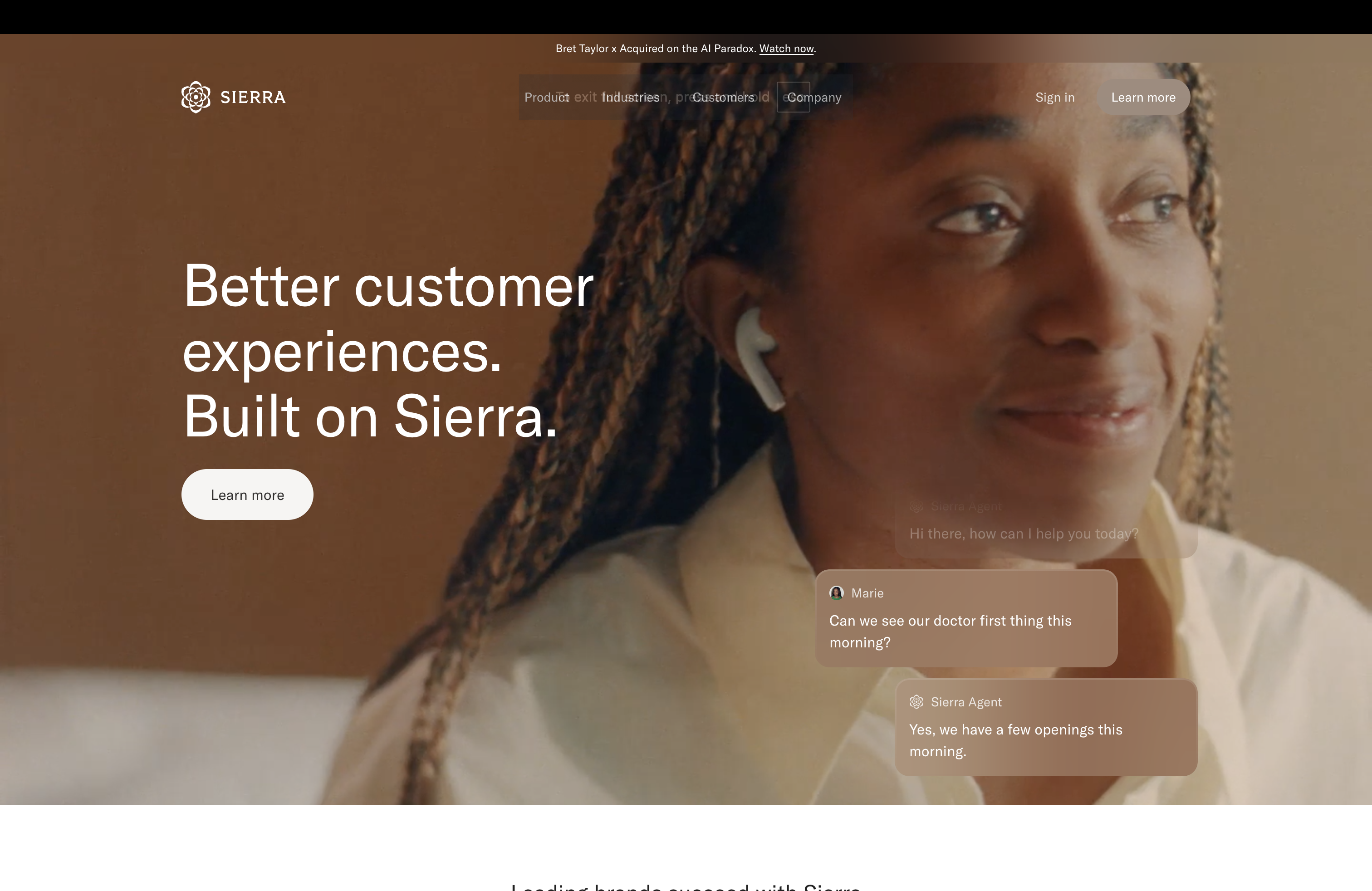
 7. Sierra
Enterprise conversational AI with deep customization; contracts typically $150K+ a year. For organizations with the volume and engineering resources to consume a platform.
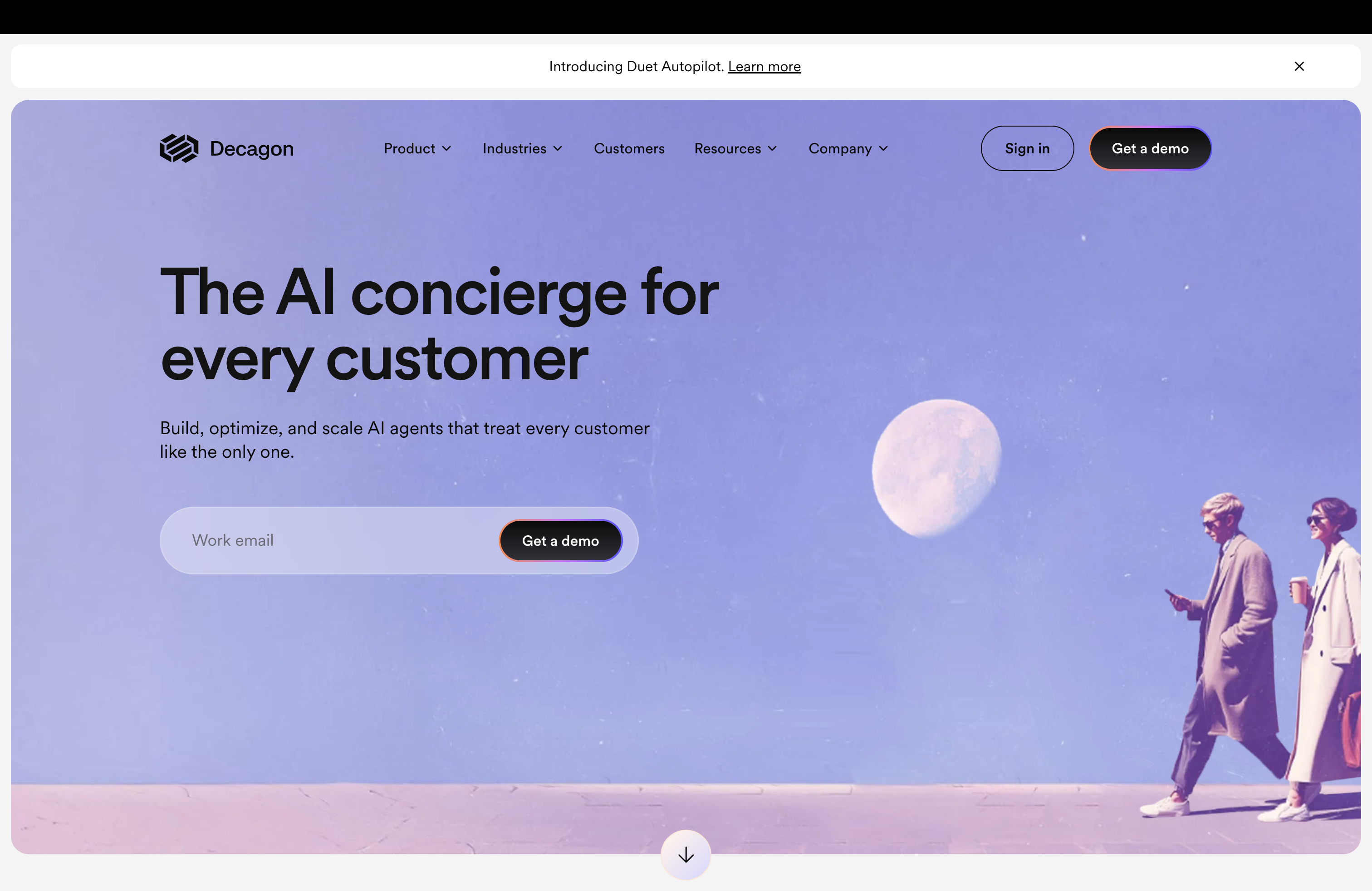
 8. Decagon
Enterprise agent platform positioned on reliability and testing; ~$50K annual platform fee plus per-conversation usage.
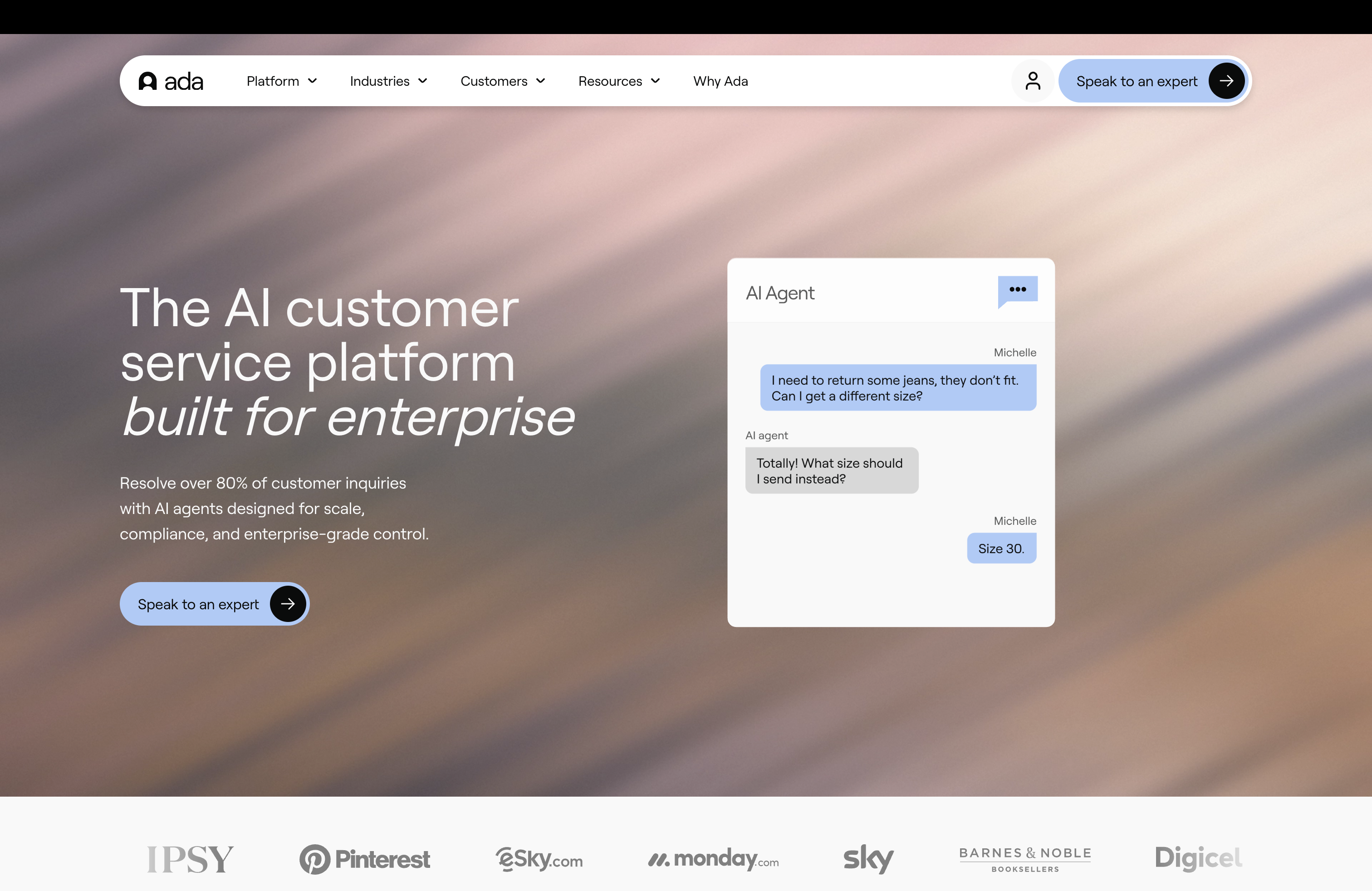
 9. Ada
High-volume containment and deflection with standardized workflows; custom enterprise pricing.
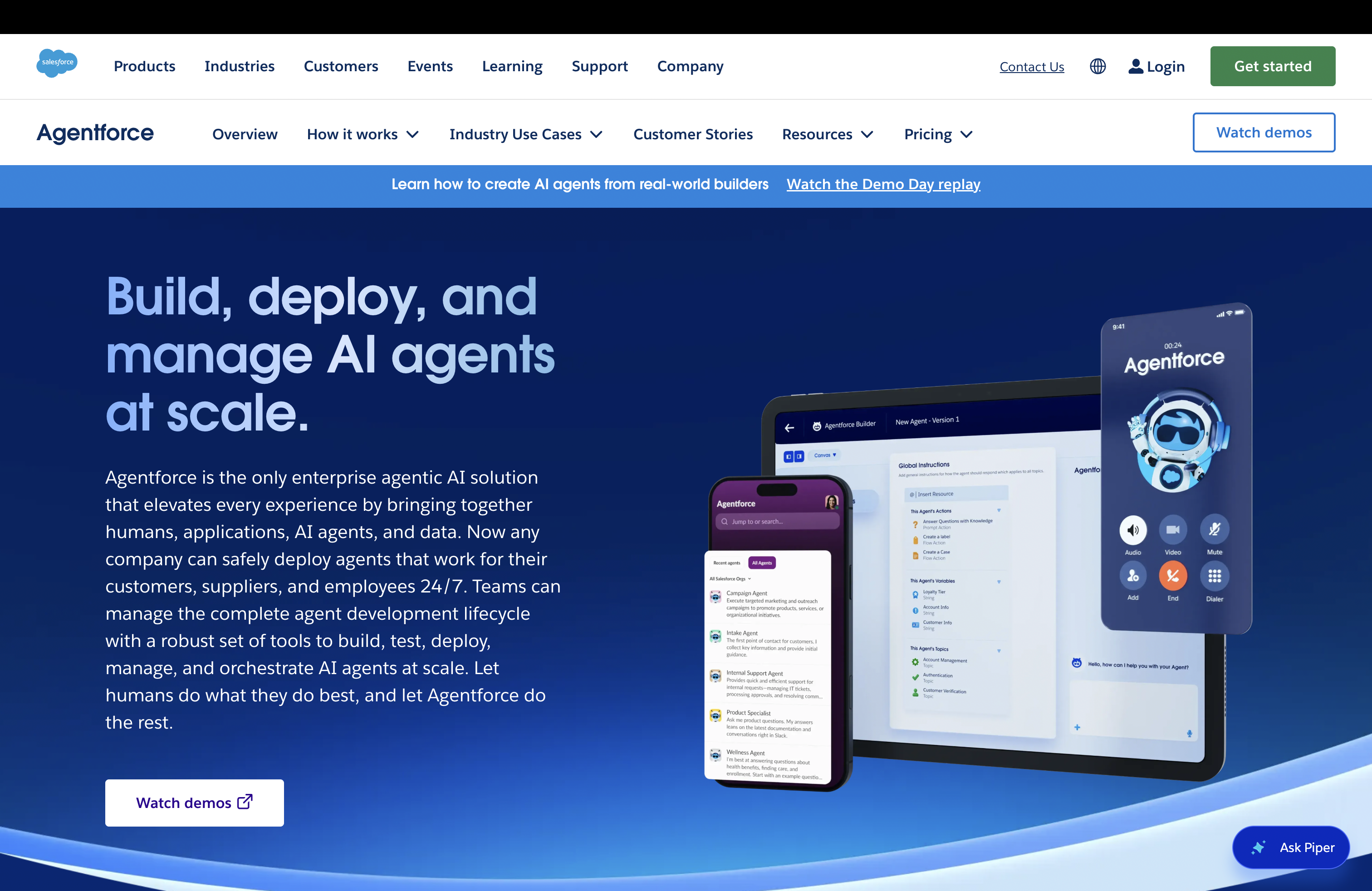
 10. Salesforce Agentforce
AI embedded in Salesforce Service Cloud at roughly $2 per conversation plus licensing. Worth noting: Salesforce is acquiring Fin, so Agentforce and Fin are heading into the same house, which makes the Salesforce path worth understanding even if you never planned it.
The consolidation backdrop (read before signing multi-year)
Two of the biggest names in this list changed hands in 2026: Salesforce agreed to acquire Fin (deal signed June 2026, not yet closed; pricing unchanged for now), and Zendesk acquired Forethought, a multi-agent platform with median contracts around $59.5K. Consolidation is not a reason to avoid these products, but it is a reason to weigh contract length, data portability, and roadmap risk. An agent you configure deeply is expensive to leave.
 A different approach: the whole inbox, not just a bot
Full disclosure: Drag is our product, and it is deliberately not in the numbered list above, because it is not a per-outcome customer-facing agent. It is the other answer to the Fin bill. Many teams evaluating Fin discover mid-evaluation that what they actually need is not a bot talking to customers, it is AI working inside the team's inbox: drafting replies, summarising threads, triaging and tagging, included in the seat rather than metered. Drag does that inside Gmail from $18 a seat with AI included (the full ladder is $12 to $24), publishes its own MCP server (47 tools across 12 categories) so assistants like Claude can act on your inbox directly, and Varley’s Agent resolves conversations on its own. If your volume is modest and your team resolves most things themselves, this path usually costs a fraction of any metered agent, and nothing about it bills you when a customer walks away. If you specifically need autonomous customer-facing resolution at scale today, choose from the list above.






 When Fin is still the right choice
Fin earned the default position. It has the lowest published per-outcome rate among the big names, a 14-day trial, the largest review base in the category, and, underrated, it now runs standalone on eight-plus other helpdesks, so you do not need to move to Intercom to use it. If you want a proven customer-facing agent, have the volume for real deflection, and can absorb usage-based billing (including its broad definition of an outcome), Fin is a strong choice. The alternatives here are for teams optimising for price predictability, a specialist fit, or a different approach entirely.
How to choose
Three questions narrow the field fast: What does the vendor count as a billable event, exactly, and what would last month have cost at your volume and a realistic 40 to 70 percent resolution rate? Do you need the agent inside your existing helpdesk (sidecars: My AskAI, eesel, Parahelp) or are you willing to adopt a platform (Hugo/Crisp, Fibi/Featurebase)? And do you need a customer-facing bot at all, or AI in the team's inbox (what is an AI support agent)? One last honest data point: Klarna famously claimed its AI did the work of 700 agents, then rehired humans after quality dropped. The winning 2026 pattern is hybrid, AI on the routine volume, humans on judgment, clean handoff between them.
Frequently asked questions
What is the best Fin AI alternative?
It depends on tier: Hugo (~$0.05/conversation) for the cheapest published rate, eesel or My AskAI to keep your helpdesk and swap the AI layer, Parahelp for technical SaaS, Lorikeet for regulated teams, and Sierra/Decagon/Ada at enterprise scale. If you do not need a customer-facing bot, a shared inbox with AI included (like Drag) is a different, cheaper path.
How much does Fin cost?
$0.99 per outcome on every plan with a 50-outcome monthly minimum, on top of seats at $29 to $132. An outcome includes assumed resolutions, procedure handoffs, and disqualifications; lead qualifications are $9.99.
What counts as a Fin resolution?
A confirmed resolution, or an assumed one, when a customer exits without asking for more help. That second case means you can be billed when a customer simply gives up, which is why teams audit their Fin transcripts.
Is Fin being acquired?
Yes. Intercom renamed itself Fin in May 2026, and on June 15, 2026 Salesforce signed a definitive agreement to acquire Fin for approximately $3.6B (closing expected in Salesforce's fiscal Q4 2027). The deal has not closed and pricing is unchanged so far, but it is worth weighing for multi-year contracts.
What is the cheapest Fin alternative?
Hugo, Crisp's AI agent, at roughly $0.05 per conversation, about twenty times below Fin's rate, though it requires adopting the Crisp platform and its credits expire monthly. My AskAI ($0.10/ticket) and Fibi ($0.29/resolution) are the next cheapest published rates.
Do AI support agents really resolve 80% of tickets?
Not in production. Vendors advertise 65 to 86 percent, but Fin's own case studies cluster at 42 to 50 percent and independent tests land lower still. Plan on 40 to 70 percent depending on your ticket mix and knowledge quality.
Is Drag a Fin alternative?
It is a different approach rather than a like-for-like: Drag is a Gmail shared inbox with AI included in the seat (drafting, triage, summaries) and its own MCP server, not a metered customer-facing bot. Teams that discover they need AI for the team rather than a bot for customers often land there; teams that need autonomous customer-facing resolution should pick from the agents above. Varley’s Agent resolves conversations on its own, included in Pro.
Can I use Fin without Intercom?
Yes, and it is underrated: Fin runs standalone on eight-plus helpdesks including Zendesk, Salesforce, HubSpot, Freshdesk, and Front, at the same $0.99 per outcome.

Co-founder
Building Drag for nearly ten years: shared inboxes, boards, and now the AI and agent layer, all on Gmail, plus HeyHelp for the personal inbox. Writes the honest versions of the comparisons.
