












The 2026 AI help desk field, verified against every vendor's own pricing: assist vs agentic capability, the per-resolution fee trap, and which desks AI agents can actually operate.
Key takeaways
- The real 2026 decision is capability class. Assist tools draft and suggest, agentic tools resolve end to end, and the best desks now do both, at very different prices.
- Watch the double bill: most incumbents charge per seat AND per AI resolution on top, so the sticker price is rarely the real price.
- MCP support decides whether an external AI agent (Claude, ChatGPT) can operate your help desk, and vendor claims range from genuinely live to beta-gated to absent.
- Every figure on this page was verified against the vendor's own pricing page on the date shown, with no third-party review scores involved.
Table of contents
- What this guide covers
- How we verified this (and what we refuse to use)
- The field at a glance
- The column nobody else publishes: MCP, graded honestly
- The math vendors won't do in front of you
- Start today: self-serve desks with real AI
- The big suites: powerful, and priced like it
- Enterprise agentic: book-a-demo territory
- How to choose (the honest decision tree)
- Frequently asked questions

Founder’s Take
A personal note from Nick, co-founder of Drag
The honest way to rank this category, and almost nobody does it: resolution rate and cost. That's really it. AI help desk software is still not a mature category, so the feature grids and the review stars are mostly noise, if I were buying today, I'd ask every vendor two questions: what share of my real tickets will your AI actually resolve, and what does each resolved ticket cost me, all fees included. Everything else on this page is context for those two numbers. At Drag we're also working on building personality into AI, but I'd be straight about what that is: a second layer, for satisfaction, after resolution is earned. Buy the resolution first.
Every price verified against the vendor's own pricing page: July 2026.
The AI help desk market in 2026 has a dirty secret and a real decision. The secret is that almost every "best AI help desk" list you'll find is written by one of the vendors on it, and almost every price shown hides a second bill, per-AI-resolution fees stacked on top of per-seat plans. The decision is whether you need AI that assists, drafting, summarizing, routing, or AI that is agentic and resolves cases end to end, and that choice matters more than any feature grid. This guide takes the unfashionable route. Every price is verified against the vendor's own pricing page, every capability is classed honestly, the resolution-fee math is worked out loud, and there is a column nobody else publishes: whether an external AI agent can actually operate each desk. We build one of the tools below and say so where it appears; the facts are checkable either way.
What this guide covers
- How we verified this
- The field at a glance
- MCP, graded honestly
- The honest TCO math
- Start today: self-serve desks
- The big suites
- Enterprise agentic
- How to choose
- FAQ
How we verified this (and what we refuse to use)
Every figure below comes from the vendor's own pricing page or documentation, checked on the date in the line above, with unpublished prices marked unpublished rather than estimated. AI capabilities are labeled by their actual release state, generally available, early access, or beta, because "has AI agents" means very different things across this list. And there are no G2 or Capterra stars here: third-party review scores are pay-to-play theater in this category, and a list built on them inherits their incentives. Where a vendor hides pricing behind a sales call, we say so, that opacity is itself useful information about how they sell.
The field at a glance
| Tool | AI class | Entry price | AI pricing model | Can an external AI agent operate it? | Free plan |
|---|---|---|---|---|---|
 Drag Drag | Assist + agentic | $12/user/mo ($18 with AI) | Flat, included | Official MCP server, built in | Trial (no card) |
 Zoho Desk Zoho Desk | Both | $7/user/mo | Included by tier | Official MCP | Yes (3 agents) |
 Tidio Tidio | Both | $24.17/mo | Lyro from $32.50/mo | Official dev connector | Yes (limited) |
 Help Scout Help Scout | Assist-led | $25/user/mo | $0.75 per AI resolution | Third-party only | Yes (limited) |
 Freshdesk Freshdesk | Both | $19/user/mo | Sessions incl., then $49/100 | Official, early access | 6-mo Free Program (2 agents) |
 Gorgias Gorgias | Both | Ticket-based from $10/mo | ~$1 per AI resolution | Official, open beta, free all plans | Trial |
 Zendesk Zendesk | Both | $55/agent/mo | Per resolution + Copilot add-on | Official, early access (gated) | Trial |
 Intercom (Fin) Intercom (Fin) | Both | $29/seat/mo | $0.99 per Fin resolution | Official, read-focused, US-only | Trial |
 Sierra Sierra | Agentic (enterprise) | Outcome-based, ~$150k+/yr | Per outcome | Official (publish-only) | No |
 Ada Ada | Agentic (enterprise) | Unpublished | Per resolution (reported) | Official | No |
Decagon (agentic, enterprise) is omitted from the table: its pricing is unpublished and its integration claims could not be verified to primary sources at publication, which tells you how that purchase would go.
Drag · with Varley
The inbox your team and Varley work in together
Shared inbox and live chat for Gmail teams, with Varley, Drag’s AI, included from $18. Plus an MCP server your own AI tools can drive.
The column nobody else publishes: MCP, graded honestly
MCP, the Model Context Protocol, is how external AI agents like Claude and ChatGPT see and operate real software, and in 2026 it is the difference between a help desk your AI can use and one it can only read about. The vendor claims deserve grading, not checkmarks. Genuinely live: Gorgias runs an open-beta MCP server free on every plan with real write tools, the strongest incumbent showing; Zoho exposes Desk through its platform MCP; Ada connects for agent configuration; Drag ships a built-in official MCP server that operates the whole inbox, boards, threads, replies, assignments. Partially there: Intercom's server is official but read-focused and US-hosted-workspaces only; Tidio's is a developer connector rather than a hosted service. Promised: Zendesk and Freshdesk both gate MCP behind early-access programs, real intent, not yet a product you can rely on. Absent: Help Scout has third-party bridges only. If "manage support from Claude" is in your 2026 plans, this column should weigh more than any AI badge on a pricing page, and our MCP for customer support guide covers what to test before you commit.
The math vendors won't do in front of you
Take a concrete team: five agents, five hundred AI-resolved conversations a month. On the per-seat-plus-per-resolution desks, the AI bill arrives twice. Help Scout: five seats at $25 plus five hundred AI resolutions at $0.75 lands around $500/month, most of it resolution fees. Gorgias prices the tickets themselves, then adds roughly a dollar per AI resolution on top: around $600 a month or more, because each resolved conversation is billed as both a ticket and a resolution, for the same workload. Zendesk stacks seats, a Copilot add-on per agent, and a per-resolution rate it no longer publishes, the honest total is "more than the pricing page implies, by an amount you learn in the sales call." Intercom's Fin is the cleanest per-outcome pricing of the incumbents at $0.99, but it still rides on per-seat plans whose prices start at $29 a seat and reach $132. And the flat-price desks, Zoho by tier, Drag at $18 per user with AI included, resolve the same five hundred conversations for exactly what the pricing page says: five users at $18 is $90/month. One unit-caveat as you compare: Freshdesk meters AI "sessions" and others meter "resolutions," which are not the same thing, so match the unit to your actual ticket flow before trusting anyone's calculator, including this paragraph. And if you are assembling the whole support setup rather than picking a single desk, the MCP-native support stack guide walks the five layers with the same verified math.
Start today: self-serve desks with real AI
Drag






(disclosure: this is us). Drag turns Gmail into the help desk: shared addresses become boards in the interface your team already knows, with AI drafting included from the $18 plan, agentic resolution on Pro, and a built-in official MCP server so Claude or ChatGPT can genuinely work the queue. Best for: teams on Google Workspace who want AI support without a new platform or a metered AI bill. The trade: if your company isn't on Gmail, Drag isn't your tool. The 7-day trial needs no card.
Zoho Desk
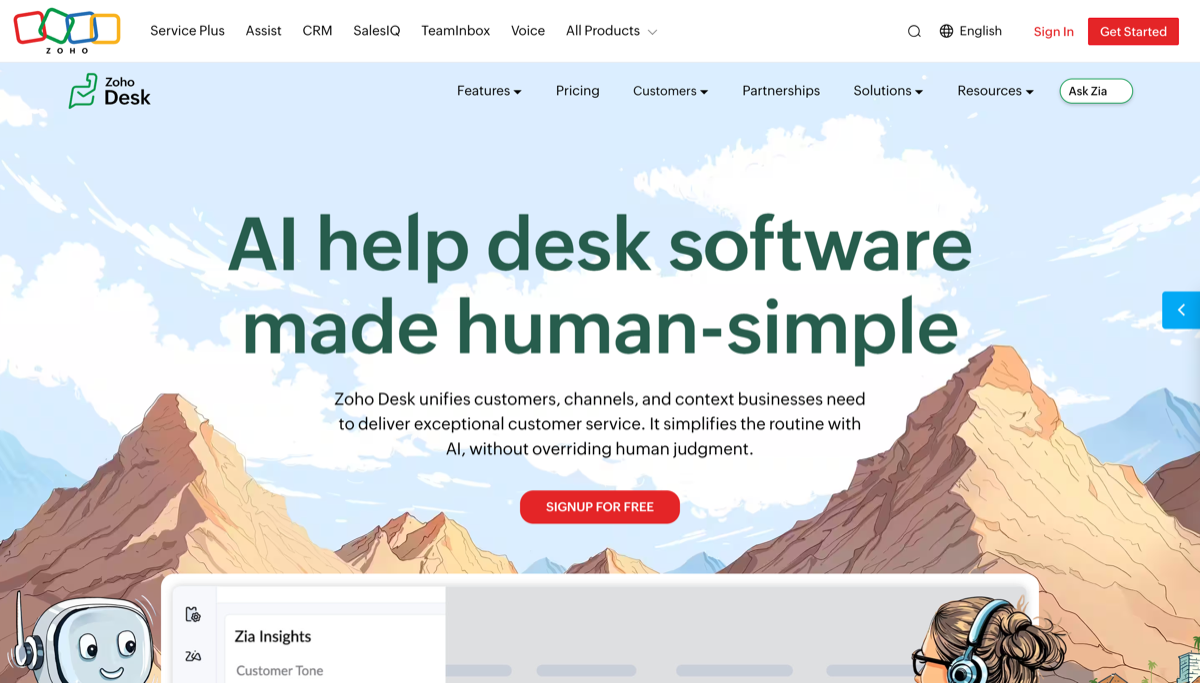
The strongest free tier in the field (three agents) and paid tiers that stay cheap while the AI, assist and increasingly agentic, comes included rather than metered. Best for: budget-led teams, especially those already inside Zoho's ecosystem. The trade: the interface shows its age against the newer field, and the deepest AI sits in upper tiers.
Tidio
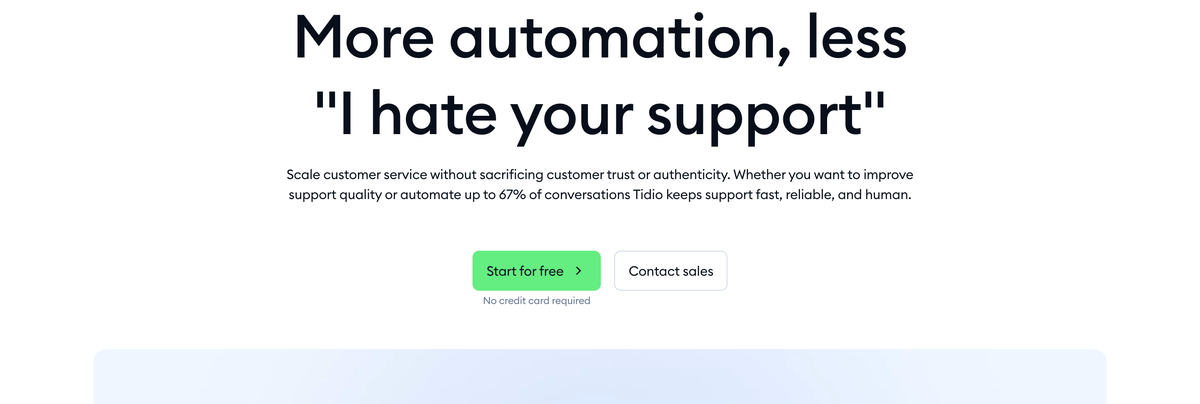
Chat-first with Lyro, a genuinely capable resolution bot priced by conversation bundle from $32.50 a month for fifty conversations. Best for: ecommerce and website-chat-led support. The trade: email support is the second-class citizen, the inverse of most desks here. See our Tidio alternative comparison for the Gmail-team angle.
Help Scout
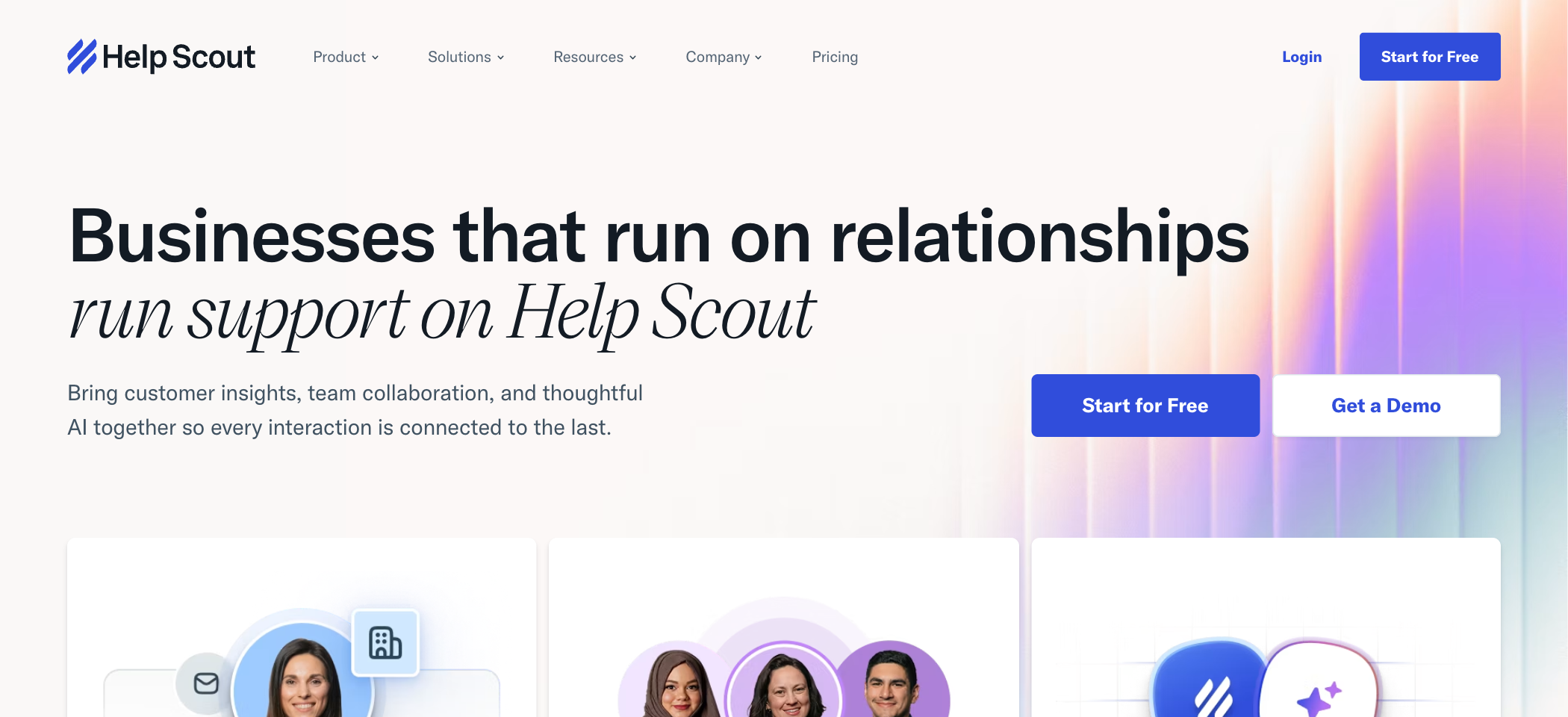
The most polished assist experience of the field, drafts, summaries, and a clean inbox, with AI Answers at $0.75 per resolution when you want deflection. Best for: teams that want humans in charge and AI helping. The trade: no official MCP path, and the per-resolution meter runs on top of seats. More in our Help Scout alternative breakdown.
Freshdesk
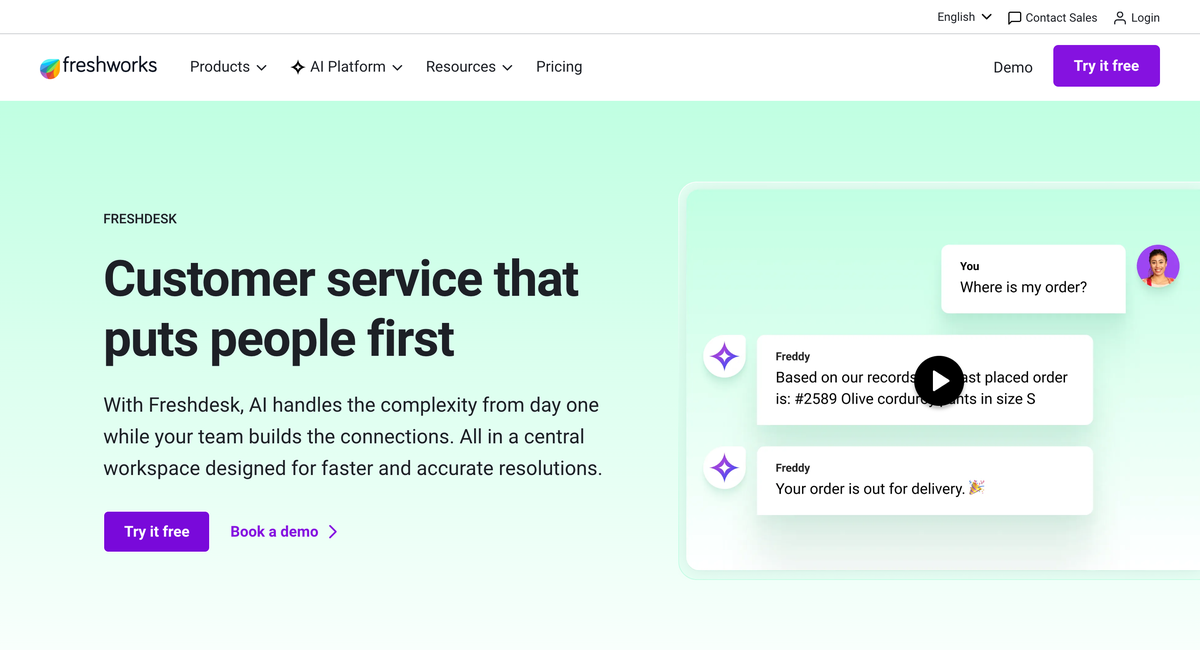
Freddy covers both assist and agentic modes with a session bundle included, and the Free Program (2 agents, 6 months) is a real on-ramp. Best for: teams wanting suite breadth on a budget. The trade: AI depth is Enterprise-gated, including its MCP early access, and session-based metering needs watching. See the Freshdesk alternative comparison.
Gorgias
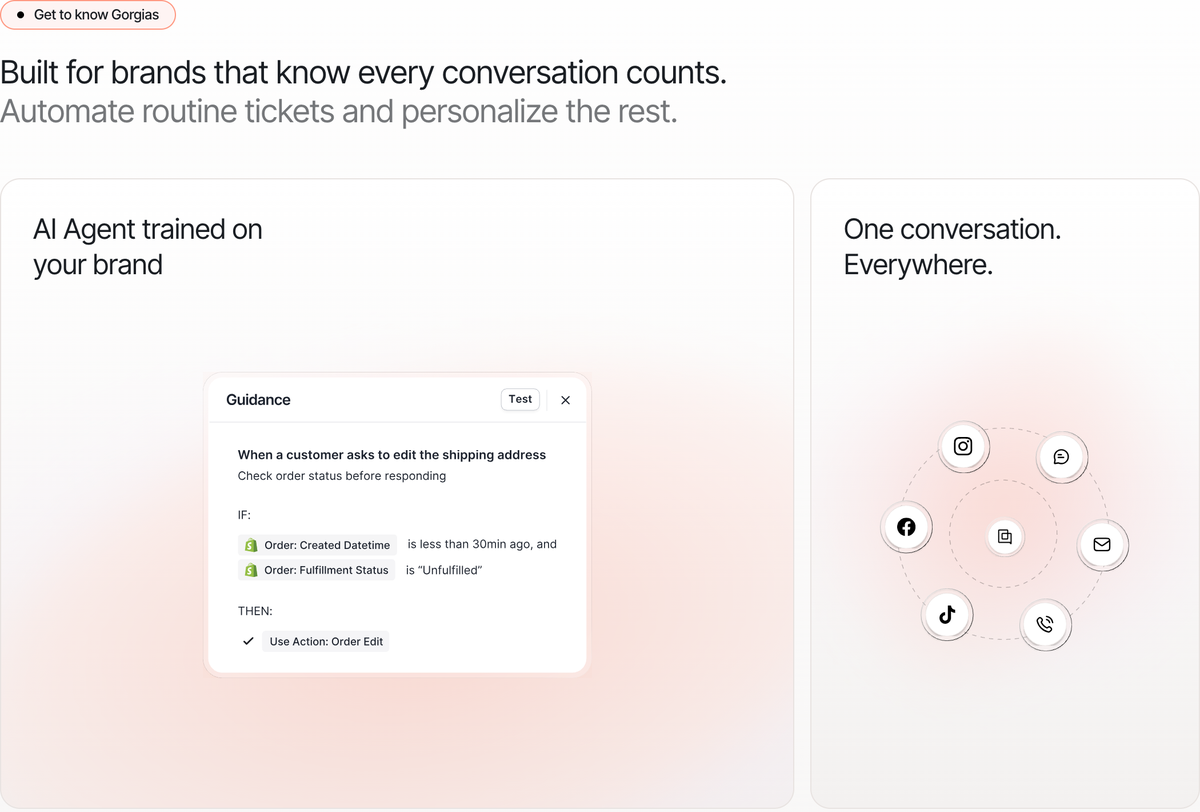
Ticket-based pricing plus roughly a dollar per AI resolution, and, credit where due, the most mature MCP server of any incumbent, open beta, free on every plan, with real write tools. Best for: Shopify-centric ecommerce teams. The trade: the double meter (tickets and resolutions) makes it the trickiest bill here to predict. Our Gorgias alternative page covers the switch.
The big suites: powerful, and priced like it
Zendesk
The most complete platform on this list and the least knowable bill: seats, a Copilot add-on per agent, and per-resolution AI fees it no longer publishes, quoted per contract. Best for: larger teams that need its depth and have someone to negotiate. The trade: you will not know your AI cost until the sales call, and its MCP remains early-access. See the Zendesk alternative comparison.
Intercom (Fin)
Fin is the best-known agentic product in support, and its $0.99-per-resolution pricing is at least transparent. Best for: teams that want a proven customer-facing agent and live in Intercom's messenger world. The trade: seats on top, US-only and read-focused MCP, and the total climbs fast at volume. More in our Intercom alternative breakdown.
Enterprise agentic: book-a-demo territory
Sierra
Outcome-based pricing, reportedly from six figures a year, for enterprise-grade autonomous agents; MCP appears as a publish surface rather than an operate-your-desk channel. Best for: enterprises replacing contact-center volume. The trade: this is a procurement project, not a signup.
Ada
Autonomous resolution at enterprise scale with an official MCP server for configuration; pricing unpublished, per-resolution by report. Best for: high-volume B2C support. The trade: everything about the buy is opaque until you're in the room.
Decagon gets a sentence rather than an entry. It is capable by reputation, but with unpublished pricing and integration claims we could not verify to primary sources, it fails this page's own standard, and that is the review.
How to choose (the honest decision tree)
Start from that decision, not the feature list. If AI should draft while humans decide, look at Help Scout or Drag's assist mode. If AI should resolve routine volume end to end, the candidates are Fin, Gorgias, Freddy, and Drag's agentic mode, priced very differently, so run the TCO math above on your real ticket count. If external AI agents operating the desk matters, and in 2026 it should, weight the MCP column, where Gorgias and Drag are the live options among desks you can buy today. If the team lives on Gmail, Drag is the shortest path, and if the budget is zero, Zoho's free tier is the real one. And if a vendor cannot tell you the price without a call, budget for what that predicts.
Frequently asked questions
What is an AI help desk?
A help desk where AI does part of the support work, from drafting replies and routing tickets (assist) to resolving whole conversations autonomously (agentic). In 2026 most serious desks offer both modes; they differ enormously in pricing and in how much you can trust the autonomous side.
What's the difference between assist and agentic AI in support?
Assist AI helps humans work faster, drafts, summaries, suggested routing, while agentic AI performs the work itself: reading the case, taking actions in your systems, and closing it, with humans handling escalations. Our full guide to agentic customer support covers when each fits.
Why do AI help desks charge per resolution?
Because it prices the AI like a worker: you pay when it successfully closes a conversation, typically $0.75 to $1 per resolution at the incumbents. The catch is that these fees usually stack on top of per-seat plans, so compare total cost at your real volume, not the seat price.
What is MCP and why does it matter for a help desk?
MCP, the Model Context Protocol, is the open standard that lets AI agents like Claude and ChatGPT see and operate software. A help desk with a real MCP server can be worked by whatever AI assistant your team uses; one without it keeps AI locked to the vendor's own features.
Which AI help desk is cheapest?
For genuinely free: Zoho Desk's free tier. For flat, predictable AI pricing: Drag at $18 per user per month with AI included and no resolution meter. The per-resolution desks can be cheap at low volume and expensive at scale, do the math at your ticket count.
Do any AI help desks work inside Gmail?
Drag is built for Gmail teams specifically: shared addresses become boards in the Gmail interface your team already uses, with the AI and MCP layers on top. Hiver also serves Gmail teams with AI bundled from its Growth tier, though at higher prices.
Can AI fully replace my support team?
Not responsibly. Agentic AI resolves routine, policy-clear volume well; judgment calls, exceptions, and upset customers still need people. The mature pattern is AI absorbing the routine half and humans handling the half that earns loyalty.
How should a small team try AI support without risk?
Pick a tool with a real free tier or card-free trial, turn on assist mode first (AI drafts, humans send), and only graduate case types to autonomous handling once the drafts prove reliable. Drag's 7-day trial needs no card if Gmail is home.
Co-founder
Building Drag for nearly ten years: shared inboxes, boards, and now the AI and agent layer, all on Gmail, plus HeyHelp for the personal inbox. Writes the honest versions of the comparisons.
