











Intercom pricing in 2026, layer by layer: seat plans, Fin AI's $0.99 outcomes, Copilot and channel add-ons, a 10-seat worked example, and what the Salesforce deal changes.
Key takeaways
- Seats are the smallest layer: $29 to $132 per person on annual billing, and as of September 2026 the entry plan's sticker is promotional: Essential shows $19 struck from $29 for new customers. Fin, the AI agent, adds from $0.99 per resolved outcome, and Copilot adds $29 per agent with just 10 Copilot conversations included.
- A realistic 10-seat team with moderate AI volume lands around $3,100 a month all-in, which is why the worked example matters more than the plan table.
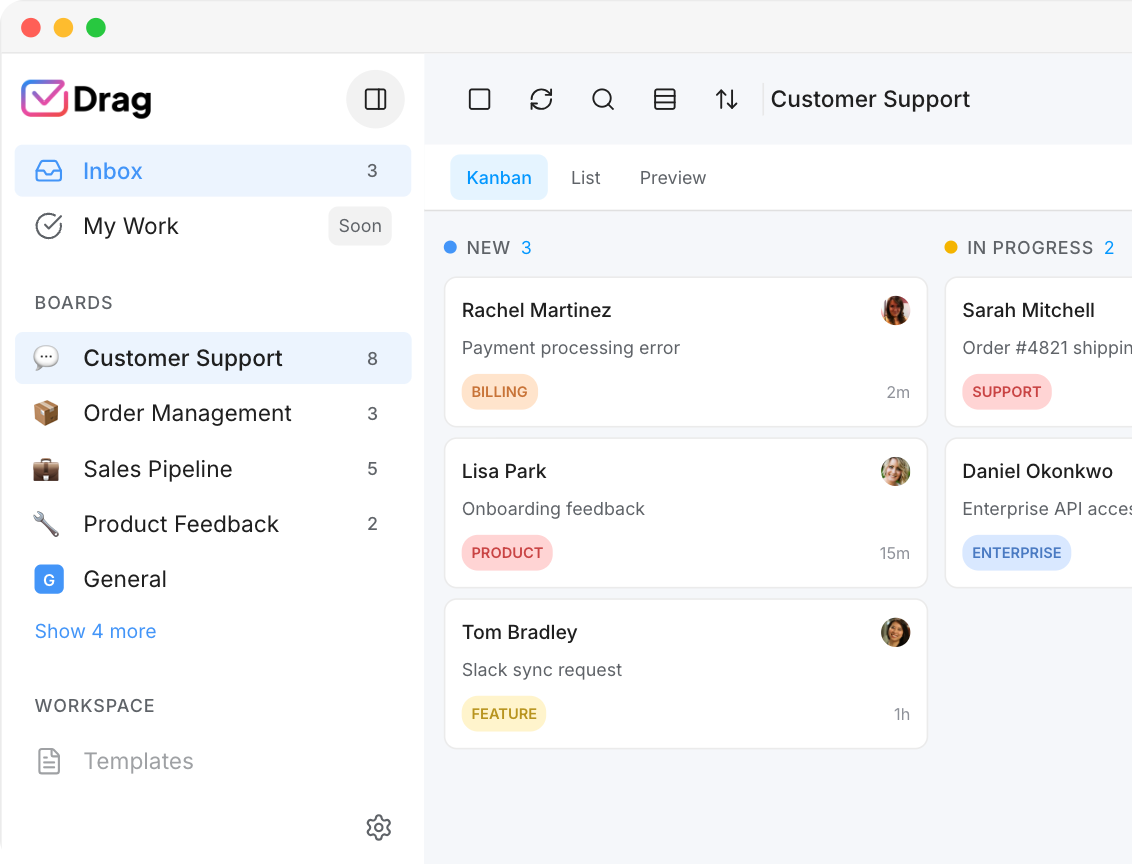
- For comparison: Drag, our shared inbox for Gmail, costs $12 to $24 a seat, with AI included from $18.
Table of contents
Intercom pricing has two layers, and the second one is the bill. Seats cost $29, $85 or $132 per person per month on annual billing (Essential, Advanced, Expert). Then Fin, the AI agent, charges from $0.99 every time it resolves a conversation, with no volume pricing published. (The page stated a 50-outcome monthly minimum when we verified in July 2026; as of September 11, 2026 it states none, so check your order form.) Put together, a 10-person support team on the middle plan with a moderate AI workload pays around $3,100 a month. That is roughly four times the number on the pricing page.
This guide walks through every layer with verified figures, works the math at a real team size, and covers what the Salesforce acquisition of Fin (formerly Intercom) means for the prices you sign up to today. For comparison along the way: Drag, our shared inbox for Gmail, costs $12 to $24 a seat with AI included from $18.
What you are actually buying
Intercom sells a customer service suite: shared inbox, messenger, help center, workflows and reporting, with Fin, its AI agent, attached to every plan. Since May 2026 the company itself is called Fin, renamed after the agent that now drives its growth, and since June 15, 2026 it has been under a signed agreement to be acquired by Salesforce for approximately $3.6 billion. The platform is genuinely capable, and nothing in this guide argues otherwise. The argument is narrower: the advertised seat price is the smallest of the four numbers that make up an Intercom bill, and teams routinely discover the other three after they have committed. We covered the acquisition itself in our breakdown of the Salesforce deal; this page stays on the money.
The four numbers in every Intercom bill
Every Intercom invoice is the sum of four lines. Price each one and the total stops being a surprise:
| Line | What drives it | Current price |
|---|---|---|
| Seats | Agents needing full inbox access | $29 / $85 / $132 per seat/mo (annual) |
| Fin outcomes | Conversations the AI resolves | From $0.99 per outcome |
| Copilot | Agent-side AI assistance | $29 per agent/mo, 10 Copilot conversations included |
| Channels and add-ons | WhatsApp, SMS, phone, campaigns, proactive support | Usage-metered, varies |
Two mechanics matter more than the numbers. First, monthly billing runs higher than the annual rates above ($39, $99 and $139 per seat, verified on the live toggle September 11, 2026), so the advertised price assumes a year's commitment. And the entry sticker is currently promotional: the page shows Essential with the list price struck through, $19 instead of $29 on annual billing and $29 instead of $39 monthly, as a new-customer offer. Offers end; price the list number. Second, an "outcome" is broader than you might assume: Fin bills for confirmed resolutions, for assumed resolutions where it answers and the customer simply leaves, and for certain procedure handoffs. You pay once per conversation, but the definition of a billable conversation is Intercom's, not yours.
The seat plans, honestly
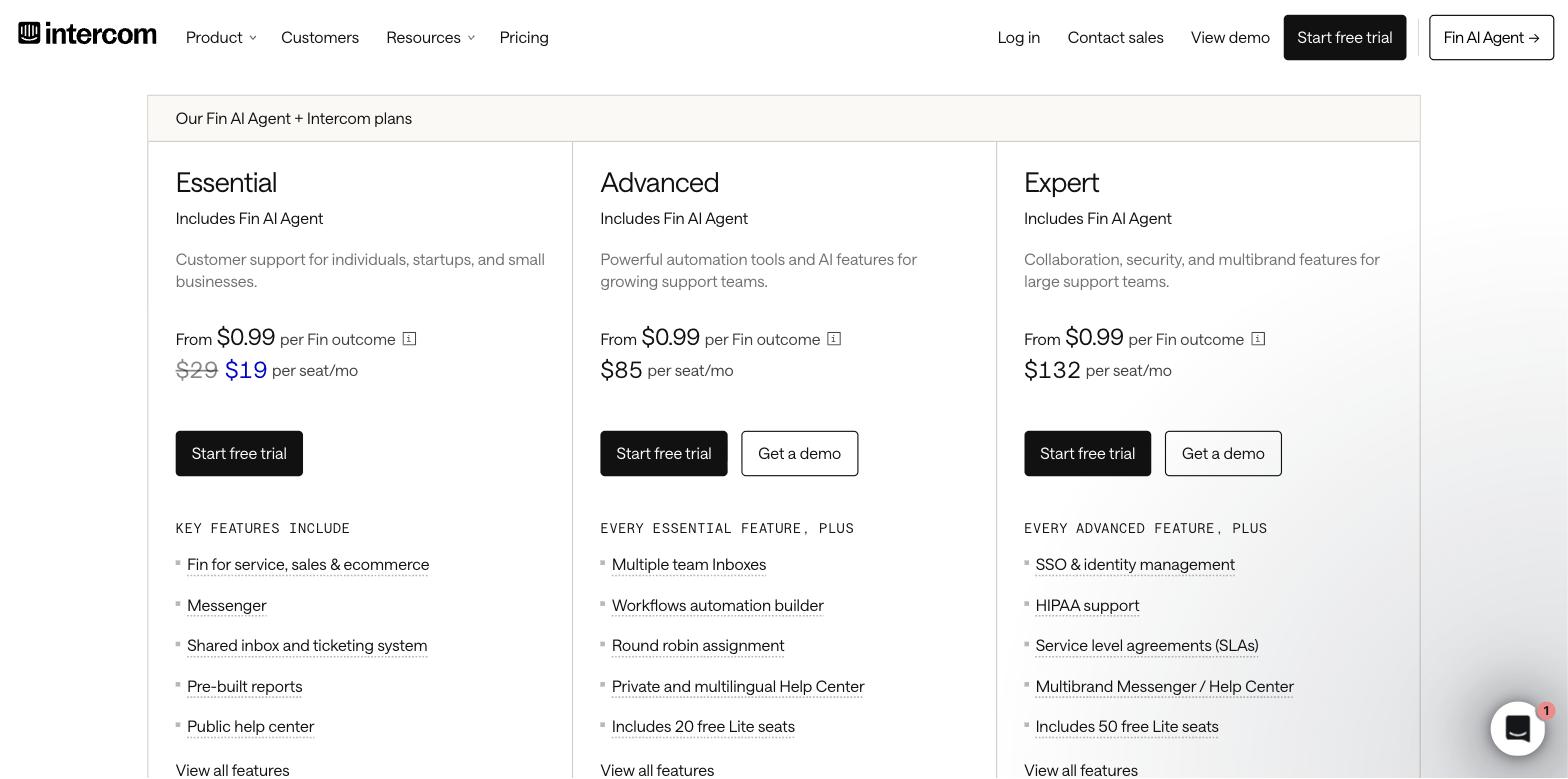
Essential at $29 covers the basics: inbox, messenger, help center, simple automation. Most support teams outgrow it quickly because workflows, routing rules and multiple team inboxes live on Advanced at $85, which is nearly three times the price and is the practical floor for a real support operation. Expert at $132 adds the enterprise layer: SSO, HIPAA, multibrand. Advanced and Expert include 20 and 50 Lite seats respectively, which are limited-access seats for occasional collaborators, useful, but not agent seats, so do not plan headcount around them. There is no free plan on any tier.
Drag · with Varley
The inbox your team and Varley work in together
Shared inbox and live chat for Gmail teams, with Varley, Drag’s AI, included from $18. Plus an MCP server your own AI tools can drive.
The Fin line: where the bill actually lives
Fin is priced on outcomes rather than seats, and the page now writes the rate as "From $0.99 per Fin outcome": a floor, with any volume pricing left to the order form. At low volume the model is a genuinely fair deal: a small team getting 200 resolutions a month pays $198 for work a human did not have to do. The economics turn as volume grows, because no volume discount is published. At the list rate, the per-outcome price is the same at 100 resolutions and at 100,000:
| Monthly Fin outcomes | Fin cost/month | Fin cost/year |
|---|---|---|
| 200 | $198 | $2,376 |
| 1,000 | $990 | $11,880 |
| 2,500 | $2,475 | $29,700 |
| 5,000 | $4,950 | $59,400 |
| 10,000 | $9,900 | $118,800 |
Past a few thousand outcomes a month, the AI line dwarfs the seat line, and because the trigger is Fin's own resolution counting, the bill scales with your customers' behavior rather than any decision you make. Teams that want agent-side AI as well add Copilot at $29 per agent, and the allowance behind that price is easy to miss: the pricing page states it includes 10 Copilot conversations a month, so an agent leaning on it daily is quickly into usage territory. That means paying for AI twice: once for the customer-facing agent, once for the assistant behind your own team. One more 2026 wrinkle: Fin now sells standalone, no Intercom seats required, on other helpdesks including Salesforce's own, which is worth knowing purely as a negotiating fact even if you never use it.
The 10-seat worked example
Take a concrete team: 10 support agents, growing SaaS company, 2,000 conversations a month resolved by Fin, Copilot for the whole team, on the Advanced plan.
| Line | Math | Monthly |
|---|---|---|
| Seats | 10 × $85 (Advanced, annual) | $850 |
| Fin outcomes | 2,000 × $0.99 | $1,980 |
| Copilot | 10 × $29 | $290 |
| Channels/add-ons | assume none | $0 |
| Total | $3,120 |
That is $37,440 a year, against a pricing-page first impression of $850 a month, and before a single WhatsApp conversation or outbound campaign is metered. The same 10 agents on Drag pay $180 a month with AI assists included in the seat, or $2,160 a year. The tools are not identical, and for some teams Intercom's depth earns the difference. The point of the worked example is only that the difference is 17x, and you should decide about it deliberately rather than discover it on an invoice. For the same math run across seventeen tools, see our shared inbox pricing comparison, or put your own headcount and Fin volume into the shared inbox cost calculator.
The receipts: how Intercom pricing got here
The entry seat, receipted across the archives:
| Year | Essential (entry) seat, annual | Receipt |
|---|---|---|
| 2021 | $39 /seat/mo | archived capture |
| 2024 | $39 /seat/mo | archived capture |
| 2025 | $29 /seat/mo | archived capture |
| 2026 | $29 list, $19 with the new-customer offer | archived capture, offer read live September 11, 2026 |
Read the direction: the entry seat got a quarter cheaper in the Fin era, and is discounted further at the door today. That is not generosity; it is the model moving. Cheap seats fill the funnel, and the meterable lines, Fin outcomes and Copilot usage, are where the growth lives.
Intercom's pricing history is a decade of structural rewrites: per-product bundles, then contact-based pricing that billed by the size of your audience, then the 2023 reset to per-seat plans, then the 2024 arrival of Fin's per-resolution pricing on top of seats. Each rewrite moved the revenue line toward whatever was growing. The 2026 rebrand to Fin and the Salesforce agreement continue the same story: the outcome-priced agent, at roughly $100M of fast-growing revenue, is what commanded the $3.6 billion, not the legacy seat business. Read the pattern honestly and the conclusion for buyers is simple: the pricing model follows the strategy, the strategy just changed hands, and a multi-year commitment signed today is a bet on a pricing structure whose owner has not finished deciding what it is for. Nothing has changed on the published prices as of publication. Whether the $0.99 outcome, the reference price for the whole category, survives integration into Agentforce intact is the open question our pricing report tracks quarterly.
What to check before you sign
Four questions do most of the work of an Intercom evaluation. What is your realistic monthly resolution volume, measured on the 14-day Fin trial rather than guessed, since assumed resolutions count? Which plan do you actually need, given that real automation starts at Advanced? Do you need Copilot for every agent, or a subset? And which metered channels will you use, at what volume? Answer those and the four-line table above prices itself. If the total lands somewhere uncomfortable, that is what the alternatives section is for.
Five alternatives, priced
The honest comparison set depends on which half of Intercom you are buying: the shared inbox or the AI agent. These five cover the spread. Figures are per seat, per month, on annual billing, verified at publication.
 1. Drag
Drag turns Gmail into the shared inbox: boards, assignment, automations and AI assists inside the inbox your team already uses, with an MCP server that lets you run the whole thing from Claude or ChatGPT. Pricing is $12, $18 with AI, or $24 per seat, with a 7-day trial and no card required. AI is included in the seat price rather than metered, which is the structural difference from Fin's $0.99 outcomes: your bill does not scale with your customers' behavior. Best for teams on Google Workspace who want the Intercom-style workflow without leaving Gmail or budgeting for usage.






 2. Help Scout
Help Scout is the closest like-for-like helpdesk: shared inbox, docs and live chat, priced per user, with the Standard plan at $25 per user per month on annual billing. Best for teams that want a dedicated helpdesk with gentler economics than Intercom's four lines.
 3. Missive
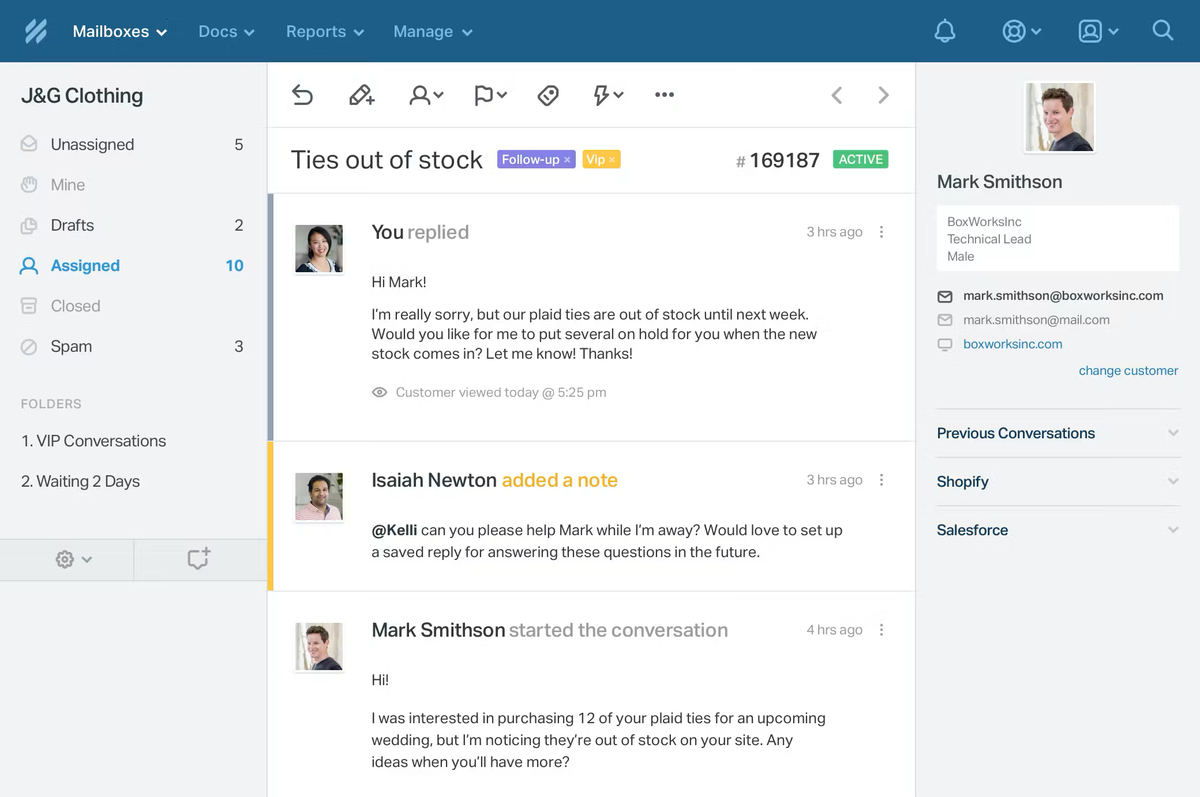
Missive is a collaborative inbox that treats email, chat and social as shared conversations with genuinely good team chat built in. Pricing starts at $14 per user per month on annual billing. AI features ride on the plans rather than metering per resolution. Best for small teams that live in conversations across several channels.
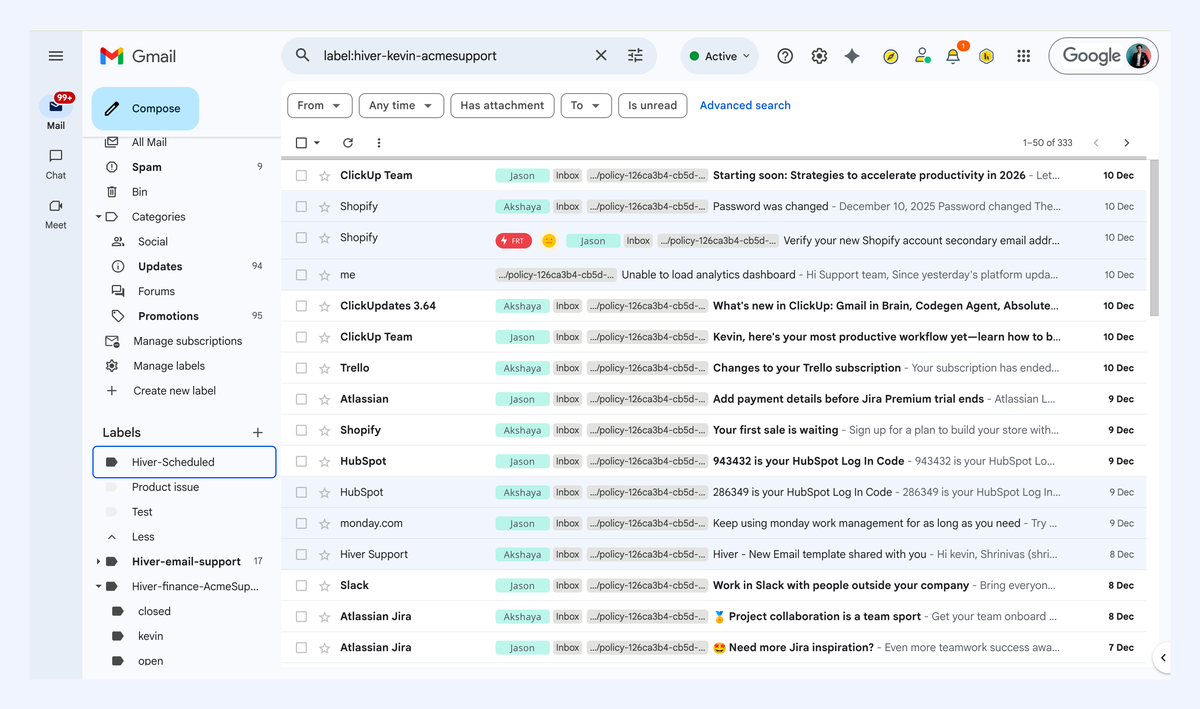
 4. Hiver
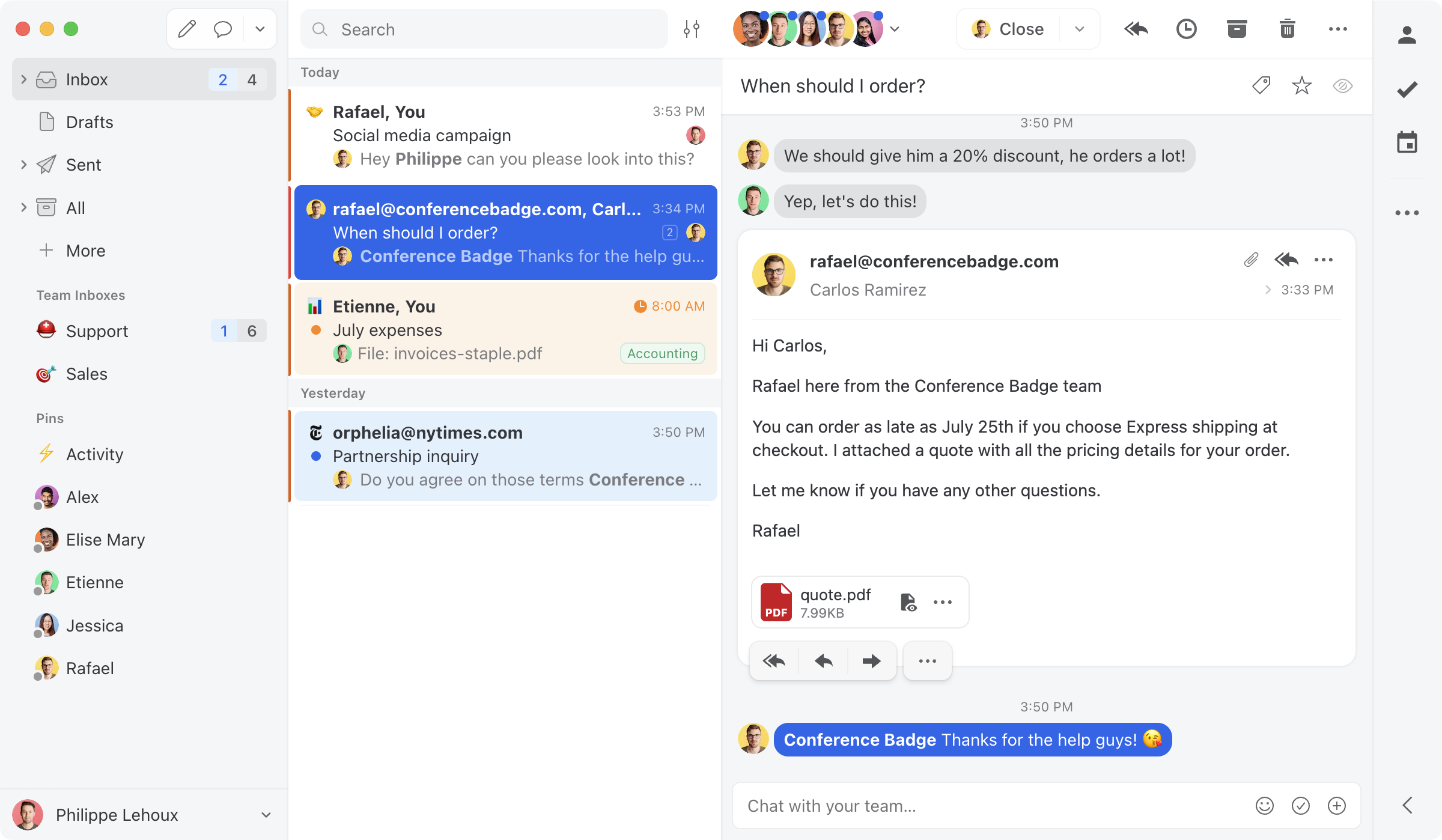
Hiver runs the shared inbox inside Gmail, similar territory to Drag with a more traditional helpdesk feature set. Its Growth plan starts at $25 per user per month on annual billing, with a two-seat minimum. Best for Gmail teams that want conventional helpdesk trappings like SLAs and CSAT on top of the inbox.
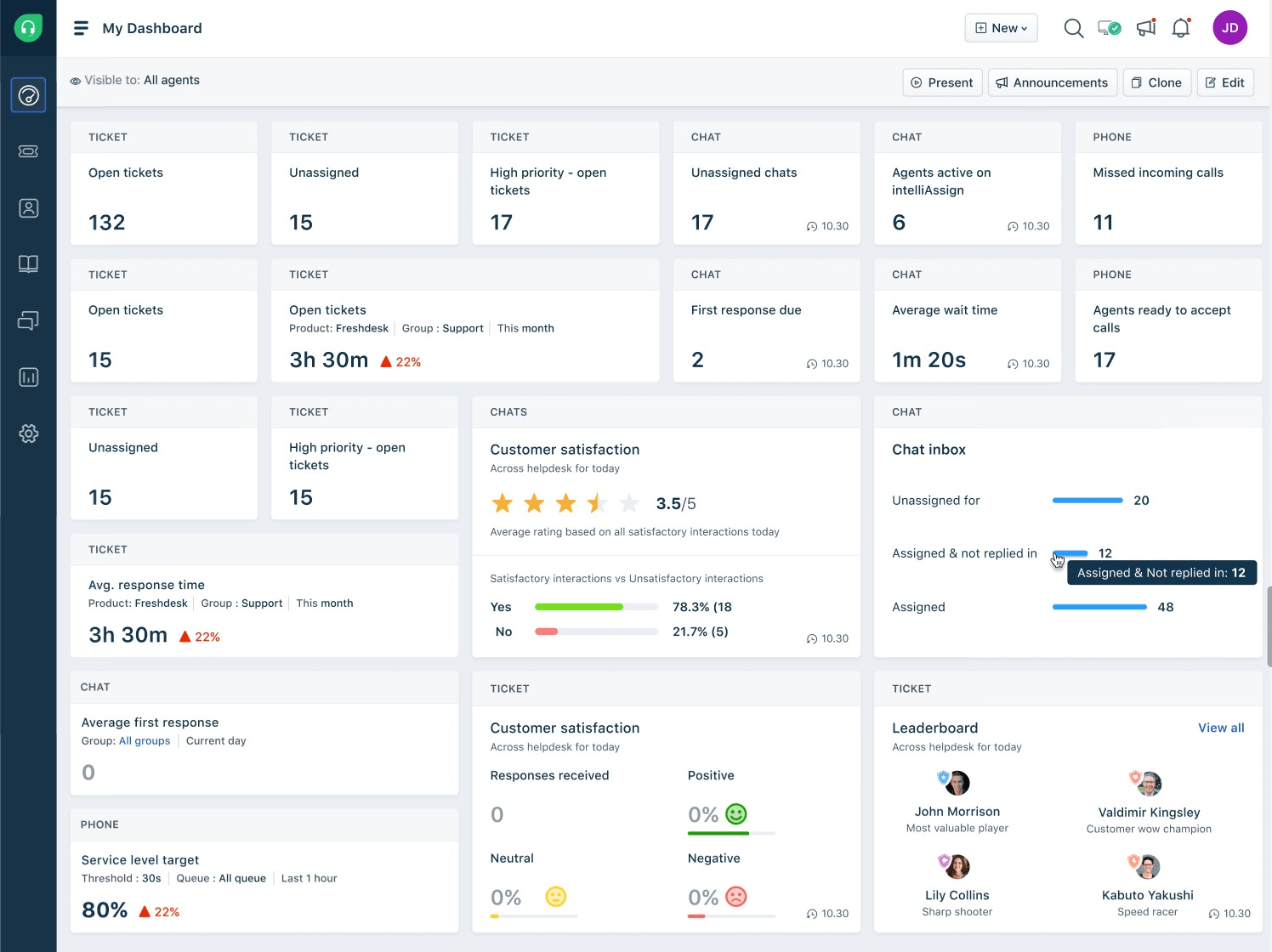
 5. Freshdesk
Freshdesk is the value pick of the full helpdesks: ticketing, automations, and paid plans that undercut Intercom's Advanced significantly. Its entry paid plan, Growth, starts at $19 per agent per month on annual billing. Its AI (Freddy) is an add-on, so check that line the same way you would check Fin's. Best for teams that want maximum helpdesk per dollar and do not need Intercom's messenger polish.
Frequently asked questions
How much does Intercom cost in 2026?
Seats cost $29 (Essential), $85 (Advanced) or $132 (Expert) per person per month on annual billing, or $39, $99 and $139 monthly, with a new-customer offer currently shown on Essential. Fin, the AI agent, adds from $0.99 per resolved outcome, and Copilot for agents is $29 per agent per month with 10 Copilot conversations included. A realistic 10-seat team with moderate AI volume lands around $3,100 a month all-in. For comparison: Drag, our shared inbox for Gmail, costs $12 to $24 a seat all-in, AI included from $18, nothing billed per outcome.
Does Intercom have a free plan?
No. There is no permanent free tier on any plan. Fin has a 14-day trial, and the Early Stage Program gives eligible startups deep first-year discounts, but ongoing use is paid on every tier.
What counts as a Fin resolution?
A billable outcome includes a confirmed resolution, an assumed resolution, which is when Fin answers and the customer leaves without asking for more, and certain procedure handoffs. You are charged once per conversation. The practical effect is that Fin's billable count is usually higher than the number of conversations you would have called solved yourself, which is why measuring on the trial beats estimating.
Is Fin included in Intercom plans?
Access to Fin is included on every plan, but usage is not: every outcome is billed at $0.99 on top of your seats. Agent-side AI, Copilot, is a separate add-on again. Access and usage are different lines on the invoice.
Did Salesforce buy Intercom?
Effectively, yes. Salesforce signed a definitive agreement on June 15, 2026 to acquire Fin, the company formerly known as Intercom, for approximately $3.6 billion, with closing expected in Salesforce's fiscal Q4 2027. Published pricing has not changed as of this writing. If you are signing a multi-year contract, the open question is whether today's structure, especially the $0.99 outcome, survives the integration into Agentforce.
What is the cheapest way to get Intercom-style AI support?
Separate the two purchases. If you mainly want the AI agent, compare the outcome-priced Fin alternatives, several of which undercut $0.99. If you mainly want the team inbox with AI assists, seat-inclusive tools like Drag ($18 per seat with AI) remove the usage line entirely. Paying Intercom for both is the premium path, and the worked example above is what the premium looks like.
Intercom remains one of the most complete platforms in support software, and for teams whose volume keeps the Fin line comfortable, the four numbers can add up to a fair deal. Just price all four before you sign, on trial data rather than the pricing page, and with one eye on what the new owner decides the $0.99 outcome becomes. For the full switching analysis, our Intercom alternatives guide covers seven tools in depth.

Co-founder
Building Drag for nearly ten years: shared inboxes, boards, and now the AI and agent layer, all on Gmail, plus HeyHelp for the personal inbox. Writes the honest versions of the comparisons.