











The eight tools that run agency client communication, with verified 2026 pricing: shared inbox, client portal, scheduling, and proofing. No star ratings.
Key takeaways
- The client communication layer is the gap in most agency stacks: management platforms track the work, but client email, approvals, and scheduling still run through tools that don't show who owns what.
- Most of this stack isn't priced per seat: SuiteDash and PageProof charge flat rates however large your team, Assembly includes one to five internal seats per tier, and only the inbox layer bills every user, which changes the math as an agency grows.
- For the inbox layer itself, Drag runs $12 to $24 per user per month in the Gmail your agency already uses, with per-client boards, assignment, and AI included, and $24 is the most a seat ever costs.
Table of contents
Marketing agencies do not have a software problem, they have a layer problem. The management platforms handle projects, budgets, and reporting, and then five people answer hello@ from a shared login and nobody knows which client is waiting on whom. This page covers the layer the platforms skip: the client communication stack, the shared inbox, portal, scheduling, and approval tools that decide whether clients feel handled or handed around, with verified current pricing for all eight and no star ratings copied from review sites.
The problem the platforms skip
Watch an agency lose a client and the post-mortem is rarely about the work. It is about the Tuesday nobody replied, the approval that sat in someone's personal inbox through their holiday, the two account managers who both answered, differently. Management platforms cannot see any of this, because it happens in email, and email is the one place agencies still work like it's 2009: a shared login, a forwarding rule, and hope. The stack below is the fix, in four layers.
It is worth being precise about what breaks, because the fix follows from it. A shared login fails on three specific things: there is no owner, so every message is simultaneously everyone's job and nobody's; there is no status, so "has this been dealt with" can only be answered by reading the thread and guessing; and there is no handoff record, so when someone goes on leave their clients become an inbox nobody wants to open. Notice that none of those are features a project tool can add, because the work is happening in a mailbox the project tool cannot see. That is why the answer is a layer rather than a plugin.
Layer 1: the shared client inbox
This is the layer that decides whether client email has owners. Everything else in the stack is optional depending on how you work; this one is not, because client email exists whether or not you have a tool for it. Four options worth pricing, all charged per seat, all verified against the five-year pricing dataset behind our support tool pricing history.
The thing to compare is not the feature list, which converges, but where the tool lives. Two of these four sit on top of Gmail, so nobody changes habits. Two are standalone workspaces, which is cleaner if your agency is not on Google and a migration if it is.
 Drag
Drag






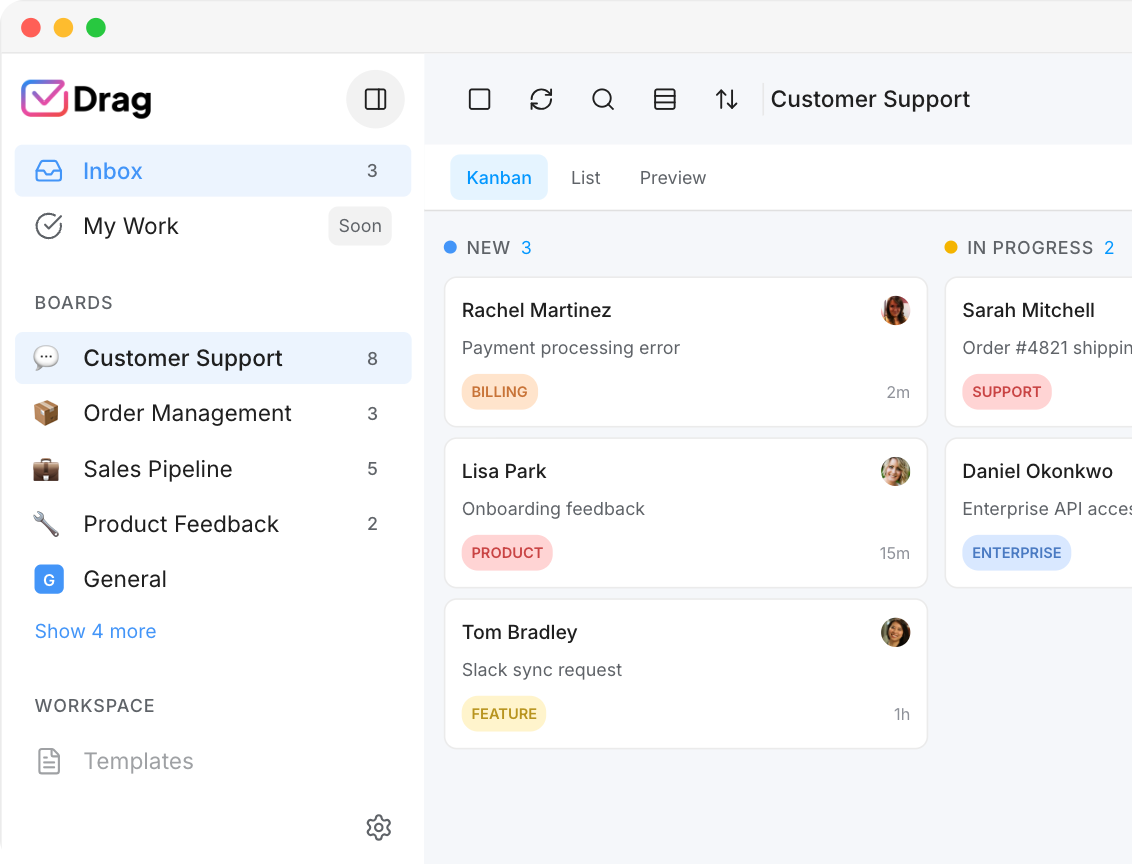
Drag turns the Gmail accounts an agency already uses into per-client boards, so every email for a client sits in one column with one owner. No new app, no migration, and the AI drafting and triage are in the seat rather than metered.
Pricing: $12 per user per month for Starter, $18 for Plus with AI included, $24 for Pro. That $24 is the top of the whole range. Source: our own pricing page, current July 2026.
Fits: agencies on Google Workspace who want client ownership without asking the team to learn a new inbox. Does not fit: teams on Outlook or IMAP, or agencies who want voice and social channels in the same queue.
 Front
Front
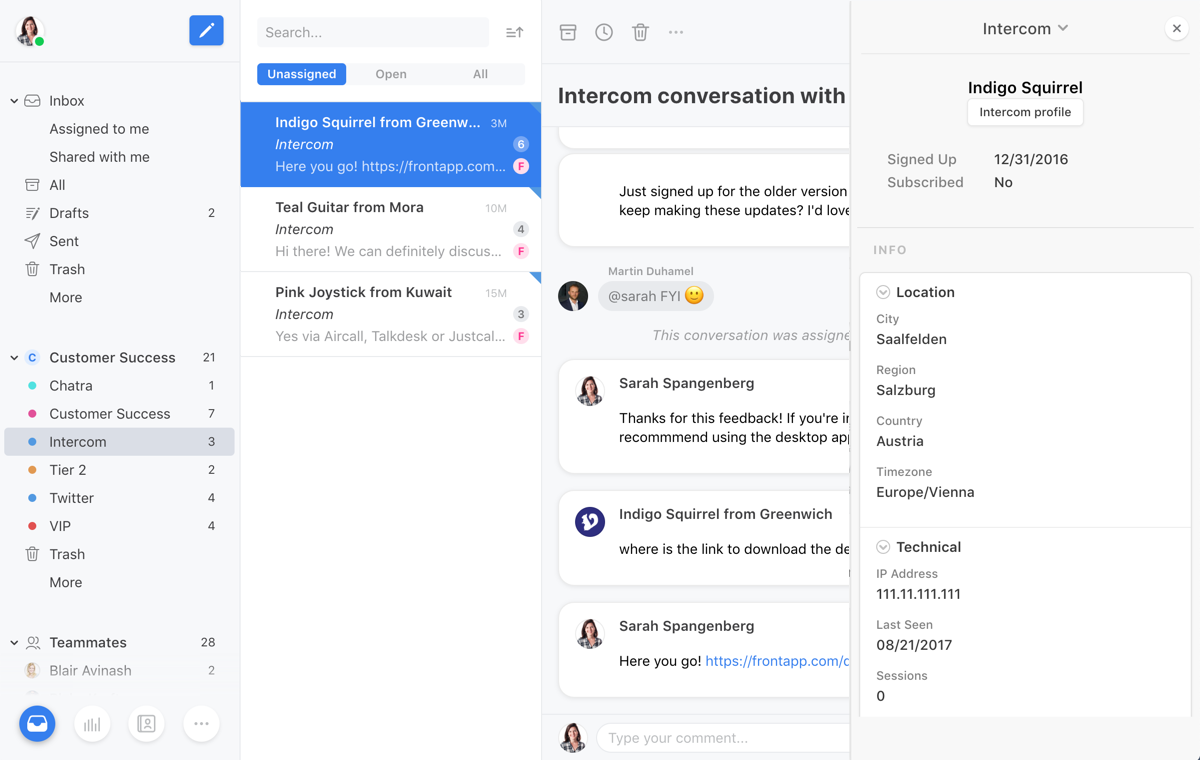
A polished standalone inbox with strong routing and rules, built for teams that want a dedicated workspace rather than Gmail. Worth the look if your agency is not on Google Workspace.
Pricing: $25 a seat for Starter, $65 for Professional, $105 for Enterprise, with AI Autopilot charged at $0.89 per resolution on top. Source: Front's pricing page, January 2026 capture in our dataset.
Fits: larger agencies with a real operations function, where routing rules and analytics justify both the seat price and the setup time. Does not fit: small teams watching the bill, because the entry seat is double the cheapest option here and the AI bills per resolution on top of it.
 Missive
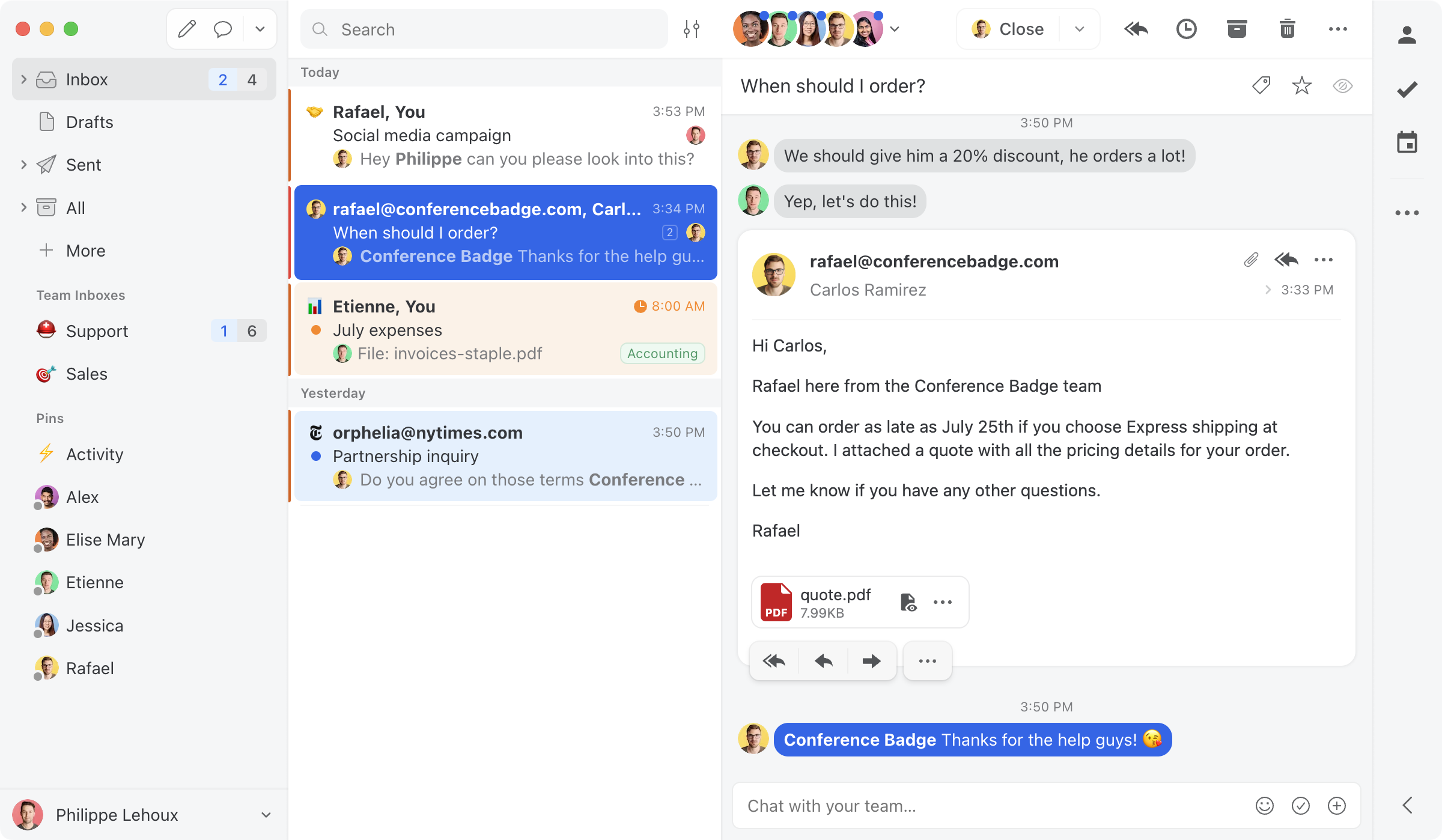
Email, SMS, and social in one product at one per-seat price, with chat-style collaboration threaded around each conversation. Genuinely useful if client contact spans more than email.
Pricing: $14 a seat for Starter, $24 for Productive, $36 for Business, billed annually. The $14 tier is capped at five users, so most agencies price the $24 tier. Source: Missive's pricing page, December 2025 capture, re-checked July 2026. Full detail in our Missive pricing history.
Fits: agencies whose client contact genuinely spans SMS and social as well as email, and teams who like discussing a thread in the thread. Does not fit: anyone pricing off the $14 headline, because rules, integrations and AI all start at $24.
 Hiver
Hiver
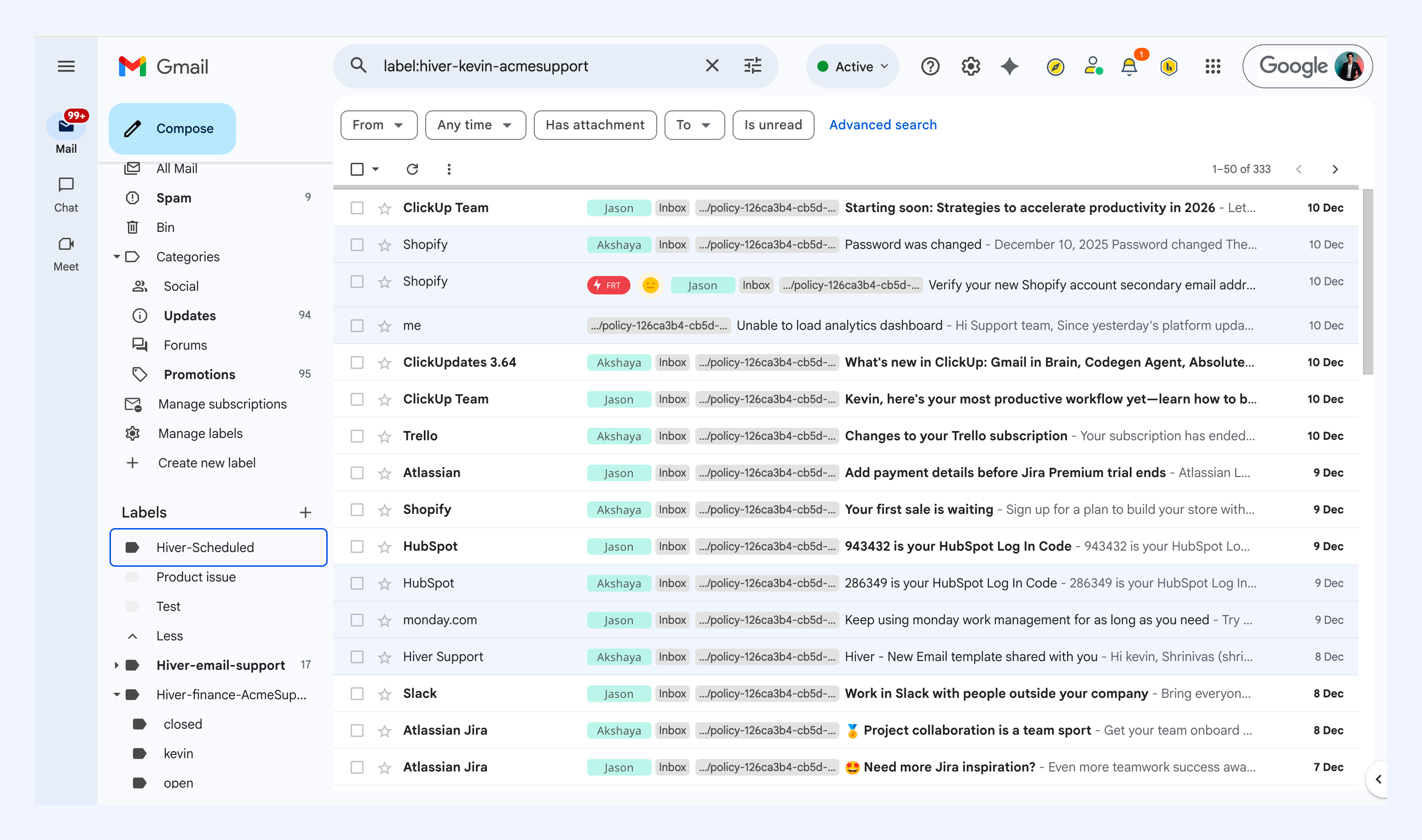
A Gmail-layered shared inbox with SLA tracking and multichannel add-ons, aimed at teams that want desk-like structure without leaving Google Workspace.
Pricing: $25 a user for Growth, $55 for Pro, $85 for Elite, plus a $20 per-seat AI add-on. Source: Hiver's pricing page, live July 2026.
Fits: agencies that want formal SLAs and desk-style reporting on top of Gmail, particularly where a client contract specifies response times. Does not fit: teams who want AI included rather than a separate per-seat line, or who balk at a two-seat minimum.
Layer 2: the client portal
Where deliverables, files, and approvals live when email is the wrong container. A portal is the layer agencies most often buy too early: it earns its price on deliverable volume, not on headcount, so a two-person studio shipping weekly assets needs one more than a ten-person team that mostly advises. Both options below break the per-seat pattern, which is what makes them cheap as you grow.
 SuiteDash
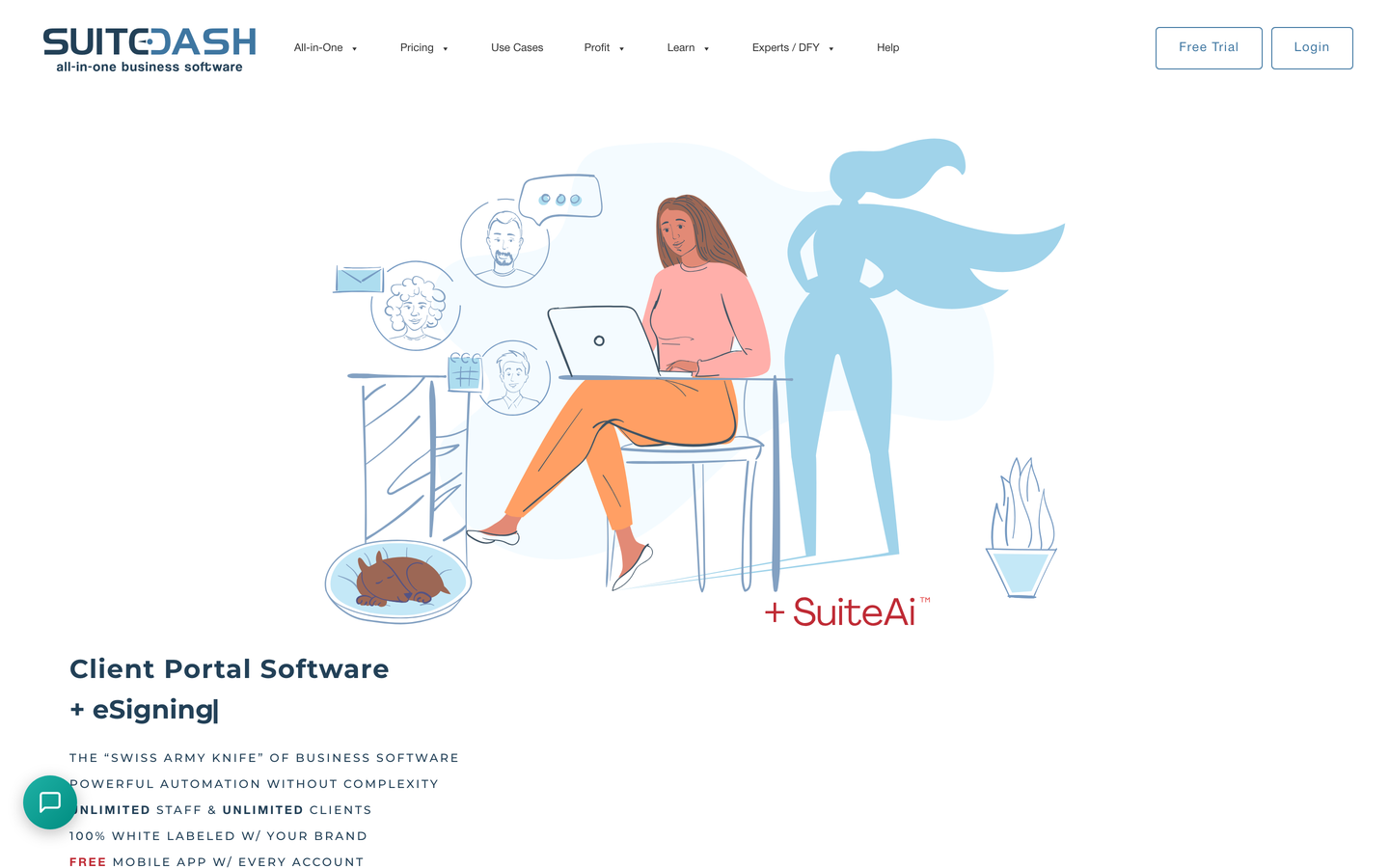
An all-in-one client portal with white labeling, file storage, and CRM, sold on one premise: one price for the whole business, not a price per person. Unlimited clients and staff on every plan.
Pricing: $19 a month for START, $49 for THRIVE, $99 for PINNACLE, each flat regardless of team size, with annual options that cut the rate. Source: suitedash.com/pricing, read 27 July 2026.
Fits: agencies who want one bill for portal, files and light CRM, and who value unlimited staff over polish. Does not fit: teams who need the client-facing experience to feel designed, because breadth here comes at the cost of finish.
 Assembly (formerly Copilot)
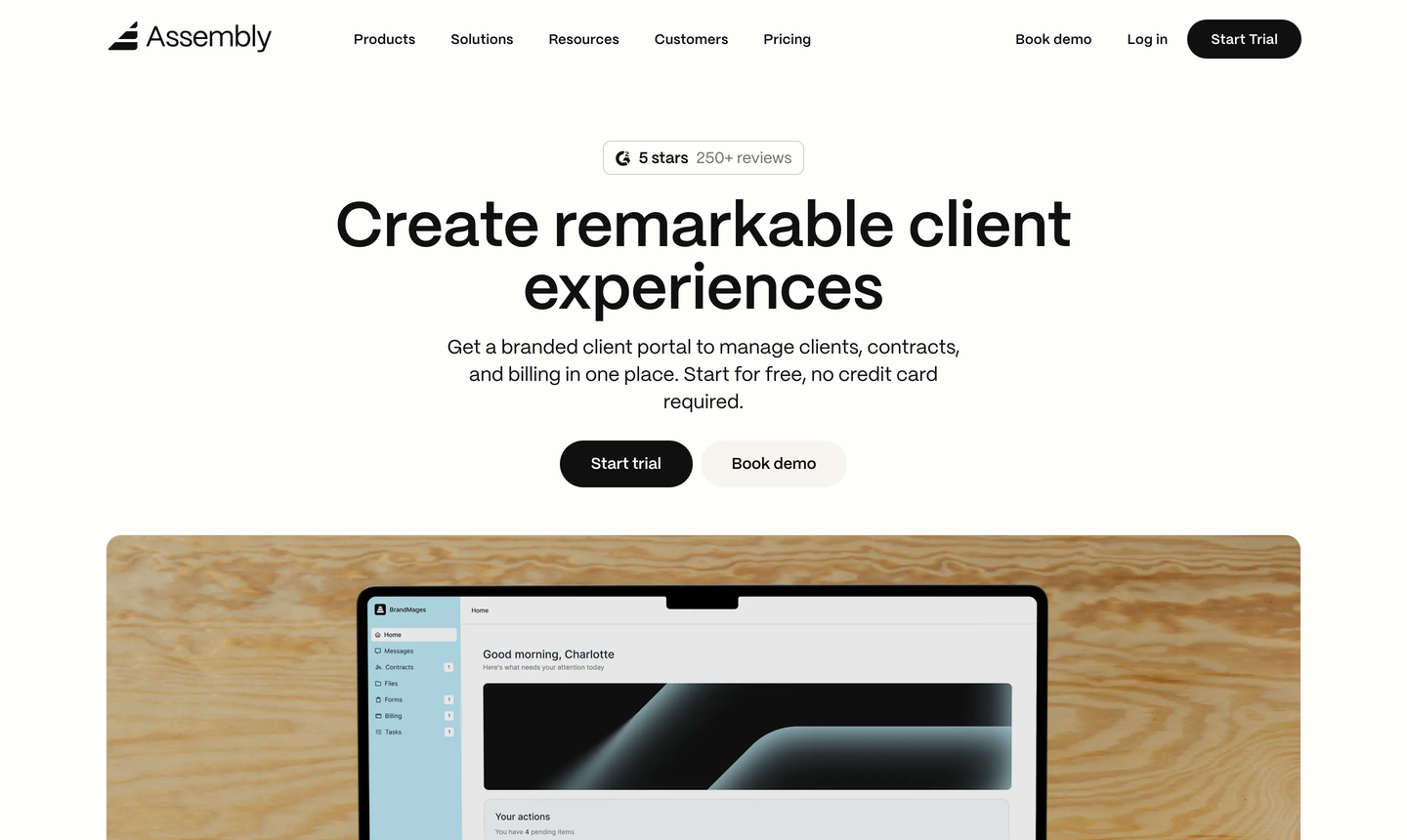
Assembly, which spent its first years as Copilot and still carries that name in places, is the design-led end of this category: a modern client portal with messaging, billing, and file sharing behind one branded login.
Pricing: from $39 a month for Starter with one internal user, from $149 for Professional with three, from $399 for Advanced with five, and from $2,000 for Enterprise. Additional internal users are charged on top: $39 each above Professional's three, $59 each above Advanced's five. Source: copilot.app/pricing, read 27 July 2026.
Fits: agencies whose portal is part of the pitch, where a branded, well-built client experience is worth paying for. Does not fit: cost-led teams, because the internal-user allowances mean the effective price climbs with the size of the account team, unlike a genuinely flat portal.
Drag · with Varley
The inbox your team and Varley work in together
Shared inbox and live chat for Gmail teams, with Varley, Drag’s AI, included from $18. Plus an MCP server your own AI tools can drive.
Layer 3: scheduling
One layer, one obvious tool, and the only per-seat line outside the inbox.
 Calendly
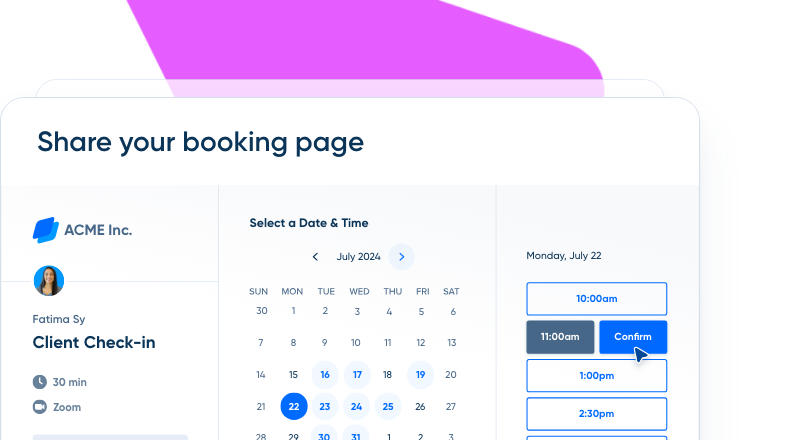
Client-facing booking links that stop the four-email dance about Thursday. Free tier is genuinely usable for a solo consultant; teams need Standard for routing and multiple event types.
Pricing: free for one event type, $10 per seat per month for Standard, $16 for Teams, and Enterprise from $15,000 a year. Source: Calendly's pricing page structured data, read 27 July 2026.
Fits: almost every agency, because the job is small, universal, and solved. Does not fit: nothing much, though note it is per seat, so it quietly joins the inbox as a line that grows with the team.
Layer 4: proofing and approvals
The layer that turns "looks good to me" in an email thread into a recorded decision on a specific version.
 PageProof
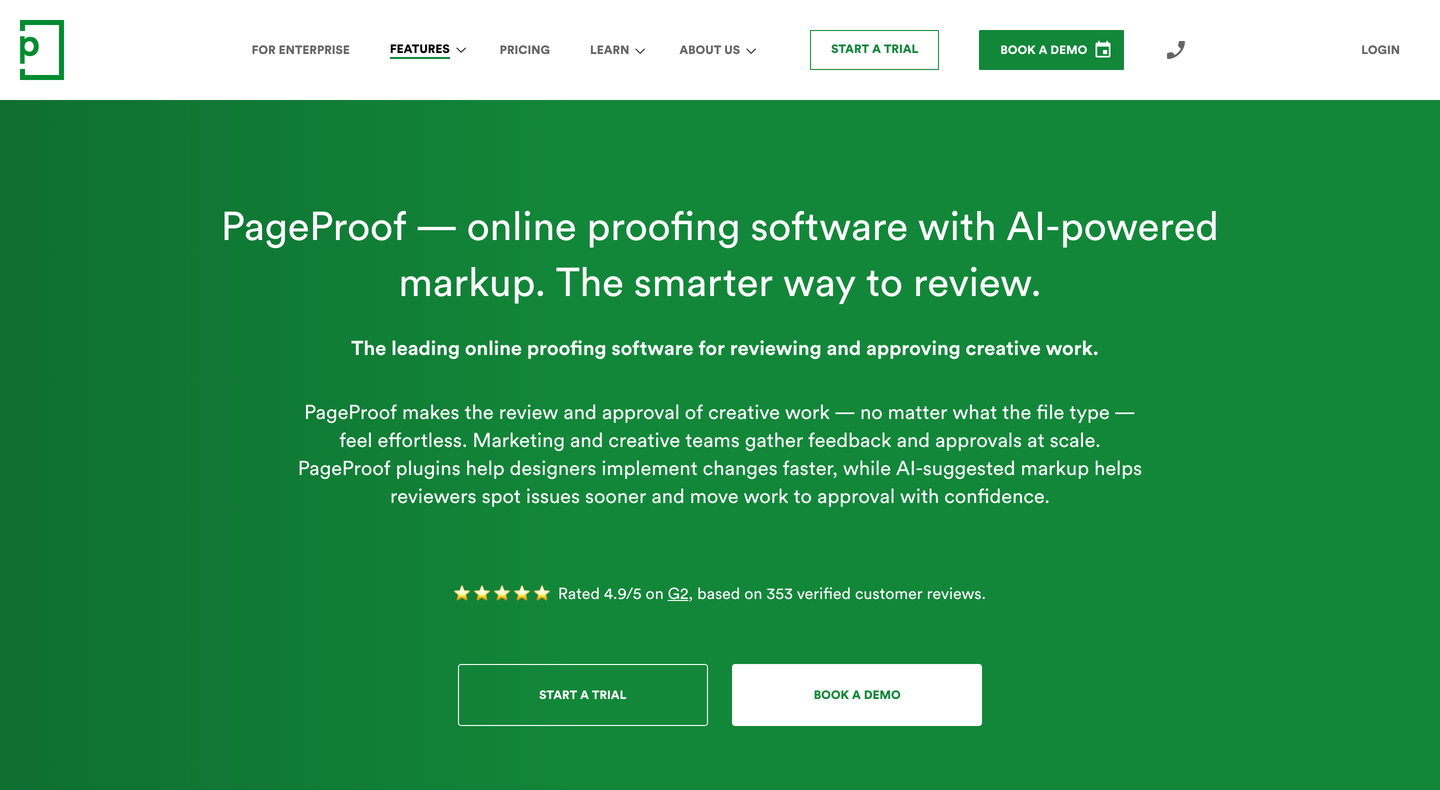
Online proofing with version control, marked-up feedback, and an audit trail of who approved what. Flat-rate for the team, with unlimited proofs and storage on every plan.
Pricing: $249 a month, or $2,499 a year, for Team; $399 a month, or $3,999 a year, for Team Plus; Enterprise on quote. Source: pageproof.com/pricing, read 27 July 2026.
Fits: agencies producing creative that goes through rounds, where "which version did they approve" is a question that has cost you before. Does not fit: consultancies whose deliverables are documents and decks, where a shared inbox and a portal already cover the approval trail at a fraction of the price.
One exclusion worth naming: we looked at Ziflow for this slot and left it out. Its pricing page lists plan names and no prices at all, and we do not publish figures we cannot verify against a vendor's own page.
What the stack costs a five-person agency
Here is the honest math for a five-person agency, and the shape matters more than the totals: the proofing and portal layers barely move as you hire, most of them bill flat, while the inbox layer scales with every seat. Which makes the per-seat price of your inbox tool the one number in this stack that compounds.
| Layer | Tool and tier | Basis | 5-person monthly | At 20 people |
|---|---|---|---|---|
| Shared inbox | Drag Plus ($18) | per user | $90 | $360 |
| Shared inbox | Missive Productive ($24) | per user | $120 | $480 |
| Shared inbox | Hiver Growth ($25) | per user | $125 | $500 |
| Shared inbox | Front Starter ($25) | per user | $125 | $500 |
| Client portal | SuiteDash START | flat | $19 | $19 |
| Client portal | Assembly Advanced¹ | includes 5 internal seats, then $59 per extra user | $399 | $1,284 |
| Scheduling | Calendly Standard ($10) | per seat | $50 | $200 |
| Proofing | PageProof Team | flat per team | $249 | $249 |
¹ Assembly's Starter includes 1 internal seat; a 5-person agency needs the tier covering 5 internal users or pays per additional user above its included count; the row shows the tier that covers 5, per Assembly's published cards.
Read the last two columns together. Going from five people to twenty quadruples every per-seat line and leaves the portal and proofing lines untouched. On Drag the inbox layer goes $90 to $360; on Front or Hiver it goes $125 to $500. That $140 a month difference at twenty seats is the compounding, and it is the reason the inbox is the line to price carefully.
When you need which
If you arrived here looking for project management software, the honest redirect is: you probably already have it, or the management platforms a search will surface (Monday, Teamwork, Scoro) do that job well. What they do not do is the client-facing layer, and that is what the rest of this page prices.
Solo or two people. You need the inbox layer and nothing else yet. Calendly's free tier covers booking, and a portal is an extra login nobody opens when there are two of you. Start at the inbox and add layers when a client complains about something specific.
Around five people. This is where the layer problem starts costing money, because there are now enough people for two of them to answer the same client. The inbox layer becomes non-negotiable, scheduling earns its seat price, and a portal earns its place only if you ship a steady stream of files for approval.
Twenty or more. Every per-seat line is now a real budget item and the flat-rate lines look like bargains. This is also where proofing stops being optional, because "approved" needs to mean a recorded decision on a version rather than a sentence in a thread.
The inbox layer: our case, plainly
For the inbox layer, here is our own case, plainly. Drag turns the Gmail accounts your agency already uses into per-client boards: every email, task, and handoff for a client in one place, assigned to one owner, visible to everyone. When an account manager is out, their clients are a column someone else picks up, not an inbox nobody can open. It runs $12 to $24 per user per month, AI drafting included, and $24 is the top of the whole range, which matters in the one layer of this stack that scales with headcount. Agencies run it as professional services teams do, and you can try it on your own client inboxes free for 7 days, no card.
If you want the mechanics of running client email this way, our guides to running a shared inbox in Gmail and choosing a shared inbox go deeper than this page can.
Frequently asked questions
How do agencies manage client emails?
Badly, in most cases: a shared login on a hello@ or accounts@ address, plus forwarding rules, plus everyone's personal inbox. It works until two account managers answer the same client differently or an approval sits unread through someone's holiday. The fix is a shared inbox that assigns an owner to every client thread and shows status to the whole team, so the question 'who is handling this' has one answer instead of a guess.
What is the best shared inbox for a marketing agency?
For agencies already on Gmail or Google Workspace, Drag, because it turns those accounts into per-client boards without moving anyone to a new app, at $12 to $24 per user per month with AI included. Front ($25 to $105 a seat, plus $0.89 per AI resolution), Missive ($14 to $36, with a 5-user cap on the entry tier) and Hiver ($25 to $85, plus a $20 per-seat AI add-on) all do the job too and are worth the look if you are not on Gmail or you need channels beyond email.
What does an agency software stack cost?
For a five-person agency running the full client communication layer: roughly $60 to $125 a month for the inbox depending on which tool you pick, $19 for a client portal on SuiteDash, or $399 on Assembly's tier that covers five internal seats, $50 for scheduling on Calendly Standard, and $249 for proofing on PageProof. The portal, scheduling and proofing lines barely move as you hire; the inbox line multiplies by every seat, which is why its per-user price is the number that compounds.
Does an agency need a client portal?
It depends on deliverable volume rather than headcount. If clients mostly need to see and approve a steady stream of files, a portal earns its price: SuiteDash starts at $19 a month flat with unlimited clients and staff, and Assembly starts at $39 a month. If your client contact is mostly conversation with occasional attachments, a shared inbox with per-client boards covers it and a portal is an extra login nobody opens.

Co-founder
Building Drag for nearly ten years: shared inboxes, boards, and now the AI and agent layer, all on Gmail, plus HeyHelp for the personal inbox. Writes the honest versions of the comparisons.