












Deciding between Missive and Drag, Front, Hiver, Help Scout, or Zendesk? Every matchup compared honestly: where Missive wins, where the other tool does, and who each suits.
Key takeaways
- Missive's AI runs on credits or bring-your-own-key: it sits on the Productive tier and costs extra through metered credits or your own OpenAI, Claude, or Gemini account, on top of the seat price.
- Drag includes AI in the seat from $18/user/month, with no separate API key and no second AI provider bill to manage.
- The most common reasons teams leave Missive are a dense interface, a weaker mobile app, and pricing that climbs as seats grow.
- For Gmail teams, the real choice is Drag or Hiver, since they add a shared inbox without making anyone learn a new email client.
- Missive remains the better pick for true multi-channel work (email plus SMS, WhatsApp, and social) and for its in-thread internal chat.
- Drag exposes its own Model Context Protocol (MCP) server, so you can connect Claude, ChatGPT, or Cursor and run your inbox from the AI tool itself, a rarer capability than connecting an inbox to outside data.
Table of contents
- What this guide covers
- Is Missive right for your team?
- Missive vs the field at a glance
- Pricing comparison: Missive against the field
- Pricing history: how these prices have moved since 2021
- The seven matchups
- How to choose between Missive and the field
- Why Gmail-native, included AI, and MCP matter in 2026
- Frequently asked questions
- Related guides: the deeper matchups
Weighing Missive against another tool? This page is the matchup guide: Missive against each of its seven closest rivals, compared honestly on the job each one does. Missive is a strong collaborative inbox, and which comparison matters depends on where your team works: if you live in Gmail, the real question is Missive vs Drag or Missive vs Hiver; if you need multichannel at scale, it is Missive vs Front. Each section below takes one matchup and calls it straight, including the ones Missive wins. For the single closest head-to-head, Drag vs Missive is the full side-by-side. Full disclosure up front: Drag is ours. It costs $12 to $24 a seat, AI included from $18, with a free 7-day trial.
What this guide covers
- Is Missive right for your team?
- Missive vs the field at a glance
- Pricing comparison: Missive against the field
- Pricing history since 2021
- The seven matchups
- How to choose
- Why Gmail-native, included AI, and MCP matter in 2026
- FAQ
Is Missive right for your team?
Missive is the right choice if your team wants email, SMS, WhatsApp, and social in one app with real-time internal chat built into the thread. It is the wrong choice if you mainly work in Gmail, want a simpler interface, need a stronger mobile app, or want AI without setting up and paying for a separate provider. Knowing which of those describes you is what tells you whether you need an alternative at all.
Missive is genuinely well liked, and the point of this guide is not to claim otherwise. It holds a 4.6 to 4.7 rating on G2 as of August 2026, and its standout feature, internal chat inside the email thread, lets your team discuss a customer message right where it lives instead of switching to Slack. It also handles multiple channels in one place, email, SMS, WhatsApp, Instagram, Messenger, and live chat, and connects to Gmail, Outlook, and any IMAP account. For a small team that wants all of that in a single app, Missive is hard to beat.
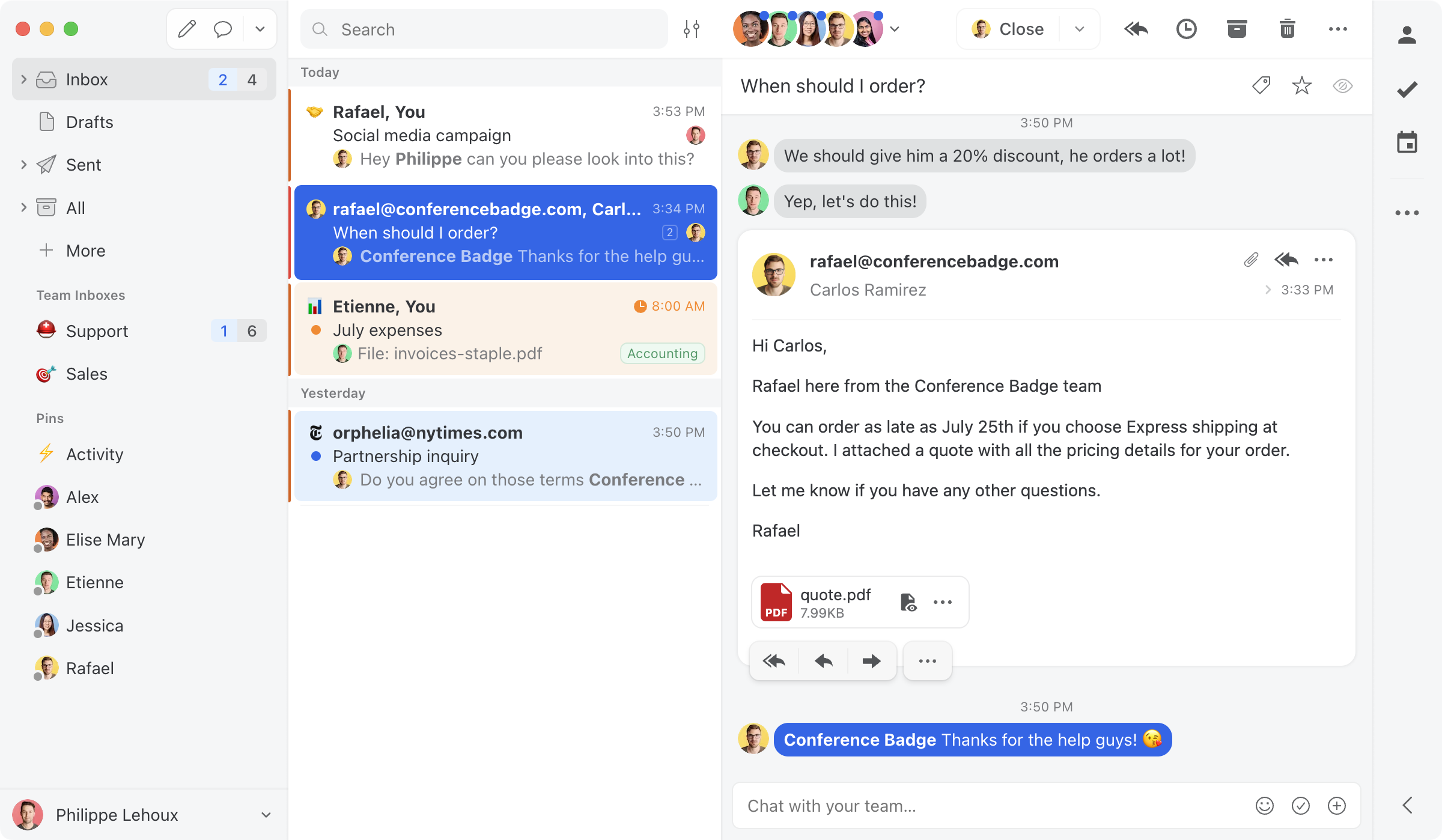
Teams usually start looking elsewhere for three reasons, all of which show up repeatedly in G2 and Capterra reviews: the interface is dense, so new hires need time before it pays off; the mobile app is noticeably weaker than the desktop experience, which hurts if your team triages from phones; and the pricing climbs as you add seats and move up tiers, especially once you need the Productive plan to unlock automations, integrations, and AI. If any of those is your sticking point, the alternatives below each solve a different version of it.
Missive vs the field at a glance
Pricing is per user per month on annual billing, re-verified against vendor pricing pages in August 2026. For Missive's own tier-by-tier numbers, see our Missive pricing guide.
| Tool | Starting price | AI model | Works on Gmail | Multi-channel | Best for |
|---|---|---|---|---|---|
 Drag Drag | $12 (AI from $18) | Included in the seat | Yes, and standalone apps | No, email only | Gmail teams wanting shared inbox plus included AI |
 Hiver Hiver | $25 | Add-on / higher tiers | Yes | WhatsApp, live chat | Gmail support teams needing SLAs and analytics |
 Front Front | $25 | Add-on (extra per seat) | No, standalone | Email, SMS, social, chat | Larger teams needing routing and CRM context |
 Help Scout Help Scout | $25 | Bundled, usage-based answers | No, standalone | Email, live chat | Support teams wanting a clean help desk |
 Zendesk Zendesk | $19 (AI extra) | Add-on (AI agents extra per seat) | No, standalone | Email, chat, voice, social | Enterprise support teams needing full ticketing |
 Superhuman Superhuman | $25 | Included | No, standalone | Email only | Individuals who want the fastest inbox |
 Zoho TeamInbox Zoho TeamInbox | $6 | Limited | No, standalone | Cost-conscious teams on a tight budget | |
 Missive Missive | $14 (30-day trial) | Credits or BYOK (Productive+) | No, standalone | Email, SMS, WhatsApp, social | Teams wanting in-thread chat and multi-channel |
Drag · with Varley
The inbox your team and Varley work in together
Shared inbox and live chat for Gmail teams, with Varley, Drag’s AI, included from $18. Plus an MCP server your own AI tools can drive.
Pricing comparison: Missive against the field
The chart frames every matchup below: Missive's $14 to $36 range sits in the middle of the field, cheaper than the multichannel and help-desk heavyweights, dearer than the Gmail-native and budget routes once AI is counted. Missive's own tier-by-tier numbers are in the Missive pricing guide.
Pricing history: how these prices have moved since 2021
Missive is one of the quieter lines on this chart, which is honestly to its credit: its entry price has moved less than most of the field. The tools around it have not, and five years of direction is worth pricing into a multi-year decision. The full dataset with every archive capture exposed is on our support tool pricing history page.
The seven matchups
Missive vs Drag: the Gmail-native switch with AI included
The short answer: Drag, if your team lives in Gmail and wants AI included in the seat; Missive, if you span providers or need SMS and WhatsApp.
For a team inside Google Workspace, this is the matchup that decides it. Rather than asking everyone to learn a new email client, Drag turns Gmail itself into your team's shared inbox, with assignments, internal notes, and Kanban-style boards, so emails become cards you move through stages like New, In Progress, and Done. The result is a shared inbox with almost no learning curve, because the interface is the Gmail your team already uses. Drag also gives you the choice most alternatives do not: it runs both inside Gmail as an extension and as standalone web, desktop, and mobile apps, so your team can stay in Gmail or work in a dedicated app. Almost every other tool here is standalone only, which means leaving the inbox your team already lives in. Drag is used by more than 240,000 users in 50+ countries since 2017 and is a G2 Leader for fastest implementation and best ROI as of mid-2026.
Two things set Drag apart from Missive specifically. First, AI is part of the product, not a separate service to wire up. From the Plus plan at $18/user/month, Drag's AI drafts replies, classifies and tags incoming email, reads sentiment, and summarizes long threads, all included in the seat, with no separate provider account and no API key to manage. Missive, by contrast, gates AI to the Productive tier ($24/user/month) and bills it through metered credits or by connecting your own OpenAI, Claude, or Gemini account, adding a variable cost on top of the seat.






Second, both tools embrace the Model Context Protocol (MCP), the open standard that lets AI tools and apps talk to each other, but in opposite directions, and the difference matters. Missive connects out to other tools' MCP servers, like Stripe or Notion, to pull outside data into its drafting. Drag does the reverse: it exposes its own MCP server, open source and MIT licensed with 47 tools across 12 categories, so you can connect Claude, ChatGPT, Cursor, or any MCP client and operate your inbox from the AI tool itself, asking it to triage threads, draft replies, or report on the week. That means your inbox becomes something your AI assistant can actually run, not just a place that reads from other apps.
Worth saying honestly: Drag works with Gmail and Google Workspace, not Outlook or IMAP, and it does not handle SMS or WhatsApp the way Missive does. If your team is on Outlook, or multi-channel messaging is central to your work, Missive or Front will serve you better. But for a Google Workspace team that wants shared email, visual workflows, and AI that works out of the box at a predictable price, Drag is the natural switch from Missive. For a side-by-side breakdown of every feature, see our full Drag vs Missive comparison. Our co-founder's honest take on Missive opens that page.
Best for: Gmail and Google Workspace teams who want a shared inbox, visual boards, and included AI without leaving Gmail or managing an API key.
Missive vs Hiver: the Gmail support-desk matchup
The short answer: Hiver, if you run real support volume in Gmail and need SLAs and reporting; Missive, if you want lighter collaboration across more channels and providers.
Hiver is the pick for support teams that want to stay in Gmail but need real help desk muscle. It layers shared inboxes, SLA tracking, round-robin assignment, analytics, and AI triage onto Gmail, and it adds channels like WhatsApp and live chat. If your team handles genuine support volume and needs to report on response and resolution times, Hiver covers ground that Missive's lighter analytics do not.
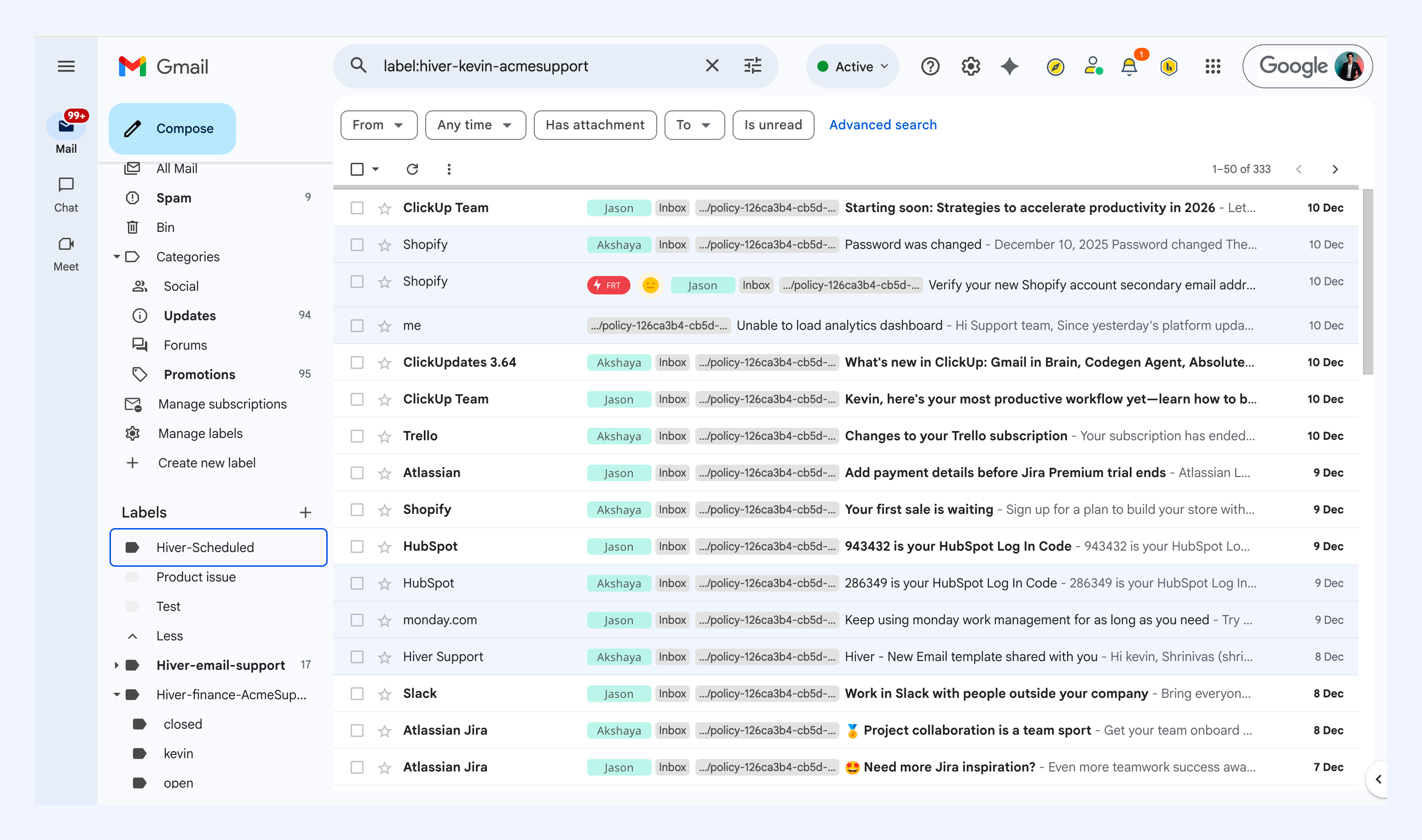
The trade-off is that Hiver is priced and built for support operations, so a small team that just wants shared email may find it more than they need. It is also Gmail and Google Workspace focused, so mixed Gmail and Outlook teams should look at Front instead. For a deeper look, see our best Hiver alternatives for 2026 or the Drag vs Hiver comparison.
Best for: Google Workspace support teams that need SLAs, routing, and reporting without leaving Gmail.
Missive vs Front: the multichannel heavyweight matchup
The short answer: Front, if support is becoming a department with budget for routing, analytics, and CRM context; Missive, if you want most of the multichannel without the enterprise price or setup.
Front is the most direct like-for-like replacement when you have outgrown Missive's scope. It is a standalone collaborative workspace that unifies email, SMS, social, and live chat, with powerful routing, deep integrations, and CRM context on every conversation. Larger teams that need structured, multi-brand workflows tend to land here.
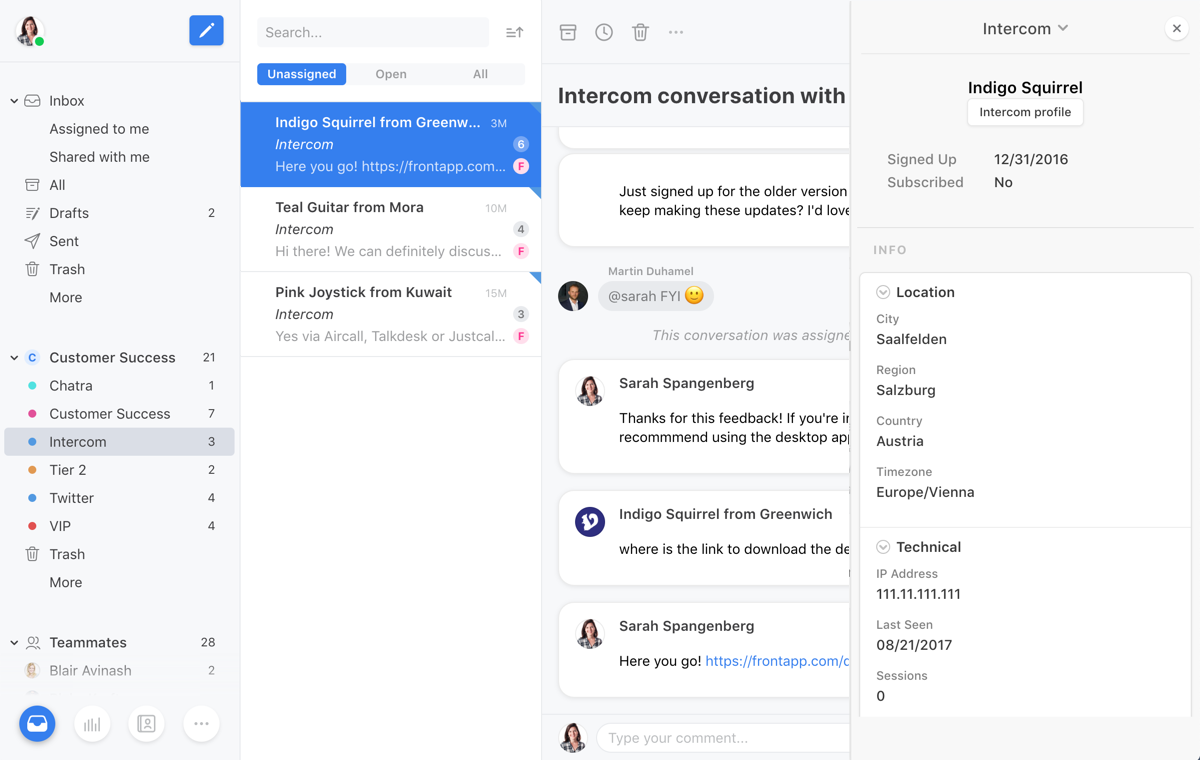
The catch is cost and complexity. Front starts higher than Missive and climbs steeply, and its AI features, such as Copilot, are paid add-ons on top of the seat price. It also has a steeper learning curve. Front makes sense when support is a real department with the budget and admin time to match.
Best for: larger teams that need advanced routing, integrations, and multi-channel support, and have the budget for it.
Missive vs Help Scout: shared inbox against clean help desk
The short answer: Help Scout, if you want a polished standalone help desk with a knowledge base; Missive, if you want collaborative email with chat in the thread rather than a ticketing model.
Help Scout is the alternative for teams that want a simple, polished help desk rather than a shared email tool. It pairs an email-style shared inbox with a built-in knowledge base and a customer-facing help widget, so common questions get deflected before they reach your team. Its interface is famously approachable, which makes onboarding quick.
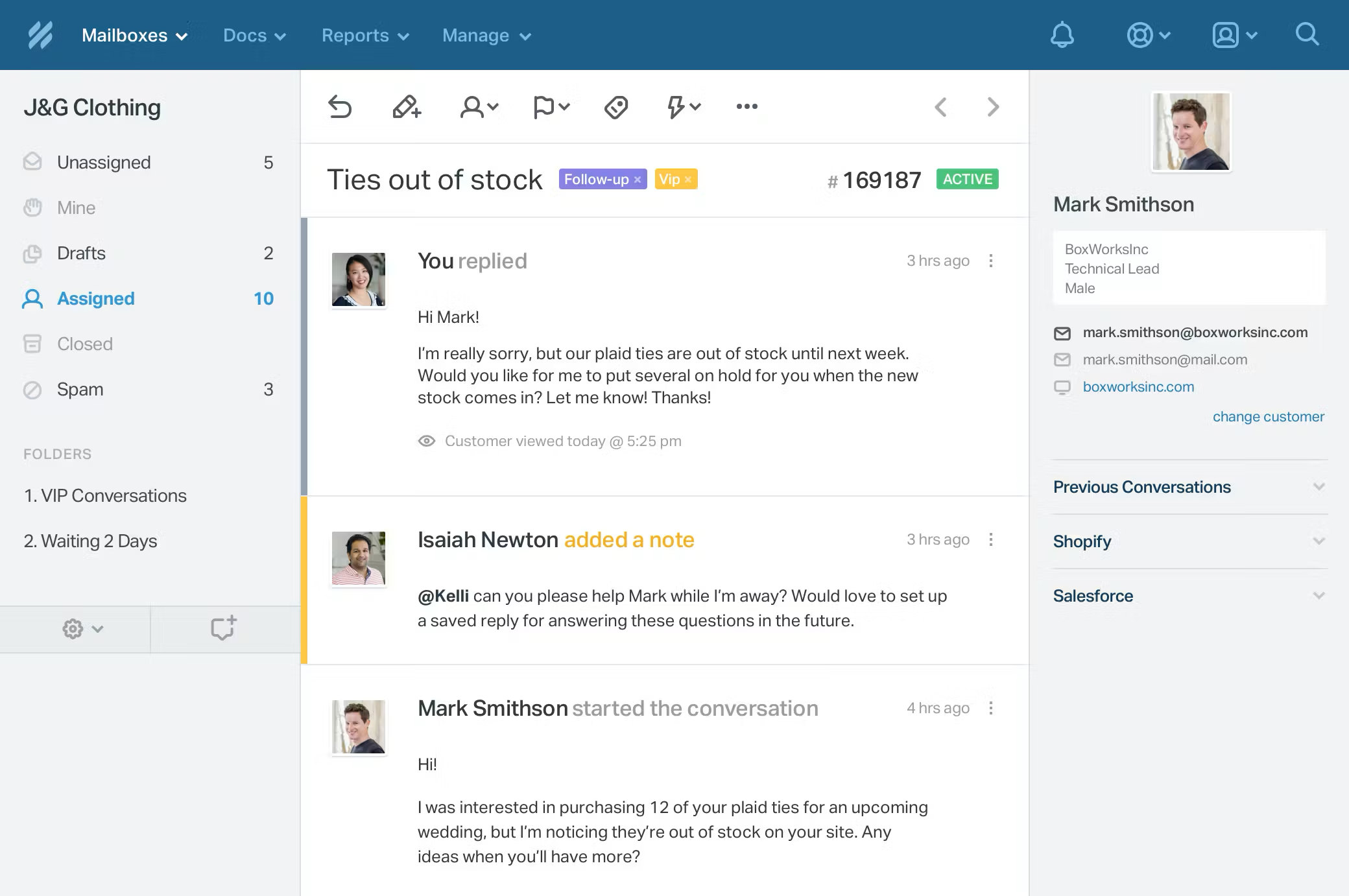
It is standalone, not Gmail-native, and it is built specifically for customer support, so it is less flexible for sales, finance, or general operations inboxes. Pricing also sits at the higher end of this list.
Best for: support teams that want a clean help desk with a knowledge base and minimal setup friction.
Missive vs Zendesk: shared inbox against enterprise ticketing
The short answer: Zendesk, only if support is a dedicated department needing enterprise ticketing; Missive, for almost everyone smaller, at a fraction of the all-in cost.
Zendesk is the alternative for teams that have outgrown a shared inbox entirely and need a full help desk. It offers multi-channel ticketing across email, chat, voice, and social, deep automation, SLA management, reporting, and AI agents that can resolve common tickets. If support is a dedicated department with hundreds of tickets a day and formal SLA commitments, Zendesk provides infrastructure that a shared inbox never will.
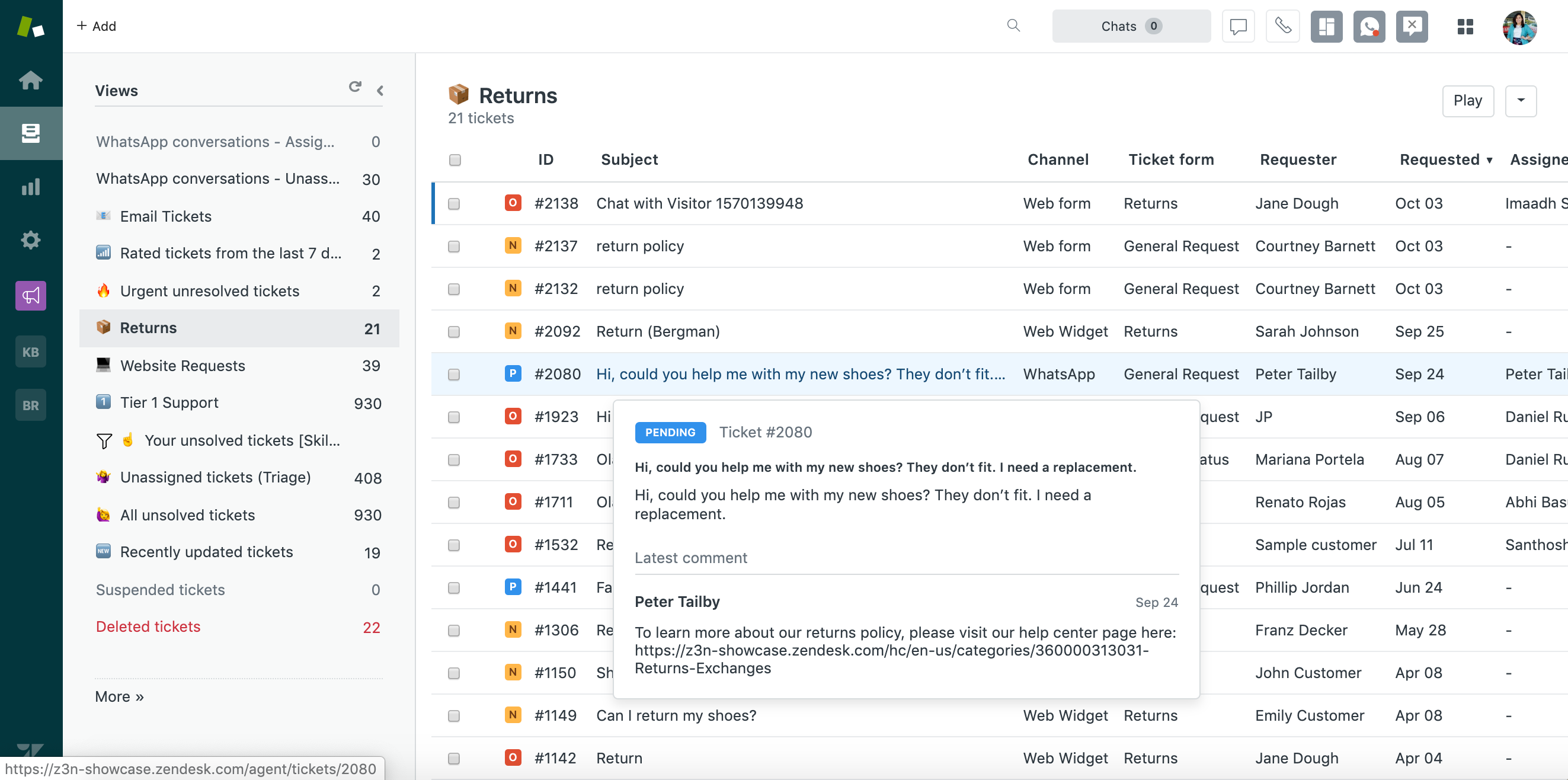
The trade-offs are cost and complexity, and they are significant. Pricing climbs quickly once you add the tiers and AI agents most teams actually need, setup takes real configuration time, and it expects admin resources to run. For a small team handling support as one part of the job, Zendesk is far more than they need, which is exactly why many teams pick a lighter tool like Drag or Missive instead.
Best for: larger organizations with a dedicated support team that needs full ticketing, SLAs, and reporting at scale.
Missive vs Superhuman: team collaboration against personal speed
The short answer: Superhuman, if the problem is one person's inbox speed; Missive, if a team shares an address, because Superhuman has no shared workflow at all.
Superhuman earns a place because many people evaluating Missive are really one person drowning in email, not a team sharing an address. Superhuman is a fast, keyboard-driven email client with AI triage and drafting, built to get an individual to inbox zero quickly. It is a joy to use if speed is your priority.
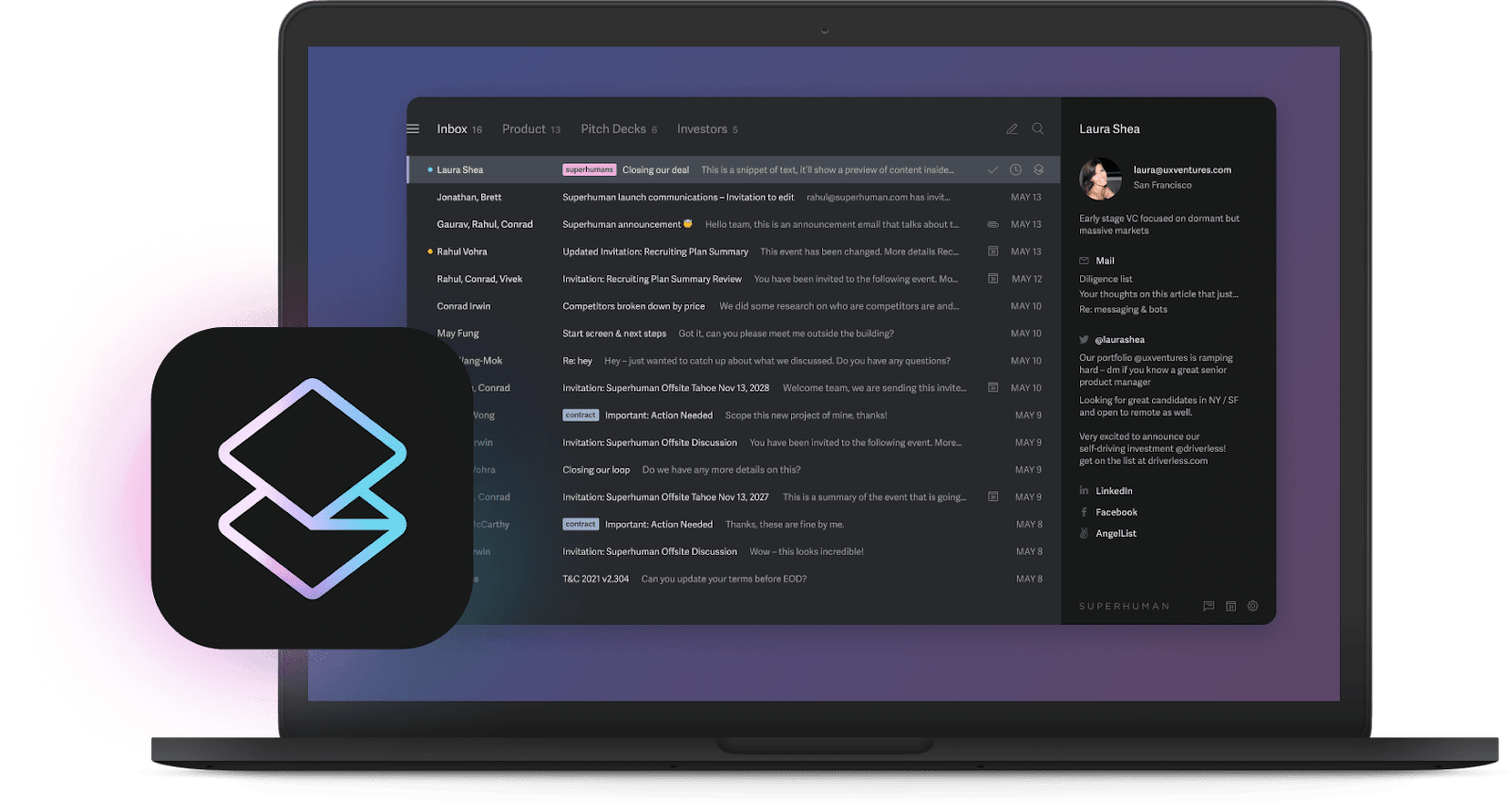
It is not a shared inbox, though. There are no team assignments, no collision detection, and no shared workflow, so it does not replace Missive's collaboration model. If your problem is personal capacity rather than team coordination, it is worth a look, and our guide to the best AI email assistants covers that category in more depth. If you need shared email, it is the wrong category.
Best for: individuals who want the fastest possible personal inbox, not teams sharing an address.
Missive vs Zoho TeamInbox: the budget matchup
The short answer: Zoho TeamInbox, if price decides and the basics suffice at $6 to $9 a seat; Missive, if you need automation depth, real integrations, or multichannel beyond email.
Zoho TeamInbox is the value pick when cost is the deciding factor. It covers the shared inbox basics, assignments, internal comments, basic rules, and analytics (Professional tier), at the lowest price of any tool here, with a 14-day trial (no free plan; mobile-only app plans exist separately). If you already use other Zoho products, it slots neatly into that ecosystem. See our Drag vs Zoho TeamInbox comparison for the full breakdown.
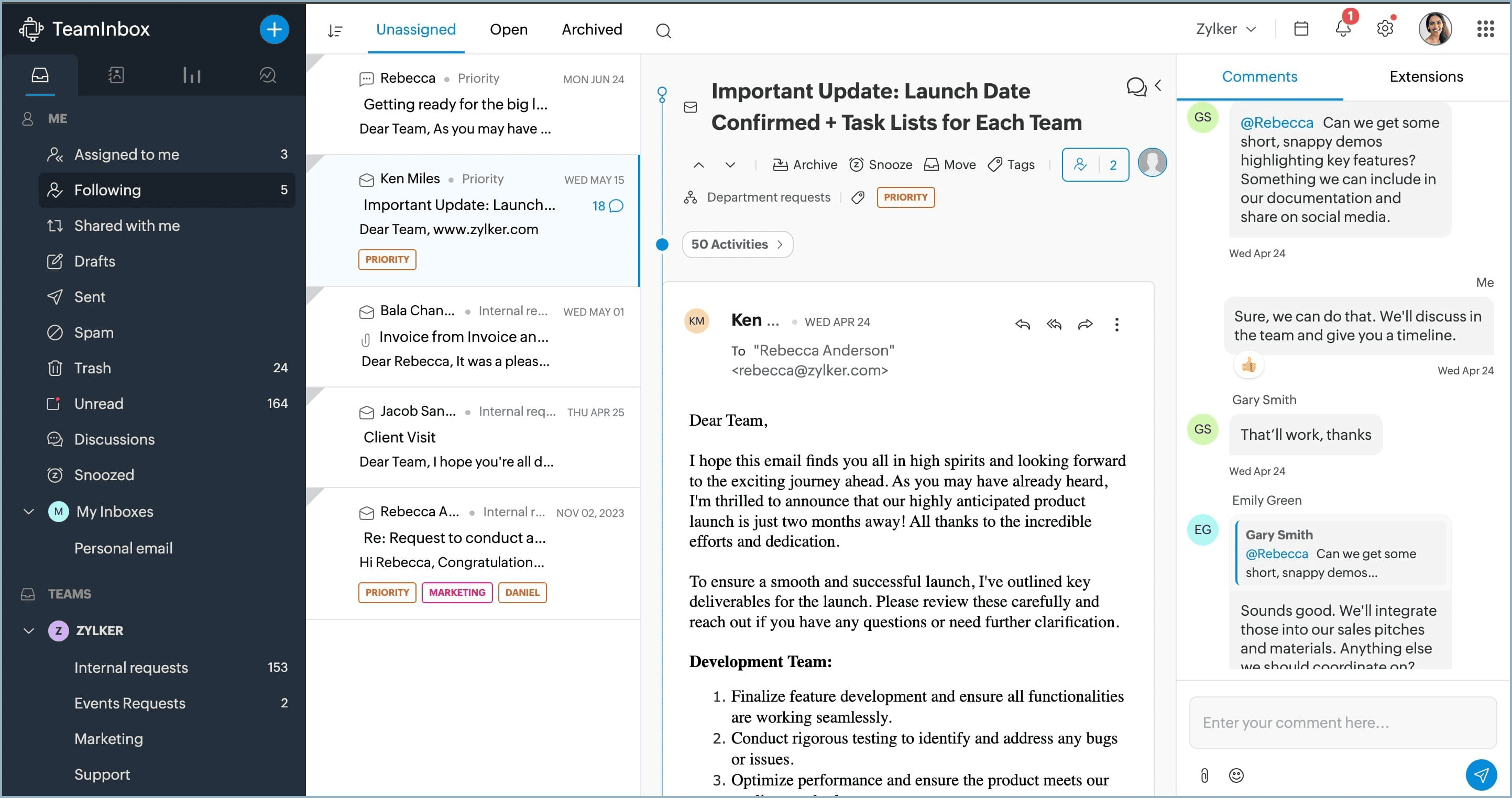
The trade-offs are a less polished interface and feature limits by tier, plus no SLA engine for serious support work. It is a sensible starting point for teams that need shared email without enterprise pricing.
Best for: cost-conscious teams that need shared inbox basics, especially existing Zoho users.
How to choose between Missive and the field
The cleanest way to decide is to answer one question first: where does your team actually work?
- You live in Gmail and want shared email plus AI: Drag is the best fit, with included AI and no API key to manage.
- You run a Gmail support team that needs SLAs and reporting: Hiver.
- You need multi-channel support and advanced routing at scale: Front.
- You want a clean help desk with a knowledge base: Help Scout.
- Support is a department needing full ticketing at scale: Zendesk.
- You are an individual, not a team, drowning in email: Superhuman.
- Budget is the deciding factor: Zoho TeamInbox.
- You genuinely value in-thread chat and broad multi-channel in one app: stay on Missive, it does that well.
A practical tip: run your shortlist in parallel for two to four weeks before cutting over. Test the mobile experience and the sync behavior under real load, since those are exactly where teams report friction after they commit. To model exact costs at your team size and AI volume, use the shared inbox cost calculator.
Why Gmail-native, included AI, and MCP matter in 2026
The shared inbox decision used to be about channels: how many places could one tool pull your messages from. That was Missive's home ground. In 2026 the more useful question is different. It is about whether AI works where your team already is, and whether it works without a second bill.
This is where the gap between Drag and Missive is most concrete. Missive's AI is real, but it runs on metered credits or bring-your-own-key: you either pay per use through Missive's credit system, or connect your own OpenAI, Claude, or Gemini account and pay that provider separately, on top of the Productive seat. That gives you flexibility, but it also means a second cost line and usage you have to keep an eye on. Drag includes AI in the seat from $18, so drafting, classification, sentiment, and summaries are simply there, with no separate provider account and no second AI bill.
Drag takes the AI question one step further with its MCP server. MCP is the standard that lets AI tools and apps talk to each other, and both products now use it. Missive is an MCP client, reaching out to other tools' servers like Stripe or Notion to pull context into its own drafting, and on its Productive and Business plans it also publishes an MCP server for search, contacts, drafts and sending. Drag's server reaches further into the team layer: 47 tools across 12 categories, including boards, assignment, labels and analytics, so Claude, ChatGPT, Cursor, or any MCP client can operate the whole inbox. In practice that means you can sit in Claude and say "show me unresolved billing threads, draft replies, and assign the urgent ones," and it happens in Drag. For a team thinking about how AI fits into their email, that is a more concrete capability than counting channels. For a deeper look at how MCP works for support teams and which platforms offer it, see MCP for customer support.
None of this makes Missive a poor tool. It makes the choice clearer: if you want broad channels and in-thread chat in a standalone app, Missive fits. If you want to stay in Gmail and have AI that works out of the box, Drag is the stronger 2026 answer.
Frequently asked questions
Missive vs Front: which should a growing team pick?
Front, if support is becoming a department: it adds mature routing, analytics, and CRM context that Missive's lighter model does not, at a higher price with AI sold as add-ons. Missive, if you want multichannel and in-thread chat without enterprise cost or setup. Teams choosing between them are usually choosing between a tool and an operation.
Missive vs Hiver for a Gmail team?
Hiver, if you need SLAs, routing, and reporting on real support volume inside Gmail; its AI now ships inside plans from the $25 Growth tier. Missive, if your team spans providers beyond Gmail or values chat inside the thread. If neither constraint applies, Drag undercuts both with AI included from an $18 seat.
What is the best Missive alternative?
It depends on where your team works. For Gmail teams that want a shared inbox with AI included, Drag is the closest fit ($12 to $24 a seat, AI included from $18), and Drag vs Missive is the full head-to-head. For multi-channel support at scale, Front is the nearest full-featured replacement. For budget-conscious teams, Zoho TeamInbox covers the basics for the least money.
Is there a free Missive alternative?
Mostly through free trials rather than free plans. Zoho TeamInbox is the cheapest at $6 a seat, with a 14-day trial (no free plan; mobile-only app plans exist separately). Missive still offers a free plan it no longer advertises: $0 for up to 3 users with 15 days of history, de-listed from its pricing page in 2024 but documented in its billing docs. Most paid alternatives, including Drag, also offer a free trial so you can test before committing.
Why do teams switch away from Missive?
The most common reasons are a dense interface that takes time to learn, a mobile app that is weaker than the desktop version, and pricing that rises as you add seats and move up to the Productive tier for automations and AI.
Does Missive include AI?
Missive offers AI features on the Productive or Business tier, billed through metered credits or by connecting your own OpenAI, Claude, or Gemini account and paying that provider separately based on usage. By contrast, Drag includes AI in the seat from $18 per user per month. Missive's full tier-by-tier numbers are in our Missive pricing guide.
What is the best Missive alternative for Gmail users?
Drag and Hiver both add a shared inbox directly on Gmail, so no one has to learn a new email client. Drag suits teams wanting included AI, visual boards, and the ability to run their inbox from an AI tool, while Hiver suits support teams needing SLAs, routing, and reporting on Gmail.
Is Drag a good Missive alternative?
For Gmail teams, yes. Drag delivers shared inboxes, assignments, Kanban boards, and AI included in the seat, all on Gmail, from $12 to $24 per user per month with AI included from $18. It is not a fit if you need Outlook support or multi-channel messaging like SMS and WhatsApp, which is where Missive is stronger.
Does Missive work with Gmail?
Yes, Missive connects to Gmail, Outlook, and any IMAP account, but it is a separate app you work in rather than a layer on top of Gmail. If staying in the Gmail interface matters to your team, a Gmail-native tool like Drag or Hiver is a better fit.
Related guides: the deeper matchups
The closest single comparison is Drag vs Missive, which opens with our co-founder's honest take. Missive's tier-by-tier numbers live in the Missive pricing guide, the Gmail-native rivals have their own field guides in the best Hiver alternatives and the best Front alternatives, and the shared inbox cost calculator models any of these at your team size.

Co-founder
Building Drag for nearly ten years: shared inboxes, boards, and now the AI and agent layer, all on Gmail, plus HeyHelp for the personal inbox. Writes the honest versions of the comparisons.