













The complete guide to Google Meet: the participant limits and recording availability for every plan in one table from Google's own current documentation, what changed recently with dates, how to create and share meetings, and where Gemini fits.
Key takeaways
- A free Google account gets meetings with up to 100 participants on Google's own current documentation, not the 25 that older guides still print, and paid caps run to 1,000 on Enterprise Plus.
- Recording is not Enterprise-only: Business Standard and Plus both include it, one of several plan facts this guide's table quotes from the per-edition comparison Google publishes but does not surface on its own main limits help page.
- Google Meet replaced Hangouts years ago; anything still comparing the two, or describing the rebrand as in progress, is describing 2020.
Table of contents
Google Meet is Google's video conferencing app, free with any Google account and included in every Google Workspace plan, and the question most people actually arrive with is a number: how many participants, on which plan, for how long, and who can record.
This guide answers that first, in one table drawn from Google's own current documentation, then covers what changed recently with dates from Google's announcements, the full tutorial, an honest Meet-versus-Zoom comparison, and which plans get Gemini.
What is Google Meet
Google Meet is Google's video conferencing app: it runs in the browser and in mobile apps, with nothing to install, and it is free with any Google account and included in every Google Workspace plan.
It took over video calling when Google retired Hangouts, and it lives where Google's work already happens: meetings are created from Gmail, from Google Calendar, or from meet.google.com, and they carry the limits of whichever plan the host is on, which is exactly what the table below settles.
What's new in Google Meet
Meet changes steadily and announces quietly, so here is the recent record from Google's own posts.
The biggest recent change is organizational: Meet gained its own homepage hub on July 21, 2026, available to all Workspace customers and Individual subscribers, and the next day Google began organizing meeting notes, transcripts, and recordings into their own place in Drive. The "Take notes for me" Gemini feature gained its settings controls on July 16, 2026, speech translation reached mobile in April, and Safari on iOS joined the supported browsers in June. Each of those is dated from Google's own announcements, and the pattern is the point: Meet in 2026 is a meetings system with a memory, not just a call window.
Google Meet participant limits and features by plan
Here is the answer to the question this page's readers actually ask, in one table, from the per-edition comparison Google keeps current on its own admin documentation, last updated July 23, 2026, and from Google's published free-account limits. Google's own help page for Meet limits says only that some editions "may have a higher participant limit" and never prints the numbers; the admin page has them all.
| Plan | Max participants | Max meeting length | Recording | Gemini in Meet |
|---|---|---|---|---|
| Free Google account | 100 | 1 hour for 3 or more, 24 hours one-to-one | ||
| Business Starter | 100 | 24 hours | No | No |
| Business Standard | 150 | 24 hours | Yes | Yes |
| Business Plus | 500 | 24 hours | Yes | Yes |
| Enterprise Standard | 500 | 24 hours | Yes | Yes |
| Enterprise Plus | 1,000 | 24 hours | Yes | Yes |
Empty cells follow Google's own table convention: the feature is not documented for that account type. One nuance from Google's recording documentation: personal accounts can record with certain consumer subscriptions, including Google One at 2 TB and above, so "not on the free tier" has exceptions Google lists on its recording help page.
Two figures deserve the emphasis because older guides, this one included until now, got them wrong: a free account's cap is 100 participants, not 25, and recording arrives with Business Standard, not with Enterprise. If a limit matters to your team, read it from the row for your exact plan, because the edition names and figures have both changed over the years and most write-ups carry the old ones. Education and Essentials editions have their own rows on Google's source table, linked in the verification section, and anyone on those plans should read their figures there.
Drag · with Varley
The inbox your team and Varley work in together
Shared inbox and live chat for Gmail teams, with Varley, Drag’s AI, included from $18. Plus an MCP server your own AI tools can drive.
How to create a video conference in Google Meet

- First, log in to your Google account.
- Go to Google Meet’s website.
- Click on “Join or start a meeting”. Enter the code or nickname of an existing meeting, or leave the field blank to start a new one. But don’t worry, this nickname will only be available inside your domain in Google Workspace.
Creating meeting through integrations
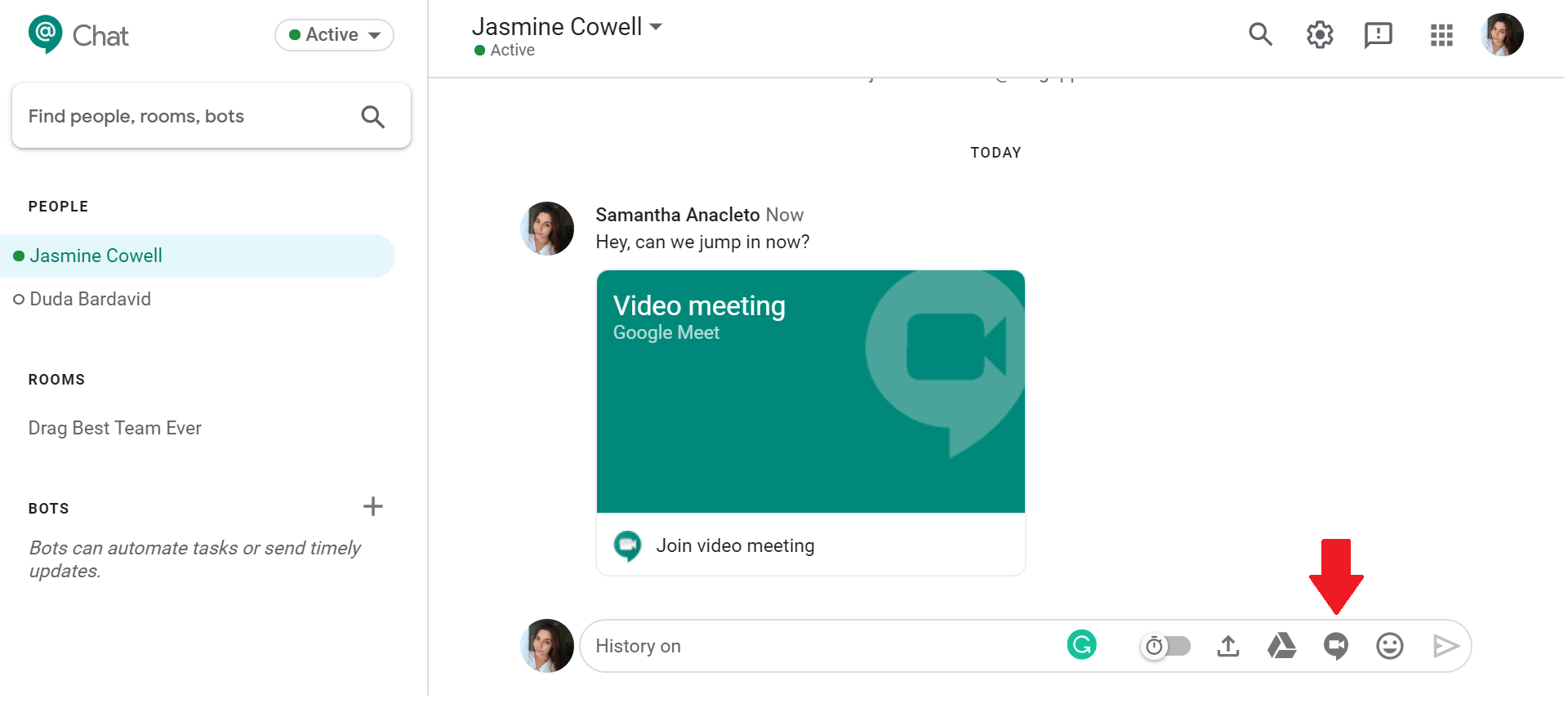
Google Meet now integrates with Google Chat, the Google Workspace communications tool for teams. When you are using Chat, you can simply start a call with someone in a direct conversation, or with the whole team in a room, just by clicking the Meet button, represented by the icon with a video camera, that appear on Reply or New Conversation boxes. A video call is automatically created, and people can click on it to be sent to Meet.
This process saves you time if you are using both apps because you don’t need to go to Meet’s site, create a meeting, and share the link. Just pressing one button makes your life a lot easier.
 It’s also possible to start a new video meeting directly from Gmail. On the left side menu of your Gmail screen, you can find a section named “Meet”. Then you have two options: start a meeting or join a meeting.
When you click the first button, it will send you automatically to a new video conference. Then you can copy the meeting link and send it to other participants or share the meeting code. The second button opens a popup where you can insert a meeting code previously provided to you. 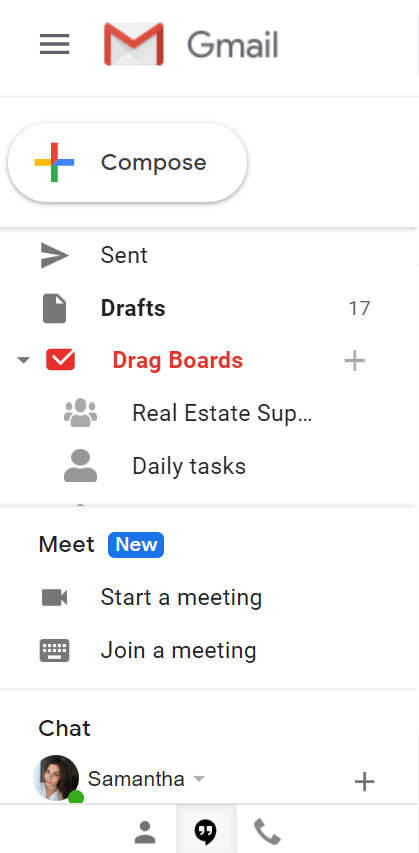
How to share a video meeting
It’s possible to add people to a video meeting before or after it starts. If you start a video session from Gmail, you will only be able to add people after the meeting begins. When you enter a meeting you created, a popup shows the joining details. 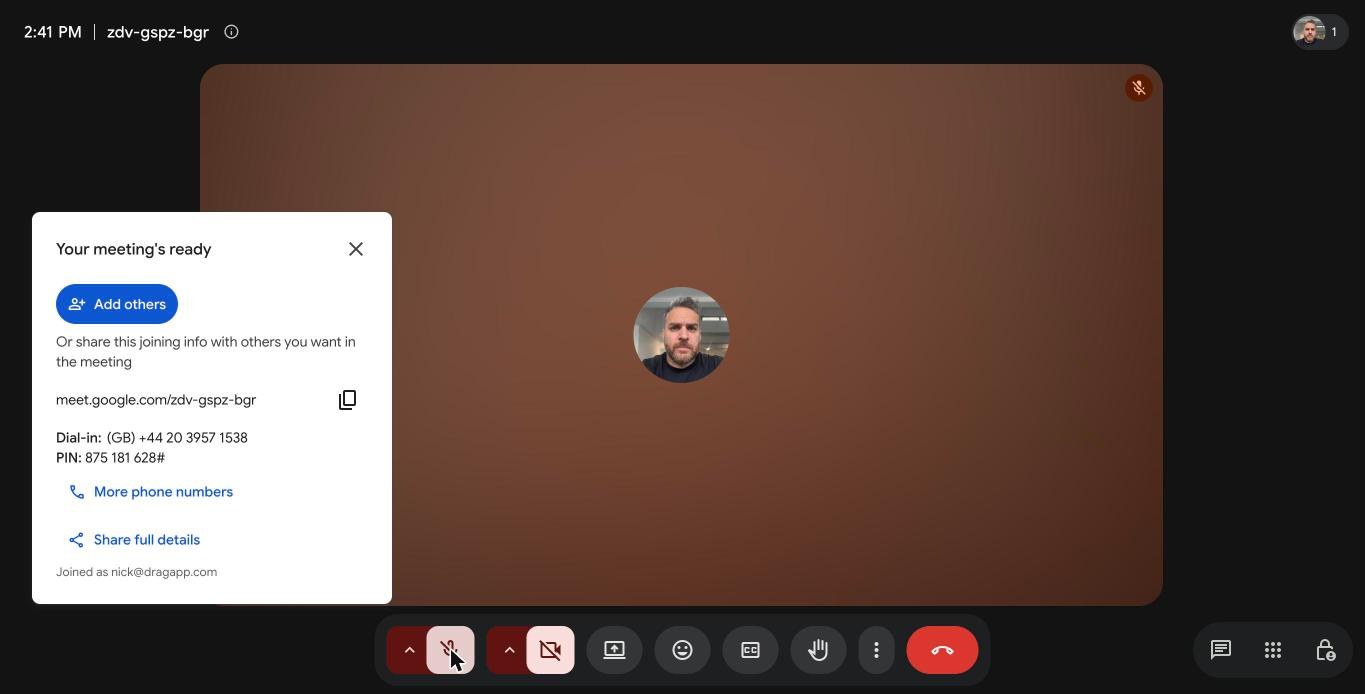 Also, to invite people when the meeting already started, follow these steps:
- On the top right corner, click the two people symbol, then select “Add people”.
- Enter names or email addresses and hit “Send invite”.
- Or click the “Call” tab, if you want the person to join by a call.
- Select the country you’re calling to, adding the country code to the call.
- Enter the person’s phone number and then click “Call”.
- The person will join the meeting when they answer the phone.
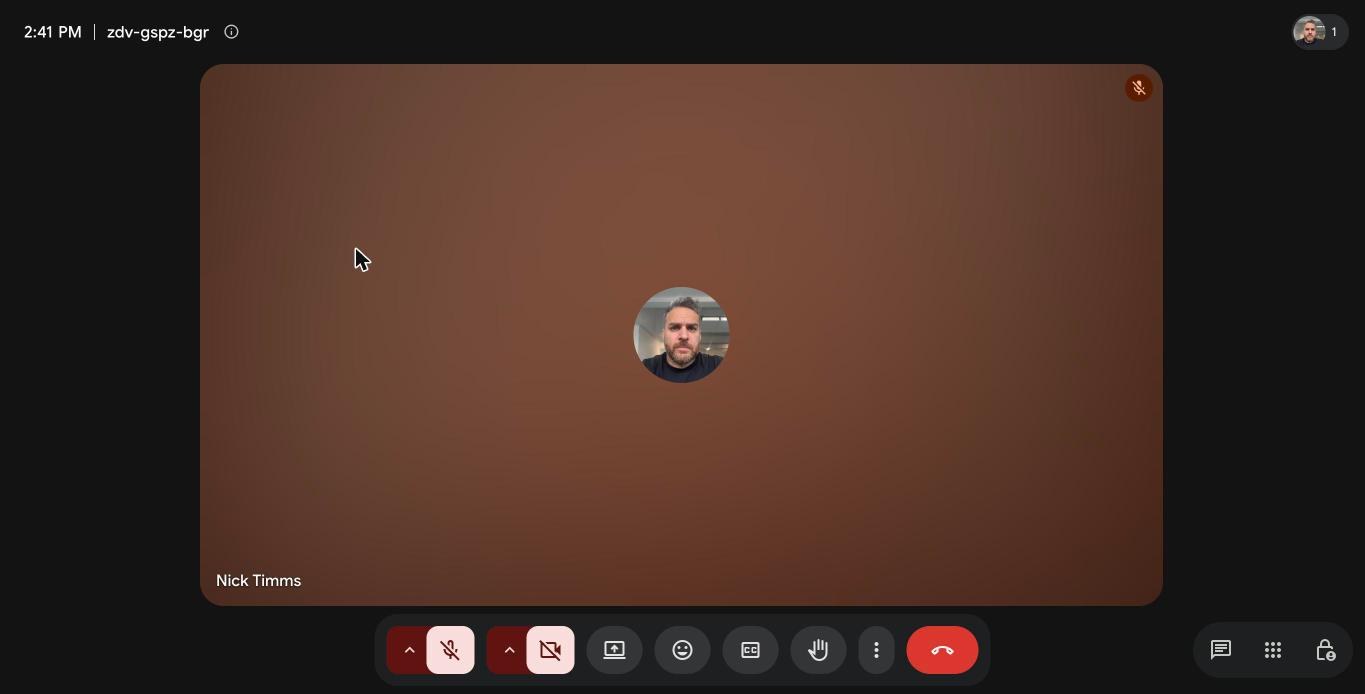 There’s also another way of sharing:
- In the bottom left corner, click the meeting name.
- Then click Copy joining info.
- Share the meeting link by email or wherever your invitees are.
A thorough look at Google Meet
To completely understand all of Google Meet’s settings and features, let’s explore each one of them.
Changing layouts
You can change the view of Google Meet according to your preferences. To change it, click the three dots in the lower-right corner of the screen, then select “Change layout”.
A popup will open with four layout options:
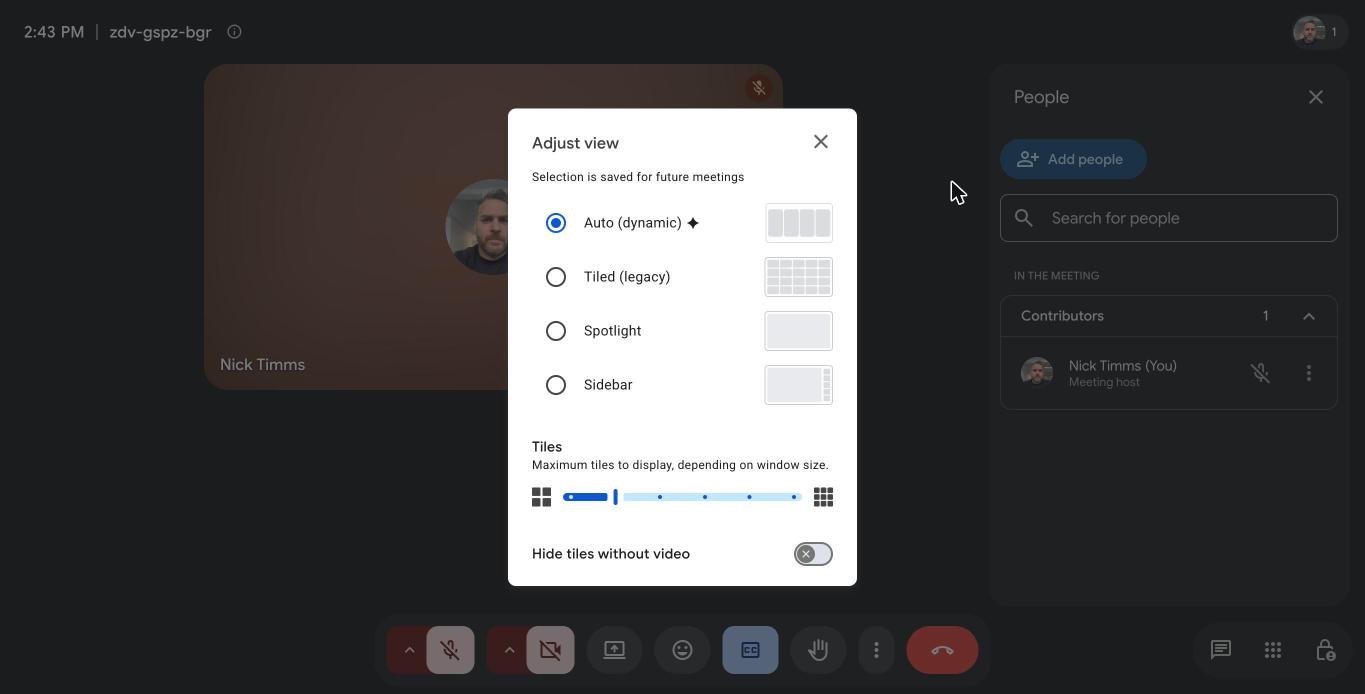
- Auto: If you want to Meet choose the layout for you.
- Sidebar: Only the active speaker or the presentation will be displayed on a larger window, while some of the participants will be on the left side, in smaller windows.
- Spotlight: The presentation, active speaker, or pinned feed will fill the entire window.
- Tiled: You will be able to see up to 16 people when no one is presenting. When you choose this option, you can hover the windows to see the participant names. And if a Presentation starts, it will appear in a large tile, and the most active participants will appear on the side in smaller tiles.
Managing participants
At a video conference, you can perform some actions: Pin, mute, or remove participants. 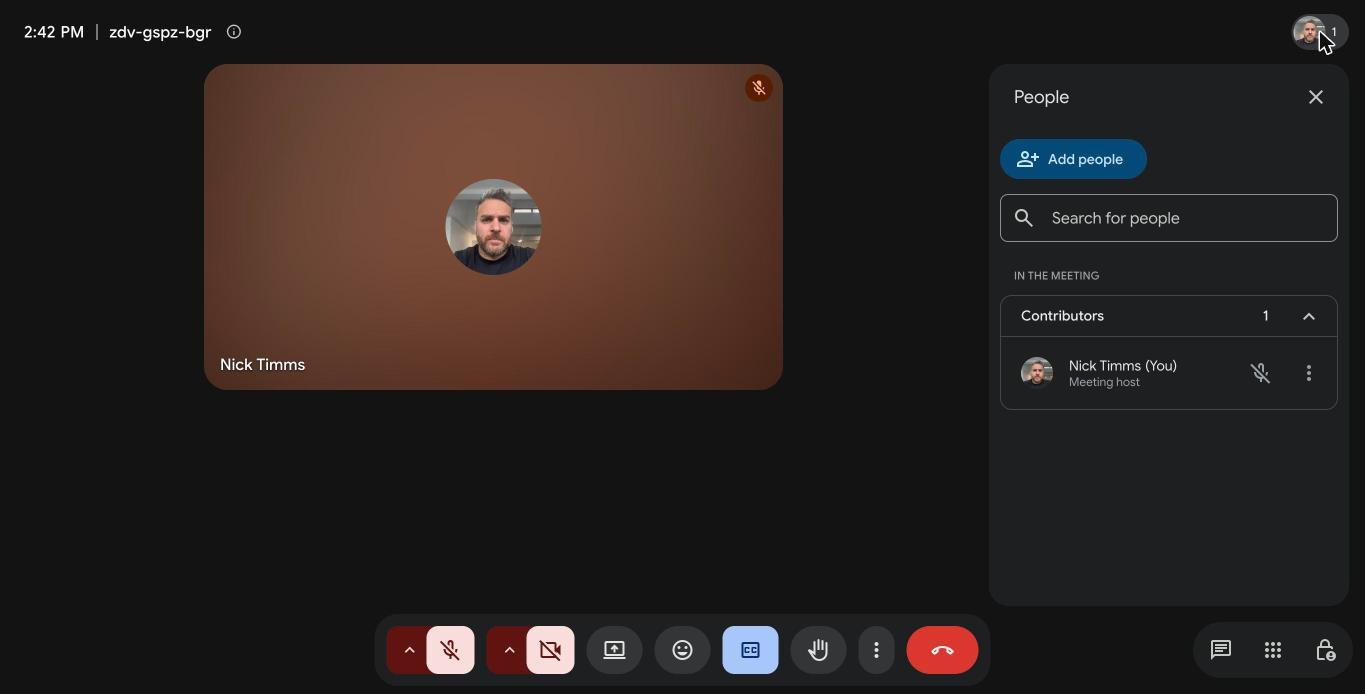 – To pin a participant, just click on their thumbnail image, then click the pin icon. – To mute a participant’s microphone, because you hear some background noise, for example, it’s also possible. With meetings organized through a personal account, only the moderator will be able to mute participants. To mute someone, next to their thumbnail, point to “Volume” and choose “Mute”.
Note that it’s not possible to unmute another person. Therefore you need to ask the participants to unmute their audio when it’s required. If you want to mute and unmute yourself, just click the microphone icon at the bottom of the window. – To remove a participant, it depends if you are using Meet from a Google Workspace account or a personal Google Account:
- Meetings organized with a Google Workspace account: In case it’s necessary, any participant from the domain that held the meeting can remove another participant.
- Meetings organized with personal Google accounts: The event creator is the only one who can remove another participant.
– If you have an education account, because the teacher needs to stay in control of the meeting, only the creator or event owner can perform any of these actions mentioned above.
Chat Messages
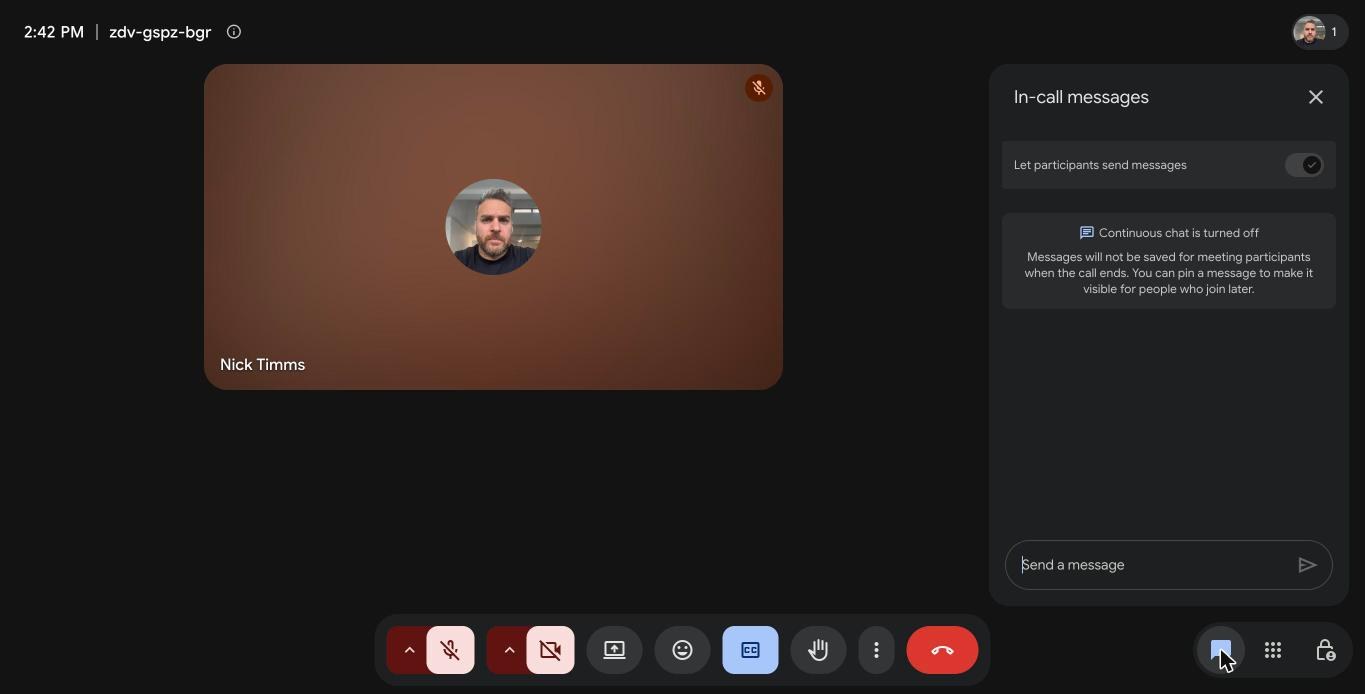 During your meetings, you can send messages to the other participants, using your computer or any mobile device. Notice that the messages will be visible to everyone on the call, and you can see only the chat messages exchanged during the time you are in the meeting. It means that you won’t be able to see messages before the moment you join.
To open the chatbox, click the Chat button in the upper right corner. Then just enter the message and click the Send icon.
Captions
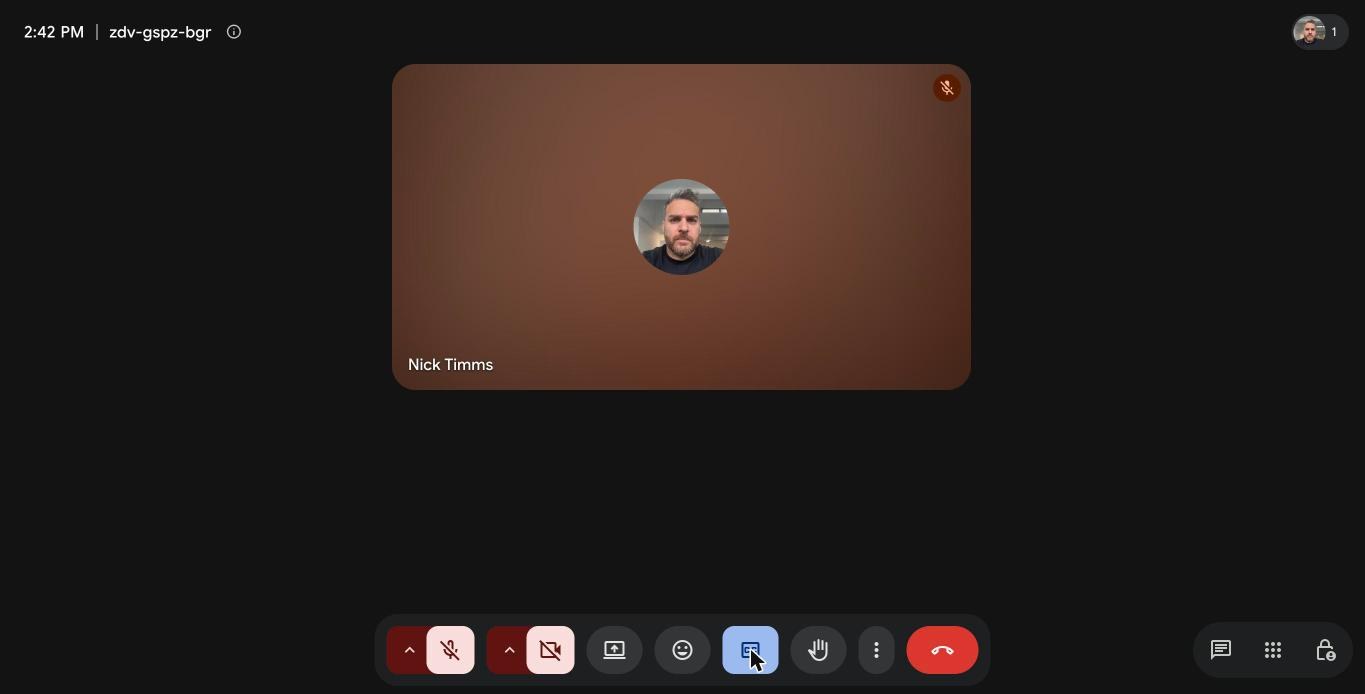 You can turn on captions during a video meeting to facilitate the understanding of what people are speaking. This feature transcribes the audio on a caption right above the video. To turn the Captions on, just click “Turn on captions” at the bottom of the window. You can quickly turn them off, by clicking the same button.
Phone for audio
It’s possible to use a phone for audio in video meetings, so you can talk and listen to the meeting using your phone while you can still see the video on your computer. There are two options to start this feature: Google Meet can call your phone, or you can dial in from your device. It’s important to highlight some situations:
- If you’re not in the meeting yet, your computer will join only when your phone connects.
- If there are more than five people at the meeting, you will join with the mic muted.
- You will also join with the mic muted if your computer is muted before connecting.
On your computer, click More, represented by the three dots icon, on the left bottom of the window. Then choose the option “Use a Phone for audio”.
Share screen
You can share your entire screen or a specific window in a meeting, what Google Meet calls “present”. While you present, you can share documents, presentations, spreadsheets, and all that is necessary for a great meeting. 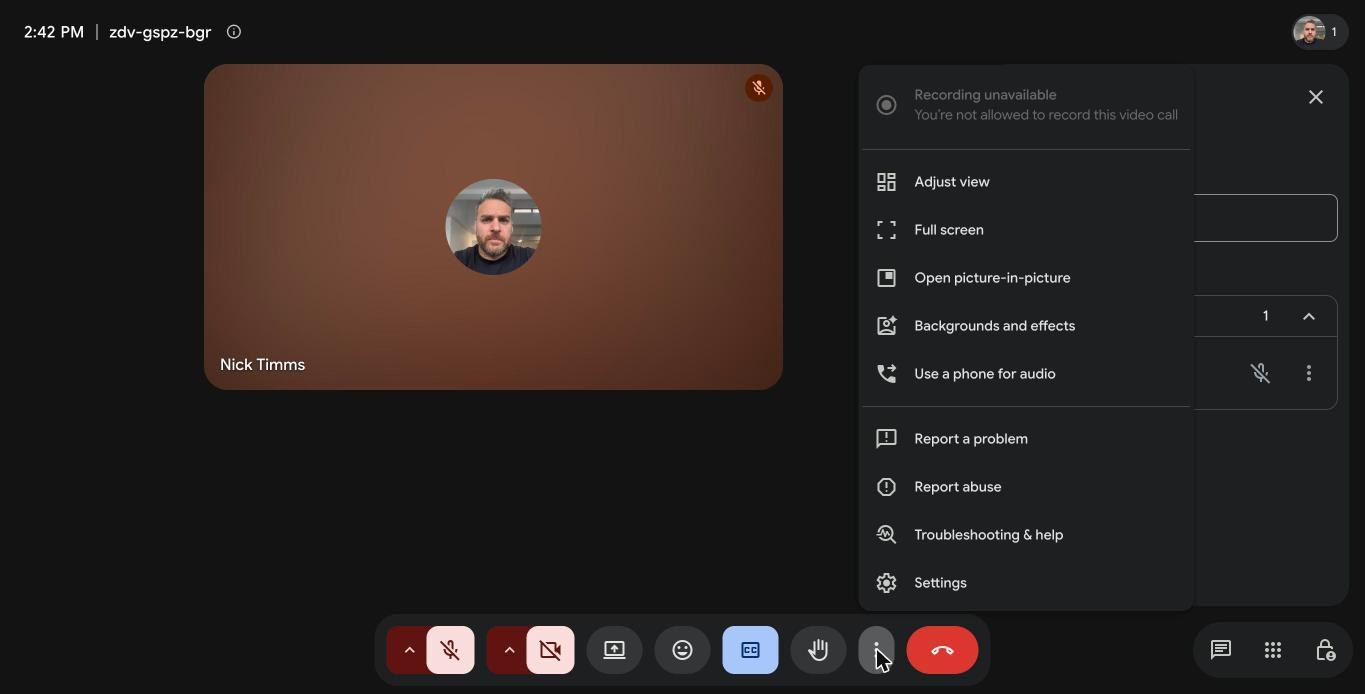 To present during a meeting, follow these steps:
- Click the button “Present now”, located at the bottom-right corner of your screen.
- You can select to present your entire screen, a window, or just a Chrome tab.
- A pop-up will open with all the open tabs or windows you have in your navigator. Choose the one you want to present.
- Select Share.
- Sometimes another person is already presenting, so you need to confirm that you want to display instead.
You can click “Stop” on the top of the tab you are presenting, or go back to the Meet window and click “Stop Presenting”.
Record meetings
It’s possible to record video meetings for other people to watch later. Recording is available from Business Standard upward, per the table above. To start using the recording feature, the administrator must enable it before the meeting.
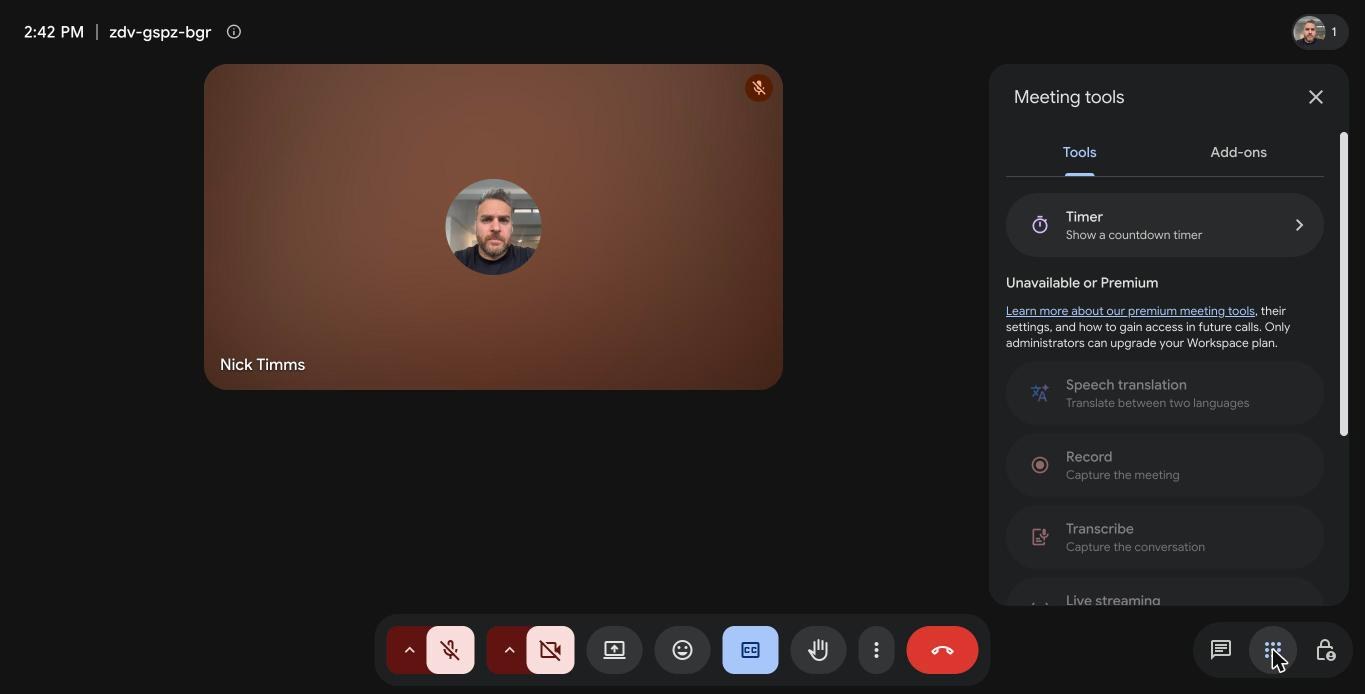
Only the meeting organizer or people in the same organization as the organizer can record video meetings. Teachers can also record the meeting when signed in to their account, but students can't. Recordings will include the active speakers and presentations during the meeting.
So other windows or notifications won’t be covered. Google will save all the recordings in the organizer’s Meet Recordings folder in My Drive. Also, an email will be sent with the recording link both to the organizer and who started the recording. To start recording a meeting, follow these steps:
- On Google Meet’s screen, click More, represented by three dots, at the bottom right.
- Select “Record meeting”.
- Wait for the recording to start. The other participants will be notified when the record begins or stops.
- To stop recording it, click More again and then “stop recording”. The recording will also stop when all the participants leave the meeting.
- Wait for the recording file to be generated and saved to the meeting organizer’s My Drive > Meet Recordings folder. An email with the recording link is also sent to the meeting organizer and the person who started the recording.
Google Meet vs Zoom
The honest comparison is shorter than the internet makes it. Zoom is the specialist: it exists to do meetings, its free tier allows 100 participants with a 40-minute cap, and its ecosystem of webinar and event features runs deeper. Meet is the integrated option: it is already in your Gmail, your Calendar, and your Workspace plan, joins from a browser with nothing to install, and its limits scale with the plan you already pay for, per the table above.
Choose Zoom if meetings are the product, webinars and large events included. Choose Meet if your team lives in Google Workspace, because the best video tool is usually the one attached to the calendar the meeting is already on. Most teams comparing the two are really choosing between adding a tool and using one they have.
Google Meet and Gemini
Gemini's arrival in Meet follows the same plan logic as the rest of Workspace: on Google's own per-edition table, the Gemini features row is blank for Business Starter and ticked from Business Standard upward, the same Starter exclusion that runs through Chat, Calendar, and Forms. The flagship is Google's note-taking feature, "Take notes for me", which Google's July 16, 2026 announcement lists for Business Standard and Plus, Enterprise Standard and Plus, and Frontline Plus. So the question is not whether your Meet has AI, it is which plan your company pays for, and the table above answers it.
Meetings start somewhere, and for most teams that somewhere is email: the customer question that becomes a call, the thread that needs a face. If your team runs that side in Gmail, Drag adds a shared inbox with boards, assignments, and internal notes in the Gmail you already use, so the conversation that booked the meeting and the follow-up after it live in one organized place. Plans start at $12 per user per month with a 7-day trial and no card required.






Google Meet FAQs
How many people can join a free Google Meet?
100 participants, per Google's own current documentation, with a one-hour limit on group meetings. The 25-participant figure still quoted by older guides is years out of date.
Which Google Meet plans include recording?
Recording starts at Business Standard, per Google's per-edition comparison, and is included in Business Plus and the Enterprise editions. It is not Enterprise-only, and it is not on Business Starter or free accounts.
Is Google Meet free?
Yes. Any Google account can host meetings free with up to 100 participants and one-hour group calls. Paid Workspace plans raise the caps, lengthen meetings to 24 hours, and add recording and Gemini features per the table in this guide.
What happened to Google Hangouts?
Google retired Hangouts in 2022 and split its jobs: Meet took video calls and Google Chat took messaging. Anything still comparing Meet to Hangouts is comparing a live product to a discontinued one.

Co-founder
Building Drag for nearly ten years: shared inboxes, boards, and now the AI and agent layer, all on Gmail, plus HeyHelp for the personal inbox. Writes the honest versions of the comparisons.
