













The complete 2026 guide to Google Chat: what it includes, what changed this year, how spaces, threads, huddles, and scheduled messages work, and where Gemini fits, with every change dated from Google's own announcements.
Key takeaways
- Google Chat is included with every Google Workspace plan and free on personal Google accounts, and it now serves from its own address, chat.google.com, with old links still working.
- The product gained huddles, in-space threading, scheduled messages, a Meetings section, and guest accounts across 2024-2026, each dated below from Google's own announcements, and most of what older guides describe predates all of it.
- Gemini in Chat is plan-gated: it is not available on Business Starter, so "Chat is on every plan" and "Gemini in Chat is on your plan" are different claims, a distinction Google's own availability list draws and most guides miss.
Table of contents
Google Chat is Google Workspace's messaging app: direct messages, group spaces with threaded conversations, audio huddles, and meeting scheduling, included with every Workspace plan and free with a personal Google account. It has changed more in the last eighteen months than in the five years before, and most guides have not kept up.
This guide covers the current product: what is included, what changed and when, dated from Google's own announcements, how to use the features that matter, and where Gemini fits and which plans actually get it.
What is Google Chat
Google Chat is the messaging half of Google Workspace, the suite Google says serves over 3 billion users and more than 13 million customers as of April 2026. Chat itself is where a team's quick conversations live: one-to-one messages, group spaces organized around projects, and the huddles and meetings that grow out of them.
It is part of every Google Workspace plan, and it is also available free as a standalone service with a personal Gmail account, in Google's own account comparison, with only app webhooks reserved for Workspace. Whether you are evaluating it for a company or just tired of losing decisions in email threads, the product described below is the one that exists in 2026, not the one from the launch-era guides.
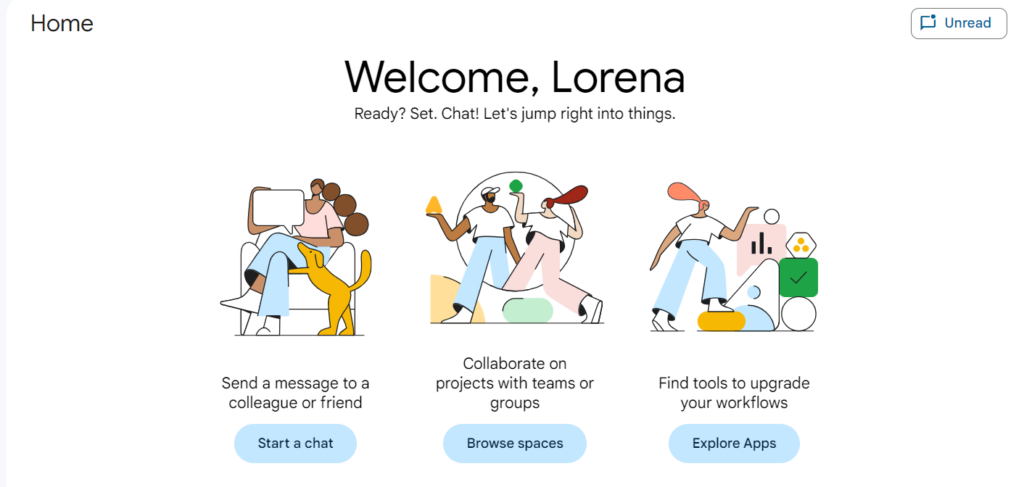 Since Chat is connected to all other Workspace resources, such as Google Docs and Google Calendar, it can be another asset to organize and optimize your workflow.
What's new in Google Chat
Chat has shipped more meaningful changes since late 2024 than most guides reflect, and every one below is dated from Google's own Workspace Updates announcements.
Huddles arrived in November 2024: instant audio-first calls started from any conversation, running in a resizable window over your chat, with video and screen sharing one click away. Scheduled messages followed on December 11, 2025, with a send-later control beside the send button and a Drafts shortcut to edit or reschedule anything queued. The same day, Google announced Chat's move to its own web address, chat.google.com, stating plainly that the move does not change the interface and that old mail.google.com/chat links keep working.
In March 2026 came two more: a dedicated Meetings section in the conversation list, collecting your meeting threads in one place, and guest accounts for collaborating with people outside a Workspace organization. June 2026 added discoverable spaces with three access levels, and July 2026 made group conversations with external collaborators generally available.
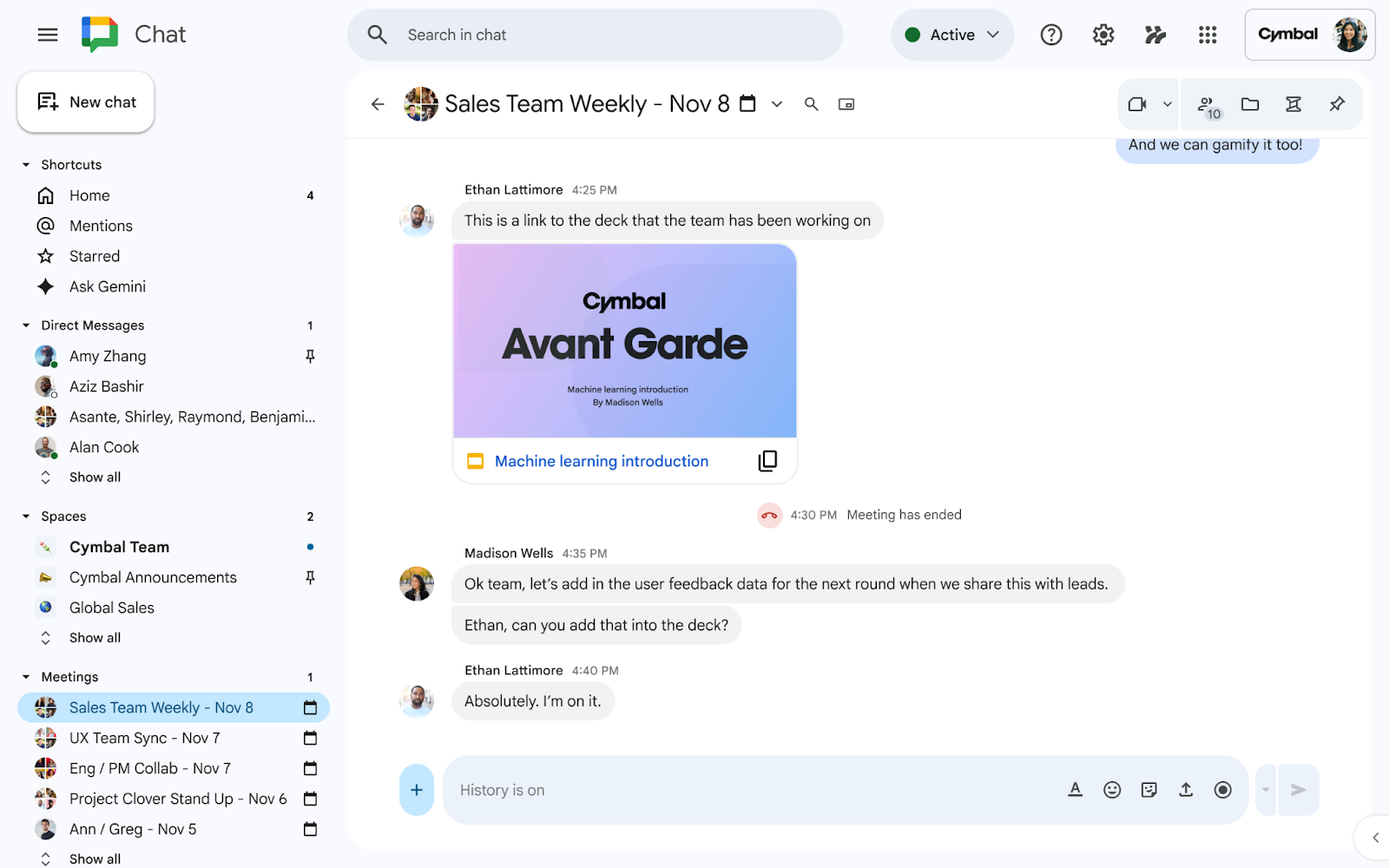
Smaller quality changes landed throughout: message forwarding in January 2026, blocking messages from unknown senders and sharing emails from Gmail into Chat in December 2025, unread previews in the left menu in November 2025, and Microsoft Teams interoperability through a partner in May 2026. If a guide you are reading describes none of this, it is describing an older product.
What's included in Google Chat?
- Direct messages: chat directly with a collaborator, client or vendor from your workspace
- Spaces: group chats that can include the whole team to stay in the loop
- App connectivity: install Workspace apps to enhance the experience
Drag · with Varley
The inbox your team and Varley work in together
Shared inbox and live chat for Gmail teams, with Varley, Drag’s AI, included from $18. Plus an MCP server your own AI tools can drive.
Starting with Google Chat
There are two kinds of conversations in Google Chat: direct messages between you and one or more people, and spaces, the persistent group conversations organized around a team or project. Both are key to business communication, since DMs allow for quick exchanges, while Spaces are great hubs for team collaboration.
Direct messages
You can message any Google account that's already in your Google Contacts. To start a chat, all you have to do is open Google Chat and click on New Chat on the left menu. Then, start writing the name of your contact and you'll be able to pick between suggestions.
When you message someone frequently, they'll show up as suggested first. 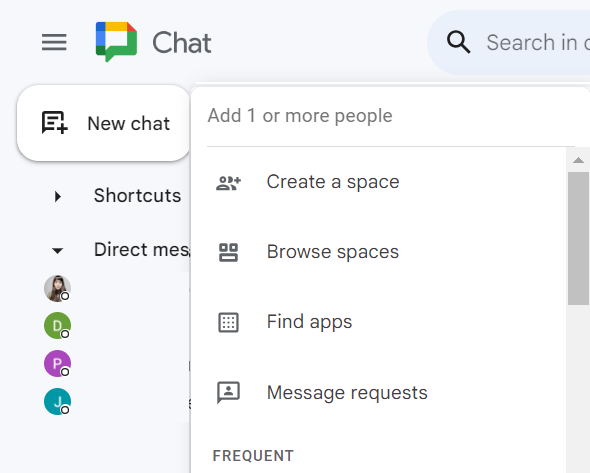 If you get a message request from a user outside your contacts, they'll be stored in Message requests, so make sure to check them frequently to avoid missing any relevant messages. You'll be able to write, send images and GIFs, add files and set up meetings through these direct messages.
Spaces
Spaces are the center of Google Chat, and the reason it works for teams rather than just pairs. A space is a persistent, named conversation for a project or team, with its own members, shared files, and tasks, and conversations inside it can run as threads: replies nest under the message that started them, so three discussions can happen in one space without drowning each other.
To create one, click New chat, then Create a space, name it, and choose its access: spaces can be restricted to invited members or made discoverable to your organization at the levels Google introduced in June 2026. Spaces built for announcements can restrict posting to managers, which keeps a company-wide space readable. Members can be added from your organization, and since March 2026, guests from outside it.
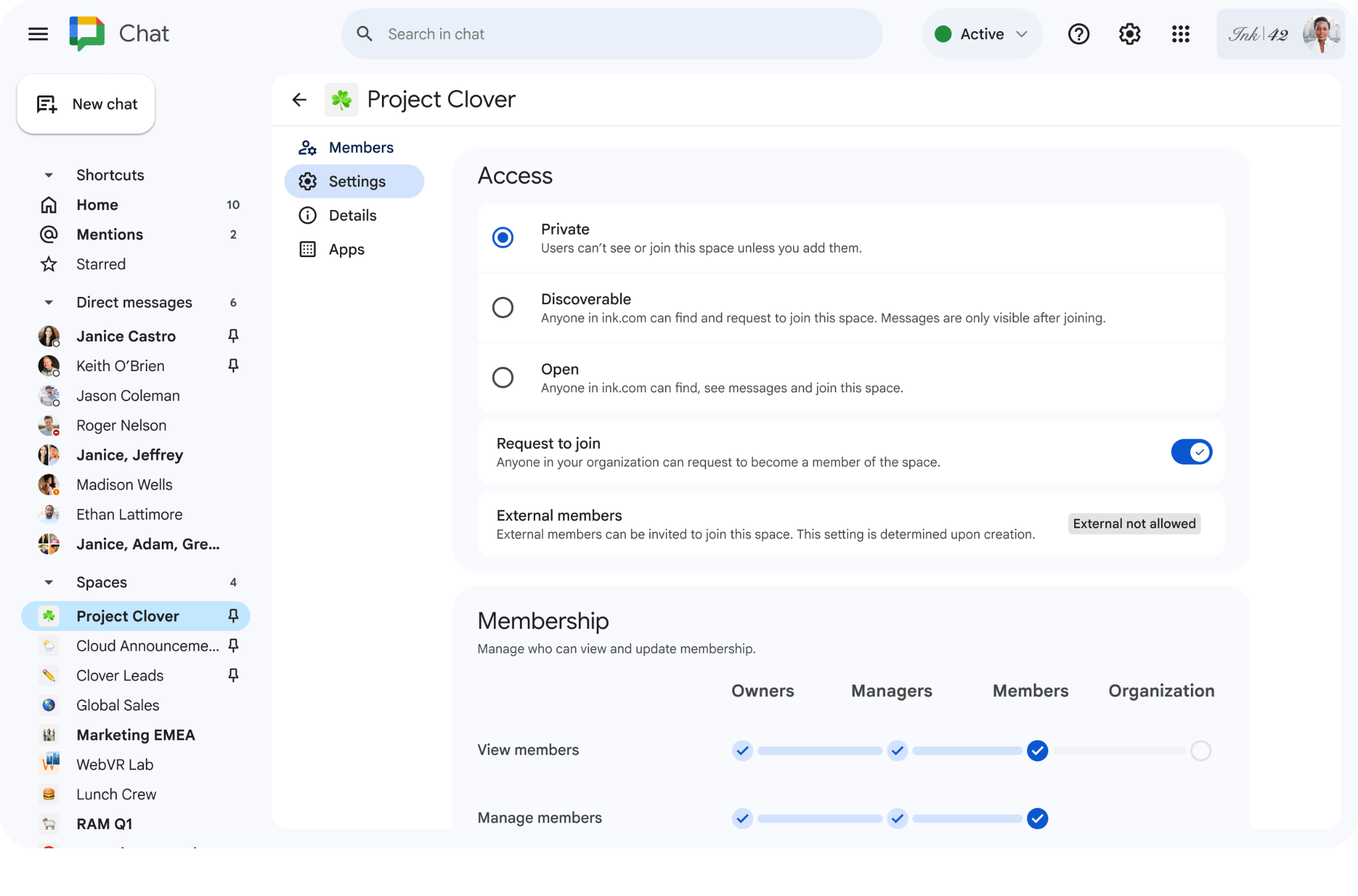
The practical habit that makes spaces work: start a thread for anything that will take more than two replies. The space stays scannable, decisions stay findable, and nobody scrolls through a lunch conversation to find a deadline.
Google Chat's best features
Besides quick chatting, there's a lot to do with Google Chat. Since it acts as a central discussion hub for your teams, it can be a starting point for task management, file sharing and problem-solving. Here are some of the main tools you can use with Google Chat:
File uploads
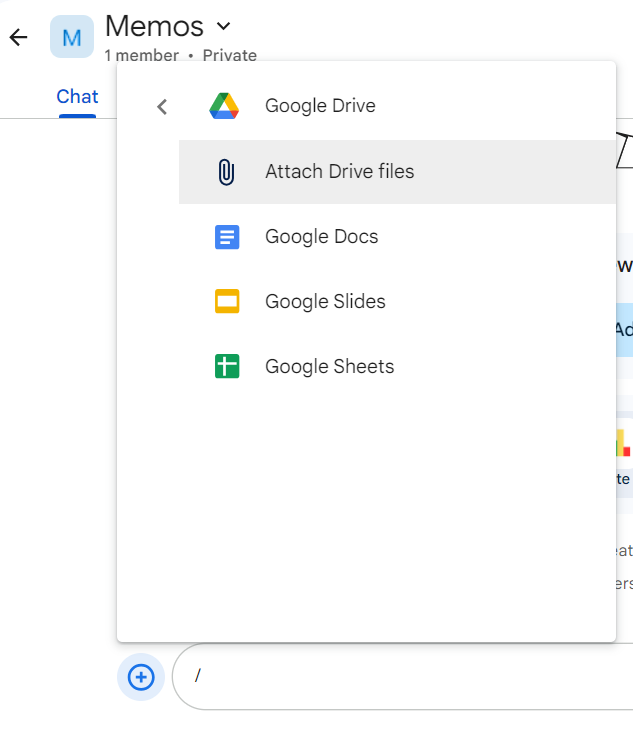
The biggest advantage of using the Google Workspace ecosystem is being able to seamlessly work on files across tools. And with Google Chat it isn't different. To upload a file to a conversation, all you have to do is click the plus sign left of the message field, then the Google Drive icon, then Attach Drive file.
Meeting setup
Chat now handles the whole spectrum from "quick word?" to a scheduled call. The fastest is a huddle: from any conversation, start an audio-first call that opens in a resizable window over your chat, with video and screen sharing available once you are in, no link, no calendar, no new tab. Huddles arrived in November 2024 and are the feature most worth retraining an email-reflex team on.
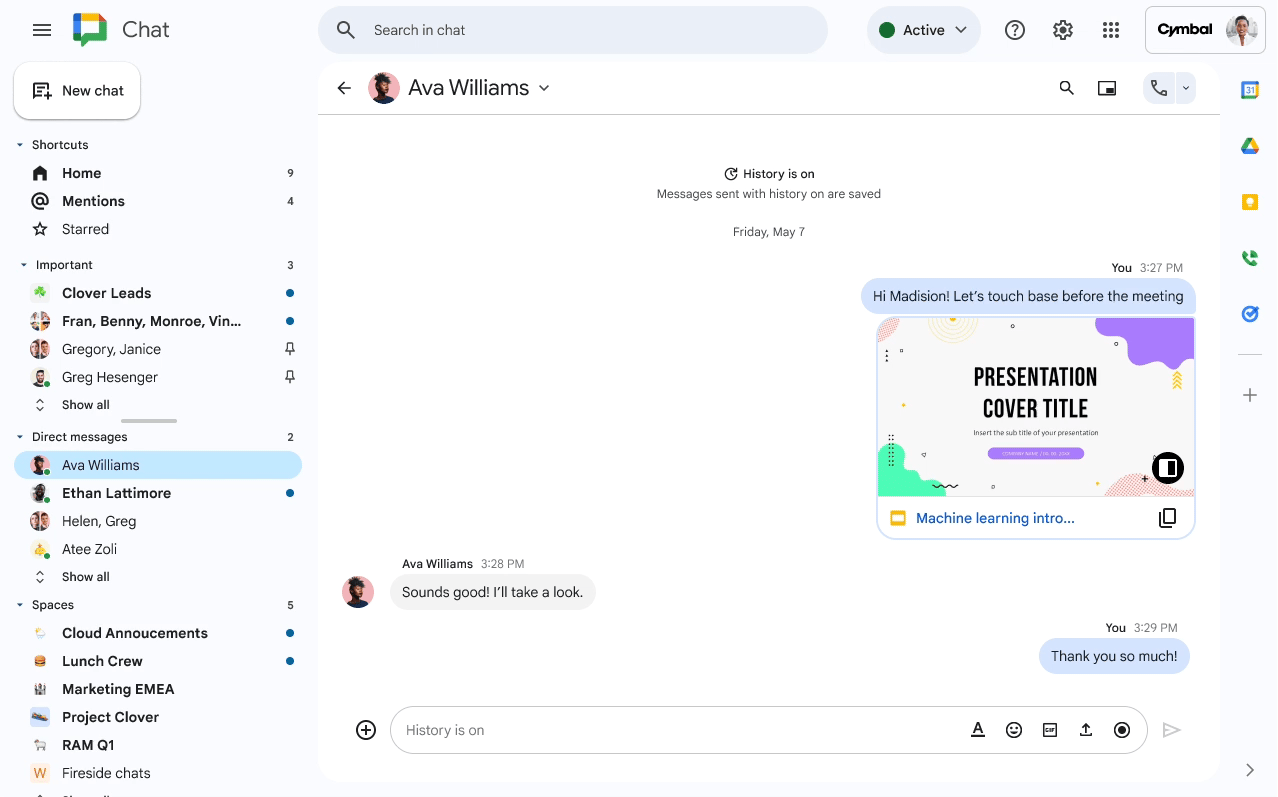
For scheduled meetings, the video icon in a conversation still creates a Meet link or a calendar invitation, and since March 2026 a dedicated Meetings section in your conversation list collects meeting threads in one place, so the "where was that meeting link" scroll is gone.
Commands and apps
One of the new resources developed for Google Chat that makes it more custom to each team's needs is the ability to connect other apps. You can browse through Google Workspace Marketplace for different productivity tools that can be attached to the conversations or use Zapier integration to merge your chats with your work software. But Google Chat goes even further.
One of the tools that other work chat apps have that was incorporated into Chat is the ability to use commands to use these tools directly from the conversation itself. Simply type "/" into the message field and a menu will pop up with command suggestions based on the apps you've installed. 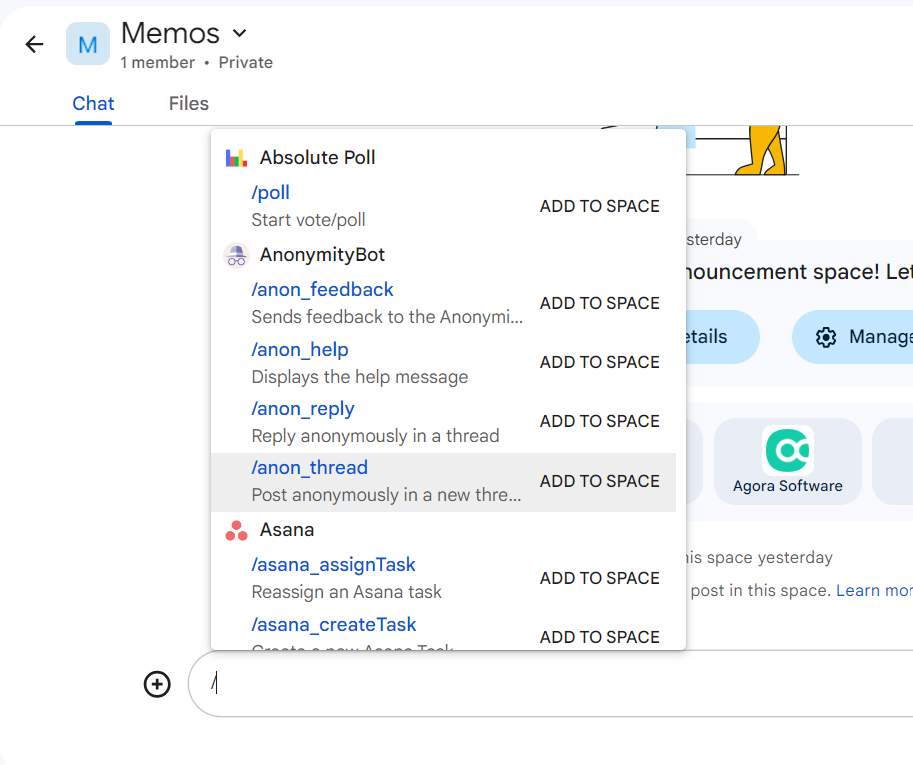
Task management
Distributing tasks among team members and setting up deadlines can be a hassle. That's why Google Chat is connected to Google Tasks to make the process smoother. You can add a chat-related task and share it with the whole team by opening the Tasks tab.
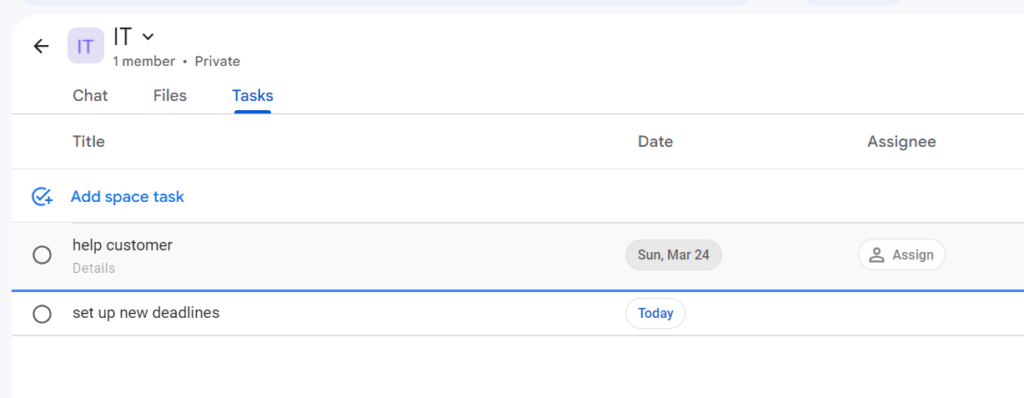 Through this method, you can also assign a user to each task, by using the round robin distribution system or any other productivity method that benefits your company.
Search history and chat overviews
What makes Google Chat valuable for teams the most, however, is the ability to refer back to previous conversations. You can use the search bar at the top of the page to look for specific messages, users and spaces. You're also able to search each individual chat as well since the conversation history is saved by default.
And the Files and Tasks tabs allow users to find what they need to complete tasks after assignments, so there's no need to reach out again to ask for a link. Instead, everything is easily accessible with a single click. When someone messages or tags you, you'll receive notifications and they'll be on the Mentions tab accessible via the left menu. That way, every interaction can be reviewed whenever you need them.
Google Chat and Gemini
Google now titles Chat's own product page "Google Chat with Gemini," and the integration is real: a Gemini side panel in Chat can catch you up on a conversation, list action items, and answer questions about what was discussed.
The part most guides omit is the gating. Chat itself is included with every Workspace plan, but Gemini in Chat is not: Google's own per-feature availability list excludes Business Starter. If your company is on Starter, you have the Chat described in this guide and none of the Gemini features, and knowing that before a rollout beats discovering it after. Google also withdrew its separate Gemini add-ons from sale in January 2025, folding AI into the plan tiers themselves, which is why the plan you are on is now the whole answer to what AI you get.
Setting up your Google Chat
As useful as Google Chat can be, it's important to define the settings that work the best for your specific needs. You can open the settings menu by clicking on the Settings button at the top right. Then, a pop-up window will have you select notifications, email digests, offline hours and more.
Using Google Chat on Gmail
Google Chat works as a standalone app on your computer and mobile devices. That being said, it's much easier to merge it with Gmail to work on live chat and incoming emails at the same time, especially if your workflow is based on emails. Customer service teams that use Gmail as a help desk, for example, can probably benefit from having a chat next to their inbox.
To turn on Google Chat on Gmail, go to the Settings menu, then the Chat and Meet tab. There, you'll have to select Google Chat, scroll down and save. 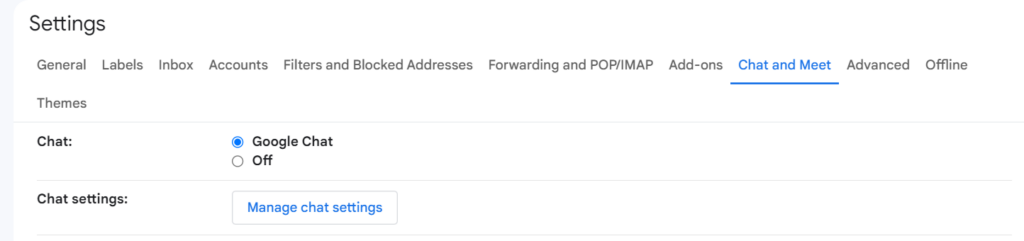 With this setup, Chat will be available on the left of your inbox, so when you're working on emails, you'll still be able to follow any direct messages and spaces you have.
One address note, dated: since Google's December 2025 announcement, the standalone web app serves from chat.google.com rather than mail.google.com/chat. Google states the old links keep working and the interface is unchanged, so nothing in this section's setup breaks; the new address is simply the one worth bookmarking.
Google Chat vs. Shared Inbox
While Google Chat has a lot of collaboration tools that can be useful for most teams, there's still a hassle: you have to switch between different apps or pages to fully dive into your tasks. For example, say you receive an email about a product concern. You'll have to open Google Drive, create a report, then go to Chat and message your team about it. If anyone needs to access the full conversation you've had with your client, you'd have to forward them the entire thread.
Real-time access
A Gmail shared inbox is a solution to this productivity loss. Instead of having to switch between apps and tabs, all the information is fully accessible to your team. That's because instead of each user working alone from their own address, everyone is an authorized manager of the shared inbox itself. So when a customer messages you, the entire team can see the context and start working on the task at hand.
Shared notes
Sometimes, however, you might need extra help to fully solve a concern. That's why our shared inbox solution, Drag, offers email notes. Email notes are helpful annotations you can add to each message with any data you've found relevant to the task. For example, your client emails you for a quote on your services, but before you answer, you have to get a manager's approval.
Instead of having to forward multiple messages to your manager with the whole interaction, all you have to do is create notes that summarize the questions, the quote you've prepared and any concerns you have. That way, when they open the task, they know what you've already done.
Live chat
Drag also comes with live chat options but with a bonus. If you're working with another team member on a task, you don't ever have to leave the page itself. Instead, simply @mention them to update them of any changes and they'll receive a notification directly back to the task at hand.



Google Chat FAQs
Is Google Chat free?
Yes. Chat is included with every Google Workspace plan and is also free with a personal Google account as a standalone service, per Google's own account comparison. Only app webhooks are reserved for Workspace accounts.
What is the difference between a space and a group chat in Google Chat?
A group message is just several people in one conversation. A space is persistent and named, with its own members, shared files, tasks, and threaded conversations, built for a team or project rather than a one-off discussion.
Does Google Chat have Gemini?
Yes, with a plan gate: the Gemini side panel in Chat can summarize conversations and surface action items, but Google's own availability list excludes Business Starter. Chat is on every plan; Gemini in Chat is not.
Did Google Chat's web address change?
Yes. Since Google's December 2025 announcement, Chat serves from chat.google.com instead of mail.google.com/chat. Google states old links keep working and the interface is unchanged.

Co-founder
Building Drag for nearly ten years: shared inboxes, boards, and now the AI and agent layer, all on Gmail, plus HeyHelp for the personal inbox. Writes the honest versions of the comparisons.
