

 Chrome
 Web
Web iOS
iOS Android






Turn Gmail into your CRM: Free Solutions to Simplify Your Sales Inbox

Every free CRM for Gmail, verified: HubSpot and Bitrix24's new 2-user caps, the tiers that are still genuinely free, and the caps that will make you pay.
Table of contents
- The free plans at a glance
- What Are the Best Free Gmail CRM Tools?
- Which CRMs work directly inside Gmail?
- Which CRM tools integrate with Gmail?
- What Chrome extensions or add-ons can turn Gmail into a CRM?
- The one we removed, and why
- Which Gmail CRM should I choose?
- Which free Gmail CRM fits your situation?
- When the free CRM stops being enough
- Frequently asked questions
Free CRM lists have a specific failure mode: the free plans quietly shrink and the lists keep quoting the old generosity. The two biggest names in free CRM both did exactly that, HubSpot's free tier now covers 2 users, down from unlimited, and Bitrix24's covers 1 to 2, so recommendations written even a year ago now point at plans that no longer exist as described. This list works the way our free task management guide works: every free tier below was verified directly against the vendor's pricing page, every entry states the cap that will actually bite, one tool was removed because its free plan no longer exists, and the tools that never had a free plan say so instead of hiding it. What remains is the honest state of running a CRM in Gmail for nothing, and the exact point where each option starts costing money.
The free plans at a glance
| CRM | Free plan reality | First paid plan |
|---|---|---|
 Drag Drag | No free plan; 7-day trial, no card | $12/user/mo |
 Streak Streak | Free tier is email tools only; CRM features are paid | $49/user/mo |
 Copper Copper | No free plan; free trial, no card | $23/seat/mo |
 Salesflare Salesflare | No free plan; 30-day trial | $29/user/mo |
 HubSpot HubSpot | Free, now capped at 2 users | $20/mo/seat (promos vary) |
 Bitrix24 Bitrix24 | Free, capped at 1-2 users | $49/org/mo |
 Agile CRM Agile CRM | Free, up to 10 users | $8.99/user/mo |
 Jobin.cloud Jobin.cloud | Free Forever tier (30 credits) | $8.99/user/mo |
 Zoho CRM Zoho CRM | Free for 3 users | $14/user/mo |
 Capsule Capsule | Free, 2 users / 250 contacts | $18/user/mo |
 Revamp CRM Revamp CRM | Free, now 1 user | $9/user/mo |
Also on this page: the one we removed, which CRM fits your situation, and the FAQ.
Figures verified against vendor pricing pages at publication, annual billing where plans differ. Read the caps column first: the industry's quiet trend is free tiers shrinking to 2 seats, which makes half of these personal tools wearing team clothing.
What Are the Best Free Gmail CRM Tools?
We have narrowed down our list of the best Gmail CRM tools into three categories, so you can choose the one that best suits your team's workflow.
Which CRMs work directly inside Gmail?
These CRMs let you manage leads, pipelines, and conversations without ever leaving the Gmail interface.
1. Drag
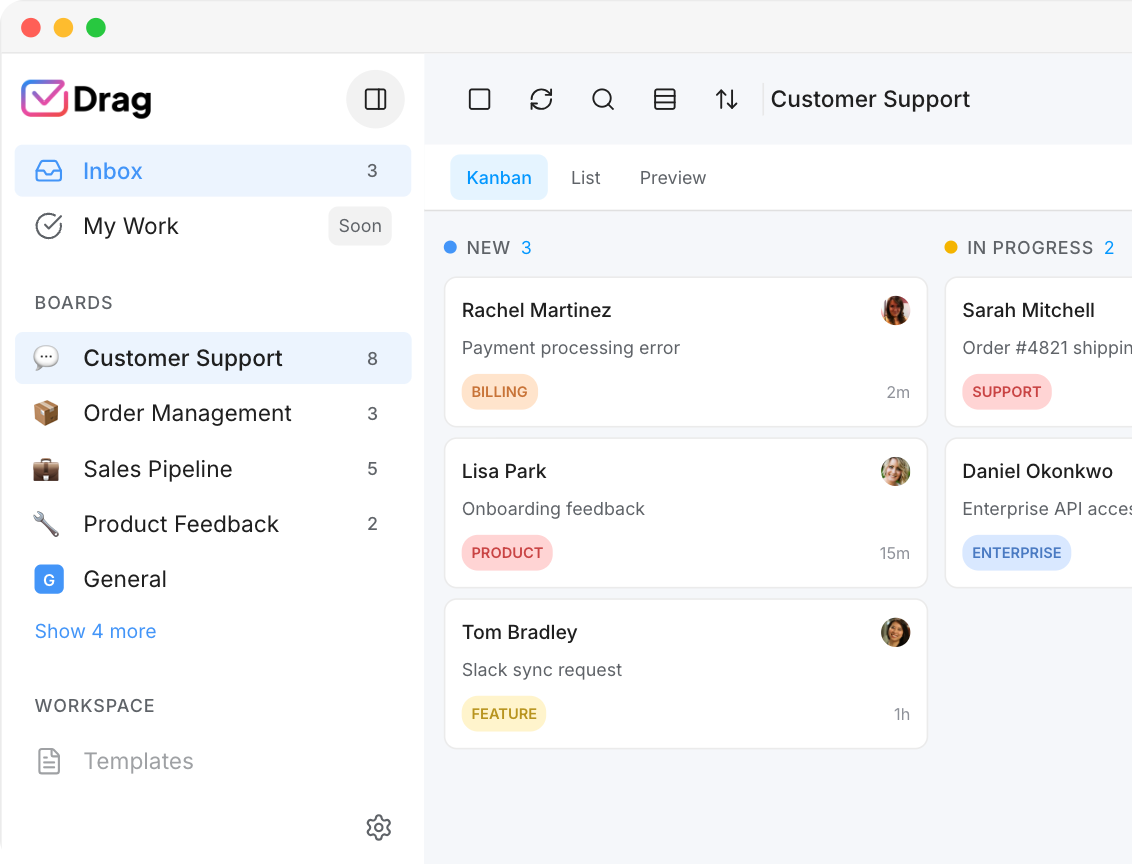
Drag has no free plan, and on a page about free CRMs that gets said plainly rather than buried. What it is: your Gmail shared inbox becomes the CRM, with emails as deal cards on boards, pipeline columns, assignment, notes, automations, and the whole thing manageable from Claude or ChatGPT through Drag's MCP server, the pattern our agentic CRM guide covers in full. There is a 7-day trial with no card required, and plans start at $12 per user per month. Best for teams whose deals already live in a shared Gmail address and who want the pipeline where the conversations are.
2. Streak
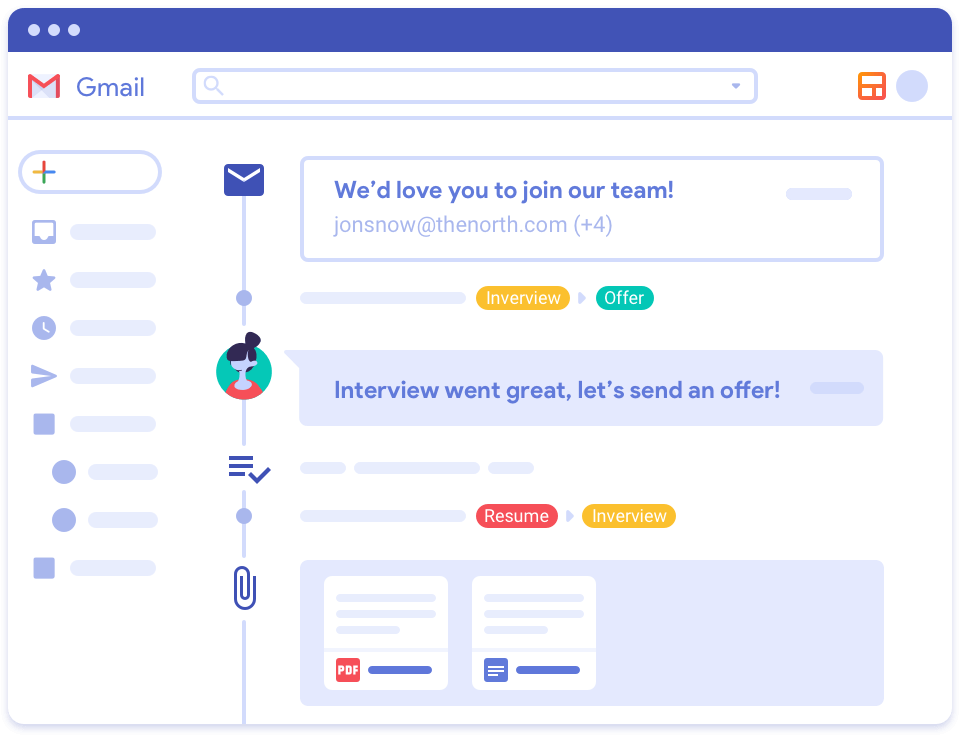
Streak is the CRM that lives literally inside Gmail: pipelines render as rows in your inbox, and every deal is a thread. The free plan now covers the email power tools only, tracking, snippets and mail merge, and the cap that bites is the CRM itself: pipelines start on the Pro plan at $49 per user per month, which is the steepest jump on this list. Best for solo operators who want zero new interfaces and will stay solo.
3. Copper
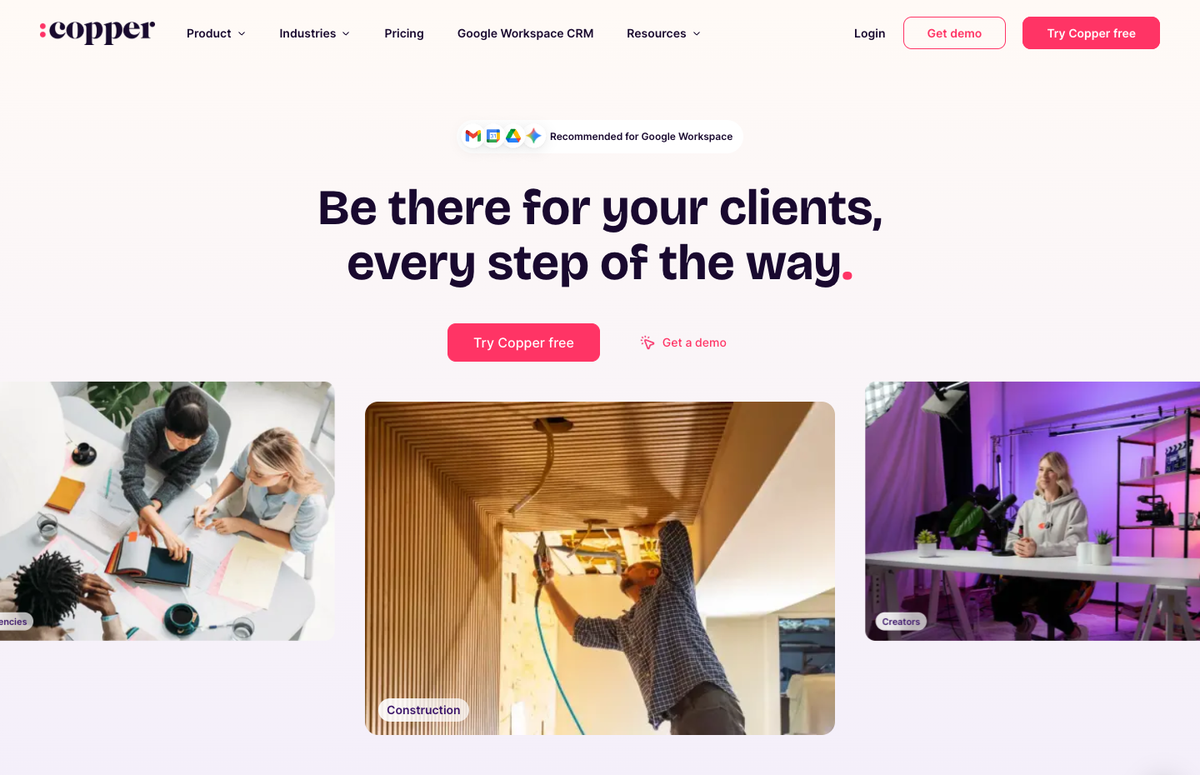
Copper is the CRM Google itself recommends, built entirely inside Google Workspace: it lives in Gmail's sidebar, auto-captures contacts and threads, and feels like a native Google product because that is the design goal. Copper has no free plan; there is a free trial with no card required, and paid plans start at $23 per seat per month billed annually. Best for Google-first teams that want the most polished native experience and accept paying for it.
4. Salesflare
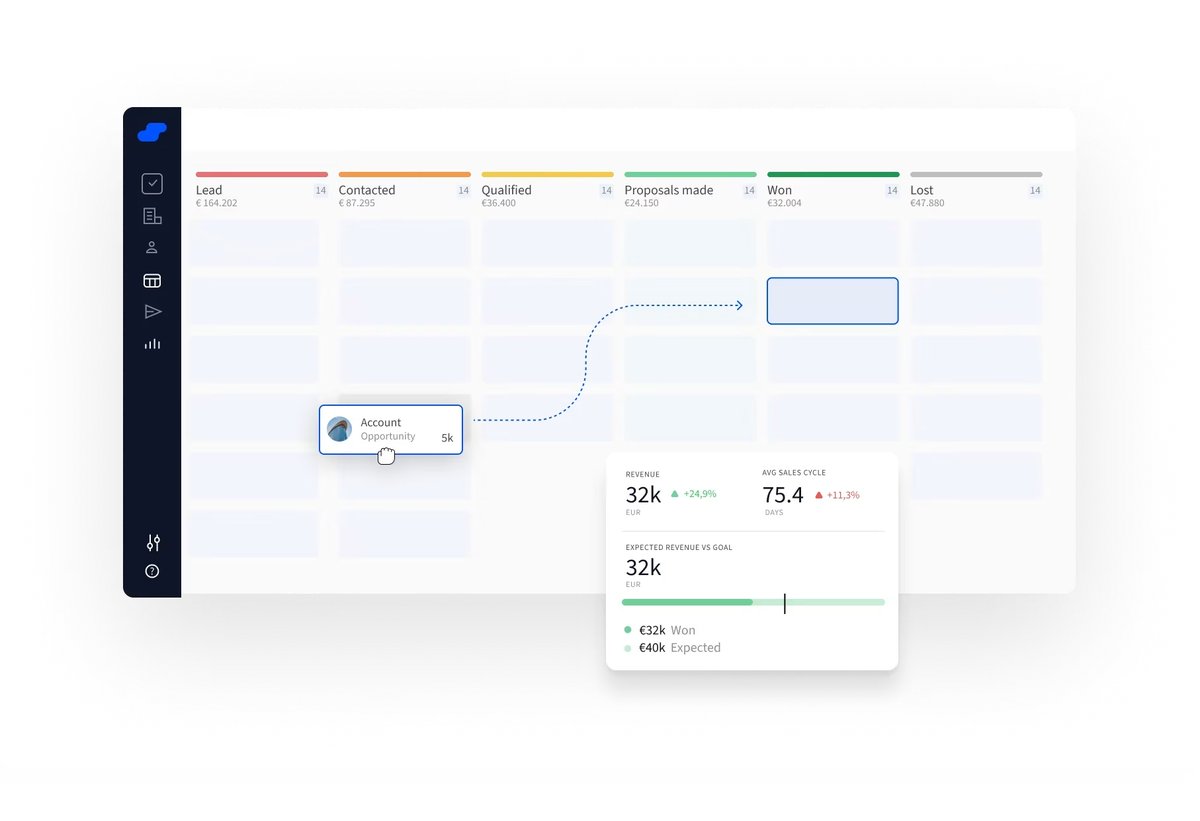
Salesflare is the automation-first Gmail CRM: it builds the pipeline from your email and calendar data so reps type less. Salesflare has no free plan; there is a 30-day free trial, and paid plans start at $29 per user per month billed annually. Best for small B2B teams that want the CRM to fill itself in.
AI Platform
The inbox your team and your AI work in together
Shared inbox, live chat, and AI in Gmail, with an MCP server your AI tools can drive.
Which CRM tools integrate with Gmail?
These platforms don’t live inside Gmail itself, but offer strong integrations that sync your inbox with a powerful external CRM. That means teams can get all the CRM benefits without having to manually export and import client data, saving time across the pipeline.
5. HubSpot
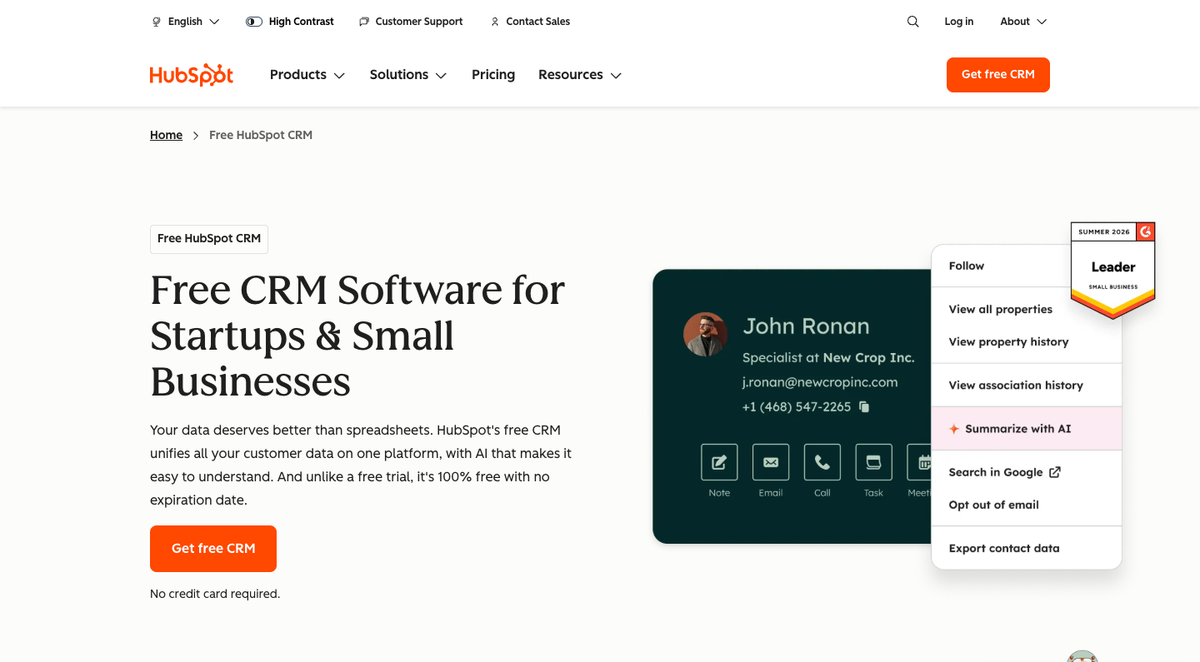
HubSpot's free CRM remains genuinely capable, contacts, pipeline, Gmail logging and tracking, but know the 2026 reality before planning around it: the free tier now covers 2 users, down from the unlimited seats it was famous for. For a solo founder or a duo it is still arguably the strongest free CRM anywhere; for a team it is now a trial wearing a free plan's name. Paid Starter runs $20 per month per seat, with frequent promotional pricing.
6. Bitrix24
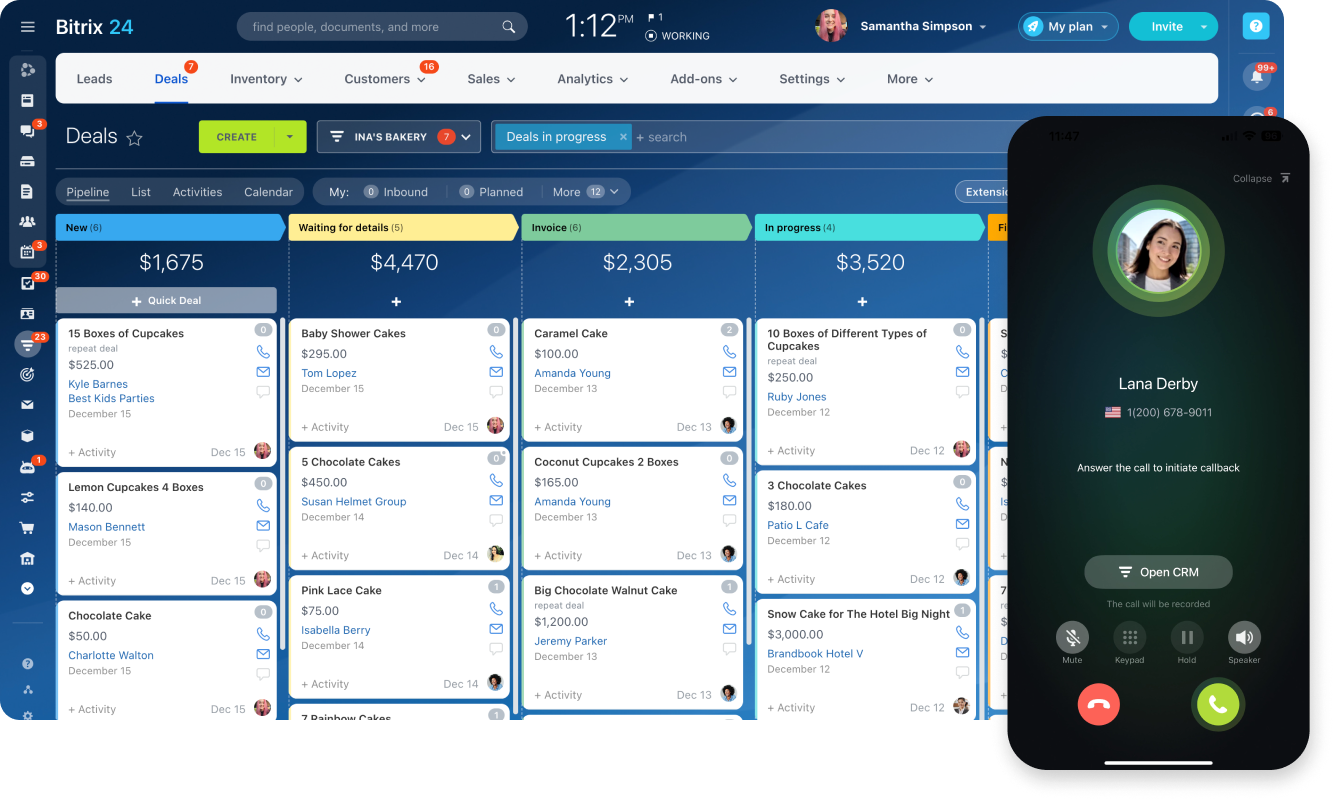
Bitrix24 bundles CRM, tasks and chat, and its free tier follows the same 2026 pattern: now capped at 1 to 2 users, a sharp cut from the old unlimited plan this page previously described. Paid Basic is $49 per organization per month, which flips the math in bigger teams' favor. Best for very small operations that want the whole suite in one place and expect to pay once they are not.
7. Agile CRM
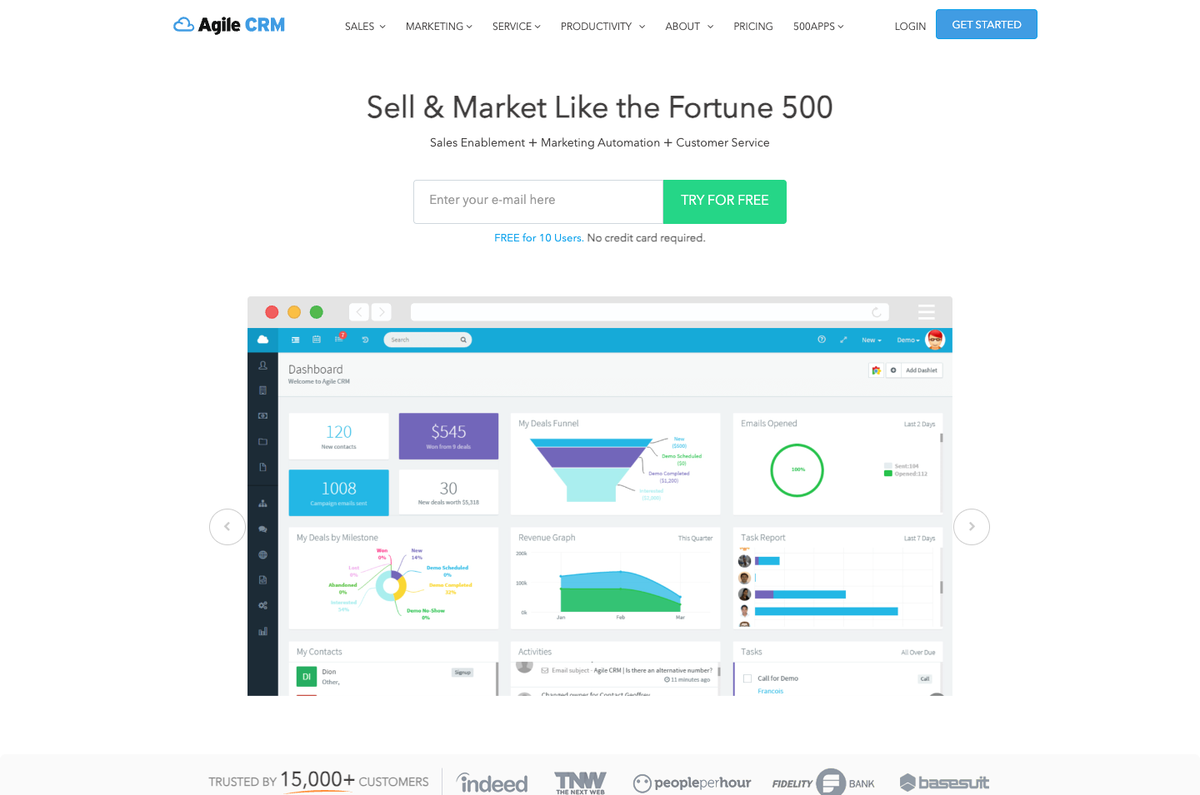
Agile CRM is the last genuinely team-sized free plan standing: up to 10 users free, with contacts, deals, and basic automation included. The product shows its age in places, and the cap that bites is polish rather than seats. Paid starts at $8.99 per user per month. Best for budget-first teams of three to ten that value the free headcount over a modern interface.
8. Jobin.cloud
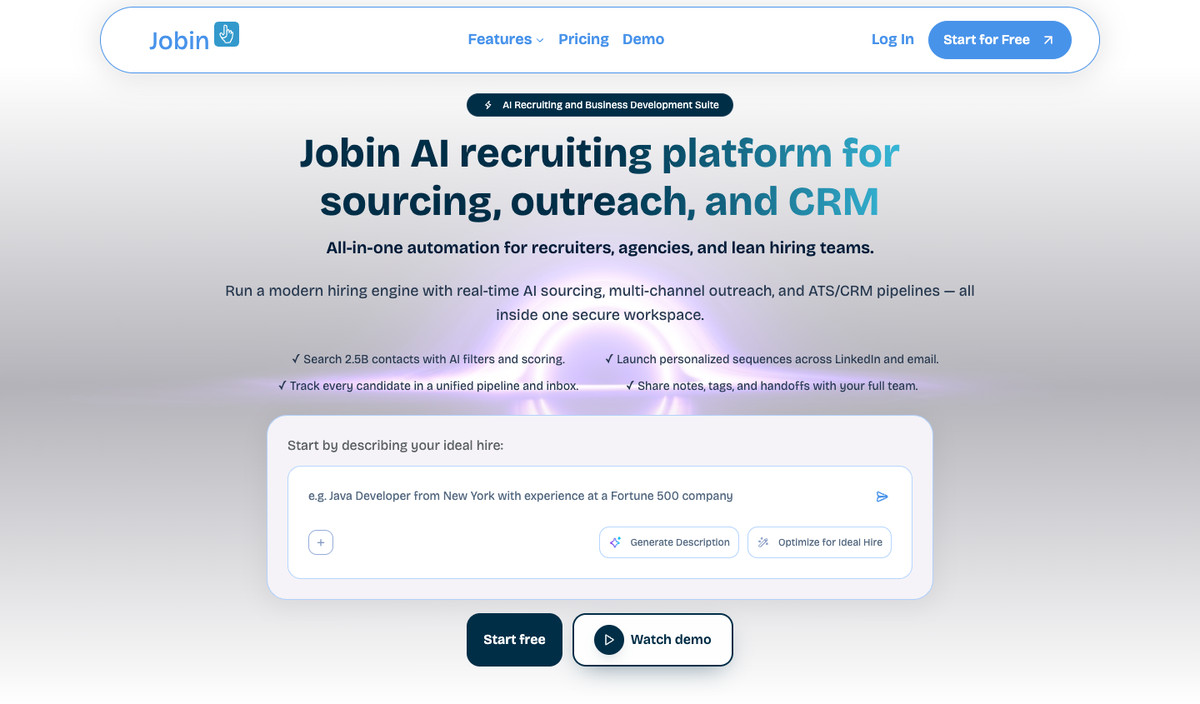
Jobin.cloud is the outreach specialist of this list, built around LinkedIn and email prospecting with CRM features attached. The Free Forever tier includes 30 monthly credits, enough to evaluate, not to run on. Paid starts at $8.99 per user per month. Best for recruiters and outbound-heavy sellers rather than general CRM use.
What Chrome extensions or add-ons can turn Gmail into a CRM?
If you prefer lightweight tools, extensions are probably the easiest way to add the basic CRM resources into Gmail. They are cost-effective and keep the learning curve easier, which is ideal for teams.
9. Zoho CRM
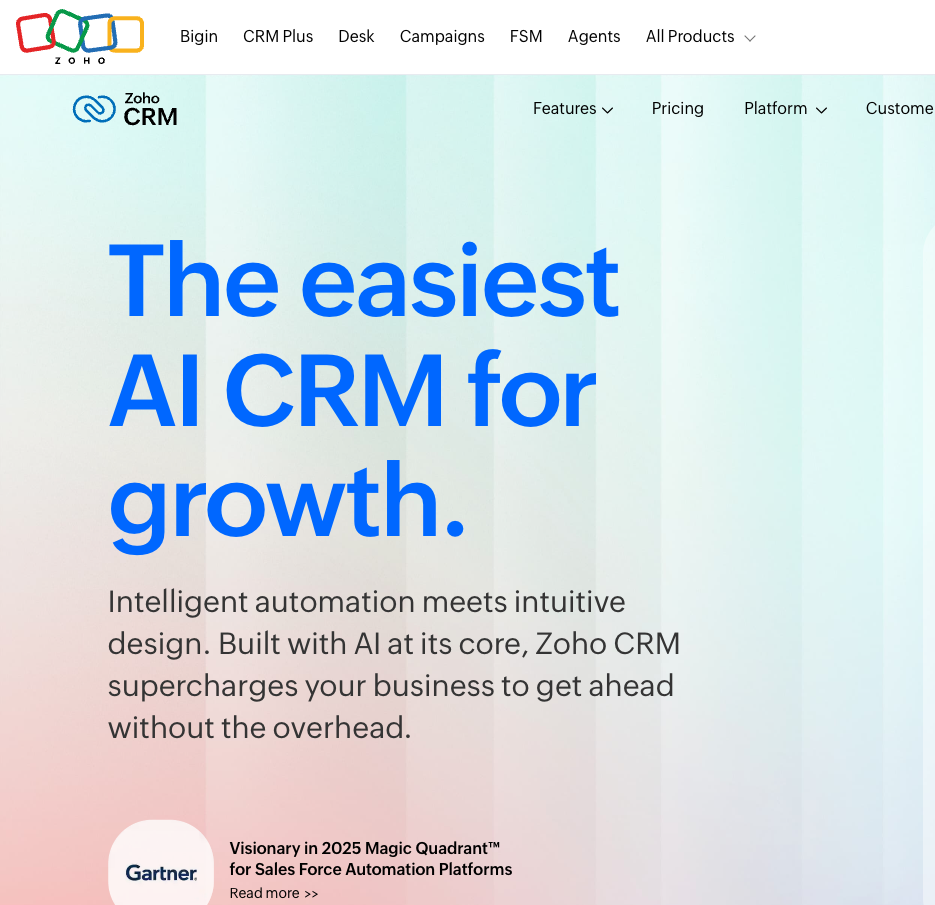
Zoho is the full-suite CRM with a genuinely useful free tier: 3 users, which quietly makes it the best free option for exactly-three-person teams anywhere on this page. Gmail integration is capable rather than native. Paid Standard starts at $14 per user per month. Best for small teams already in or open to the wider Zoho suite.
10. Capsule
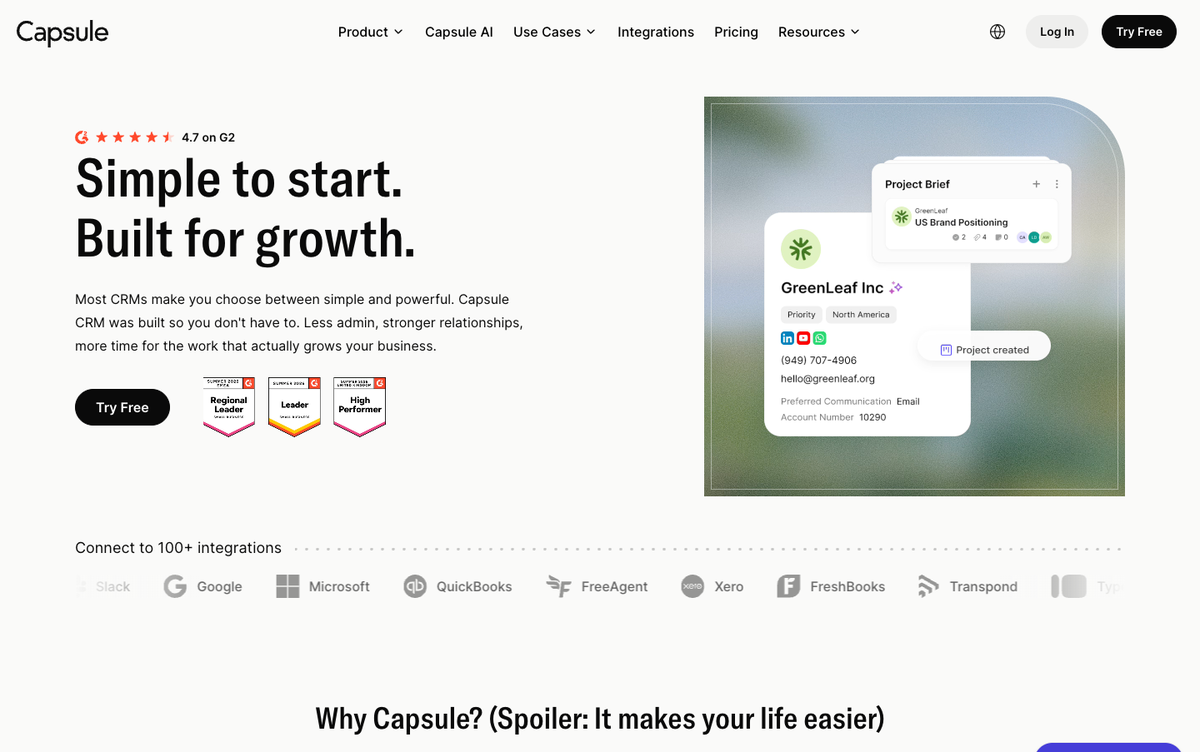
Capsule is the tidy, honest small-business CRM: contacts, pipeline, and tasks without bloat. The free plan states its limits plainly, 2 users and 250 contacts, and paid starts at $18 per user per month. Best for duos who value clarity over feature count.
11. Revamp CRM
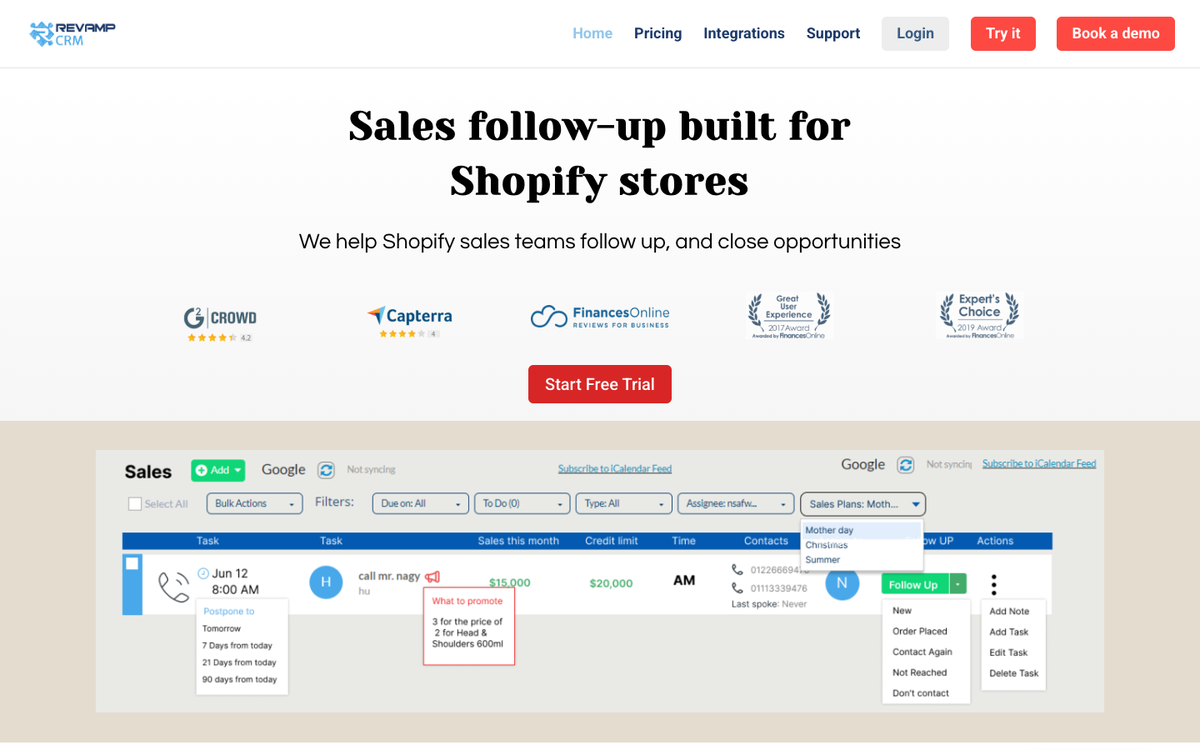
Revamp is the small-shop option: straightforward contact and deal management with a free tier covering 1 user. Paid starts at $9 per user per month. Best for tiny commerce and service businesses that want simple and cheap.
The one we removed, and why
Aritic Pinpoint left this list because it no longer offers a permanent free plan, only a trial, and its entry pricing has roughly tripled since we first covered it. It may still suit teams shopping for a paid marketing automation suite; it is just no longer an answer to this page's question. Free-plan lists rot quietly; this one gets re-verified instead.
Which Gmail CRM should I choose?
This process doesn’t have to be overwhelming. Start by looking at your team’s main needs: do you want a shared inbox, advanced automation, or just a simple add-on for Gmail?
Use the comparison table above to narrow down your options. If you’re still unsure, take advantage of free plans or trials. Testing the tools with your real workflows will show you which one feels most natural for your team.
Don't forget to pick an option that is easy to learn and get used to the interface, so that the onboarding process can be as smooth as possible.
Most importantly, pick a CRM that can grow with your business. A tool that works for a small team today should also support advanced features when you need them in the future.
Which free Gmail CRM fits your situation?
By headcount, because that is where free plans end: solo, HubSpot's 2-seat tier or Revamp's single-seat free plan; exactly two of you, Capsule or HubSpot both work honestly at that size; three, Zoho's free tier is the quiet winner; up to ten, Agile CRM is the last genuinely team-sized free plan standing. By workflow: if your deals are email threads in a shared address, sales@ or hello@, the CRM-in-a-spreadsheet-shaped-tool model fights you, and a shared inbox with pipeline boards fits the actual work, which is the case Drag's trial exists to make. And if what you mostly need is tasks around deals rather than a full CRM, our verified free task management list is the better-fitting page.
When the free CRM stops being enough
Free CRM tiers end at the same walls in the same order. Seats go first: the 1-and-2-user caps that now define this list mean person three usually triggers the decision. Contacts go second, the 250-to-1,000-contact ceilings arrive faster than teams expect once a shared address is feeding the pipeline. And automation goes last but costs most, because workflows, sequences and reporting are where every vendor monetizes. The honest advice mirrors our task guide: do not upgrade preemptively, run the free tier until a wall physically stops you, and when one does, compare the paid step against restructuring the work instead, because for email-centric teams a shared inbox with pipeline boards sometimes replaces the CRM upgrade entirely.
Frequently asked questions
What is CRM in Pipeline Management?
CRM helps businesses keep track of leads, follow-ups, and deals. It organizes customer interactions so nothing gets forgotten. Sales teams use it to see where each deal stands and what steps to take next.
What's the difference between CRM and Sales Pipeline?
The main difference between CRM and a sales pipeline is their purpose. CRM manages customer relationships, stores contact details, and tracks communication. A sales pipeline, however, maps out the steps a prospect takes before becoming a customer.
What are the best tools for Gmail CRM?
It depends on use case, email volume and team structure. DragApp is a good option because it helps users track emails, manage pipelines, and helps teams stay on top of leads, all inside the inbox.
Are there free Gmail CRM tools available?
Yes, several CRMs, such as HubSpot, offer free versions. The free plans usually include basic CRM features like contact management, email tracking, and pipeline views. However, it's worth noting that they lack the customization resources from paid tiers and other software options.
Can I use a Gmail CRM on mobile devices?
Yes. Most Gmail CRMs, like DragApp, HubSpot, and Zoho, offer mobile apps. This allows sales teams to track leads, respond to emails, and update pipelines no matter where they are.
Did HubSpot's free CRM get worse?
The features remain strong, but the seats changed: the free tier that was famous for unlimited users now covers 2. For solo use and duos nothing important was lost; for teams, free HubSpot is effectively an extended trial now.
Is there a truly free CRM for a whole team in Gmail?
For teams above three people the honest options narrow fast: Agile CRM's 10-user free tier is the last team-sized one on this list, and Zoho covers 3. Everything else free is capped at 1-2 seats. Teams that hit those walls usually either pay for the CRM or restructure around a shared inbox with pipeline boards instead.

Co-founder
Building Drag for nearly ten years: shared inboxes, boards, and now the AI and agent layer, all on Gmail, plus HeyHelp for the personal inbox. Writes the honest versions of the comparisons.
