













The complete 2026 guide to Google Slides: what changed this year dated from Google's own announcements, a full tutorial on the current interface, the tips and tricks worth knowing, and the honest state of Gemini in Slides, including what is and is not generally available.
Key takeaways
- Google Slides' interface moved its design entry points into a consolidated sidebar in March 2025, and the old Add-ons menu is now Extensions, so tutorials showing the old menus are describing a retired layout.
- Gemini in Slides is not one feature but several with different statuses: generating full presentations is a Workspace Experiment, desktop and English only, while the deck-aware upgrade that matches your existing slides rolled out in March 2026 to specific plans, each dated below from Google's own posts.
- The fastest wins in Slides are still the unglamorous ones: master slides, keyboard shortcuts verified against Google's own reference, and the sharing model, all covered in the tutorial against the current interface.
Table of contents
Google Slides is the presentation half of Google Workspace, free with any Google account, and it has changed enough recently that most tutorials now describe an older product: the design tools moved into a new sidebar in March 2025, the Add-ons menu became Extensions, and Gemini arrived with more caveats than the headlines admit.
This guide covers the current product: what changed and when, dated from Google's own announcements, a full tutorial against today's interface, the tricks that make decks faster, and exactly which Gemini features are generally available, which are experiments, and which plans get them.
What is Google Slides, and why to use it?
Google Slides is a web-based free program to build presentations, the same way as the other software included in Google Workspace, such as Google Docs and Google Sheets. In other words, you develop your presentations inside your web browser, and you don’t need to install it on your computer. Like any other Google Workspace app, Google Slides has features that encompass aspects such as collaboration, online editing, auto-save, and personalization. Let’s check the reasons why you should start using Google Slides soon enough.
Collaborate in real-time
Something you won’t find in regular slide builders is the possibility of working on presentations with other people at the same time. This feature is ideal for teams that need to work together on a presentation meeting, for example. Or even on those times that you need to edit slides for a lecture with two or more people involved. There are three collaborative elements that Google Slides offers: Share, Comments, and Edit.
Share
How many times did you have to send presentations via email to your colleagues, so they could make the necessary alterations, and then return them to you? Or how many times did you have to send an email with the presentation to be displayed or carried in external storage devices? These pains end the moment you start using a web-based tool since you can share it easily with other people.
With Google Slides, you can share your presentations with your team directly from the tool, and then they will be able to view or edit them online. Sharing works from the Share button at the top right. Add people or groups by email and choose their role, Viewer, Commenter, or Editor, or use the link settings to open the deck to anyone with the link at a role you pick. Access can be restricted again at any time from the same panel, and ownership can be transferred from the person picker.
Comments
When you produce content together with your team, a feature like this one can be handy. Sometimes you need to add notes or comment suggestions, highlighting specific parts of a slide, and this is where the comment feature comes in. To add a comment, you can select any part of a slide you wish.
Then click with the right button of your mouse over it. Choose the option “Comment”. Another way to do that is by merely pressing the keyboard shortcut Ctrl+Alt+M.
All comments are shown in boxes on the right of your screen, with the photo and name of who has commented. These boxes work as an interactive way of solving the situation mentioned in the comment. You can either reply or mention somebody who needs to see it and do something about it.
If you choose to refer a person, just press the “+” button on your keyboard and type in your teammate’s email address. After solving what was requested, you can simply click on “Resolve”, and the comment will disappear.
Edit
We have talked about one of the problems regular slide programs may offer. One of them is when you need to share it with other people, usually by sending them through email. But Google Slides offers an edition in real-time, which is a significant solution for this problem.
Slides is built for working together: several people can edit the same deck at once, seeing each other’s cursors live, with comments and built-in chat alongside. Google’s documentation puts the simultaneous-editing limit at 100 people; in practice the practical limit is however many collaborators a deck can stand.
Work both online and offline
Decks live in Google Drive and save every change automatically, so there is no file to lose and no Save button to forget. They open from any signed-in device, and offline access can be switched on in Drive’s settings for working without a connection.
No need to save files
If you are always hitting the save button to prevent file losses, the good news is that Google Slides has an auto-save function. So every time you make any alteration in your presentation, Slides immediately saves it. It’s a second-by-second saving feature. This aspect is common to all the Google Workspace apps.
Personalize your Google Slides
There are many ways of building a presentation. Every presenter has a visual style, and Slides covers the range: That’s the main reason why Google Slides allows you to personalize your experience in the app, using Extensions. To browse what is available, open the Extensions menu at the top and choose Get add-ons, which opens the Google Workspace Marketplace with the full catalog and a search bar. Choose those that will turn your presentations more dynamic, and that will fit the purposes you need to fulfill.
What's new in Google Slides
Slides changes quietly, so here is the recent record, dated from Google's own announcements.
In March 2025, Google consolidated the design tools into a new sidebar, moving the entry points for themes, layouts, and formatting into one place. Google's post describes it as consolidation rather than removal, so old instructions still mostly work, but the screenshots in older tutorials no longer match what you see. Speaker spotlight, which places your camera feed inside your slides for presentations and recordings, is generally available, and one Google announcement in this run printed a three-way availability split across plan tiers for a single feature, which tells you how much plan gating now decides what your Slides can do.
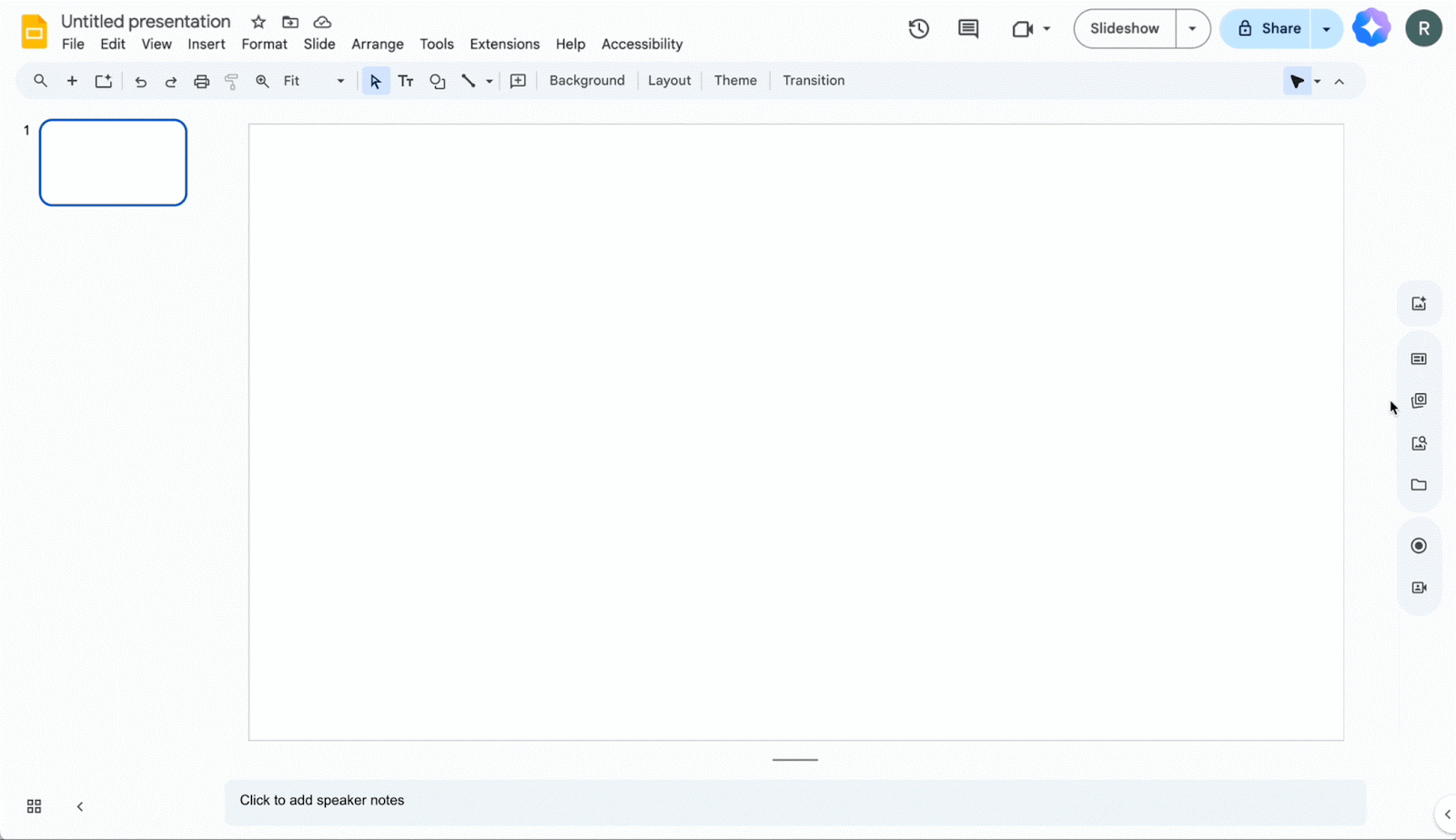
The bigger recent arrivals are Gemini's, and they get their own section below, because their availability statuses differ enough that lumping them together would be misleading.
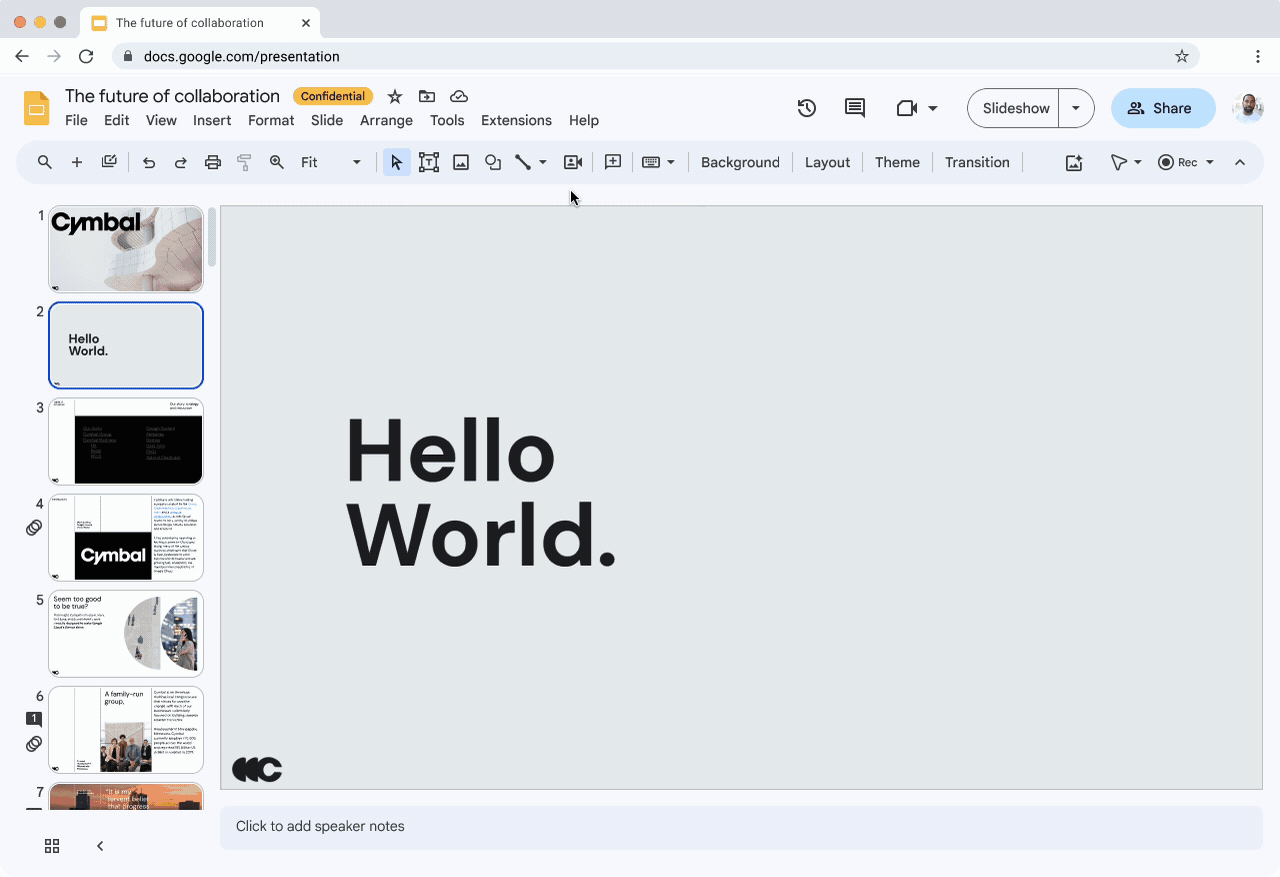
A thorough Google Slides tutorial
Now that you know all the benefits of choosing Google Slides, it’s time to learn how to build a presentation from scratch.
1 - Creating or importing a presentation
To create a new presentation in Google Slides, go to your Google Drive, click “new”, and select “Google Slides”. Then click on “Untitled presentation” at the top of the app to insert the title of your presentation. But if you want to import an existing presentation from other software to Google Slides, access the tab “File”, click “Open” and choose the file.
2 - Adding content to your presentation
When you want to add content on a slide, just click on it. The first slide usually is pre-formatted with a title and a subtitle box, where you can put the name of your presentation. Sometimes the other slides won’t be displayed when you create a new presentation, so just click the right button on the first one, and choose “New Slide”.
Also, you can click the plus symbol on the toolbar, and select the style you want for the next slide. Click into any text box on the slide to type; the layout you chose decides where the title and body boxes sit. There you can add texts and media.
3 - Inserting media and other elements
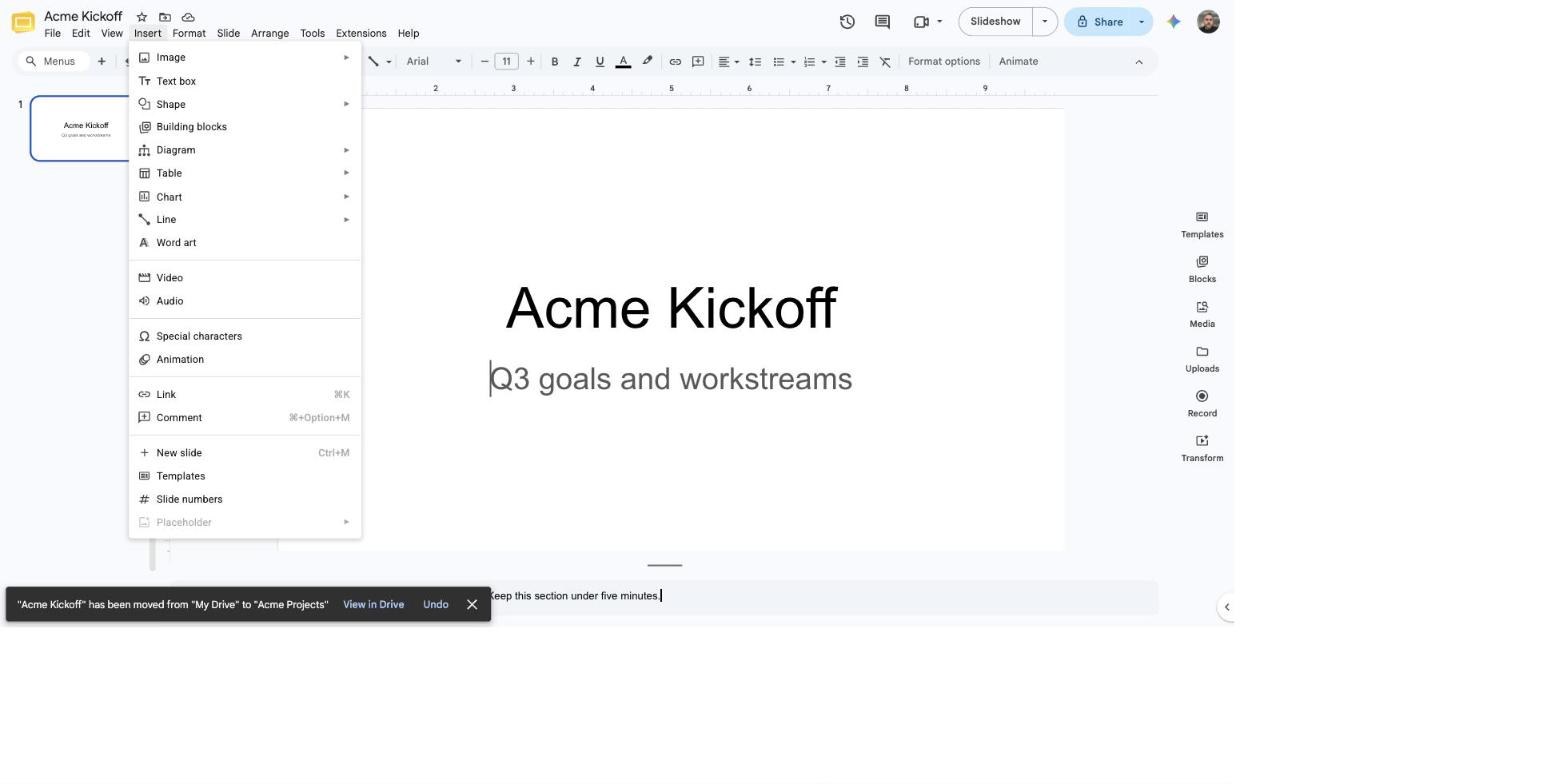
When you need to add images, videos, and other items, click on the tab “Insert” on the menubar. You can choose from the following aspects:
- Image
- Video
- Audio
- Shape
- Text Box
- Table
- Chart
- Diagram
- Word Art
- Line
- Animation
- Special Characters
You can place these elements the way you want because they are all editable.
4 - Organizing slides
Remember that every time you need to insert a new slide to the presentation, you just need to click the “+” button which is the first one in the toolbar. You can simply move a slide, changing its position by dragging it. Just click and hold, drag, and drop where you want to place it.
In case you need to move multiple slides at the same time, press the “Ctrl” button and select the slides you want to perform this action. Likewise, if you want to keep the same formatting, it’s usually recommended to duplicate the slides. To do that, click the right button on the slide and choose the “Duplicate slide” option. In case you need to delete a slide, click on it with the right button of your mouse and choose “Delete”.
5 - Picking a theme
You’ve already added the content you needed, so it’s time to pick a theme and a layout. These elements help to make your presentation more visually appealing and impress what you want to transmit through it. Click on “Theme” located in the toolbar, and a miscellaneous of themes will appear on the right side of your screen.
If you don’t want to use any of the Google Slides themes, you can import one that you enjoy. To do that, go to the bottom of the Theme pop-up and click on “Import Theme”. Use any of the themes from previous presentations you have had contact with.
It can be from a presentation you just viewed, for example. Or you can also upload PowerPoint themes that you have saved.
6 - Adding speaker notes
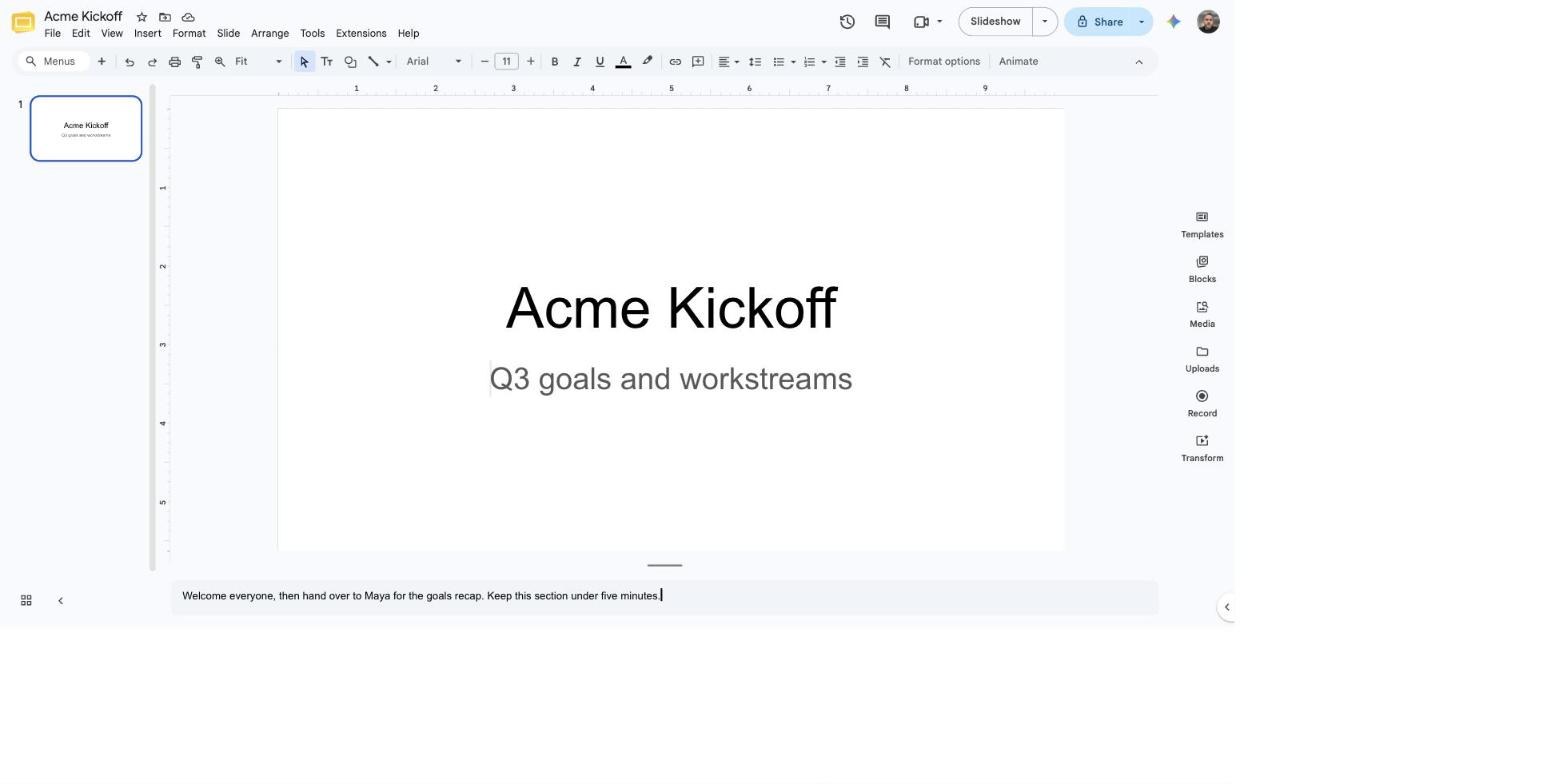 Don’t forget anything you need to say during your presentation. Add speaker notes at the bottom of your page to follow your script correctly.
7 - Presenting
After editing all the slides is time to present them. When the deck is ready, click the Slideshow button at the top right to present; the button was previously labeled Present, so older tutorials name it that. You can also press the “Ctrl” button and F5 at the same time.
There is a useful feature inside Google Slides called “Pointer”. By using it, you can turn your mouse pointer into a laser one, while you present your slideshow. To do that, just click the “Pointer” button located at the bottom of the page.
8 - Download your presentation
After a presentation, many people decide to share it with their audience for future reference. That’s why you can download it in another format to send to other people, instead of just sharing the visualization on Google Slides. Usually, it’s ideal to choose a format that everybody will be able to open.
To download as other formats, go to the tab “File” and choose “Download as”. You can download your presentation in any of the formats below:
- Microsoft PowerPoint (.pptx)
- ODP (.odp)
- Text File
- JPEG
- PNG
- Scalable Vector Graphics (.svg)
Drag AI
The inbox your team and your AI work in together
Shared inbox, live chat, and AI in Gmail, with an MCP server your AI tools can drive.
Google Slides tips and tricks
Sometimes you just need a good trick to make an impressive presentation, or to facilitate the process of building it. Here are some of the best tips and tricks that will help you master Google Slides properly.
Import slides from other presentations
This feature is useful for when you need to put some information in the current presentation you are editing, which is on other past presentations. Notice that you need to have at least two presentations in your Google Slides gallery: a previous one and the one you are editing right now. To import slides from other existing presentations, follow these steps: 1 - At the presentation that you are editing at the moment, click on the tab “File”, then choose the option “Import slides.” 2 - Then, a popup will open with all the available presentations you have.
Select the presentation that contains the slides you wish to import. 3 - Select each one of the slides you want to import, then click on “Import slides”. Keep in mind that you may choose if you want to keep the theme these slides have on the original presentation. To do that, you just need to mark the “Keep original theme” checkbox that is located above the “Import slides” button.
Save your time with Master Slides
If you don’t have much time, you need to optimize the editing of your slides. With the Master Slides tool, you don’t need to visit and edit each one of your slides but edit a range of them. You can use this tool also for changing the entire presentation design, such as the background, for example, or theme. To access this tool, go to the tab “View” and choose the option “Master”.
How to add music to your Google Slides
Some presentations require audio and music, which are elements that can attract more attention from the public. Let’s learn how to add music to your slides. There is an option to insert audio in Google Slides, but only to add audio you already have in your Google Drive, or that someone has shared with you. However, we can help you in another way:
-
Firstly, go to YouTube, Spotify, or any streaming service for audio, and copy the link from the song or audio you want to insert in your slide.
-
Paste the link in your slide.
-
The audio or song will automatically play when you click on the link during a presentation. If you feel the need to hide this link, you can use an image to match your design and theme.
- First things first, go to the toolbar and click on the picture symbol to insert an image.
- Then search for an image on your computer, on the internet, Google Drive, Google Photos, or use your URL or computer camera.
- Resize the image and move it where you desire.
- Select the image, then click on the “insert link” icon located at the toolbar. Paste the audio URL in the box and click Apply.
To play the audio, just click on the image during the presentation.
Manage previous versions of your presentations
Even being an online tool, Google Slides has a resource to keep the previous versions of your presentations. It means every alteration on it is recorded, and you can restore them whenever you want. This feature is useful when multiple people are editing the same file.
If someone makes a mistake, the simple solution is to go to the Version History and restore a previous version before it was done. To access this tab, go to the page’s top and click on “All changes saved in Drive”. You will find a complete activity log with the user names, times, and dates of modification.
Click on each date to see the version you had at that time. Notice that the parts of the presentation that were changed will be highlighted. In case you want to restore a version, just click on it and hit the button “Restore this version”.
Useful Keyboard Shortcuts
Keyboard shortcuts help to facilitate your processes on the internet. And you can also count on this feature on Google Slides. Therefore, by using these shortcuts, you save time and can focus on what is more important: the content on your slides. Every shortcut below is Google's own, taken from its keyboard-shortcuts reference for Slides.
| Action | Shortcut |
|---|---|
| Show common keyboard shortcuts | Ctrl + / |
| New slide | Ctrl + m |
| Duplicate slide | Ctrl + d |
| Find | Ctrl + f |
| Move to previous slide | Page Up or Up arrow |
| Move to next slide | Page Down or Down arrow |
| Move focus to first slide | Home |
| Move focus to last slide | End |
| Go to specific slide (7 followed by Enter goes to slide 7) | Number followed by Enter |
| Zoom in | Ctrl + + |
| Zoom out | Ctrl + - |
| Open speaker notes panel | Ctrl + Alt + Shift + s |
| Play the selected video | Enter |
| Present slides | Ctrl + F5 |
| Exit the current mode | Esc |
| Insert comment | Ctrl + Alt + m |
Google Slides and Gemini
Google's headline is that Gemini can generate presentations in Slides. The accurate version is more specific, and worth knowing before you plan a workflow around it.
Generating full presentations with Gemini is filed by Google under Workspace Experiments: desktop only, English only, and explicitly not a generally available feature. The generally available layer is different: the deck-aware upgrade Google rolled out on March 31, 2026 analyzes your existing presentation and produces brand-matched slides, and it went to Business and Enterprise Standard and Plus, plus consumer AI Pro and Ultra subscribers. Business Starter is not in that list, and Google withdrew its separate Gemini add-ons from sale on January 15, 2025, folding AI into the plan tiers themselves.
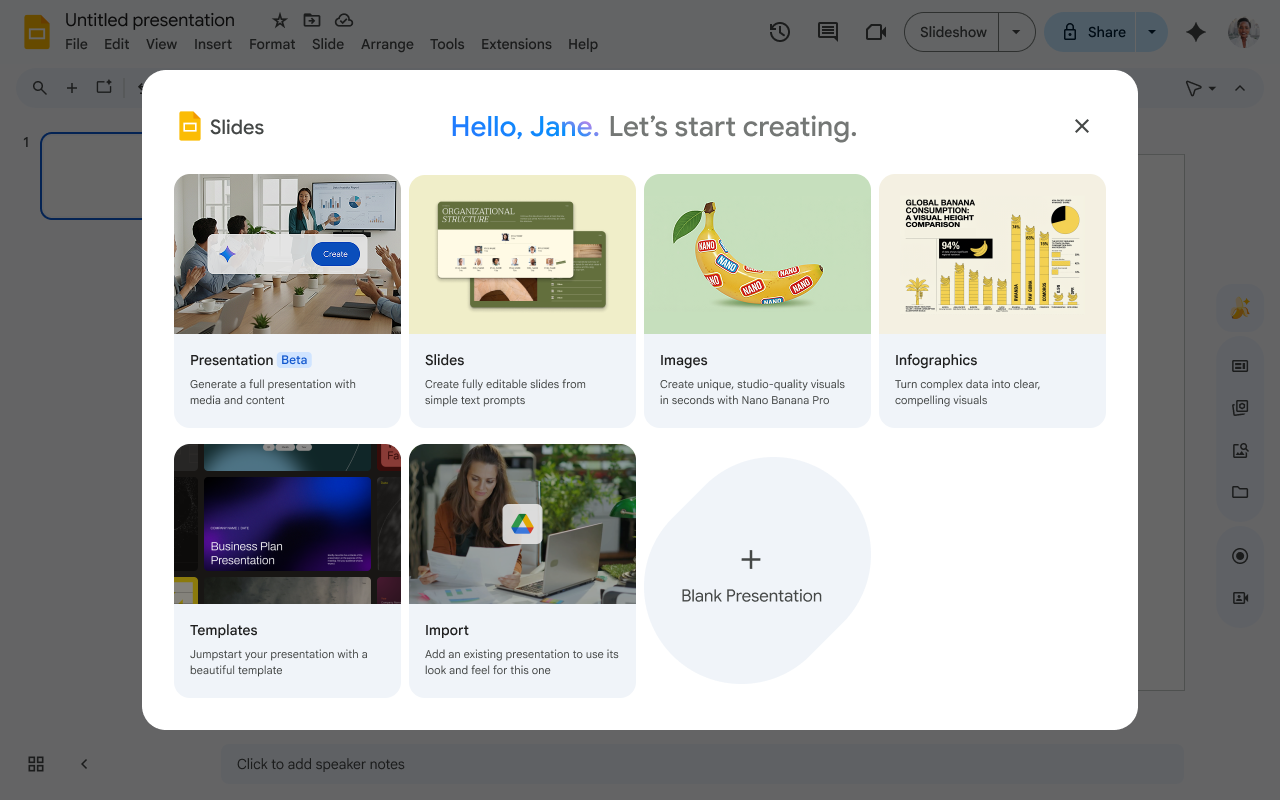
So the honest questions before relying on Gemini in Slides are which plan you are on and whether the feature you saw demonstrated is the experiment or the release. This guide quotes each status from Google's own posts rather than the headlines, because the difference is exactly where rollout plans go wrong.
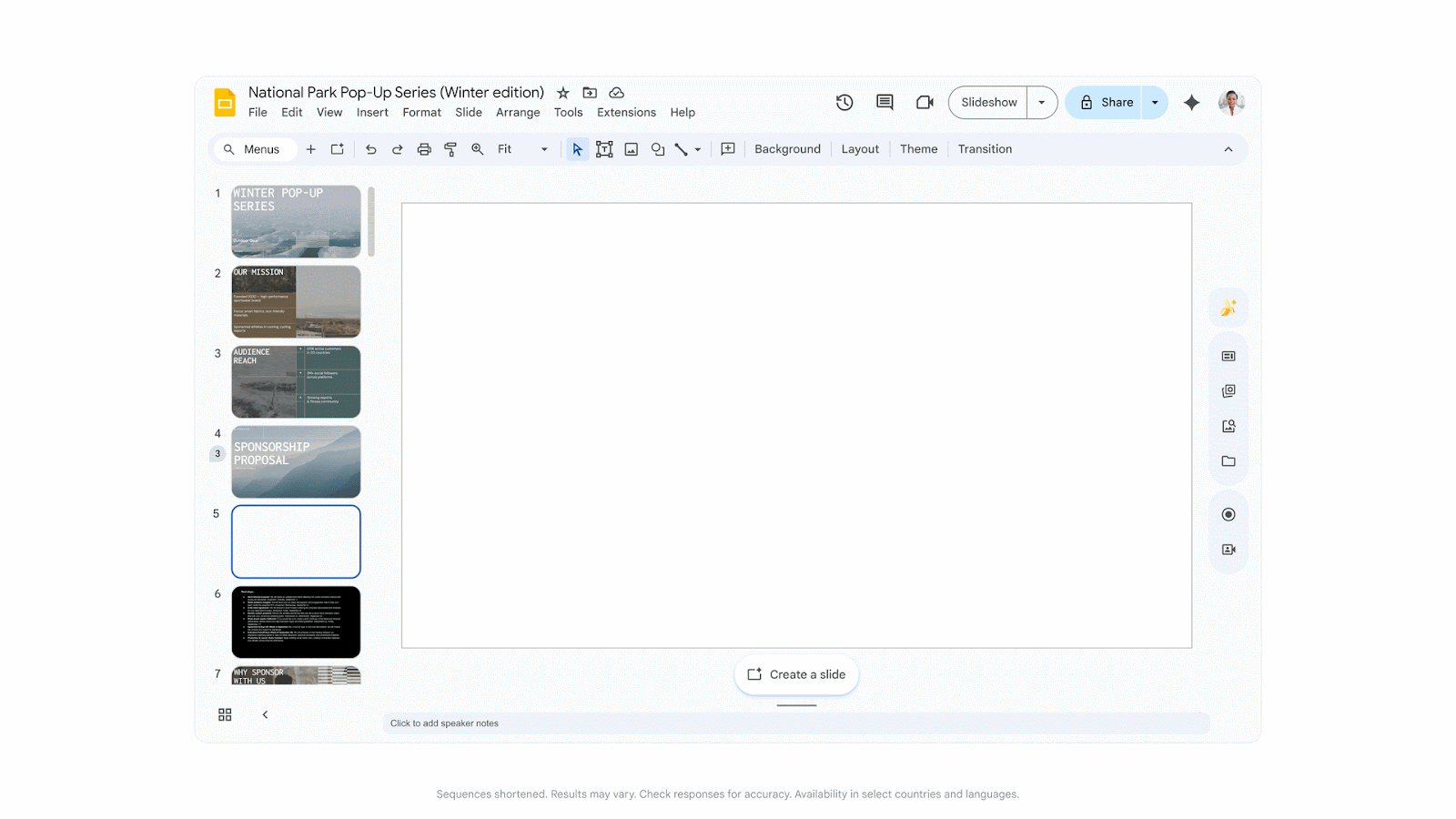
Most decks are made for someone: a client, a prospect, a team. The making happens in Slides, and the sending, the feedback, and the follow-up almost always happen in email. If your team runs that side of the work in Gmail, Drag adds a shared inbox with boards, assignments, and internal notes in the Gmail you already use, so the deck's conversation is as organized as the deck. Plans start at $12 per user per month with a 7-day trial and no card required.
Google Slides FAQs
Is Google Slides free?
Yes. Slides is included free with any Google account, and with every Google Workspace plan for business use. The plan you are on decides Gemini features, not access to Slides itself.
Can Gemini create a presentation in Google Slides?
As an experiment, yes; as a released feature, not quite. Full presentation generation is a Workspace Experiment, desktop and English only, per Google. What is generally available since March 2026, on eligible plans, is Gemini producing brand-matched slides that analyze your existing deck.
What happened to the Add-ons menu in Google Slides?
Google renamed it: Add-ons is now Extensions, and the marketplace behind it is the Google Workspace Marketplace. The functionality is the same; tutorials pointing at Add-ons are describing the old name.
Can you insert SVG files into Google Slides?
Google's own supported-formats documentation does not list SVG for direct insertion into Slides; the working routes are converting to PNG at export size or opening the SVG in Google Drawings first. If Google announces native support, this answer will carry that date.

Co-founder
Building Drag for nearly ten years: shared inboxes, boards, and now the AI and agent layer, all on Gmail, plus HeyHelp for the personal inbox. Writes the honest versions of the comparisons.
