












Twelve free project management tools with every free plan verified against vendor pricing, eight stale tools removed, and the caps that will make you pay.
Table of contents
Free project management lists rot in a specific way: tools die, rebrand, or quietly retire their free plans, and the lists keep recommending ghosts. This one just went through exactly that reckoning. Eight tools from its previous edition have been removed, including one that no longer exists under its old name and no longer has a free plan at all, and every remaining free tier below was verified directly against the vendor's pricing page, with the caps that actually bite stated plainly. What survives is the honest 2026 state of running projects for nothing: twelve tools, from the board that lives on Gmail to the platforms your whole company could outgrow into, and the exact point where each one starts charging.

Founder’s Take
A personal note from Nick, co-founder of Drag
There are two products that dominate this list's category: Notion and ClickUp. That does not mean there is no space for anyone else, and many people make the mistake of assuming a saturated space has only a few go-to options. My outlook is different. I see room for specialists that compete with the incumbents directly on one axis rather than everywhere.
Drag will not beat Notion or ClickUp, and I am comfortable writing that on our own site. But where a team's work genuinely lives in email, where the projects arrive at sales@ and support@ and the “tasks” are threads, a tool that brings boards and workflows into that environment wins naturally over a general platform the team has to copy reality into.
Pick the general tool if your work is general. Pick the specialist if your work is not. That is the honest version of how this market actually works, and it is the same logic behind every recommendation above.
The free plans at a glance
| Tool | Free plan reality | First paid plan |
|---|---|---|
 Drag Drag | No free plan; 7-day trial, no card | $12/user/mo |
 ClickUp ClickUp | Free Forever, unlimited members, 60 MB storage | $7/user/mo |
 Trello Trello | Free, 10 boards + 10 collaborators/workspace | $5/user/mo |
 Wrike Wrike | Free, unlimited users (200 active tasks, 2 GB) | $10/user/mo |
 Jira Jira | Free, up to 10 users | ~$7.91/user/mo |
 Zoho Projects Zoho Projects | Free, 5 users / 3 projects | ~$4/user/mo |
 Asana Asana | Free, capped at 2 users | $10.99/user/mo |
 monday.com monday.com | Free, 2 seats | ~$9/seat/mo (3-seat min) |
 Notion Notion | Free for individuals | ~$10/member/mo |
 Teamwork Teamwork | Free, 5 users / 5 projects | $9.99/user/mo |
 Basecamp Basecamp | Free, 1 project (20 users, 1 GB) | $15/user/mo |
 Bitrix24 Bitrix24 | Free, capped at 1-2 users | $49/org/mo |
Figures verified against vendor pricing pages at publication, annual billing where plans differ. Read the caps column first: half of these free plans are personal tools in team clothing, and the generous exceptions, Wrike's unlimited seats, ClickUp's unlimited members, Jira's ten users, are where genuinely free teamwork still lives.
Also on this page: the eight we removed, which free plan fits your team size, and the FAQ.
1. Drag
Drag has no free plan, and a list built on free-tier honesty says that in the first sentence. What it is: project boards on Gmail itself, where emails become cards, cards carry tasks, due dates, owners and notes, and the whole board, cards, emails and tasks alike, can be driven from Claude or ChatGPT through Drag's MCP server. It helps to eliminate the back-and-forth between your Gmail and a third-party tool, and your Drag boards are customizable, displayed with a Kanban or a list view. It's possible to add notes and due dates to your tasks and emails and mention teammates on the private chat, centralizing all the communication necessary for a specific job. There is a 7-day trial with no card required, and plans start at $12 per user per month. Best for teams whose projects arrive and live in email, client work, sales, support, operations, where a separate PM tool means copying reality into a second system.





2. ClickUp
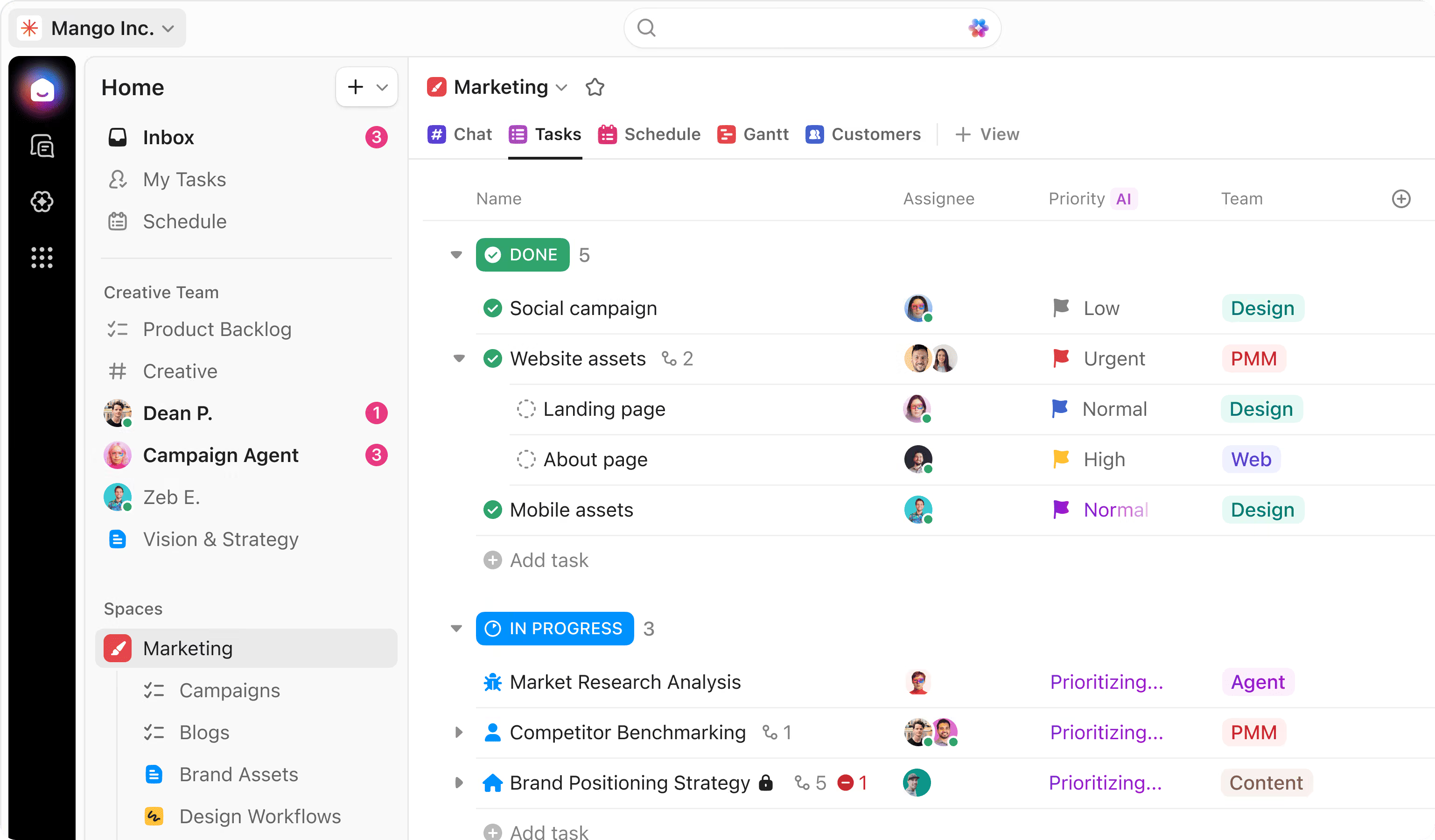
ClickUp remains the most-features-per-dollar answer in project management, and its Free Forever plan is the real thing: unlimited members and unlimited tasks, with the cap moved to storage, 60 MB, and to advanced views. The cap that bites is therefore attachments, not people. Paid Unlimited runs $7 per user per month billed annually, and it also brings native time tracking and unlimited integrations, which is usually the actual reason teams pay. Best for teams that want maximum free capability and accept a busier interface as the price.
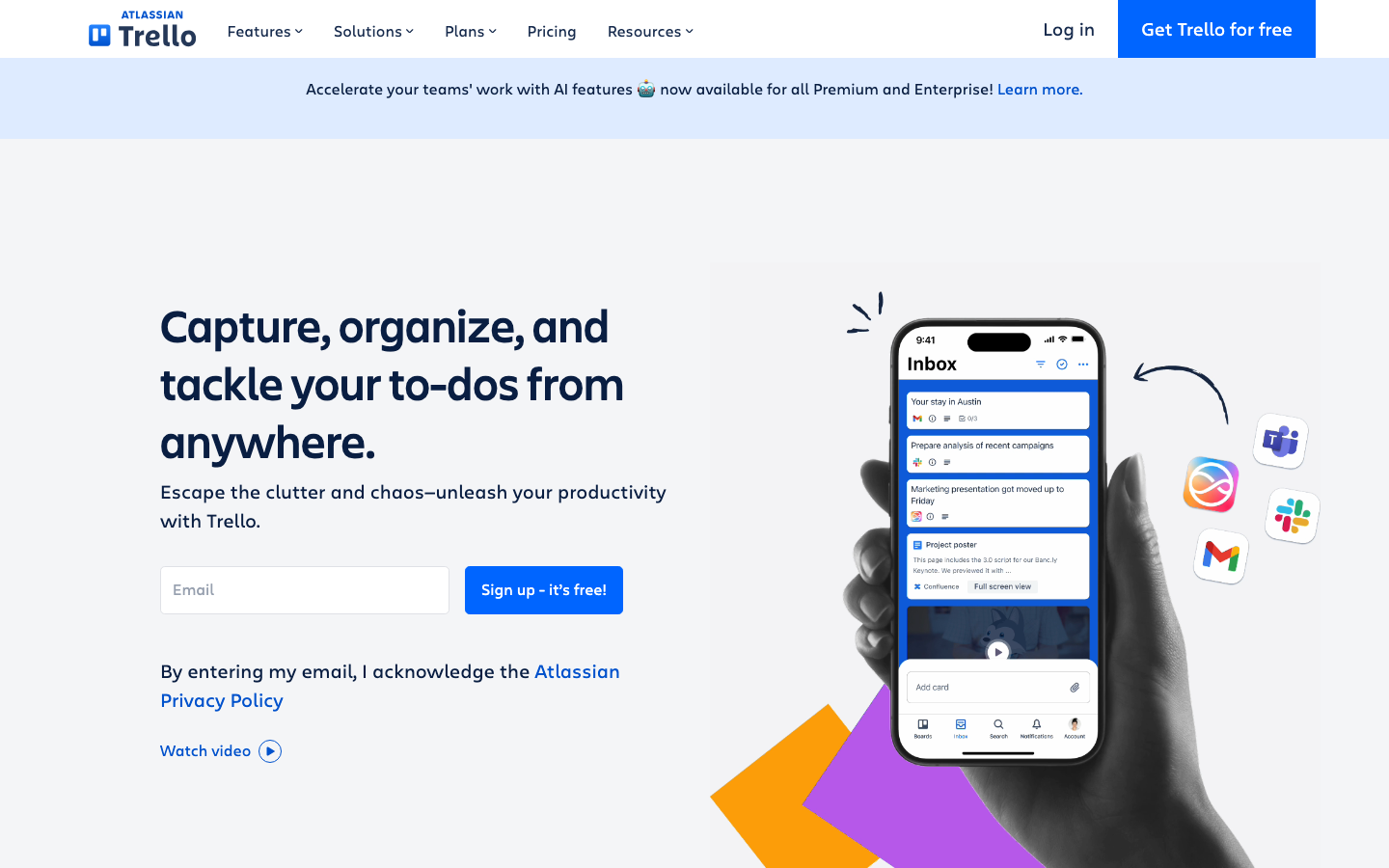
3. Trello
Trello is the gentlest start in project management: boards, cards, drag and drop, done. The free plan covers 10 boards and 10 collaborators per workspace with unlimited cards. The collaborator cap is per workspace, not per board, so guest-heavy client work reaches it sooner than the board count suggests. The cap that bites: board count for multi-project teams, and the useful views beyond boards live in Standard at $5 per user per month billed annually ($6 billed monthly). Best for small teams and personal projects that think visually and want zero onboarding.
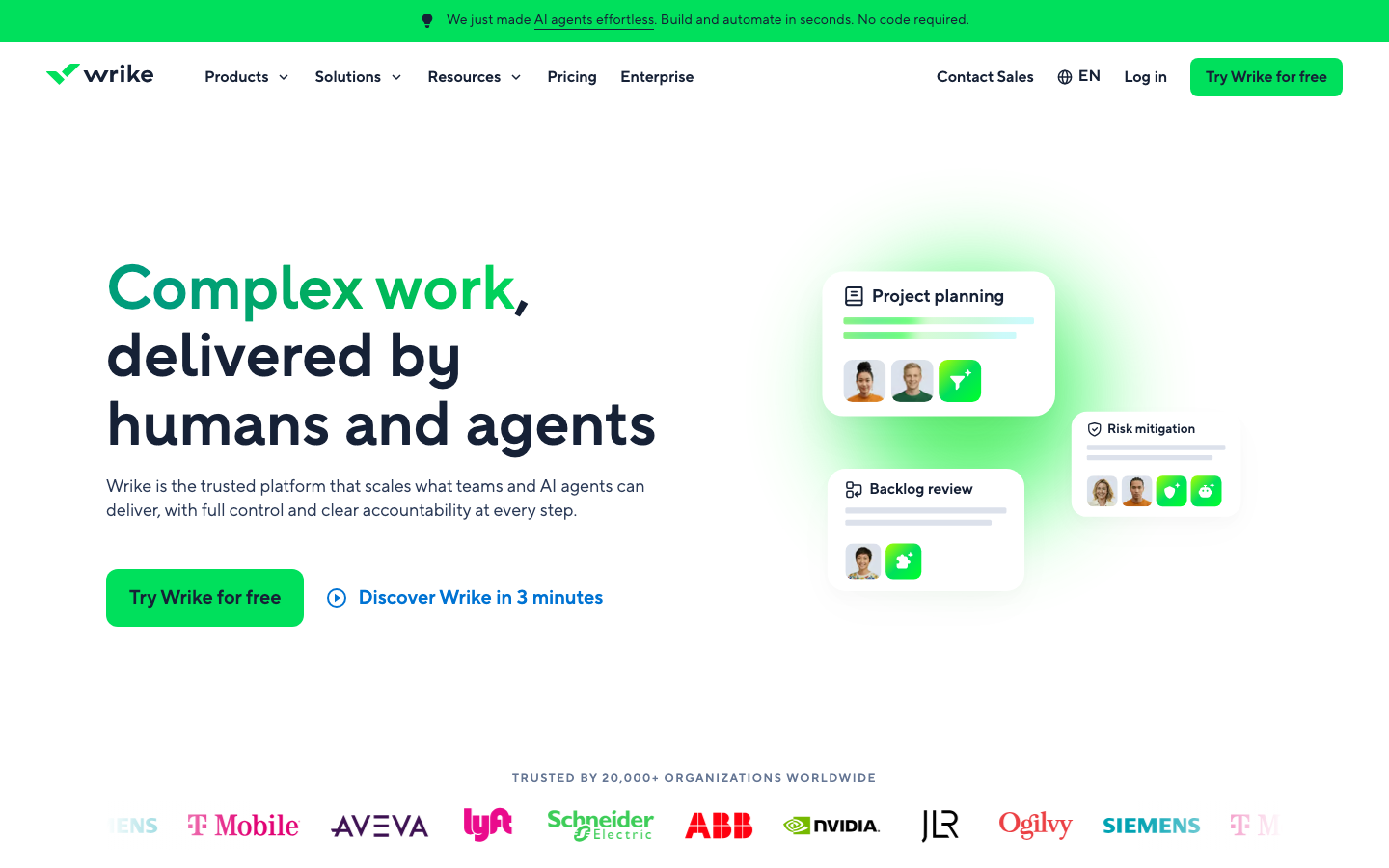
4. Wrike
Wrike's free plan has the rarest property on this list: unlimited users. The trade is depth, 200 active tasks and 2 GB of storage, with board and table views included but Gantt charts, dashboards and time tracking held for the Team plan at $10 per user per month billed annually; the Team tier spans 2 to 15 users and adds AI features and shareable dashboards on top of everything in Free. Best for bigger teams that need everyone in one tool now and can live inside the task ceiling while they decide.
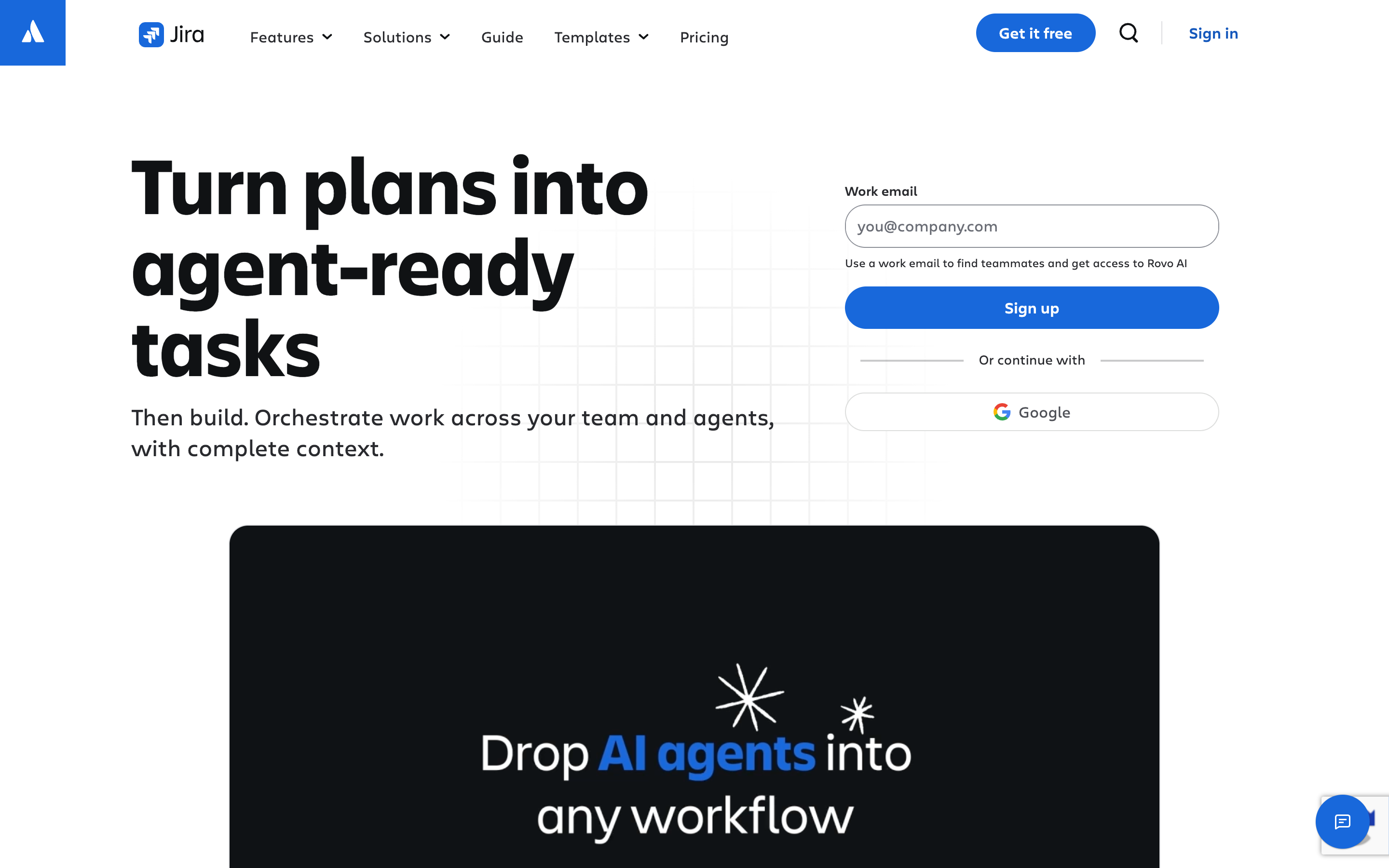
5. Jira
Jira free covers 10 users with unlimited projects, boards, backlogs and sprints, which makes it the most complete free plan for software teams, full stop. Everything in free is the real product; Atlassian's bet is simply that the team grows past ten. The cap that bites: the eleventh person, and the learning curve for anyone who does not think in sprints. Paid Standard lands around $7.91 per user per month. Best for engineering teams working agile who want the industry-standard tooling for free.
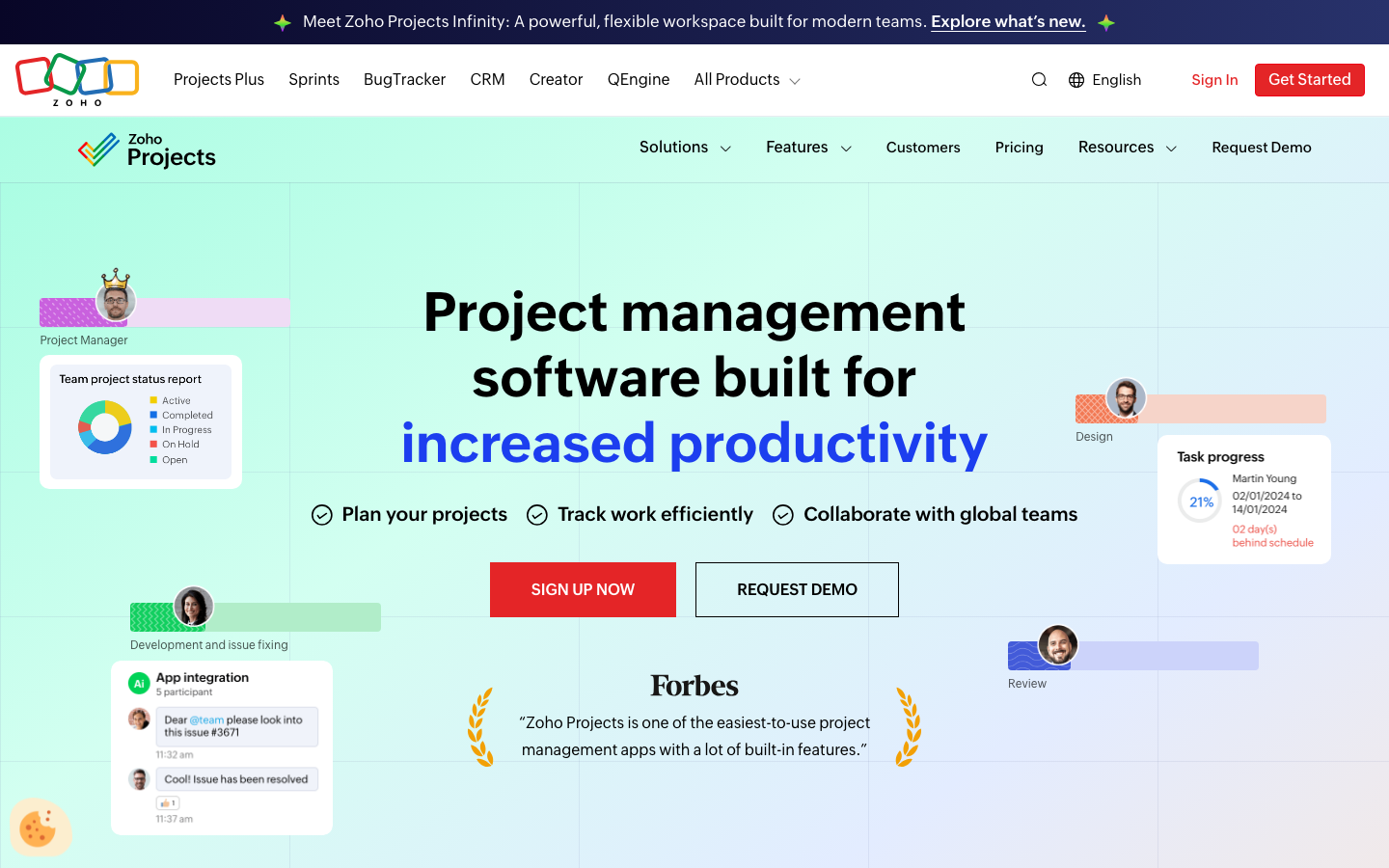
6. Zoho Projects
Zoho Projects is the quiet value pick: the free tier covers 5 users and 3 projects with task lists, Gantt views and 5 GB of storage, more real project structure than most free plans allow. It allows you to use Gantt charts to build your project plan and track your task schedule. Free accounts also get 50 workflow executions a month, enough to test automation before Premium raises the ceiling to 5,000. The cap that bites: three projects arrives fast for client work. Paid Premium is about $4 per user per month billed annually, among the cheapest serious upgrades anywhere on this page. Best for small teams of up to five that want traditional PM structure without paying for it.
7. Asana
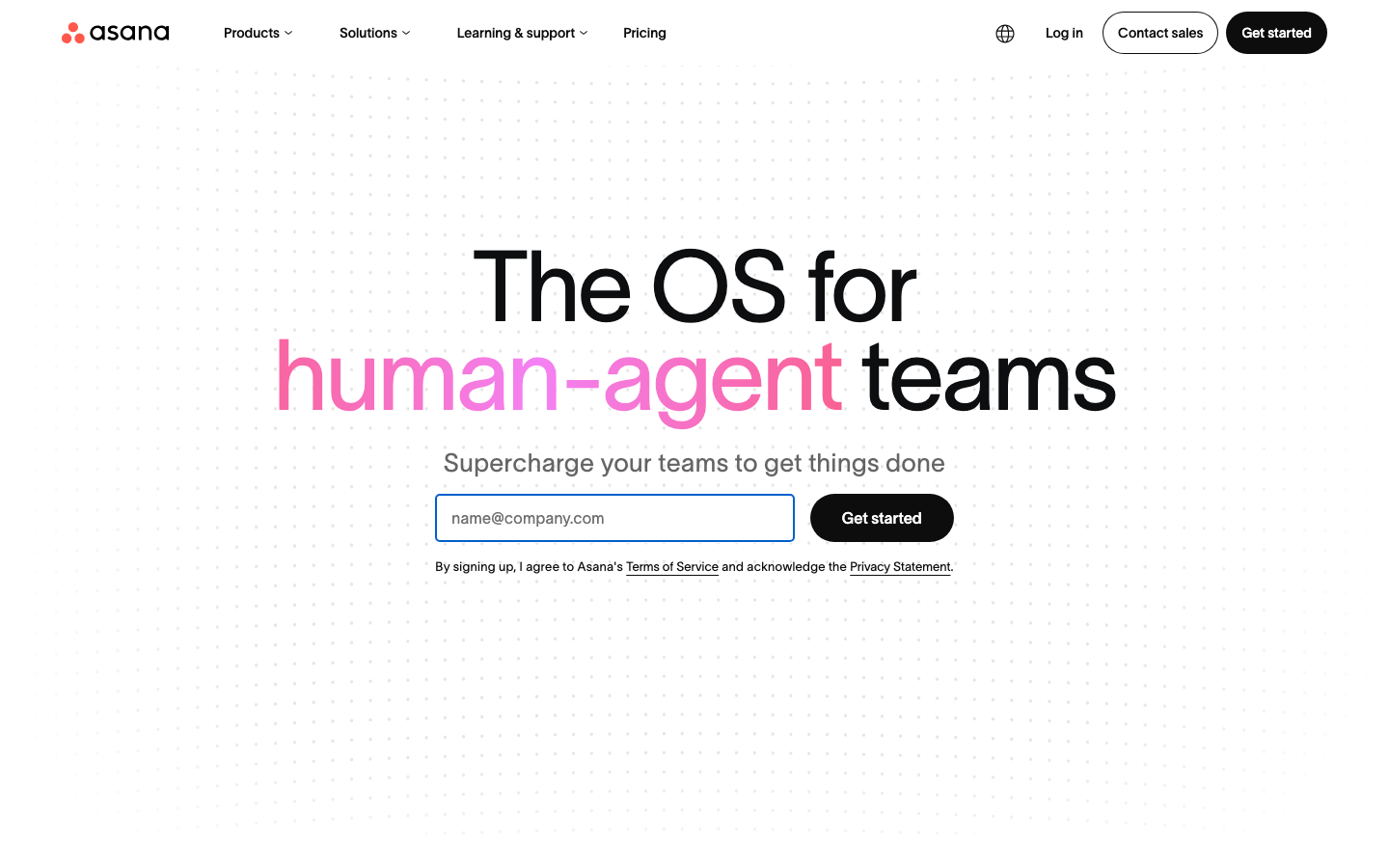
Asana is the polished standard for structured work, and the 2026 reality check applies: the free Personal plan caps at 2 users for new accounts, which makes free Asana a solo-or-duo tool rather than the team option older lists remember. Paid Starter begins at $10.99 per user per month billed annually, $13.49 month to month, so the annual commitment is where the listed price lives. Best for individuals and pairs who want the smoothest interface in task and project tracking.
8. monday.com
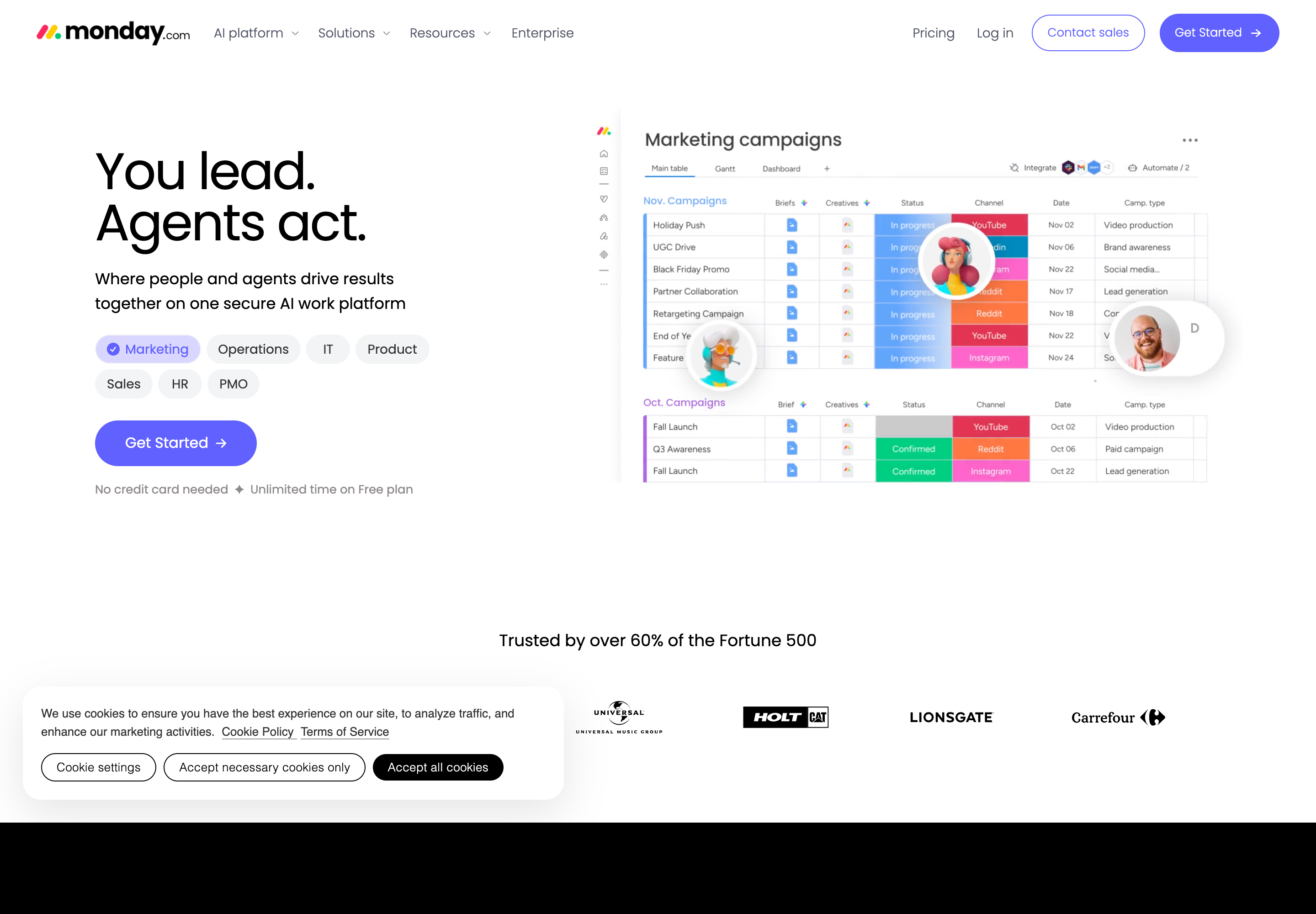
monday.com is the customizable work OS with the colorful boards, and its free plan follows the industry's quiet trend: 2 seats, with structure capped at 3 boards and 3 docs, which is the real prototyping boundary. Paid Basic runs about $9 per seat per month billed annually with a three-seat minimum, so the real entry bill is roughly $27 a month. Best for duos prototyping a workflow they expect to pay for once the team grows.
9. Notion
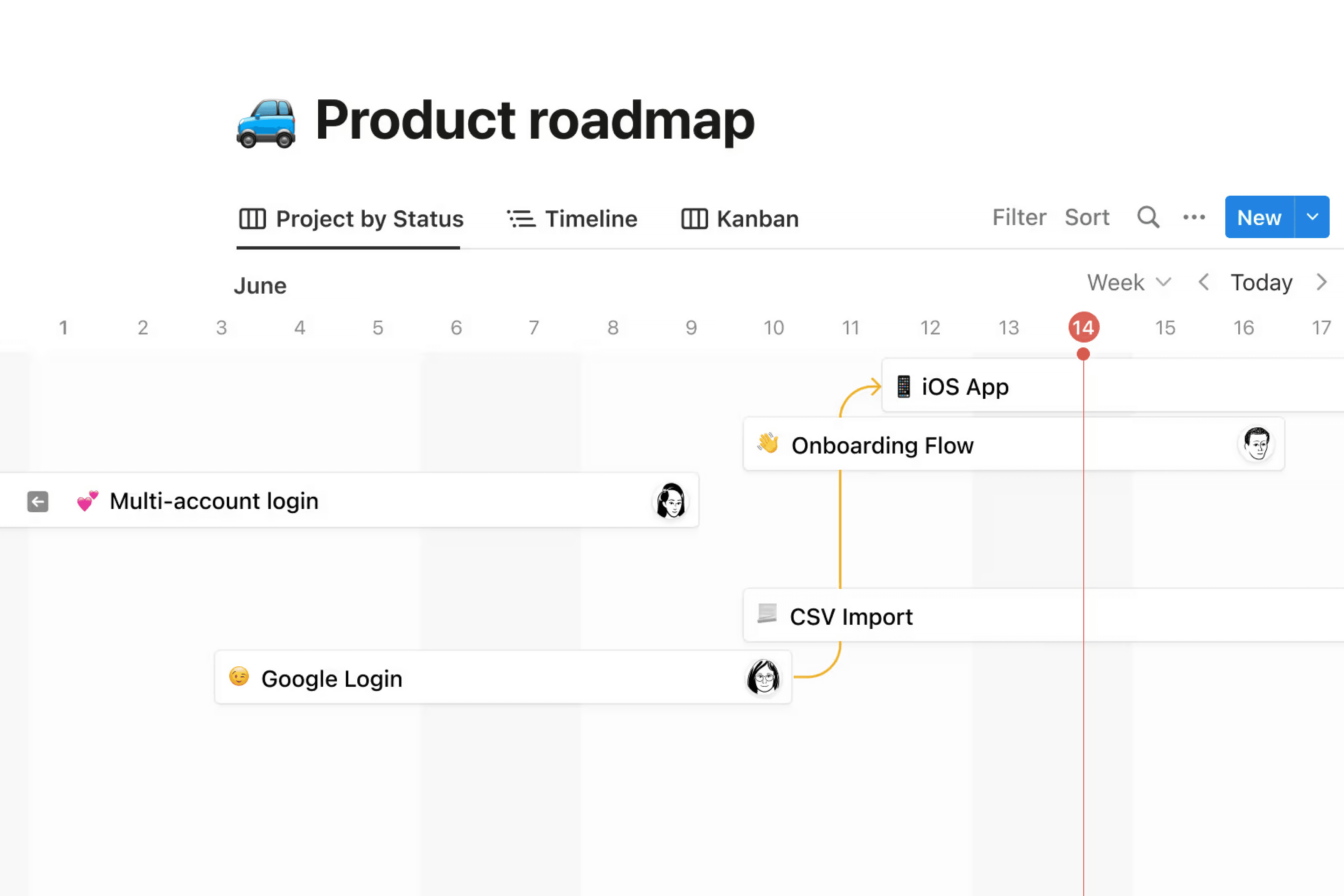
Notion's free plan is genuinely complete for one person: pages, databases, boards and docs in a single flexible workspace. Free workspaces can also host up to 10 guests, which stretches solo use surprisingly far. The cap that bites is collaboration, real multi-member work moves to paid at roughly $10 per member per month billed annually. Best for solo operators who want projects, notes and docs living in one system rather than a dedicated PM tool.
10. Teamwork
Teamwork is client-work-shaped project management, milestones, time logs, billable rates, and its free plan covers 5 users and 5 projects with 100 automation runs a month. The cap that bites: five projects is one busy agency month. Paid starts at $9.99 per user per month billed annually. Best for small client-services teams evaluating whether they will grow into the paid tiers built exactly for them.
11. Basecamp
Basecamp is the opinionated classic: to-dos, message boards, schedules, and famous calm instead of feature sprawl. It allows you to organize your tasks in to-do lists, where it's easy to reorder and prioritize assignments. The free plan covers exactly 1 project with up to 20 people and 1 GB. Paid is $15 per user per month, with a $299 flat Pro Unlimited that flips the math for bigger teams. Best for a team running one real project that wants structure without configuration.
12. Bitrix24
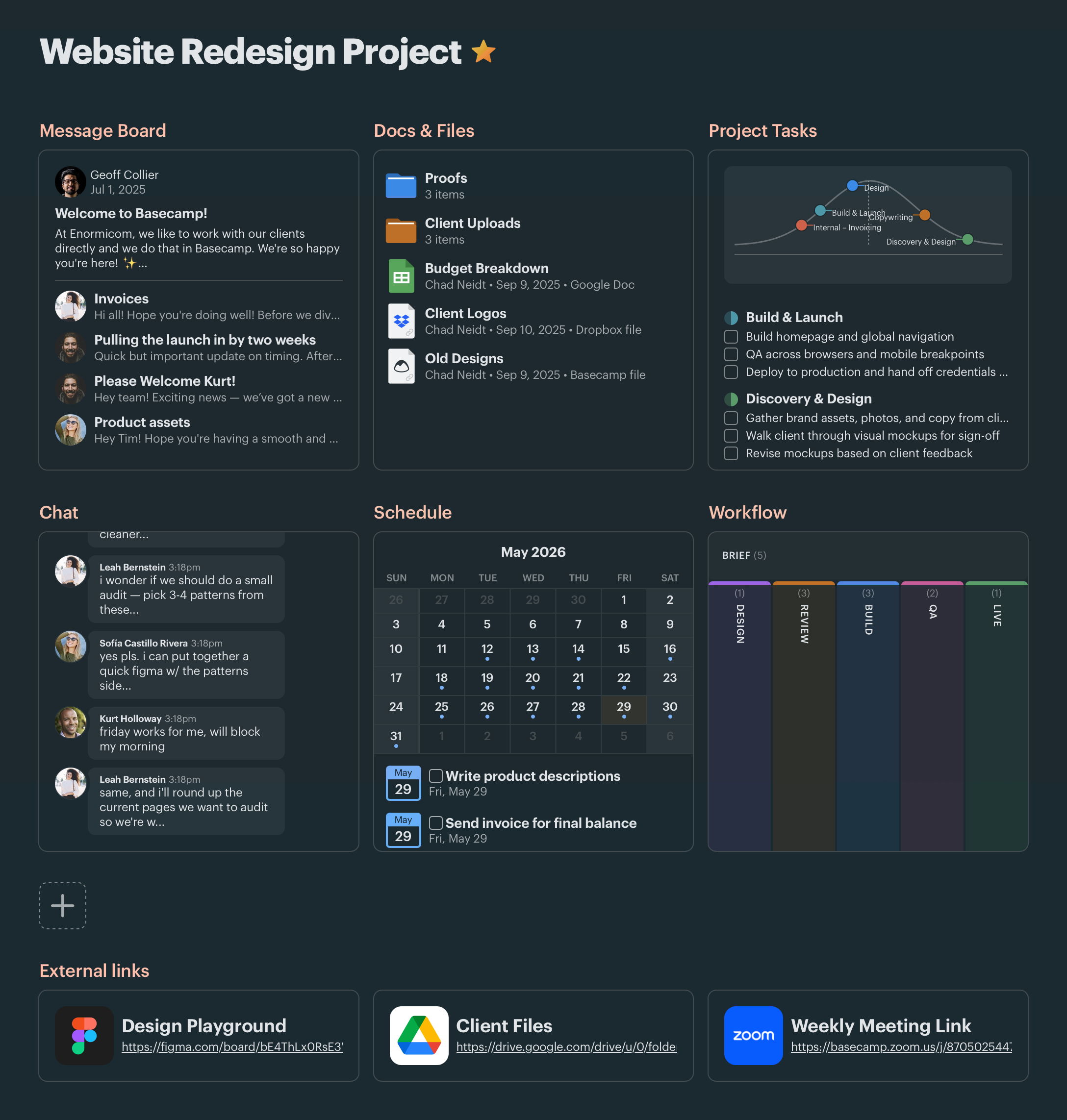
Bitrix24 bundles projects, CRM, chat and sites into one suite, and it offers extra features such as a contact center and website building. The free tier carries 5 GB of storage, and the suite breadth is the point: you are trialing an all-in-one, not just a PM tool. It now covers 1 to 2 users, the sharp cut from the old unlimited plan that older lists still cite. Paid Basic is $49 per organization per month billed annually for 5 users, per-org pricing that gets cheap per head as teams grow. Best for very small operations that want everything in one place and expect to pay soon.
The eight we removed, and why
Eight tools left this list since its previous edition, and the reasons are the whole argument for verifying free plans instead of copying them forward. LiquidPlanner no longer exists under that name: it is now Tempo's Portfolio Manager, the new product has no free plan, and the legacy LiquidPlanner Classic that did is scheduled to sunset at the end of 2027, which means the "free LiquidPlanner" older lists recommend is a countdown, not an option. TeamGantt and Agantty survive only in the Gantt-chart niche now, with Agantty's free tier reduced to a single project and its last sign of editorial life years old. KanbanFlow still runs but has fallen off every current ranking for good reason: maintained, minimal, and outclassed by the free tiers above. And Paymo, Flowlu, Avaza and Zenkit all trimmed their free plans to one-or-two-user shells that no longer answer this page's question. Free-plan lists rot quietly; this one gets re-verified instead.
The verification method, for the record: every keeper's pricing page was loaded fresh at publication, seat caps and entry prices were read from the vendor's own tables, and the two figures vendors geo-hide behind scripts were cross-checked against a second source and marked approximate. Where a vendor's page shows a different currency by region, the US dollar figure is stated as approximate and worded that way in the entry. The same pass runs again at the next update, and the roster changes when the facts do.
Which free plan fits your team size?
Headcount is where free plans end, so start there. Working alone: Notion if projects live next to notes, Trello if they live on a board, and our free task management guide covers the lighter-weight options. Exactly two: Asana and monday.com are both excellent right up to their 2-seat caps. Three to five: Zoho Projects and Teamwork are the honest picks, real PM structure, team-sized. Up to ten: Jira if the work is software, Trello if it is anything else. A whole team, free: ClickUp and Wrike both take unlimited people and cap features or storage instead, which is usually the better trade. And if the projects arrive by email at a shared address, none of the free plans above touches the actual problem, which is what Drag's trial is for.
Drag · with Varley
The inbox your team and Varley work in together
Shared inbox and live chat for Gmail teams, with Varley, Drag’s AI, included from $18. Plus an MCP server your own AI tools can drive.
When free stops being enough
The walls arrive in a predictable order. Seats first: the 2-seat caps mean person three forces the decision, and the unlimited-seat plans move the same wall to tasks or storage. Views second: boards are free everywhere, but Gantt charts, timelines and dashboards are where vendors monetize managers. Automation third and most expensively, because recurring workflows are what turn a tool from a list into a system. The honest advice has not changed from our task guide: never upgrade preemptively, run the free plan until a wall physically stops you, and when it does, price the upgrade against restructuring the work, because email-centric teams sometimes find that a shared inbox with boards, driven from the AI tools they already use, replaces the PM upgrade entirely.
Frequently asked questions
What is the best completely free project management software?
For a whole team, ClickUp and Wrike, both take unlimited users free and limit storage or active tasks instead of people. For software teams, Jira's 10-user free plan is the most complete. For up to five people wanting classic PM structure, Zoho Projects. There is no single best; there is a best per team size, which is how this page is organized.
Which free project management tools have no user limit?
ClickUp (unlimited members, 60 MB storage cap) and Wrike (unlimited users, 200 active tasks and 2 GB). Everything else on this list caps seats: Jira at 10, Zoho Projects and Teamwork at 5, Asana and monday.com at 2, Bitrix24 at 1-2.
Is LiquidPlanner still free?
No, and it is no longer LiquidPlanner. The product is now Tempo's Portfolio Manager, which has no free plan, and the legacy LiquidPlanner Classic is scheduled to sunset at the end of 2027. Lists still recommending free LiquidPlanner are recommending a product that no longer exists as described.
Can I manage projects for free in Gmail?
Partially. Gmail's own labels and Multiple Inboxes can imitate a personal board, and our Kanban in Gmail guide covers that method honestly, including its limits. For a shared, team-level board on Gmail, the tooling is paid: Drag turns the shared inbox into project boards with a trial but no free tier, which this page states plainly rather than pretending otherwise.
What do free project management plans usually leave out?
The same four things almost everywhere: seats beyond a small cap, advanced views like Gantt and timeline, automation and recurring workflows, and meaningful storage. The free tier is for proving the workflow; the paid tier is for running it at team scale.
Which free project management tools include Gantt charts?
Zoho Projects is the standout: Gantt views are in its free tier. Most rivals hold Gantt for paid plans, Wrike's arrives with Team and Trello's timeline with Standard. The dedicated Gantt tools that used to fill this niche for free, TeamGantt and Agantty, have cut their free tiers to a single project each.
How many projects can you actually run on free plans?
It varies more than any other cap: Jira and ClickUp allow unlimited projects, Trello caps boards at 10 per workspace, Teamwork allows 5 projects, Zoho Projects 3, and Basecamp exactly 1. If you juggle many small client projects, that single number should drive the shortlist.
Is Bitrix24 still free for unlimited users?
No. The unlimited-user free plan that made Bitrix24 famous is gone; the current free tier covers 1 to 2 users with 5 GB of storage. The $49 per month Basic plan for 5 users is the closest thing to the old deal, and because it is priced per organization rather than per seat, it gets cheaper per head as the team grows.
Do free plans get worse over time?
Demonstrably yes, and recent years accelerated it: Asana cut its free plan from 10 collaborators to 2, Bitrix24 from unlimited users to 1-2, and several tools this page used to list trimmed free tiers to single-user shells. It is why every figure here is verified against the vendor's current pricing page rather than carried forward from older editions.
Co-founder
Building Drag for nearly ten years: shared inboxes, boards, and now the AI and agent layer, all on Gmail, plus HeyHelp for the personal inbox. Writes the honest versions of the comparisons.
