













The best team management apps for 2026, sorted by the job: communication, project tracking, and the shared inbox for the addresses your whole team answers, with every price from the vendor's own page.
Key takeaways
- The category question comes first: communication apps, project trackers, and shared inbox tools solve different coordination failures, and no single app covers all three well, whatever its homepage says.
- Prices on this page come from each vendor's own pricing page, dated July 2026, because team-software lists routinely quote figures the vendors' pages no longer support.
- The most overlooked category is the third: the shared addresses where customer and supplier email actually lands, which no chat app or project board manages, and which is where team coordination visibly fails first.
Table of contents
"Team management app" means three different purchases, and most lists blur them into one ranking: communication tools that move conversation out of email, project trackers that hold the work, and shared inbox tools for the addresses the whole team answers, support@, sales@, info@. Buying the wrong category is how teams end up with five apps and the same coordination problems.
This guide resolves the category first, then covers the honest options in each, with every price read from the vendor's own page in July 2026 and dated, and the tools named even where they are not ours to sell.
The three kinds of team management apps
Communication apps move team conversation somewhere faster than email: channels, threads, calls. They fix the talking, not the work itself, and the honest note is that they add an inbox rather than removing one.
Project and task management apps hold the work: boards, lists, timelines, owners, due dates. They are where internal work should live, and they do nothing for the email that arrives from outside.
Shared inbox tools manage the third thing, the one most lists forget: the team's shared addresses, where customer, supplier, and partner email lands and where "who has this?" costs real money. That category is ours, and it gets the honest treatment below alongside the others.
| Lane | What it fixes | Tools covered here |
|---|---|---|
| Communication | Conversation that is slow or lost in email | Slack, Microsoft Teams, Google Chat |
| Project and task management | Internal work with owners and deadlines | monday.com, ProofHub, FunctionFox |
| Shared inbox | The team's shared email addresses | Drag |
Team communication apps
This lane is the one nobody needs a list to find: Slack, Microsoft Teams and Google Chat are the three most teams actually choose between, and the decision is usually settled by which suite you already pay for rather than by a feature comparison. We have not priced them here, because doing it properly means pricing three suites rather than three apps, and a figure without that context would mislead more than it helps.
What is worth saying about the lane is the thing the vendors do not: a chat app does not reduce your message volume, it relocates it and usually adds to it. It is the right purchase when conversation is the bottleneck, and the wrong one when the problem is work with no owner or email with no home. For what practitioners actually recommend when they compare these day to day, our roundup of the best email communication tools collects the threads.
Project and task management apps
This is where most "team management app" searches land, and where the roster below sits. All three are alive, all three prices are from the vendor's own page this month, and they differ more than their category label suggests.
monday.com
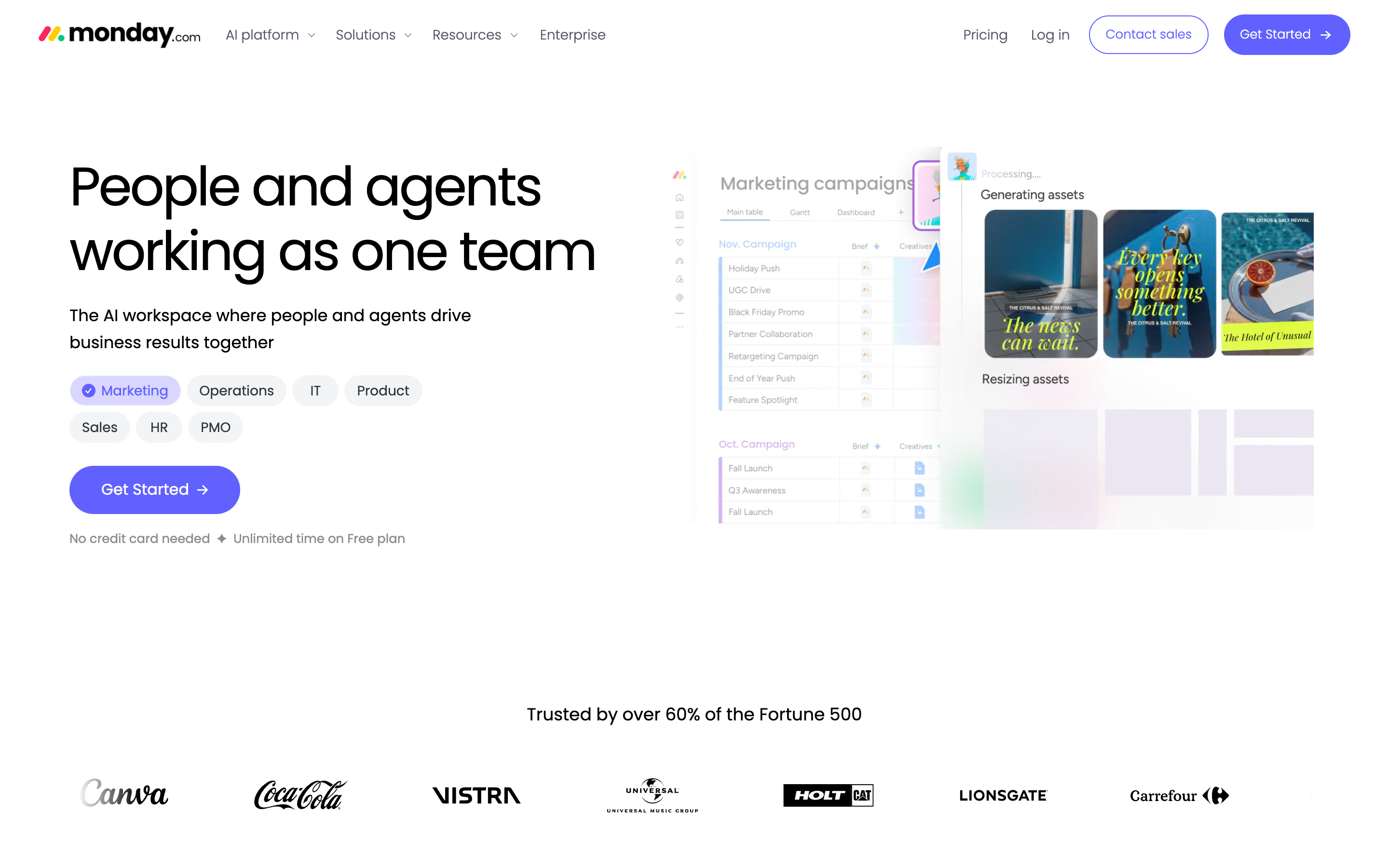
Best for: teams that want one configurable system for many kinds of work, and are willing to spend time configuring it.
monday.com is the broad end of this lane, now split into four products (Work Management, CRM, Service, Dev) and positioned as an AI workspace rather than the board tool it was a few years ago. That breadth is the appeal and the catch: it will model almost any process you can describe, which means someone has to describe it.
- Pricing: about $10 to $11 per seat per month on annual billing for the entry paid tier. Served in GBP from the UK at £8 per seat (Basic), £11 (Standard) and £17 (Pro); monday prices in local currency, so check your regional rate. There is a free plan capped at two seats.
- Watch-outs: per-seat costs scale quickly across a whole company, monthly billing costs more than annual, and the four-product split means the price you are quoted depends on which product you land in.
ProofHub
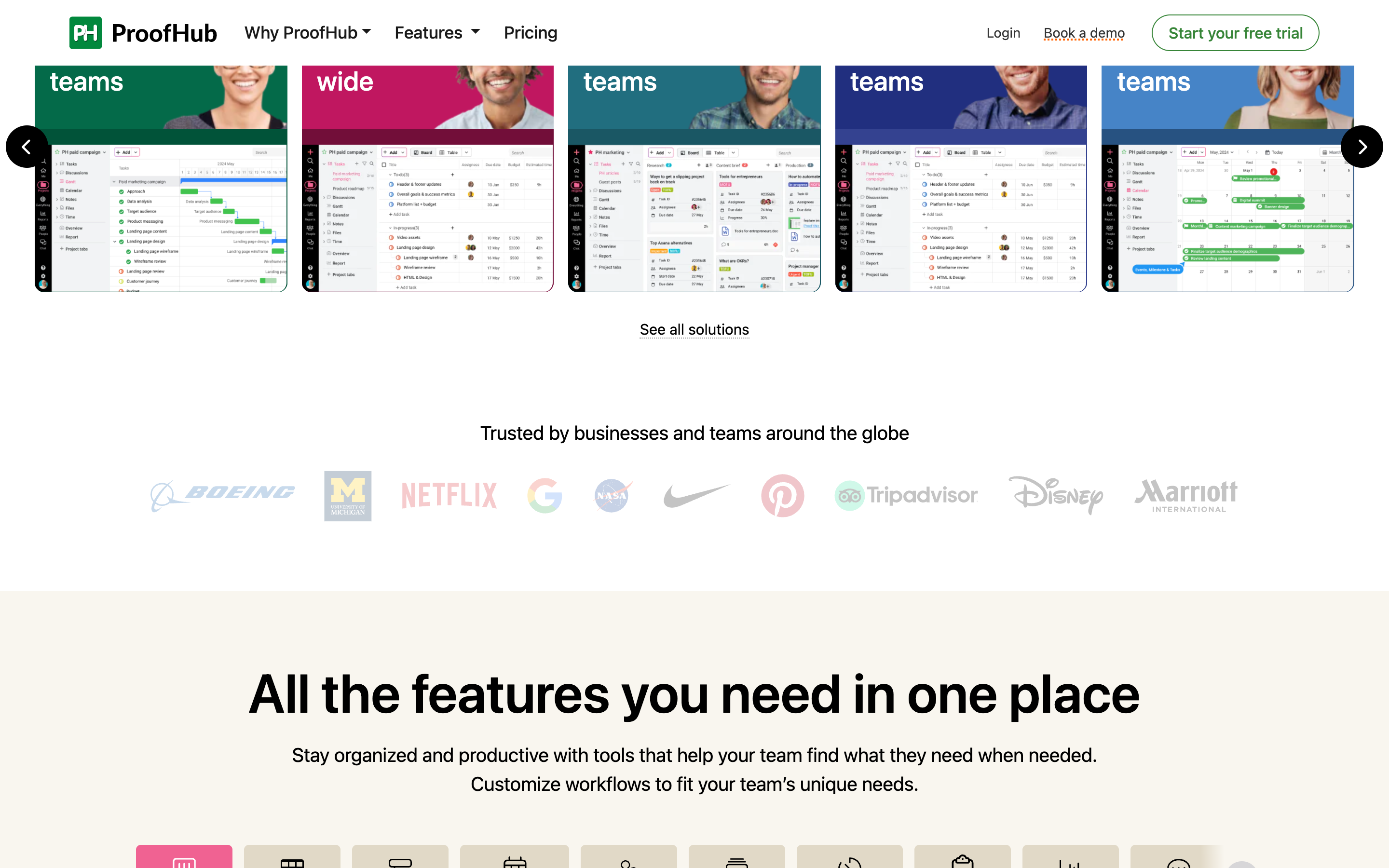
Best for: growing teams that want the bill to stop scaling with headcount.
ProofHub's distinguishing fact is its pricing model rather than its feature list: it charges a flat rate with unlimited users, so adding people costs nothing. For a team of twenty that is a materially different proposition from a per-seat tool, and it is the one genuinely differentiating claim in this roster.
- Pricing: Essential $45 per month billed annually, $50 billed monthly; Ultimate Control $89 to $99 per month. Flat rate, unlimited users.
- Watch-outs: the flat rate is only a saving above a certain headcount, so a team of three will pay more here than on a per-seat tool.
FunctionFox
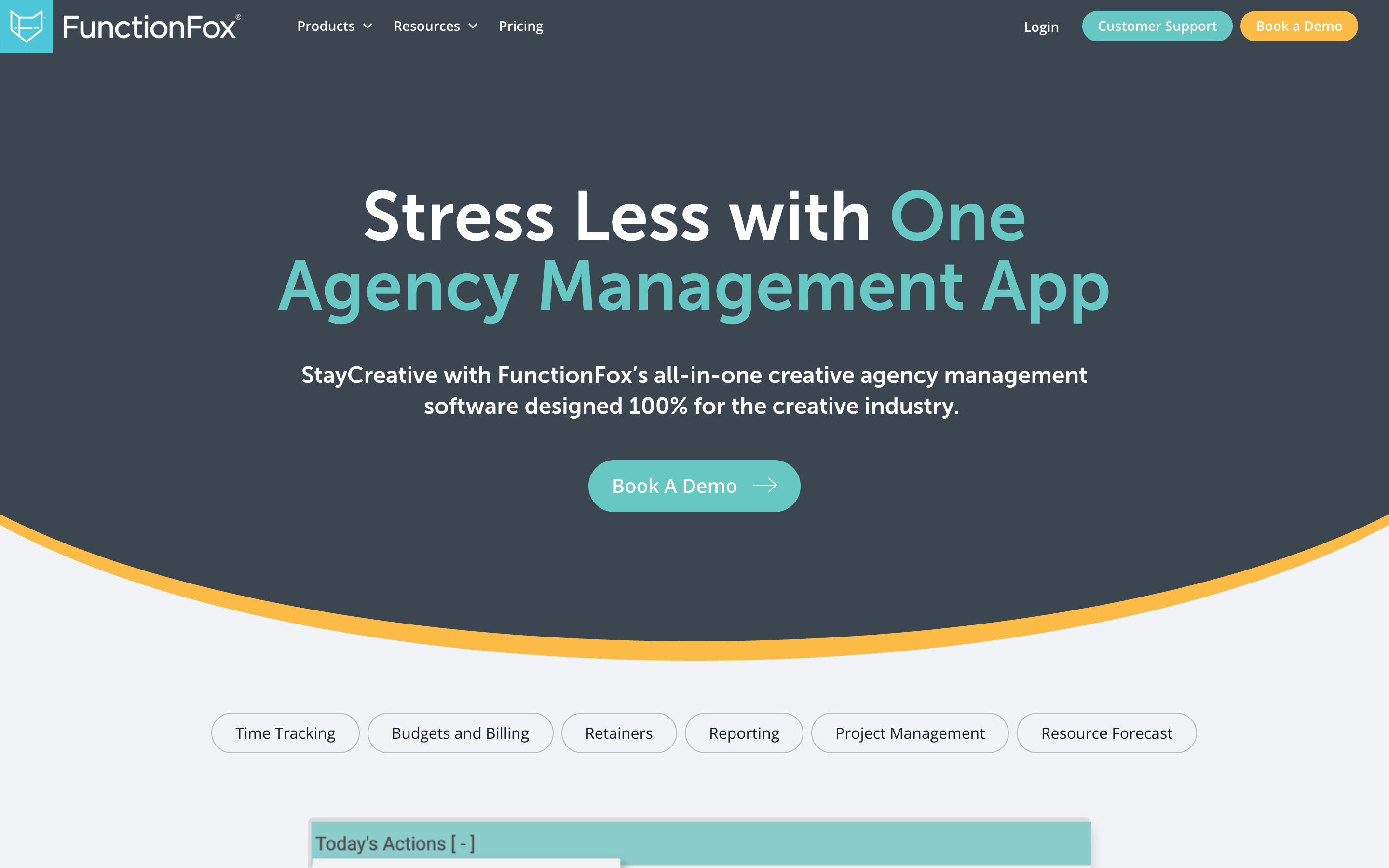
Best for: creative agencies that bill time, not general teams.
FunctionFox is narrower than the other two by design: its own homepage describes it as agency management software built for the creative industry, and its capability set leads with time tracking, budgets and billing, retainers and resource forecasting. If you bill clients by the hour it is aimed squarely at you; if you do not, most of what you are paying for is machinery you will never open.
- Pricing: Classic $10.50 per user per month billed annually with a three-user minimum, so the real floor is about $31.50 a month; Premier $16.00; In-House $36.75.
- Watch-outs: the three-user minimum is easy to miss, and the product assumes billable-hours workflows that general teams do not have.
Drag · with Varley
The inbox your team and Varley work in together
Shared inbox and live chat for Gmail teams, with Varley, Drag’s AI, included from $18. Plus an MCP server your own AI tools can drive.
The shared inbox: managing the team's email
Best for: teams whose coordination failures happen in email, the shared addresses several people answer and nobody owns.
Chat moved the internal conversation and project boards hold the internal work, but the email from outside still lands in shared addresses that neither touches. Drag turns those addresses into a shared inbox with boards on the Gmail your team already uses, or as a standalone app: every email becomes a card with an owner, internal notes, due dates, and tasks, with AI drafting, tagging, and triage included from the middle plan and an MCP server on the Pro plan so the inbox can be run from Claude or ChatGPT. Full disclosure: Drag is our product, and it is in its own lane here because it competes with nothing above, it completes them.






- Pricing: $12, $18 (AI included), $24 per user per month billed annually. 7-day trial, no card, no free plan.
- Rating: 4.7 from over 1,200 reviews.
- Watch-outs: it is not a chat app or a project tracker for internal-only work; it manages the team's email operation, and teams typically run it alongside one tool from each lane above.
If you want the category in more depth, our shared inbox guide covers how these tools work, and what is a shared inbox answers the definitional question.
How to choose
Name the coordination failure first. Conversations lost or slow: a communication app. Internal work slipping, unclear owners, missed handoffs: a project tracker. Email to shared addresses sitting unowned, duplicate replies, "I thought you had it": a shared inbox, and that one is usually the failure teams misdiagnose longest, because it looks like individual carelessness when it is structural. Most teams over five people end up with one tool per lane, and the mistake to avoid is buying a second tool in a lane you already covered while the third lane stays on fire.
If the project lane is the one you are filling, our guides to free project management software and free task management software cover the options that cost nothing to try, and Google Workspace project management covers doing it with the tools you already own.
How this guide is verified
Every price on this page was read from the vendor's own pricing page in July 2026 and is dated. Tools removed from earlier versions of this list are named with the reason in each case, and category-famous tools we cannot verify to this standard are named without rankings rather than quoted on stale figures. The author builds in the shared inbox category and says so where it matters. Corrections are recorded rather than silently overwritten.
Two corrections from this update are worth stating plainly. This page previously listed FunctionFox at "from $5 per user per month"; the vendor's own page shows Classic at $10.50 per user per month on annual billing with a three-user minimum, so the real entry cost is about six times what we published. And monday.com was described here as "more of a group of spreadsheets", a characterization that was arguably fair in 2021 and is not fair now. Both are fixed above.
Team management app FAQs
What is the best app for team management?
One per lane, not one overall: a communication app for conversation, a project tracker for internal work, and a shared inbox for the team's email addresses. The best single choice depends on which coordination failure is costing you most right now, which is the question the category section above resolves.
What is the difference between a team management app and a project management app?
Project management is one lane of team management: it holds internal work, boards, tasks, owners, deadlines. Team management more broadly includes communication and the team's shared email, and the common mistake is expecting a project tool to manage the email that arrives from outside it.
How do teams manage a shared email address?
With a shared inbox tool rather than a shared password: each person uses their own account, every email gets a visible owner, and internal notes replace forwarded copies. Drag does this on Gmail from $12 per user per month, which is the category this guide's author builds in.
Do small teams need team management software?
Under about five people, a chat app and discipline usually suffice. The tipping points are volume and shared addresses: once customer email lands where several people can see it and nobody owns it, tooling stops being optional, because that failure mode does not respond to effort.

Co-founder
Building Drag for nearly ten years: shared inboxes, boards, and now the AI and agent layer, all on Gmail, plus HeyHelp for the personal inbox. Writes the honest versions of the comparisons.
