













You cannot truly merge two Google accounts, only consolidate. The free service-by-service playbook, plus the ten-minute shortcut most people actually need.
Key takeaways
- There is no real merge: consolidation means choosing a keeper account and moving mail, contacts, calendar, and files into it with Google's own free tools, no paid software required.
- Check your actual goal first: if you just want every email in one inbox, forwarding plus send-as gets you there in ten minutes without touching the rest.
- Back up before you move: run Google Takeout on the account you are leaving, then work service by service, and keep the old account alive until everything has proven itself in the new one.
Table of contents
- First: what are you actually trying to do?
- Why would users want to merge two Google accounts?
- Merge two Google accounts with Gmail migration
- Use Google Takeout to move files
- Move your contacts
- Move your calendar
- Move your Drive files
- Retire the old account
- After you merge Google accounts
- Managing multiple accounts in an operation
- Frequently asked questions
Here is the truth most guides bury: Google accounts cannot be merged. There is no button, no setting, and no third-party tool that truly combines two accounts into one, whatever the software ads on this search promise. What you can do is consolidate: pick the account you are keeping, then move each service's data into it, mail, contacts, calendar, and files, using Google's own free tools. This guide walks that playbook step by step, and it starts with a question worth thirty seconds: whether you actually need to consolidate at all, because if what you really want is all your mail in one place, there is an easier answer.
First: what are you actually trying to do?
| What you want | Do this |
|---|---|
| All your mail in one inbox, accounts stay separate | forwarding + send-as, ten minutes → our multiple Gmail accounts guide |
| Move old mail into another account | Gmail's import or fetcher → our Gmail-to-Gmail migration guide covers it in depth |
| Truly retiring an account | this page, the full playbook below |
| Consolidating a team or company's addresses | the business section at the end of this guide |
You will see paid "account merger" tools advertised against this search. You do not need them: everything below uses Google's own free features, and handing a third party full access to two Google accounts is a risk that buys you nothing.
Why would users want to merge two Google accounts?
Before exploring how to actually do it, part of the process is understanding why the users are looking for a way to merge Google accounts. Each specific situation might be suited to a different method. And since some might be extra work and time, it's better to determine the actual needs first.
Switching digital identity
A common reason users look into merging Google accounts is simple: their previous email address doesn't represent their digital identity anymore. Whether due to a name change or opting for a more professional-sounding email account, they might not want to lose previous interactions. In that sense, they can probably forward emails from the old account to the new one and inform correspondents about the new address.
Going from personal to professional
When a business owner or manager is starting out, they can probably get away with using the basic Gmail assets and free Google Workspace app. However, as the business thrives, professional resources can make a huge difference. For example, the Google Workspace environment comes with more cloud storage, custom domains, collaboration features such as video calls and an admin dashboard with security protocols. However, when they decide to make the investment and switch to a professional account, some of the files from the personal workspace are still needed. And when you're combining accounts from multiple business departments, the amount of files to transfer is even higher. That's when Google Takeout, the native Google backup tool, can be a lifesaver. This resource can help you merge two Google accounts into one by exporting Google Drive files and photos, Google Contacts, Chrome favorites, Google Meet and Chat history and even Google Calendar.
Merge two Google accounts with Gmail migration
If your need to merge two Google accounts is mostly due to emails, you can try migrating from Gmail to Gmail. As in: forwarding incoming messages from your old account to a new one and updating your contacts with the new address. Here's how to do it:
- Access Gmail web from your old account
- Go to the Settings page
- Click on the Forwarding and POP/IMAP tab
- To prepare your old account for the merge, select Enable POP for all mail
- Click Save Changes
- Log into the new Gmail account
- Go back to the Accounts and Import tab and scroll to Check mail from other accounts
- Click on Add a mail account and select Import emails from my other account (POP3)
- Add the server information and click on Add Account
Two current notes on this route: the Import mail and contacts wizard (Settings, then Accounts and Import) is the simpler one-shot version, pulling the old account's history across and importing new arrivals for about 30 days; and POP fetching, which Google closed to new users after early 2026 and retires in January 2027, needs an app password if the old account has 2-step verification turned on. Our Gmail-to-Gmail migration guide covers both routes, and what does not transfer, in full.
Using an alias to send emails
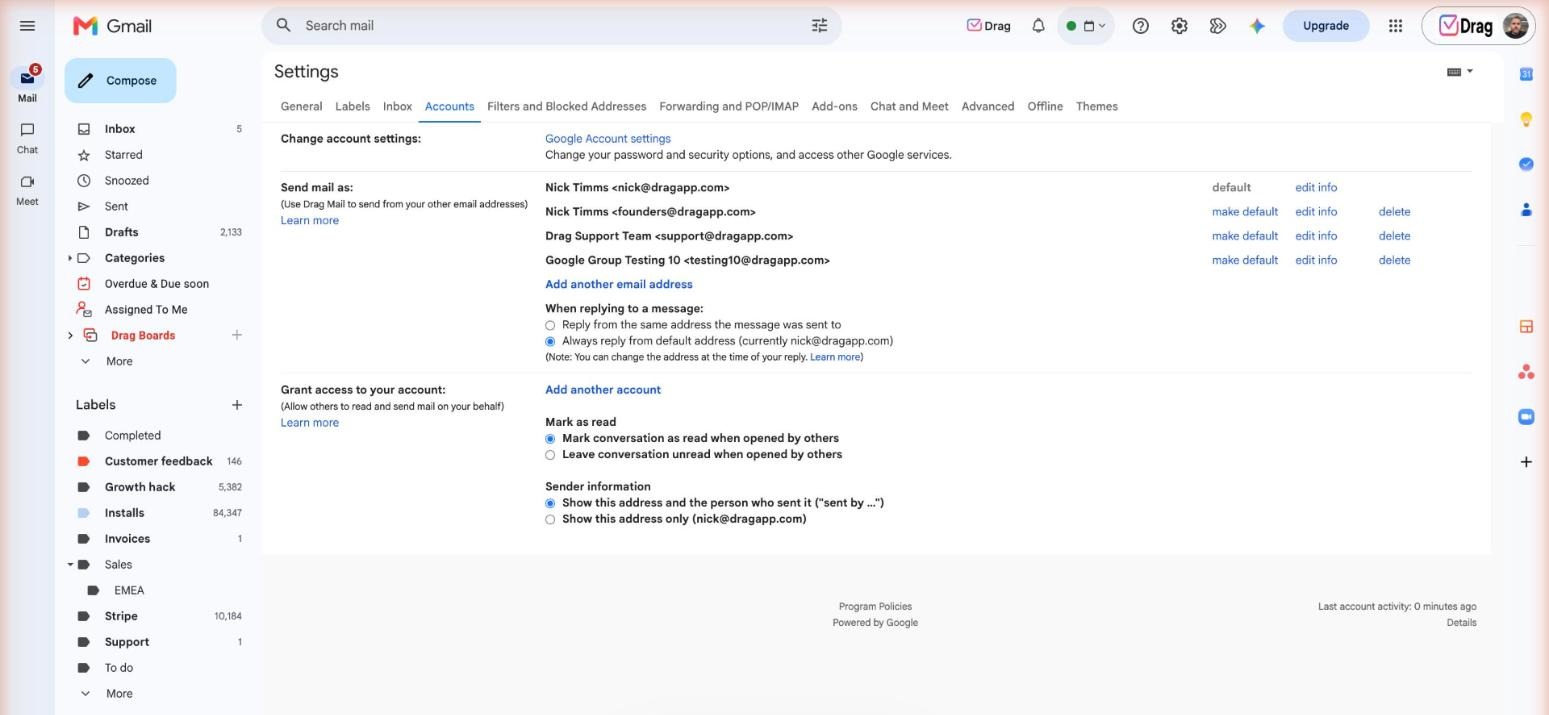
Now you've added the previous email as a way to view incoming messages into your new inbox. But how can you respond from your old address using the new inbox? Here's a step-by-step guide on email aliases:
- Open Gmail on your browser
- Go to Settings, then to the Accounts tab
- Scroll down to Send mail as and click Add another email address
- Enter the name and address of your old account
- Click Next Step and then Send verification
- Log into the old account and confirm the process
- Now, when you write an email, Gmail will let you select from which account you are sending it from
With these guides, you can receive, manage and respond to emails sent to one address from both addresses. Essentially, that's how you merge two Google accounts on the email level. Related post: How to Transfer Emails from Outlook to Gmail
The limitations of this method
In short, this only works for emails. So if your work goes beyond the inbox, such as Google Drive files, Calendar meetings and detailed contact information, you'd need to move them one by one. That's a long and unproductive process most users would rather avoid.
Drag · with Varley
The inbox your team and Varley work in together
Shared inbox and live chat for Gmail teams, with Varley, Drag’s AI, included from $18. Plus an MCP server your own AI tools can drive.
Use Google Takeout to move files
Do this first, before you move anything else: a full Takeout export of the account you are leaving means nothing is lost if a later step goes wrong. Google Takeout is a native resource from Google that allows users to export their accounts for backup. It can also be useful if you need to merge two Google accounts. The process is quite simple. Just access Google Takeout and select the Google tools you want to export from. It can be Drive files, Contact information, Chrome bookmarks, tasks, Google Groups data and so on. Then, select the file format, size and export frequency. It should take anywhere from a few hours to multiple days, depending on how many files you've stored on your Google account.
The limitations of this method
There are two main concerns when using Takeout to merge Google accounts. Surely, this method is more comprehensive than forwarding emails, since it allows for more of your account to go through. However, the process can still be very tedious, given the amount of importing you have to do afterward. Users have to upload the retrieved data into the new account for each service. The second issue, however, is the file size. If you have to do this with multiple accounts, such as when managing a team, that's a lot of time spent downloading big files into your device and then uploading them back.
Move your contacts
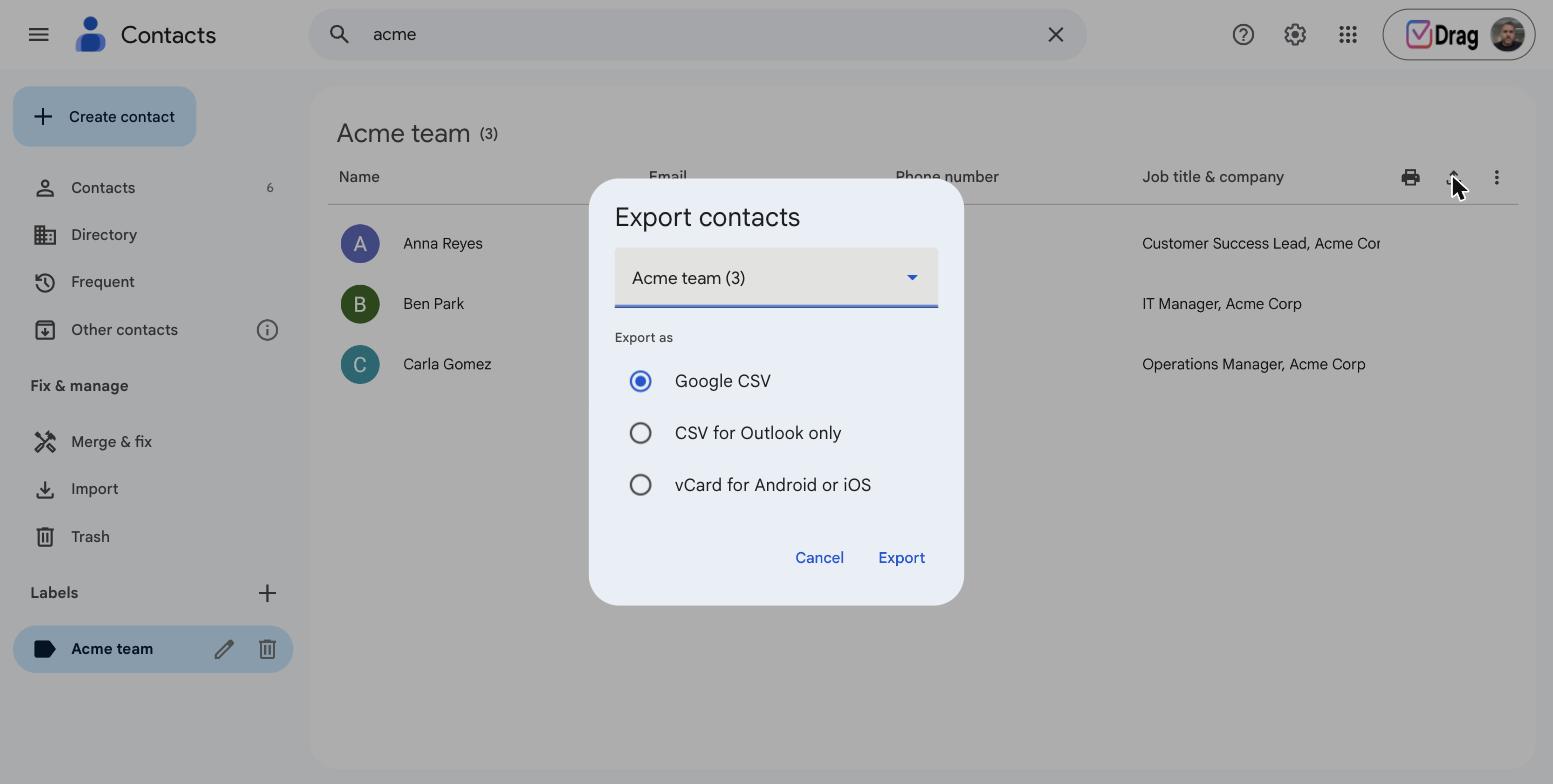
Contacts move as a single CSV export and import.
- In the account you are leaving, open Google Contacts, click Export, choose Google CSV, and download the file.
- In the keeper account, open Google Contacts, click Import, and upload that CSV.
Once they land, you can tidy up with shared contact management in Google Workspace.
Move your calendar
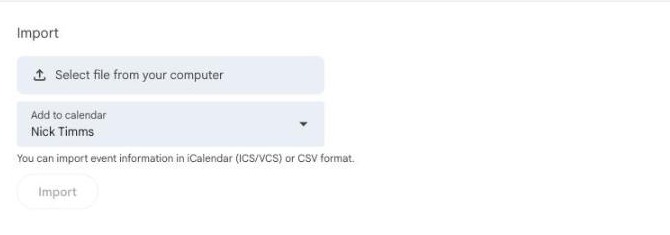
Calendar events move as an export and import. Note that imported events do not stay in sync between the two accounts, so do this once the old calendar is final.
- In the account you are leaving, open Google Calendar, go to Settings, then Import & export, and click Export. A .zip containing an .ics file for each calendar downloads.
- In the keeper account, go to Settings, then Import & export, select the .ics file, choose which calendar to add the events to, and click Import.
Move your Drive files
Drive is the fiddliest service, because Google limits ownership transfer: you can only transfer ownership to someone you have already shared with, transferring a folder does not transfer the files inside it, and you cannot transfer ownership from a personal account to a Google Workspace one. For a whole account, the reliable move is the Takeout archive you already made: upload its Drive folder into the keeper account. For a handful of important files, share them to the keeper account and use Make a copy, or transfer ownership one by one from Share.
Retire the old account
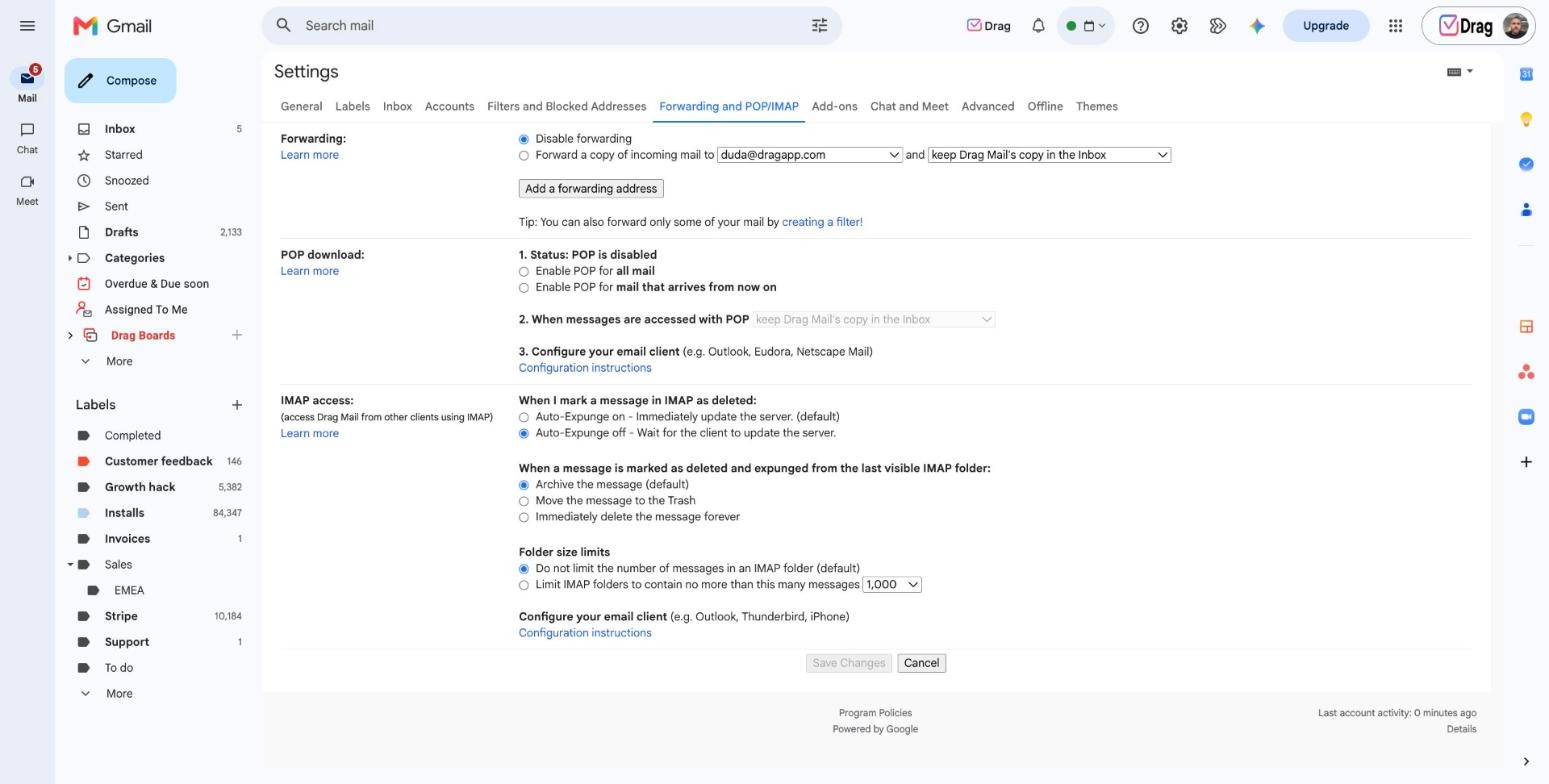
Once every service has moved and you have checked it arrived, wind the old account down rather than deleting it on day one.
- Set forwarding on the old account so anything still sent there reaches your keeper account during a transition period.
- Add the old address as a Send mail as address in the keeper account, so you can still reply from it while people update their records.
- Review the old account's third-party access under Security, then Your connections to third-party apps, and revoke anything you no longer need.
- Only after mail has flowed correctly for the whole transition, delete the old account, or keep it dormant as a safety net.
To set up that transition forwarding (step 1):
- In the old account, open Settings, then See all settings, and go to the Forwarding and POP/IMAP tab.
- Click Add a forwarding address, enter your keeper address, and confirm the verification link Gmail sends to it.
- Back in the Forwarding section, select Forward a copy of incoming mail to your keeper address, choose whether to keep or archive the original, and click Save Changes.
Disable forwarding once nothing important still arrives at the old address.
After you merge Google accounts
As your shared account is managed by multiple people, another key point is making sure they are aligned with the company's mission and the email management best practices they should implement to offer the best possible services no matter which industry they're in.
Managing multiple accounts in an operation
Consolidating accounts for a business is a different job from a personal cleanup, because the addresses usually matter more than the accounts. After a merger or a rebrand, the goal is rarely one inbox: it is that support@, sales@, and the old domain's addresses all keep working and land with the right people. The account-level playbook above still applies to individual mailboxes, and Google Workspace admins have migration tools for moving whole users between domains. But for the shared addresses, the cleaner pattern is to stop tying them to any one person's account at all: route them into a shared inbox the team owns, where the addresses survive every staffing change and every future consolidation. That is what Drag does on top of Gmail, from $12 per user per month with a 7-day trial and no card.
Frequently asked questions
Can I merge two Google accounts into one?
No, not truly: Google provides no way to combine accounts. What works is consolidation, moving mail, contacts, calendar, and files into the account you are keeping using Google's free built-in tools, then retiring the other.
Will I lose my emails if I close a Google account?
Anything not moved first is lost when an account is deleted, which is why the order matters: back up with Google Takeout, import your mail into the keeper account, verify it arrived, and only then retire the old one.
Is there a tool that merges Google accounts?
Paid tools advertise exactly that, and none of them can do more than the manual playbook, because Google offers no merge for them to use. They just want authorized access to both your accounts. Skip them.
What about shared addresses like support@ when consolidating a business?
Move them out of personal accounts entirely: a shared inbox tool gives addresses like support@ a home the whole team owns, so they survive consolidations, departures, and domain changes. Drag, our shared inbox for Gmail, costs $12 to $24 a seat, with AI included from $18.

Co-founder
Building Drag for nearly ten years: shared inboxes, boards, and now the AI and agent layer, all on Gmail, plus HeyHelp for the personal inbox. Writes the honest versions of the comparisons.
