












Help Scout pricing in 2026: Free, $25, $45, $75 per user, the $0.75-per-resolution AI fee, the 25 and 50-user cliffs, and the pricing model they reversed in 2025.
Key takeaways
- Help Scout's 2026 pricing is per user again: Free, then $25 (Standard), $45 (Plus), and $75 (Pro) per user monthly on annual billing ($30, $54, and $90 month-to-month), after the company tried contacts-based pricing in late 2024 and reversed course within a year.
- The AI is metered on top of the seat: AI Answers costs $0.75 per resolved conversation on every paid tier, and the agent-facing AI drafting tools only arrive on the $45 Plus plan.
- The cliffs matter more than the sticker: Standard caps at 25 users (the 26th forces an 80 percent per-seat jump), Plus now caps at 50 (the 51st forces $75 Pro), Docs costs $10 a user extra on Standard, and Pro has a 10-user minimum.
- Every figure here is verified against Help Scout's live pricing page (September 2026) and billing docs, dated, with archive receipts for every model change since 2021.
Table of contents
- What this guide covers
- What is Help Scout?
- Help Scout pricing breakdown
- The three cliffs that decide the real bill
- AI pricing: the meter and the tiers
- What you are paying for at each tier
- Pricing comparison: Help Scout against the field at a glance
- Help Scout's pricing history: the receipts
- What Help Scout actually costs at your team size
- Top 5 alternatives to Help Scout
- Frequently asked questions
Help Scout costs $25 (Standard), $45 (Plus), or $75 (Pro) per user per month on annual billing in 2026, about 17 percent more month-to-month, with a real free plan for up to 5 users. The number that moves the bill most is not the seat: AI Answers, the customer-facing chatbot, bills a further $0.75 for every conversation it resolves, on every paid tier.
The story behind those simple-looking tiers is anything but: in late 2024 the company eliminated seats entirely and billed by "contacts helped," the market pushed back hard, and within a year it reversed course. That history matters because it tells you how this vendor prices under pressure, and because thousands of accounts are still on the legacy model. Here is the full 2026 breakdown, the fees the pricing page undersells, the receipts on the changes, and the honest math on alternatives. For comparison: Drag, our shared inbox for Gmail, costs $12 to $24 a seat with AI included from $18.
What this guide covers
- Help Scout pricing breakdown
- The three cliffs that decide the real bill
- AI pricing: the meter and the tiers
- What you are paying for at each tier
- Pricing comparison: Help Scout against the field
- Help Scout's pricing history: the receipts
- What Help Scout actually costs at your team size
- Top 5 alternatives to Help Scout
- FAQ
What is Help Scout?
Help Scout is a standalone customer support desk: shared inboxes, a Docs knowledge base, live chat, and reporting in one platform, aimed at small and mid-size teams that want real support tooling without enterprise ticketing weight. It is a genuinely well-liked product; this page is only about what it costs and where the bill moves. 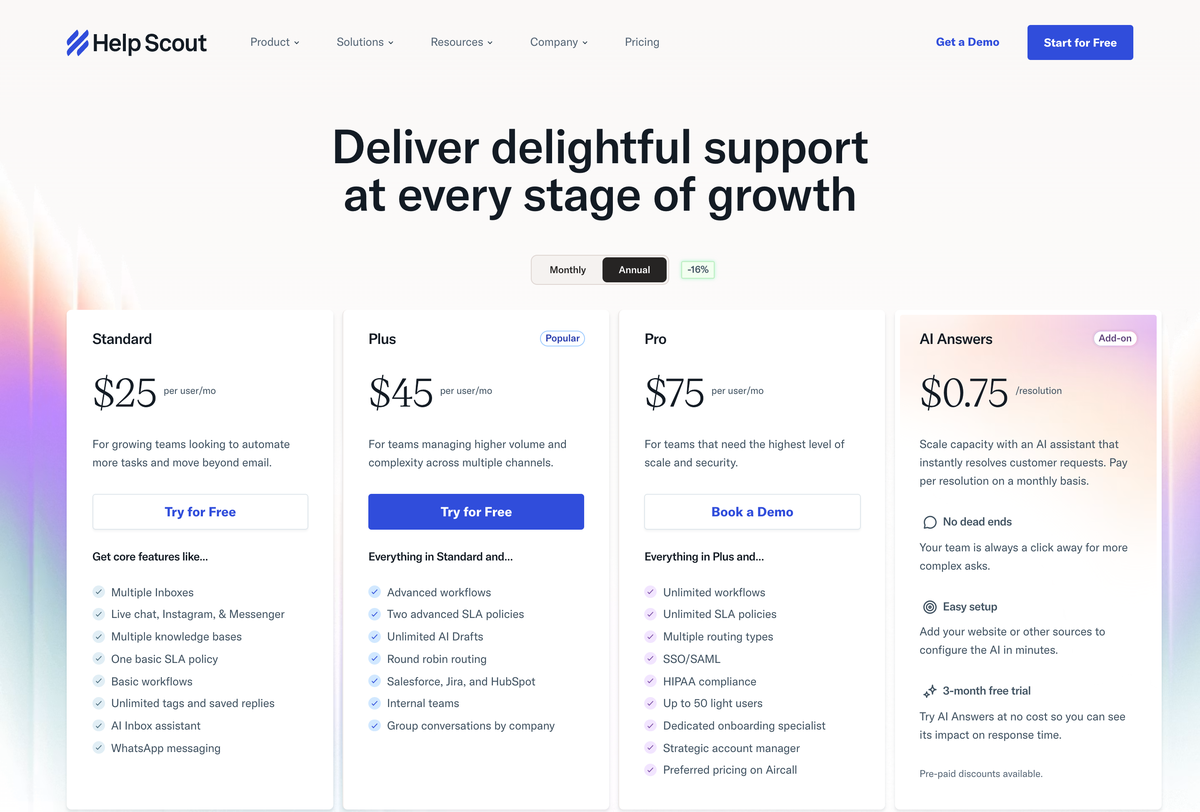
Help Scout pricing breakdown
Help Scout offers four per-user tiers. Annual billing is the advertised rate; month-to-month runs about 17 percent higher. Here is what each plan costs and what it actually includes, per Help Scout's pricing page as of September 2026:
| Plan | Per user, annual | Per user, monthly | Users | What you get |
|---|---|---|---|---|
| Free | $0 | $0 | Up to 5 | One inbox, one Docs site, 100 helped contacts a month, 10 saved replies |
| Standard | $25 | $30 | Up to 25 | Core shared inbox and reporting, 150 basic workflows; Docs +$10 a user; agent AI drafting not included |
| Plus | $45 | $54 | Up to 50 | Full agent AI assists (Drafts, Summarize), advanced reporting, 5 inboxes included, teams |
| Pro | $75 | $90 | 10 minimum, no cap | Everything in Plus, plus HIPAA, 10 inboxes included, higher API limits, priority support |
On top of any paid tier: AI Answers (the customer-facing chatbot) is metered at $0.75 for every conversation it resolves on its own, extra inboxes are $10 a month on annual billing ($12 monthly), and extra Docs sites are $20 a month on annual billing ($24 monthly).
Drag · with Varley
The inbox your team and Varley work in together
Shared inbox and live chat for Gmail teams, with Varley, Drag’s AI, included from $18. Plus an MCP server your own AI tools can drive.
The three cliffs that decide the real bill
First, the AI meter: AI Answers costs $0.75 for every conversation it resolves on its own, on every paid plan, and it is genuinely fair metering (one charge per conversation, none if the customer asks for more help), but success scales the bill: a thousand AI resolutions a month is $750 before anyone's seat is paid. Meanwhile the AI features agents actually feel, drafting and summarizing, are absent from Standard and arrive on the $45 Plus tier.
Second, the seat caps, and there are now two of them. Standard stops at 25 users, so the 26th hire forces every seat onto Plus, an 80 percent per-seat jump in one invoice. And Plus, which had no cap when we verified this page in July 2026, now lists a maximum of 50 users: the 51st hire forces the whole team onto Pro at $75, a further 67 percent per seat. A knowledge base on Standard also means the Docs add-on at $10 per user, and Pro will not sell to fewer than 10 users.
Third, the model question: if your account predates 2025, you may still be on contacts-based billing, which is a different bill entirely, so check which model you are on before comparing anything.
AI pricing: the meter and the tiers
Help Scout's AI splits in two. AI Answers, the customer-facing chatbot, is metered at $0.75 per resolution on every paid tier, with a three-month trial. The agent-facing assists, drafting replies from past conversations, summarizing threads, tone editing, are included, but the useful ones (Drafts, Summarize) require the $45 Plus tier; Standard gets only the lighter text-editing assists. If AI is the reason you are buying, price the Plus tier plus your expected resolution volume, not the $25 headline.
What you are paying for at each tier
Three things separate the tiers in practice. Reporting depth: Standard carries core reports, while the Happiness (customer satisfaction) and Productivity report suites that managers actually run the team on sit with the advanced reporting on Plus. Workflow ceilings: 150 basic workflows on Standard against 500 advanced on Plus and unlimited on Pro, which is the quiet reason automation-heavy teams get pushed up a tier. And light users: people who need visibility without a full seat (a contractor, another department) can be added outside the paid seat count, one of Help Scout's genuinely customer-friendly pricing features. Integrations run a hundred-plus apps from Standard, with custom fields and teams from Plus and 800-calls-a-minute API access on Pro, so a CRM or task stack connects at any tier.
Pricing comparison: Help Scout against the field at a glance
Each bar runs from that tool's cheapest published plan to its most expensive, read from the vendor's own pricing page. A striped tail marks metered AI billed beyond the seat.
Help Scout's pricing history: the receipts
| When | Model | Standard seat | AI |
|---|---|---|---|
| 2021 to 2023 | Per user | $20 | Assists bundled, no chatbot meter |
| Nov 2024 | Per user (last capture before the switch) | $22 | Not separately metered |
| Dec 2024 to mid-2025 | Contacts-based: seats eliminated, billed by "contacts helped" | Flat $50 a month for 100 contacts, unlimited users | Not separately metered |
| Jul 2025 | Per user again (new customers) | $25 | AI Answers metered |
| 2026 (verified September) | Per user | $25 | AI Answers $0.75 a resolution |
Sources: dated Internet Archive captures of Help Scout's own pricing page for every pre-2026 row (January 2021 for the $20 era, November 2024 for the last per-user price before the switch, July 2025 for the reversion), Help Scout's still-live Contact-based Fair Billing guide for the contacts era, and the live pricing page for 2026, re-verified September 2026. The free plan arrived with the December 2024 switch and survived the reversion.
The round trip is the story. Removing seats made bills track queue volume instead of headcount, which made costs unpredictable enough that the market pushed back, and Help Scout listened, which is to its credit. But a vendor that restructured its billing model twice in eighteen months, and has now added a second seat cap, is telling you something useful: read your renewal, know which model your account is on, and price the trajectory, not the snapshot.
What Help Scout actually costs at your team size
Four honest scenarios, annual billing, before taxes. A 5-person team on Standard pays $125 a month, or $175 with the Docs add-on. A 12-person support team on Plus (Standard's AI gap usually forces this) pays $540 a month for seats, and if AI Answers resolves 1,000 conversations that month, the bill is $1,290. The 26th hire is the first cliff: 25 Standard seats cost $625 a month, and one more person makes it 26 Plus seats at $1,170, an 87 percent jump in one invoice. The 51st hire is the new second cliff: 50 Plus seats cost $2,250, and one more makes it 51 Pro seats at $3,825. Model your own numbers, including the AI meter, in the cost calculator.
Per-seat pricing suits steady teams; metered AI suits spiky, low-volume deflection; and included-in-seat AI suits teams that want the bill to equal headcount, full stop. At ten agents, the same "AI help desk" ranges from zero extra (included in seat) to hundreds a month (per-resolution at volume), which is why the model matters more than the sticker.
Top 5 alternatives to Help Scout
Even though Help Scout is a great tool, it might be over your budget, or the wrong shape for your team. Considering this, here are five alternatives that might be a better fit:
 1. Drag






For Gmail teams the comparison is structural, not just cheaper: Drag is the shared inbox inside the Gmail you already run, from $12 a seat with AI included from $18, no seat cliffs, and an MCP server so your AI tools can work the queue directly. The honest boundary: Gmail-only, and it is a shared inbox with boards rather than a full ticketing desk.
Starts at: $12 a seat, AI included from $18. The full Help Scout comparison and eight alternatives compared.
 2. Zendesk
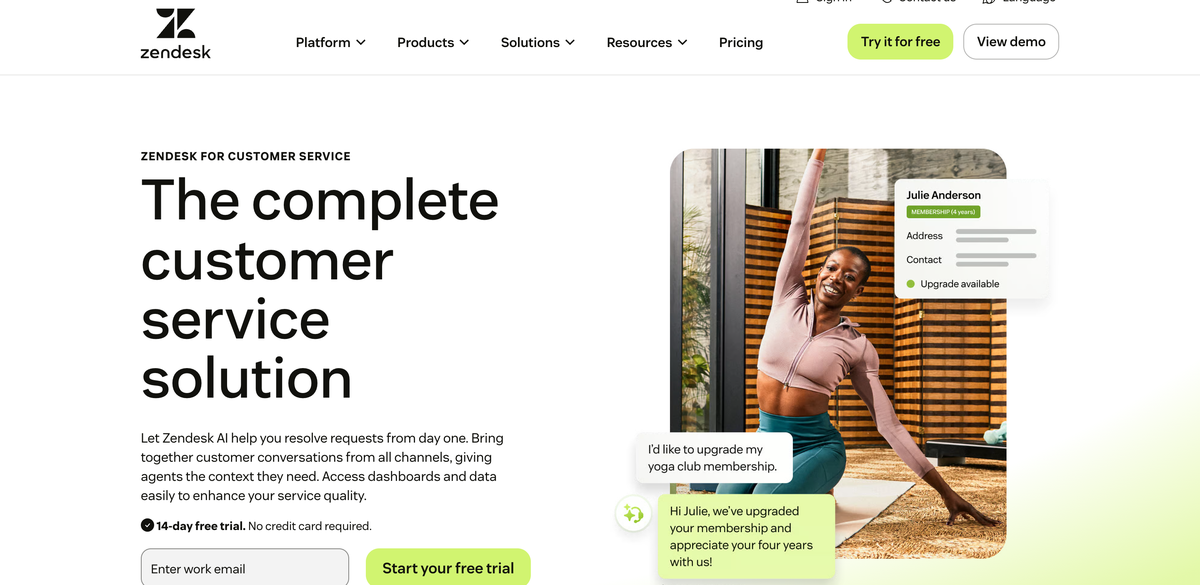
The enterprise-default desk: the most complete ticketing, routing, and reporting in the category, and priced like it. AI is the swing cost, sold as a per-seat add-on on top of the seat, with per-resolution automation charges above that, so the sticker and the real bill diverge fast at scale. You are buying depth and a mature ecosystem, not simplicity.
Starts at: $55 an agent (Suite Team, annual); AI add-on around $50 an agent plus per-resolution. Deep dive: Zendesk alternatives.
 3. Freshdesk
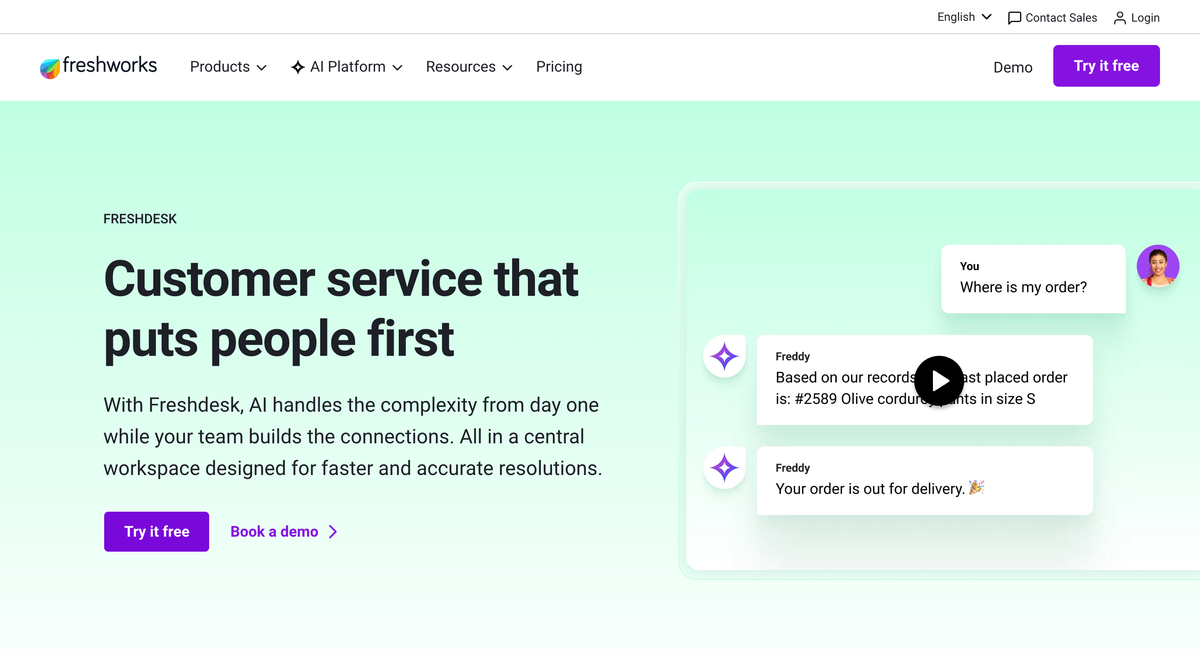
The budget-capable desk: most of the classic help-desk toolkit at roughly a third of Zendesk's entry price, with a genuinely usable free tier for one or two agents. AI is Freddy, sold as a per-agent Copilot add-on plus per-session automation charges, so the same add-on math applies, just on a lower base.
Starts at: $19 an agent, annual (free for 1 to 2 agents); Freddy Copilot around $29 an agent plus roughly $0.49 a session. Deep dive: the Freshdesk alternative.
 4. Front
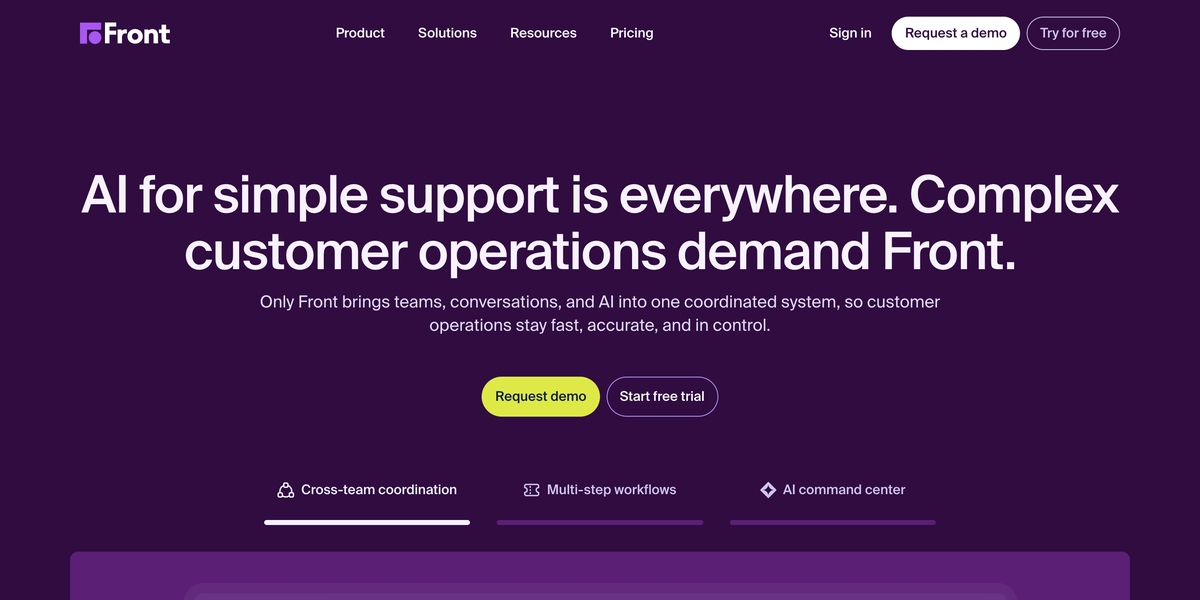
Front is a polished, collaboration-focused shared inbox that goes well beyond Gmail. It handles multichannel and is built as a standalone app with strong routing, analytics, and CRM context. It is capable and enterprise-grade, and priced accordingly.
Starts at: $25 a seat. Deep dive: the Front alternative.
 5. Helply (from the Groove team)
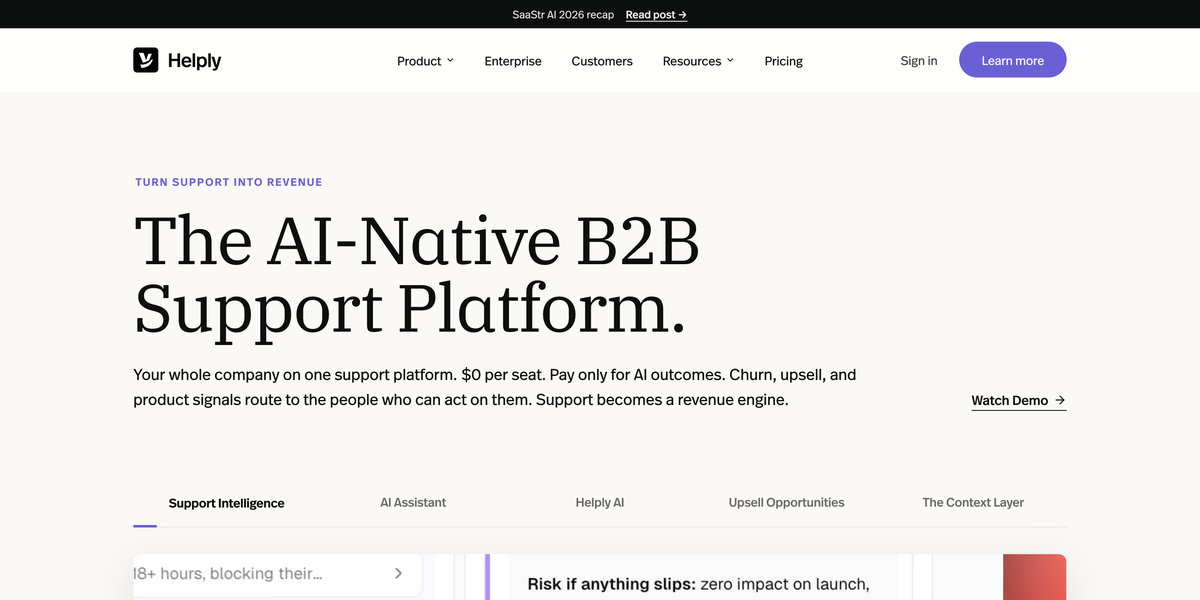
Groove, long the small-team favorite in this slot, pivoted: the team now ships Helply, an AI-first support tool priced at $1 per ticket with a 250-ticket monthly minimum, roughly a $3,000-a-year floor, while Groove Classic continues for existing accounts. A per-ticket model is the exact opposite bet to Help Scout's per-seat return, which makes it a genuinely interesting comparison.
Starts at: $1 a ticket, 250-ticket monthly minimum (roughly $3,000 a year).
Frequently asked questions
How much does Help Scout cost in 2026?
Four per-user tiers: Free, then Standard $25, Plus $45, and Pro $75 per user per month on annual billing, or $30, $54, and $90 billed monthly. AI Answers adds $0.75 per AI-resolved conversation on any paid tier.
Does Help Scout have a free plan?
Yes, a real one: up to 5 users, one inbox, one Docs site, and 100 helped contacts a month, no card required. Real teams outgrow the contact cap quickly, but it is a genuine start.
What happened to Help Scout's contacts-based pricing?
It launched in late 2024 (seats eliminated, billing by contacts helped), drew heavy criticism for unpredictable bills, and was reversed: new customers in 2026 get per-user pricing, while pre-2025 accounts may remain on the legacy contacts model.
Is Help Scout's AI included in the price?
Partly. The customer-facing AI Answers chatbot is always metered at $0.75 per resolution. The agent-facing drafting and summarizing tools are included only from the $45 Plus tier; Standard gets lighter editing assists.
What are the user limits on Help Scout's plans?
Standard sells a maximum of 25 seats and Plus a maximum of 50, per Help Scout's pricing page as of September 2026. The 26th user forces the whole team onto Plus at $45, an 80 percent per-seat increase, and the 51st forces Pro at $75. Pro requires at least 10 users and has no cap above that.
What is the best Help Scout alternative for Gmail teams?
Drag: the shared inbox inside Gmail from $12 a seat with AI included from $18. The full alternatives comparison covers eight options honestly, including where Help Scout remains the right pick.
Frequently asked questions
How much does Help Scout cost in 2026?
Four per-user tiers: Free, then Standard $25, Plus $45, and Pro $75 per user per month on annual billing, or $30, $54, and $90 billed monthly. AI Answers adds $0.75 per AI-resolved conversation on any paid tier, and extra inboxes run $10 a month on annual billing.
Does Help Scout have a free plan?
Yes, a real one: up to 5 users, one inbox, one Docs site, and 100 helped contacts a month, no card required. Real teams outgrow the contact cap quickly, but it is a genuine start.
What happened to Help Scout's contacts-based pricing?
It launched in late 2024 (seats eliminated, billing by contacts helped), drew heavy criticism for unpredictable bills, and was reversed: new customers in 2026 get per-user pricing, while pre-2025 accounts may remain on the legacy contacts model.
Is Help Scout's AI included in the price?
Partly. The customer-facing AI Answers chatbot is always metered at $0.75 per resolution. The agent-facing drafting and summarizing tools are included only from the $45 Plus tier; Standard gets lighter editing assists.
What are the user limits on Help Scout's plans?
Standard sells a maximum of 25 seats and Plus a maximum of 50, per Help Scout's pricing page as of September 2026. The 26th user forces the whole team onto Plus at $45 (an 80 percent per-seat increase) and the 51st forces Pro at $75. Pro requires at least 10 users and has no cap.
What is the best Help Scout alternative for Gmail teams?
Drag: the shared inbox inside Gmail from $12 a seat with AI included from $18. The full alternatives comparison covers eight options honestly, including where Help Scout remains the right pick.

Co-founder
Building Drag for nearly ten years: shared inboxes, boards, and now the AI and agent layer, all on Gmail, plus HeyHelp for the personal inbox. Writes the honest versions of the comparisons.