













The complete 2026 guide to Google Calendar: what changed this year with every change dated from Google's own announcements, the keyword flairs list, appointment schedules, calendar management, and the October 2026 deletion policy change worth knowing before it lands.
Key takeaways
- Google Calendar's booking feature is appointment schedules; the appointment slots described in older guides were retired by Google, and Reminders have folded into Google Tasks.
- From October 5, 2026, Google is changing how deleted secondary calendars are handled, a data-loss class change this guide covers in the deletion section, dated from Google's own announcement.
- The keyword flairs that add illustrations to events still work and are listed below, and the what's-new section dates every 2025-2026 change from Google's announcements so you can tell this year's Calendar from the one older tutorials describe.
Table of contents
Google Calendar is the scheduling half of most people's working day, and it has changed more in the past two years than its tutorials admit: appointment schedules replaced the old booking model, Reminders folded into Google Tasks, sharing permissions gained a new level, and a calendar-deletion policy change arrives in October 2026 that is worth knowing before it lands.
This guide covers the current product, with every change dated from Google's own announcements: setup and daily use, the keyword flairs that decorate your events, appointment scheduling, managing multiple calendars, and where Gemini fits.
Key features include:
-
Calendar Sharing: Share your calendar with others, assigning varying permission levels for collaboration.
-
Device Synchronization: Sync your calendar across devices for seamless access and updates.
-
Event notifications: set customizable alerts via popup or email so nothing slips past you, with the timing under your control.
-
Multiple Calendars: Manage various aspects of your life by creating and color-coding multiple calendars within one interface.
-
Integration with Drag: Boost functionality by integrating with Drag, allowing automatic creation of calendar events from emails or tasks within Gmail.
What is Google Calendar and why to use it
Google Calendar is a multiplatform calendar application. It is more than just a calendar; it can be useful to manage your entire life, in several aspects. This tool is straightforward to manage, as any of the other Google Workspace apps, such as Google Sheets, Gmail, and Google Docs.
Google Calendar offers so many features that will make you forget about paper calendars. Here are some of the main ones:
Share your calendar
With Google Calendar, you can share calendars with other people, which must be Google users as well. This feature is based on collaboration and can be very useful for teams that have standard schedules to manage. It's valuable that everyone knows of their busy times, and also tasks in common, such as meetings.
Moreover, Calendar offers the possibility of giving different permission levels on each calendar. This way, you can control what other people can or can't do inside it. For instance, they can have the power to create and change schedules or just view them.
Sync Calendar with your mobile devices
Another super important aspect of Google Calendar is the possibility of synchronizing your calendars with your phone, tablet, and any other device. Which, of course, gives you the mobility to take your schedule with you anywhere. It is handy when you need to cancel or schedule an event, but you're not with your computer.
If your devices have Android as an operating system, when you enter your Google account on them, your calendar should be synchronized. If it doesn't happen, you can verify what may be wrong on this Google article. But if you have an iPhone, don't worry, it's not so difficult to activate the synchronization. Just follow Google's step by step.
Be reminded of your schedule
Every event can carry its own notification, set to the date and time you choose, so appointments stop slipping past you. You also choose how the alert arrives, as a popup notification or by email. You also choose how far in advance it arrives, whether that is ten minutes before or a full day.
Your phone gets the same notification as a popup. You can choose to set the alarm also so that it can call your attention. But of course, it depends on Google Calendar synchronizing with your phone.
Lots of calendars in just one place
Google Calendar has the standard calendar with days, weeks, and months. But it can also have multiple calendars to attend to all the aspects of your life: business, personal, your kids' schedule, and so on. To separate your calendars, you can customize each one of them with a specific color, so you can identify quickly, to what schedule an event belongs.
For instance, here it is a calendar with personal activities, represented by the color pink. The business calendar is represented by the color green, and the kids' schedule has a lavender color. They can be mixed on the main calendar, so you have your entire schedule in one place.
But it's also possible to turn on or turn off each one of the calendars, just by marking the checkbox next to their names. This way it's better to visualize just what matters to you at a specific moment.
Public calendars
All your country's Holidays can be loaded automatically on your calendars, as well as other countries you may be planning to go to, which is very useful when you are traveling. Google also offers ready-made public calendars you can subscribe to, from sports season schedules to phases of the moon. In the same way, if you have a website or blog, you can create events on a specific calendar and put a Google Calendar widget on these channels.
Then just permit your audience to add it and view it. This way, you can keep your fans updated and informed of the next steps, important dates, new releases, and whatever you need to engage with them.
What's new in Google Calendar
Calendar's changes arrive quietly, so here they are, dated from Google's own Workspace Updates announcements.
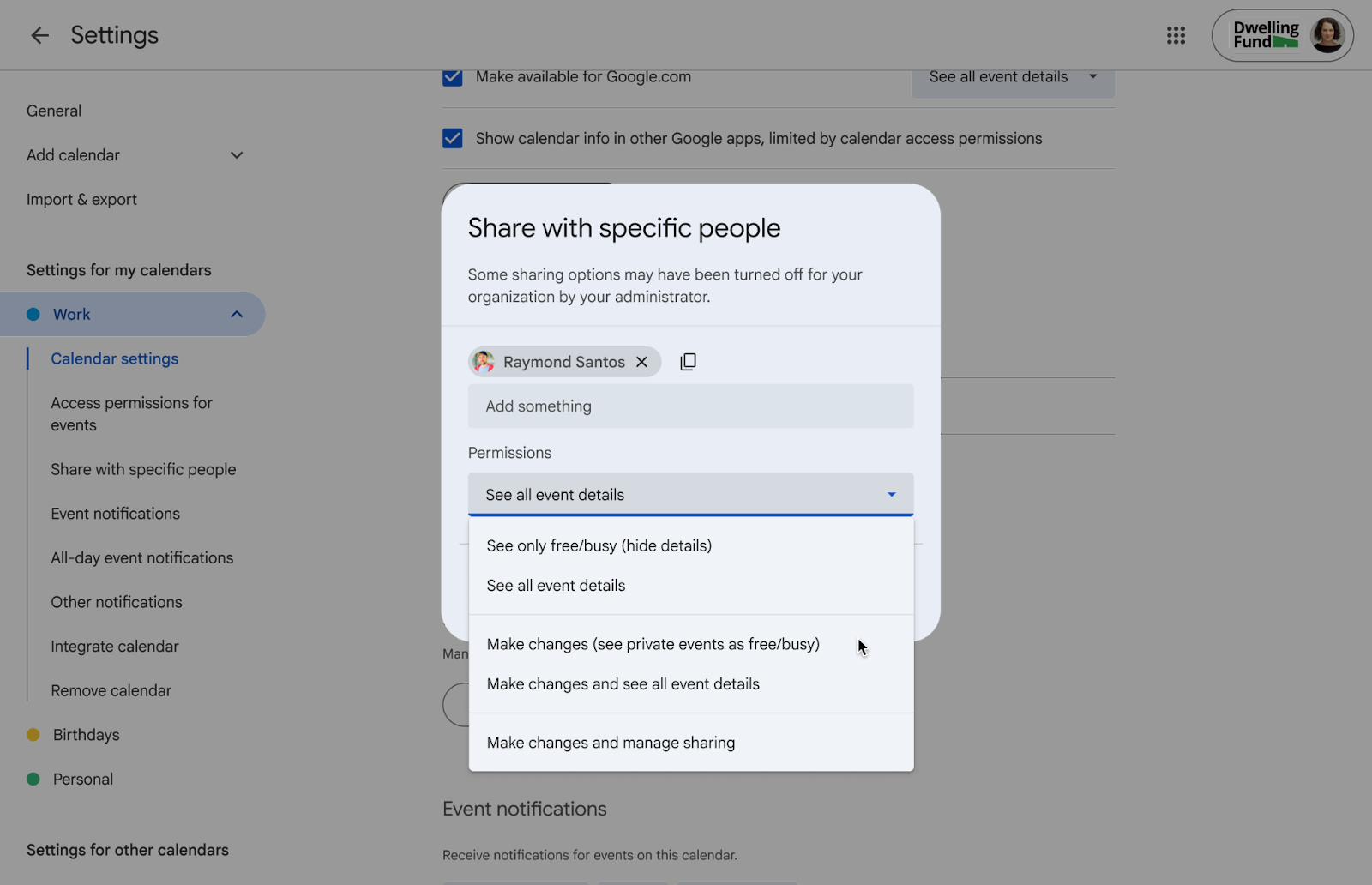
The structural one came earlier: appointment schedules replaced appointment slots as Calendar's booking model, so any guide still teaching slots is describing a retired feature. In July 2026, Google added a new sharing-permission level and changed how recurring-event visibility behaves, both worth rechecking if your team shares calendars. And on October 5, 2026, a change to how deleted secondary calendars are handled takes effect, covered in the deletion section below because it is the kind of change you want to know before you need it, not after.
Reminders are gone as a separate type: Google folded them into Google Tasks, so anything you would once have saved as a Reminder now lives as a task, visible in Calendar but managed by Tasks. If a tutorial shows an Event-or-Reminder toggle, it is showing you 2020.
Getting started with Google Calendar
First, you need to log in to your Google account (if you don't have yours yet, you can create one here), then access Google Calendar's site. You can also download the app on your mobile devices. Usually, new Android devices come with the app installed, so you don't have to worry about that.
However, be aware that this tutorial is more focused on the web version. On the Google Calendar page, you can see your current week, while on the phone's app, you can view the whole month at first sight. It's possible to set a different view of the calendar according to your needs.
You will notice that there is a horizontal red line placed on the current day and time you are at the moment. This helps you control your time if you are constantly checking the calendar.
Recognizing the menu bars
On the top bar, you can see the current month and year, and when you hover the box Today it also returns the date with the day of the week. Besides that, there are two arrows, in which you can see the previous and the next week, respectively. There is a search option, so you can find your events easily, followed by the Support button and the Settings button.
You can also change the calendar's view, from Week to Day, Month, Year, and others. 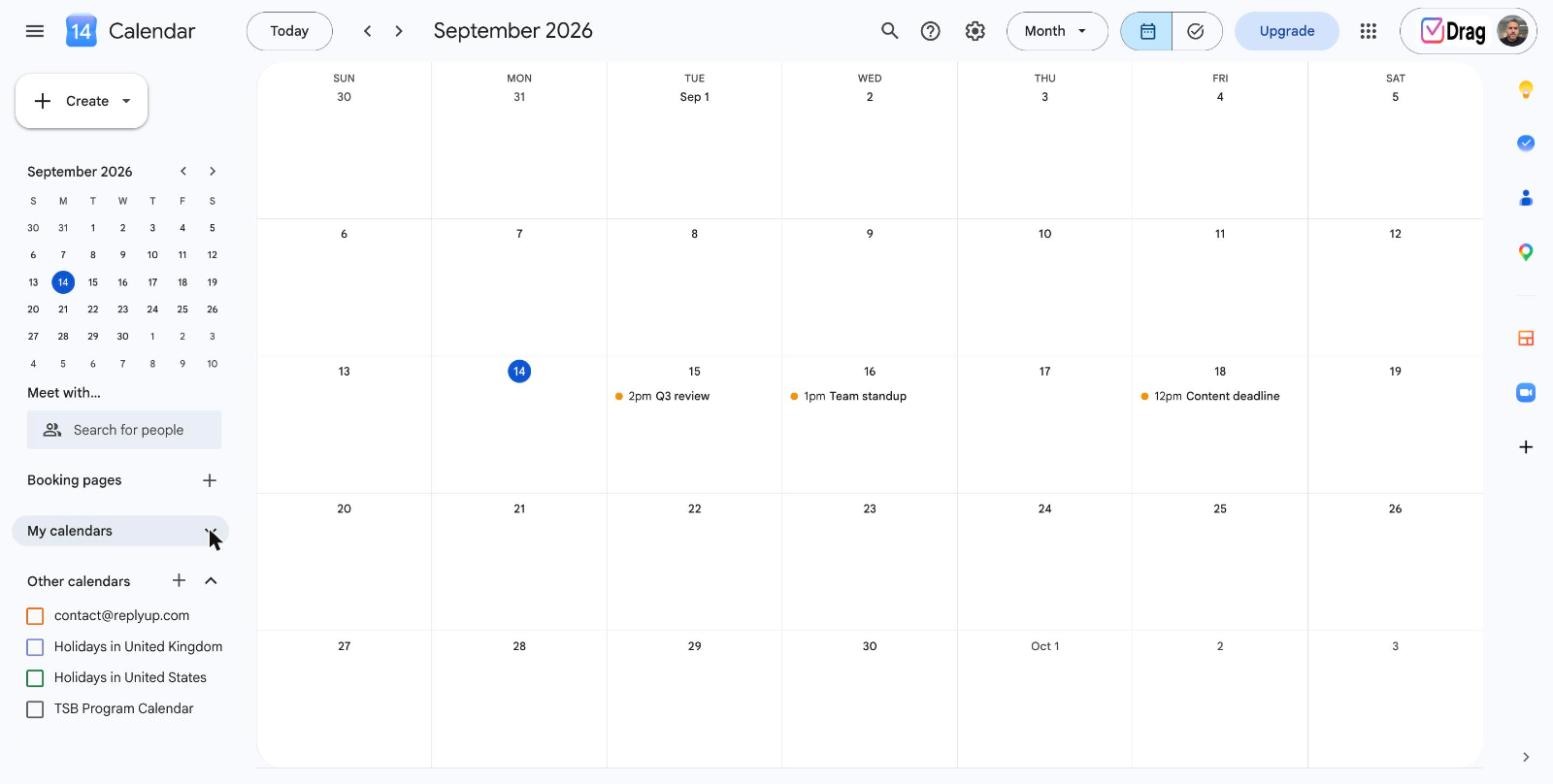 Another essential part of Google Calendar's page is the left sidebar, where you can see the current month's grid. Above that, there is an entry box to search for people with whom you may have an event. To be searchable, you have to put the person's email on the event while creating it. Next, there is the list with all your calendars, and also an option to add more of them, everything according to your needs.
How to Schedule an Event in Google Calendar
One excellent characteristic of Google Calendar is that it's straightforward to use. Creating an event is easy and intuitive because you just need to click on the date and time you want, and start filling it with all the information you need. You can also press the button Create on the left sidebar. For instance, we are going to show you how to create the reminder Meeting with Anna.
Creating the event
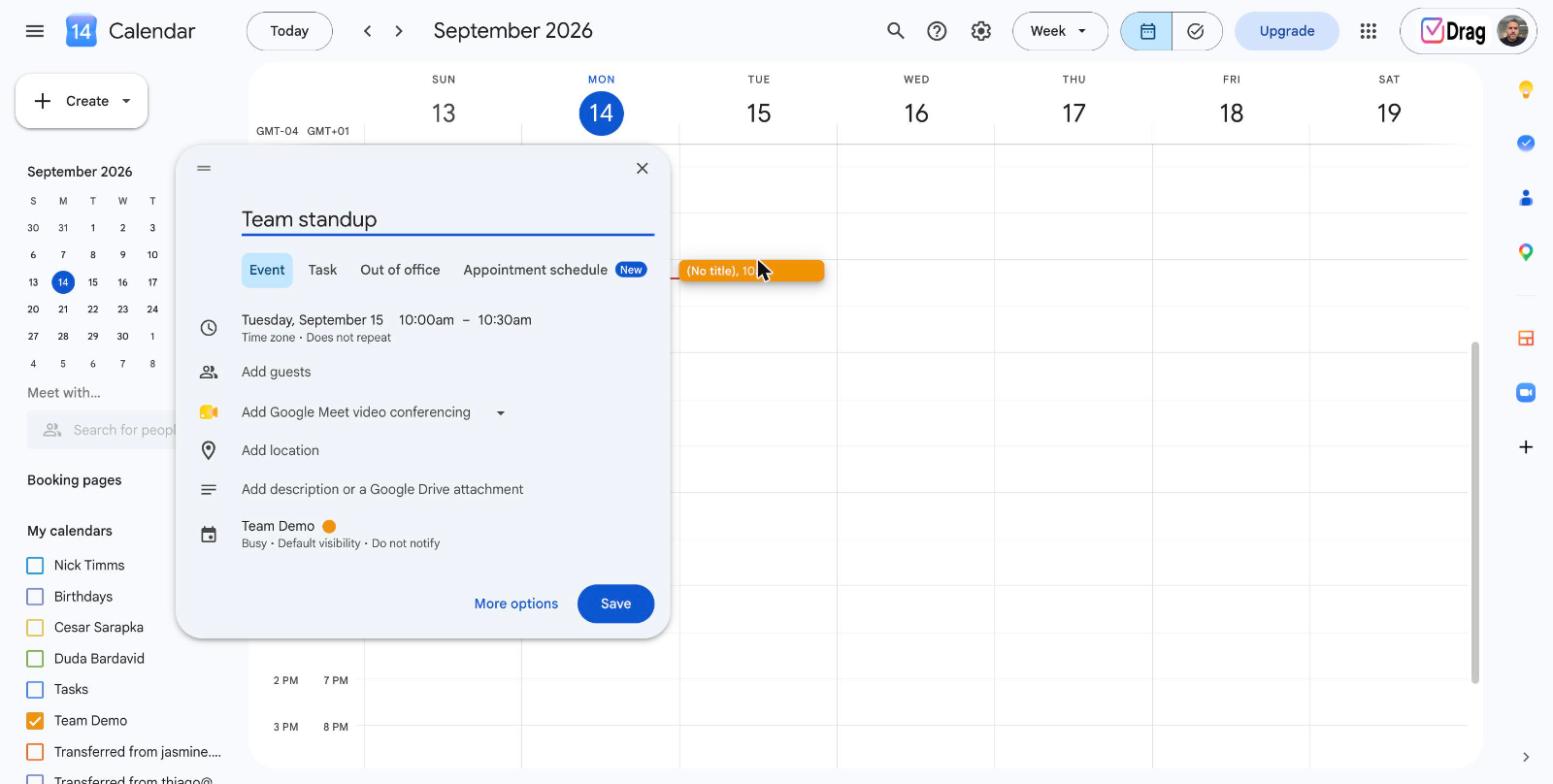
Give your event a title, and Calendar will handle the rest of the details in the same panel; anything you would once have saved as a Reminder now lives in Google Tasks, which shows its tasks in your calendar grid alongside events.
Adding guests
If it is an event with someone you want to receive a reminder as well, type their email on Add Guests. Sometimes you just need to start typing the name of the guest, and the email will appear automatically. If you want to allow the guests to make modifications in the event, or even invite more people, just click on Guest permissions and check the boxes you desire. Don't forget to click on See guest availability, to make sure that the time you are setting is not busy for the other person.
Location or conferencing
Click on Add location to either put the meeting place or Add conferencing, if it is a remote meeting. To add a location, start typing the address, and some suggestions will appear. But if it doesn't, type the complete address, so you and the other guests know exactly where the place is.
When you choose to add conferencing, Google Calendar creates a Google Meet link for a video conference session between you and your guests. You can also install a third-party program if you don't want to use Google Meet.
Description and attachments
The next step is to add an event description, and/or if you prefer, add attachments. Just type describing precisely what the event will be in detail, with instructions and useful links. To add an attachment, click the clips symbol, then choose the file you want. After that, just click Select or Upload, and your file will be attached to the event.
Choose a Calendar and More Options
You can choose which calendar you want to save the event by clicking next to the calendar symbol. 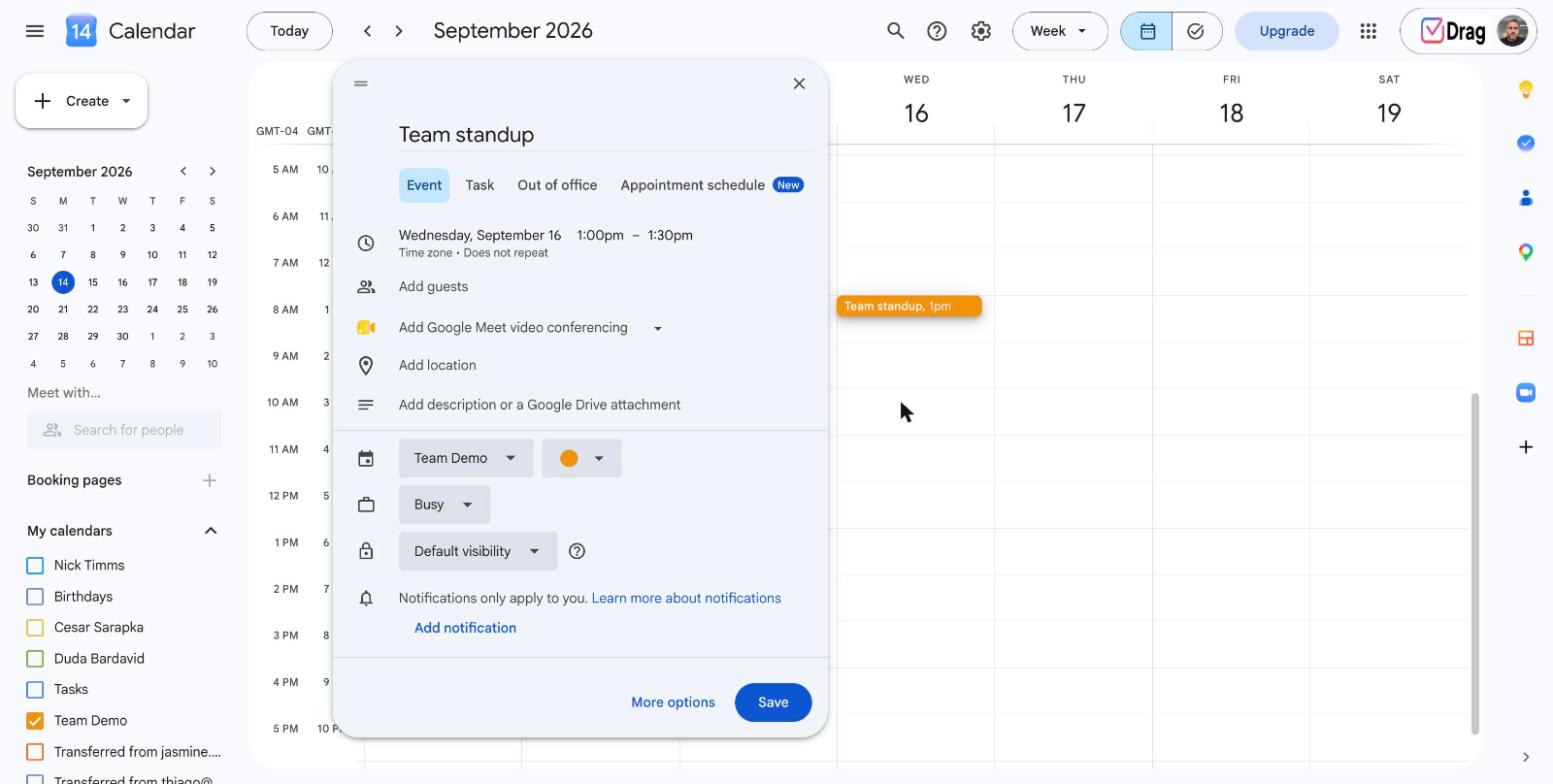 In the link More Options, you are taken to an expanded window with more advanced options:
- By clicking on Does not repeat, you can choose a frequency for the event, for example, Every Week Day, or Every Monday.
- You can also mark the box All Day if it's the duration of an event.
- It's possible to add a notification as well if you want to be alerted about the event a couple of minutes or one hour in advance.
- Choose if you are Free or Busy during the event, which will prevent other people from inviting you in case you are busy.
- On the right side, you can manage the guests and the permissions you want to give to them.
Save events
Once the event panel has everything it needs, save it. But as simple as it may be, there are some things that you should know about doing this process. When you click the Save button, a pop-up will open, asking if you want to send invitation emails to your guests. You can choose between:
- Send: If you want to notify the guests via email.
- Don't send: So, the guests won't receive any notification email for now.
- Dismiss: If you want to continue working on the invitation.
Deleting an event
Deleted events sit in Calendar's trash for 30 days before being permanently removed, and you can empty the trash sooner if you want them gone immediately. To delete an event, just click on it and choose Delete Event, represented by the trash can symbol. But if you want to remove it permanently, go to the Trash following the same path as before, and check the box of the event, you have deleted.
Then just click Delete. In case you need to restore a deleted event, that hasn't been deleted permanently, go to Settings, then Trash. Find the deleted event and mark the box next to it. Finally, click on Restore.
Customize an event
You can edit and customize your events according to what you need. To do that, click on the event you want to customize, you can set a color for the event to be displayed on your calendar. For example, you can pick the color red when an event requires more attention than others, to signalize its importance.
If you are adding an event to a specific calendar, the color will be the same as the calendar. So be careful not to put the same color in different calendars, so you don't get confused. Also, if you want to add an event to a different calendar, just click on its name and choose a different calendar.
Drag · with Varley
The inbox your team and Varley work in together
Shared inbox and live chat for Gmail teams, with Varley, Drag’s AI, included from $18. Plus an MCP server your own AI tools can drive.
Google Calendar keywords and flairs
Calendar has a small delight most users find by accident: type certain keywords into an event title and Google adds an illustration, a flair, to the event. "Gym" gets weights, "dinner" gets a table setting, and the effect is a calendar you can read at a glance.
Google publishes no official flairs list, so every list online, this one included, is observation rather than documentation. The keywords most consistently reported to trigger flairs include: gym, run, yoga, tennis, golf, swim, hike, bowling, dinner, lunch, breakfast, coffee, drinks, movie, concert, birthday, wedding, haircut, dentist, and massage. Titles need the keyword to be the recognizable subject of the event, and results vary by language.
Flairs are title-triggered and language-sensitive, so if a keyword fails for you, the usual reason is a modifier in the title or a non-English locale, not a removed feature. If Google ever documents the feature properly, this section will cite that instead; until then, treat any flairs list, anywhere, as a report rather than a specification.
Scheduling with appointment schedules
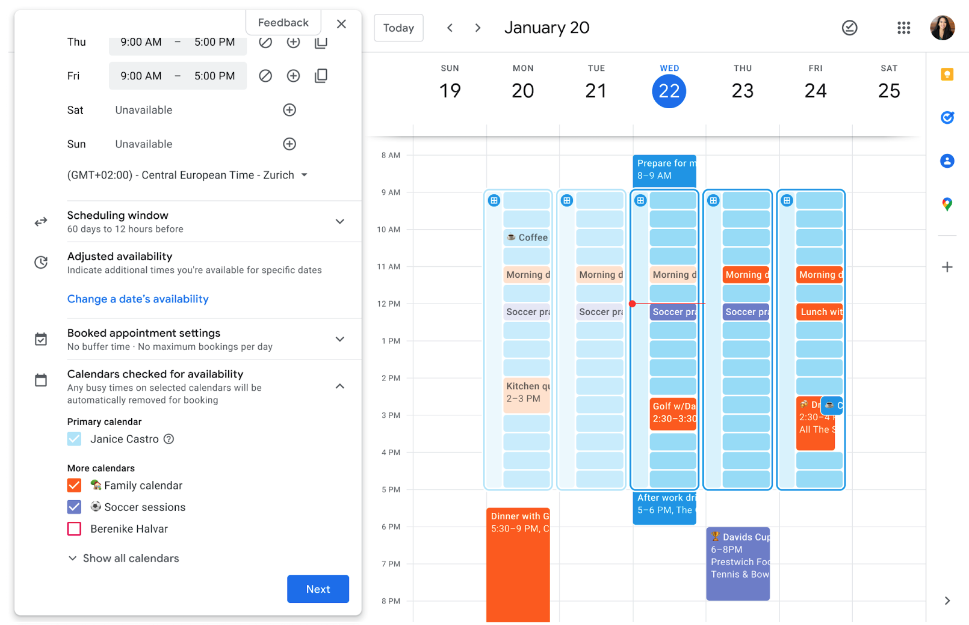
Appointment schedules are Calendar's booking system: you define a window of availability, share a booking page, and other people pick times without the email back-and-forth. It replaced the older appointment slots feature, which Google retired, and it is the feature to learn if you booked anything through Calendar before and remember it working differently.
Setup lives in the event creation flow: choose Appointment schedule, set your scheduling window, adjust availability, and Calendar checks your existing calendars so double-bookings cannot happen. The setup panel below shows the current flow.
Managing Calendars
After learning the basics of how to create events, and manage them, now it's time to become an expert on managing whole calendars.
How to import a calendar
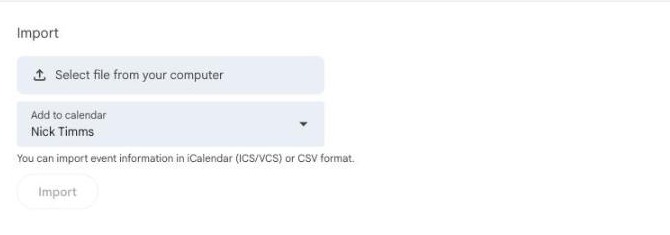
If you have an existing calendar from any other calendar app, you can import it to Google Calendar. Keep in mind that it must be saved with the extension .ical. At the home page, click on the three dots located next to Add calendar, then select the option Import. Choose the desired file, and click Import so you can have your previous calendar inside Google Calendar.
How to export a calendar
If you need to export your calendar, it's simple:
- Click on the Settings Menu, represented by the gear symbol, then choose Settings.
- Then click on Import & Export, on the left. Choose export.
Your calendars will be all in a ZIP file, all in the ICS format.
How to delete a calendar
Sometimes it's necessary to delete a calendar, and to do that you can follow these steps:
- Click on the Settings Menu on the top right of the page, and select Settings.
- Next, on the left menu bar, select the calendar you want to remove.
- Then scroll to the bottom of the page to the section Remove Calendar.
- You can choose one of these options: Unsubscribe if you want to unfollow calendars that you can only read, not edit, Delete, if you own the calendar.
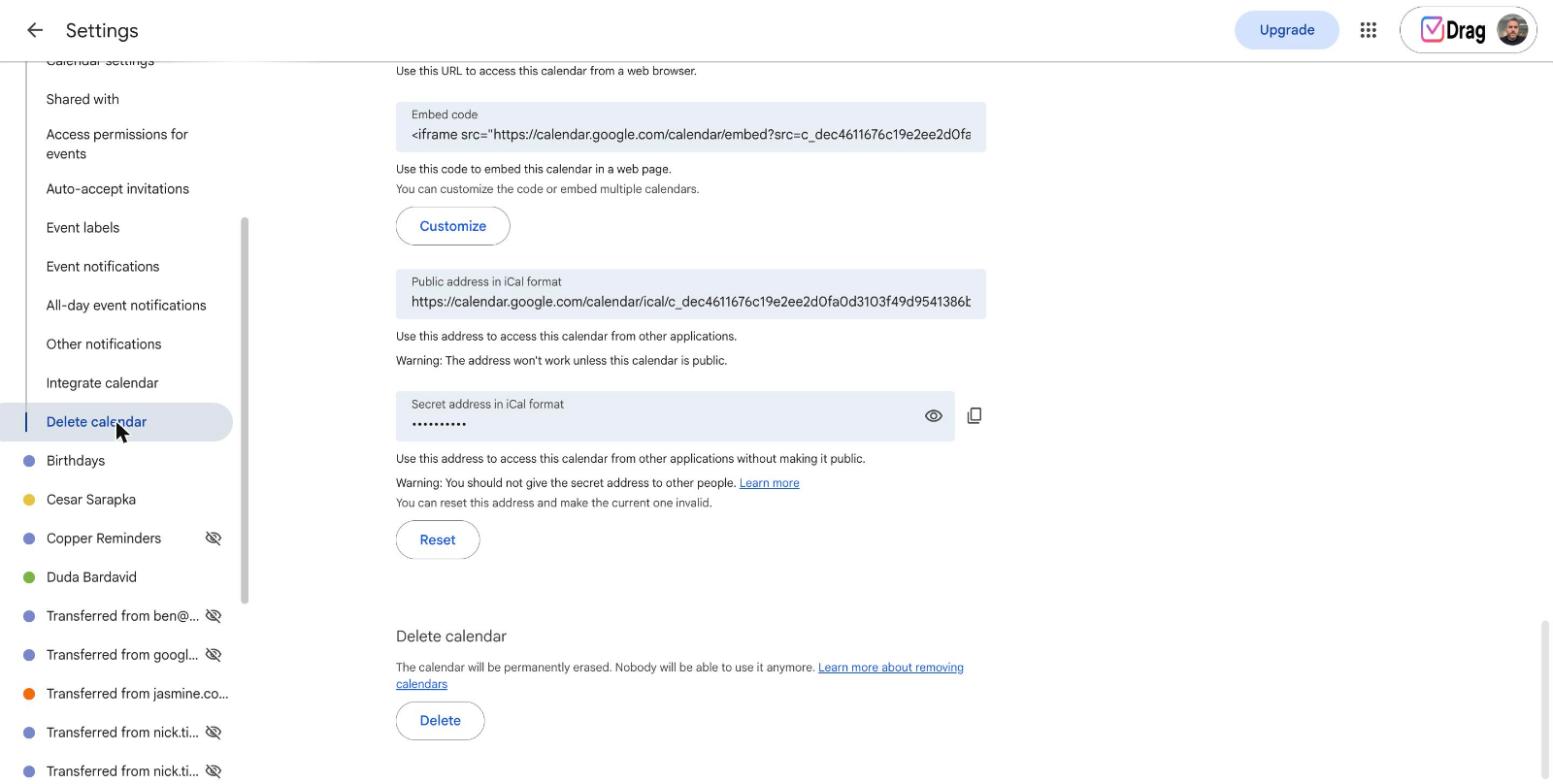
One dated change worth knowing: from October 5, 2026, Google is changing how deleted secondary calendars are handled, per its own March 2026 announcement. If your team runs project calendars you periodically retire, review what you delete before that date with the new lifecycle in mind, because this is a data-loss class change and almost no guide mentions it.
How to create shared calendars
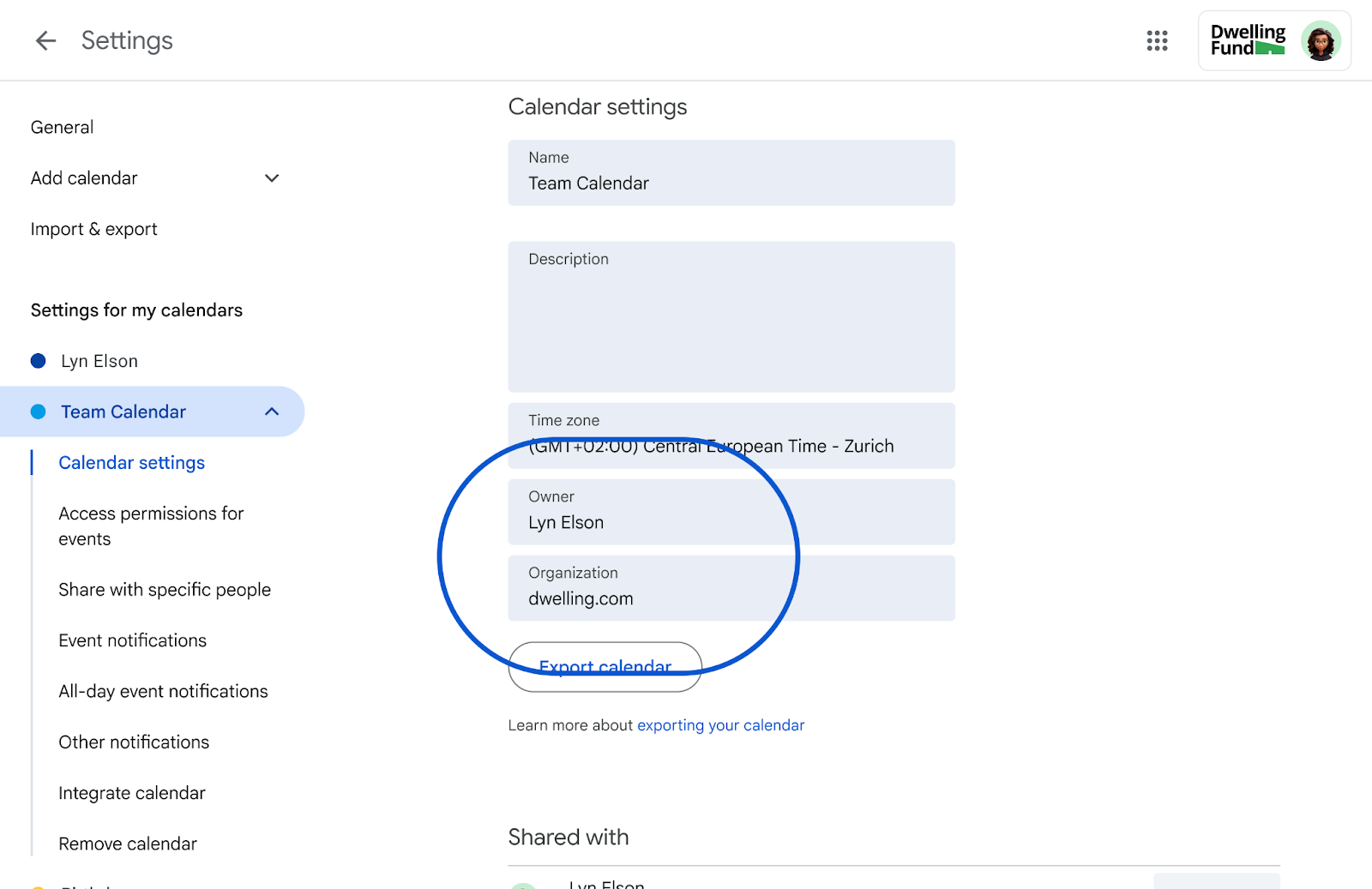
If you are part of a team or whatever group of people, this feature is quite interesting and still unknown to many people. It's possible to create a shared calendar to facilitate the tracking of activities, assignments, events, and appointments in the group. To create your shared calendar, follow these steps:
- On the left, search for Add other calendars, then click on create a new calendar.
- Put a name and a description on the calendar.
- Select the Time Zone you are at.
- Then click on Create calendar. You will be able to see it in the session My calendars.
- Click on the three dots next to your shared calendar's name, and choose the option Settings and sharing.
- Scroll down to the session Access permissions. Here you can choose to make your calendar public, get a shareable link, or share with specific people. We recommend you select the last one.
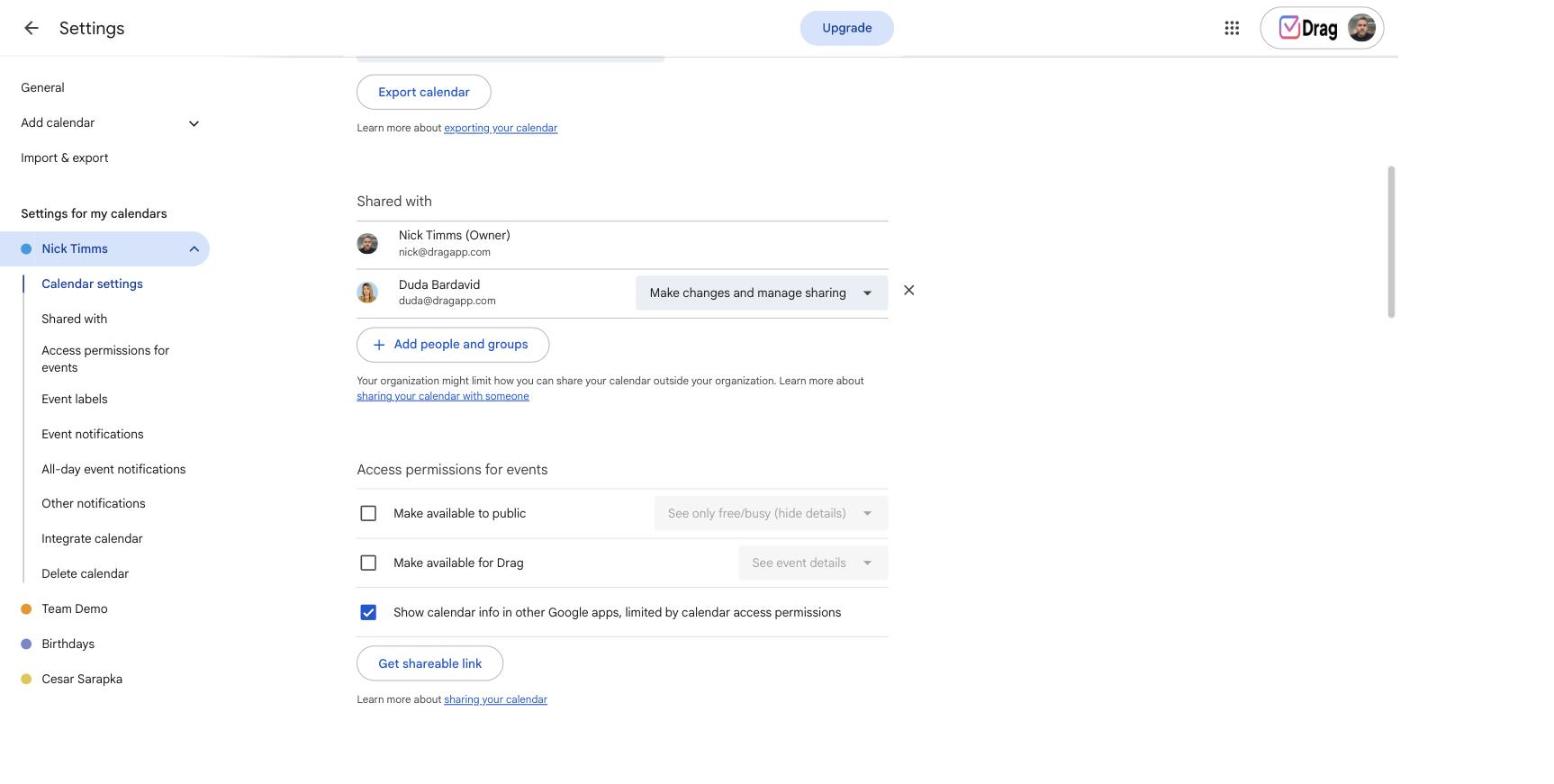
- Click on Add people, and type the emails of the group. If you want to skip this manual part, you can share a link, but it may not be so secure. Then you can send this link to the group members.
- If you are on Google Workspace and you want to make the calendar available only for your team, check the box Make available for My Organization.
Google Calendar and Gemini
Google's own Calendar product page now shows Gemini working inside Calendar: a "Help me schedule" flow, suggestions that add events from elsewhere in Workspace, and meeting notes taken by Gemini. As with the rest of Workspace, the features are plan-gated: Google's October 2025 announcement lists Business Standard and Plus, Enterprise Starter, Standard and Plus, Google AI Pro for Education, and Frontline Plus, with Business Starter absent. That is the same Business Starter exclusion that applies to Gemini in Google Chat, though the exact plan lists differ per feature, which is why this guide quotes each from Google's own availability block rather than generalizing.
Drag: a shared inbox integrated with Google Calendar
 Sarah Chen
Drag is a shared inbox for Gmail: your team runs support@, sales@, and every shared address together, in the Gmail you already use, with boards, assignments, internal notes, and tasks living on the same cards as the email.
The Calendar connection is due dates. Give any email or task card a deadline and Drag can create the matching Google Calendar event automatically, so the commitments your team makes in the inbox show up where everyone already looks for their day. No copying tasks into a second tool, no deadline living only in someone's memory of a thread.
If your team's work arrives by email and its schedule lives in Google Calendar, that pairing is the practical version of everything this guide covers. Plans start at $12 per user per month with a 7-day trial and no card required.
Google Calendar FAQs
Did Google Calendar remove Reminders?
As a separate type, yes: Google folded Reminders into Google Tasks. Anything you would have saved as a Reminder is now a task, still visible in your calendar grid but managed through Tasks.
What happened to appointment slots in Google Calendar?
Google retired appointment slots and replaced them with appointment schedules, a fuller booking system with a shareable booking page, availability windows, and automatic conflict checking against your calendars.
Do Google Calendar flairs still work in 2026?
Yes. Typing certain keywords into an event title still adds an illustration to the event. Google publishes no official keyword list, so the list in this guide is verified by hand in a live calendar and dated.
What is changing about deleting Google calendars in October 2026?
Per Google's March 2026 announcement, from October 5, 2026 Google is changing how deleted secondary calendars are handled. If your team retires project calendars, review the new lifecycle before deleting anything you might need back.

Co-founder
Co-founder at Drag, writing about Google Workspace, shared inboxes, and how teams actually run email.
