












Seven help desks judged for SaaS teams by stage, from founders' Gmail to enterprise, with verified 2026 pricing and an honest look at where each one fits.
Key takeaways
- SaaS support is account-shaped: the tools that thread one company's conversations together beat the ones that count closed tickets.
- Stage decides more than features: what a five-person startup needs from support software is almost nothing like what a two-hundred-seat scale-up needs, and buying for the wrong stage costs either money or migration.
- Ask the 2026 question before you buy: whether the help desk's AI works only inside its own walls, or whether your AI tools, Claude, ChatGPT, Cursor, can connect and act on the queue directly.
Table of contents
The best help desk for a SaaS company is the one built for how SaaS support actually works: your customers are accounts, not tickets. Five people from one company will write in about billing, a bug, and onboarding in the same week, and whether anyone connects those threads decides a renewal. So this guide judges the field on account context, stage fit, and one 2026 question most lists skip, whether your own AI tools can work the queue, and it tells you plainly which tool fits which stage, including where ours does not.
Every price verified against the vendor's own pricing page: July 2026.
What this guide covers
- How to judge a help desk as a SaaS company
- The quick answer by stage
- The field at a glance
- The AI line item: where the real bill lives
- The seven help desks, in depth
- Frequently asked questions
How to judge a help desk as a SaaS company
Four tests, in order of how much they will matter in a year. Account context: when someone writes in, can an agent see everything that company has ever asked, or just this thread? Stage fit: does the pricing and complexity match your team today, with one honest step up available, rather than an enterprise platform you grow into by overpaying for two years? The feedback loop: how easily do bugs and feature requests flow from support into wherever your product decisions happen? And the AI direction: every tool on this list now claims AI, so the differentiating question is whether that AI is a closed feature or an open surface, one your own tools can drive, through MCP, the open standard that lets tools like Claude and ChatGPT connect to your software directly. Our MCP guide covers why that direction matters more each quarter.
The quick answer by stage
| Your stage | Where to start |
|---|---|
| Pre-launch to first customers | your founders' Gmail, honestly, then Drag the week two people share support@ |
| Seed to Series A, support in Gmail | Drag |
| B2B with customers in Slack | Plain or Pylon |
| Product-led with in-app messaging at the core | Fin (formerly Intercom) |
| Mid-size, outgrown the inbox, want simple | Help Scout |
| Budget-driven mid-size | Freshdesk |
| Enterprise scale and compliance | Zendesk |
Drag · with Varley
The inbox your team and Varley work in together
Shared inbox and live chat for Gmail teams, with Varley, Drag’s AI, included from $18. Plus an MCP server your own AI tools can drive.
The field at a glance
| Tool | Best stage | Works in | Account context | Works with your AI tools? | Entry price (verified Jul 2026) |
|---|---|---|---|---|---|
 Drag Drag | Seed to Series A on Gmail | Gmail | Boards + shared views | Yes, via MCP | $12/user/mo ($18 with AI) |
 Help Scout Help Scout | Mid-size, outgrown the inbox | Own app | Contact history | Vendor's AI only | $25/user/mo |
 Freshdesk Freshdesk | Budget-driven mid-size | Own platform | Contacts + companies | In beta | $19/agent/mo (annual) |
 Fin Fin | Product-led, in-app messaging | In-app messenger | User + company profiles | Read-only via MCP | $29/seat/mo + $0.99/resolution |
 Plain Plain | B2B on Slack, API-first | Slack | Account-centric API | Yes, via MCP | $35/seat/mo |
 Pylon Pylon | B2B lifecycle on Slack | Slack | Account-native (B2B) | Yes, via MCP | Not published (~$59/seat reported) |
 Zendesk Zendesk | Enterprise scale + compliance | Own platform | Org + user records | In beta | $55/agent/mo (annual) |
Entry prices are each vendor's lowest paid plan, at the annual-billing rate where the vendor quotes annually; Fin and Help Scout AI fees bill on top per resolution. Pylon does not publish pricing, so its figure is the Starter rate reported by independent trackers (three-seat minimum). MCP status per our own verified findings, re-confirmed July 2026.
The AI line item: where the real bill lives
Every entry price above is honest and none of them is the number you will pay. The AI features are where 2026 pricing actually lives, and the models differ wildly: some tools bundle it, some meter it per resolution, and a busy month on a metered plan can cost more than the seats. Ask every vendor the same question: what does a thousand AI-handled conversations cost on your plan?
- Help Scout: $0.75 per resolution
- Fin: $0.99 per outcome
- Zendesk: Copilot add-on, +$50 per agent
- Freshdesk (Freddy): $49 per 100 sessions past the included bundle
- Drag: AI included from $18 per user
- Plain: bundled
The seven help desks, in depth
Drag






Drag is the pick for SaaS teams that live in Google Workspace and want support handled where the rest of the company already works: shared inboxes on Gmail with boards, account-threading through shared views, automation, and AI drafting, plus its own MCP server so tools like Claude can work the queue directly. From $12 per user per month with a 7-day trial and no card. The honest limit: at enterprise ticket volume with heavy compliance workflows, the platforms below earn their price, and full disclosure, Drag is ours.
Help Scout
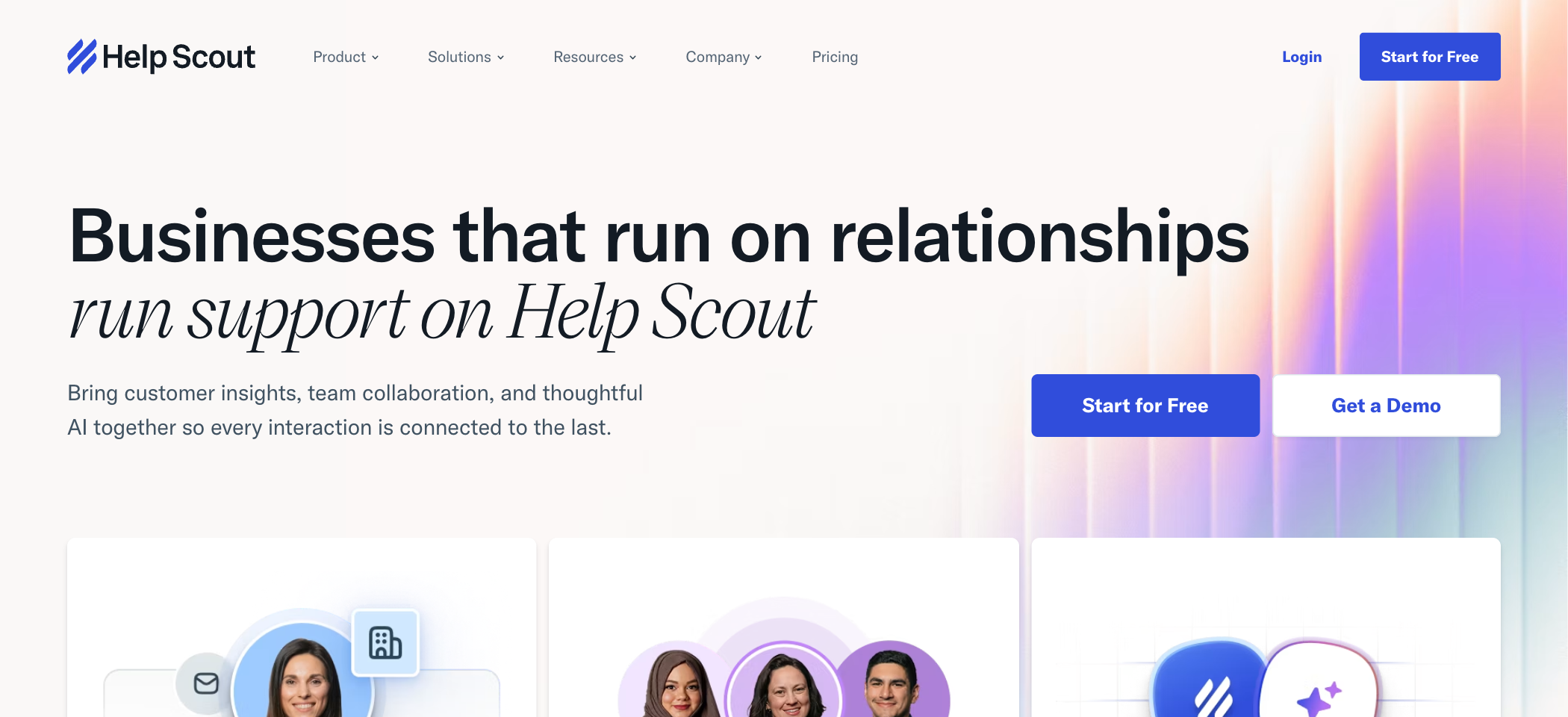
Help Scout is the graceful middle: an email-like interface a new hire learns in an afternoon, with docs and light automation that scale into the mid-size years. The fit is teams that have outgrown a raw inbox but want simplicity to survive the growth. The Standard plan starts at $25 per user per month, and AI Answers add $0.75 per resolution on top.
Zendesk
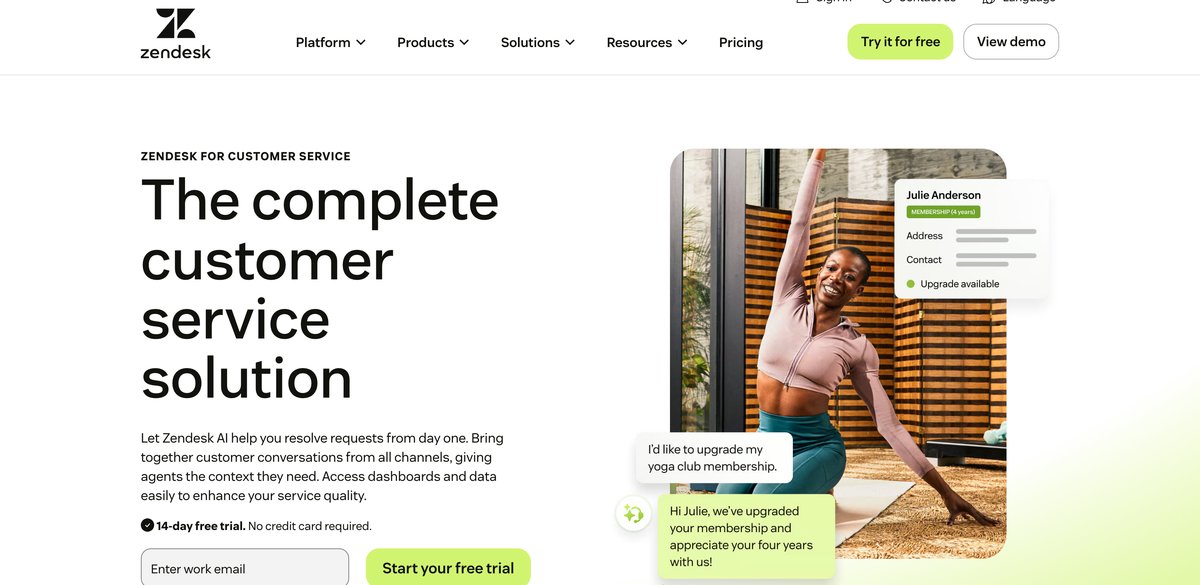
Zendesk is the enterprise workhorse: unmatched workflow depth, integrations, and compliance, priced and complicated accordingly. The fit is scale, and buying it early is how startups end up paying enterprise prices for startup problems. Suite Team starts at $55 per agent per month on annual billing, with the Copilot AI add-on and per-resolution fees stacked separately.
Freshdesk
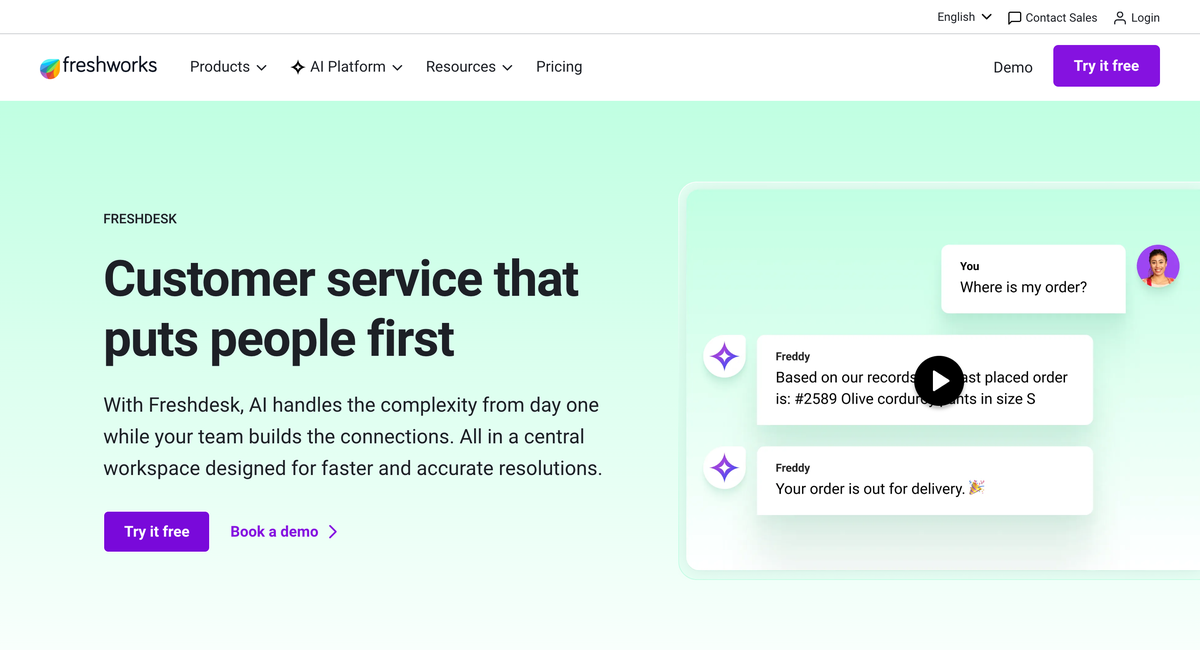
Freshdesk is the capability-per-dollar play, with a genuinely usable free tier and cheap steps up. The fit is budget-driven teams that want a full help desk shape without the full help desk bill. Growth starts at $19 per agent per month on annual billing, with a free plan for up to two agents, and Freddy AI meters sessions past the included bundle.
Fin (formerly Intercom)
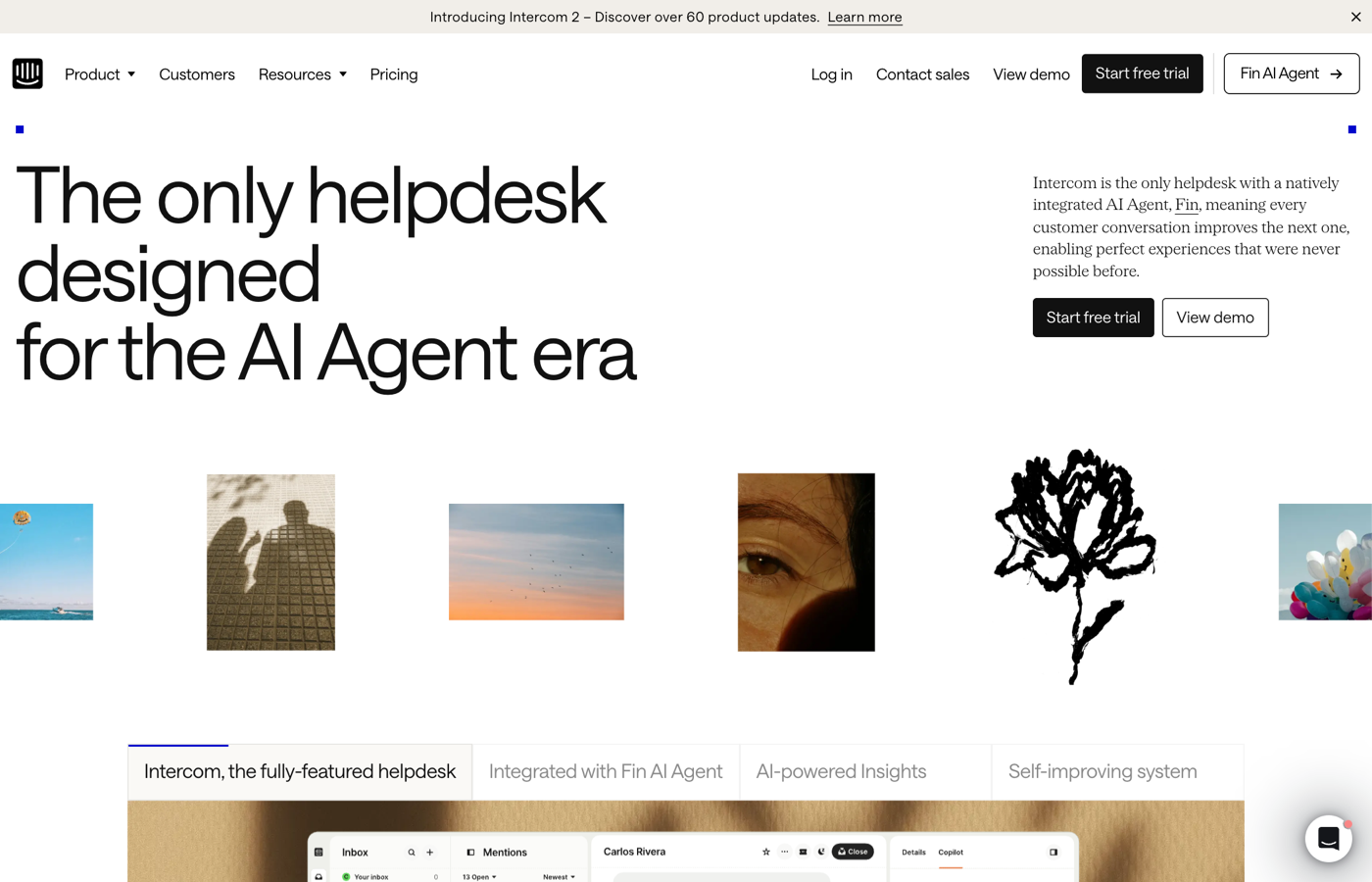
Fin is the in-product option: messaging where your users already are, with one of the strongest vendor AI agents in the category built in, priced per resolution on top of seats. The fit is product-led companies where support and product messaging blur. Our full cost breakdown covers what it really adds up to. Essential seats start at $29 per seat per month on annual billing, with Fin billed at $0.99 per resolution on top.
Plain
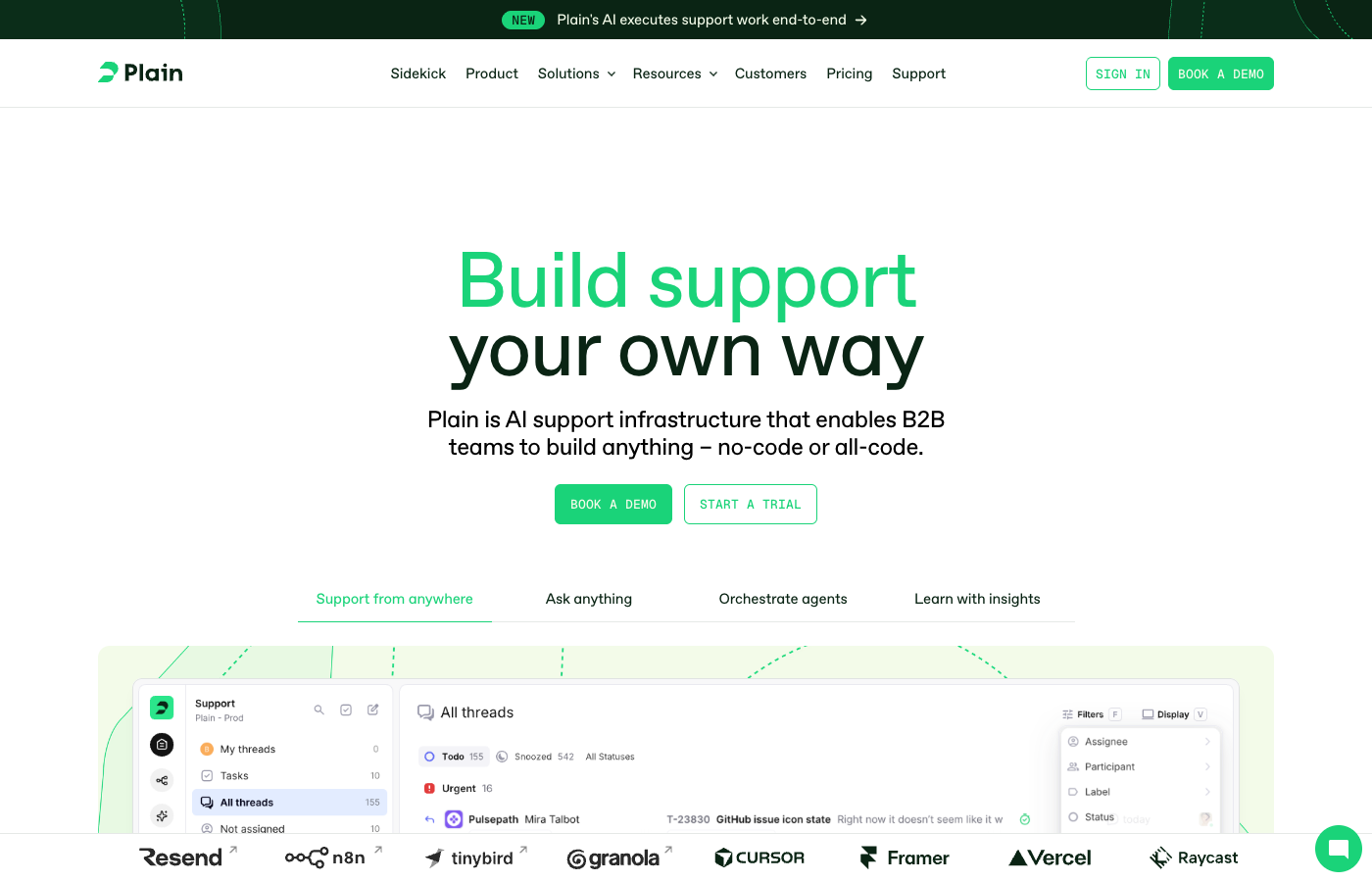
Plain is API-first and Slack-native, built for technical B2B teams whose customers live in shared Slack channels, with an open MCP direction engineering teams can build on. The fit is developer-tool companies; the trade is that it assumes an engineering mindset. The Foundation plan starts at $35 per seat per month, billed yearly.
Pylon
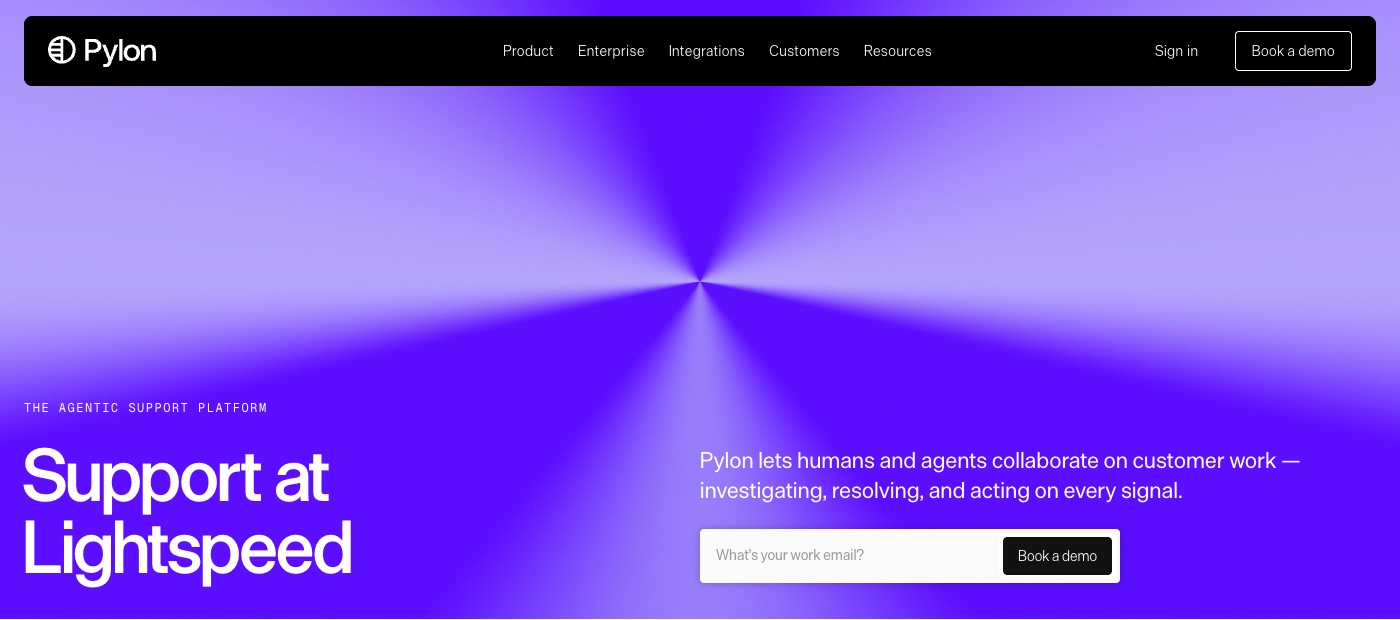
Pylon aims at the whole B2B customer lifecycle, support, success, and renewals in one Slack-native platform with account context at the core. The fit is B2B SaaS running high-touch relationships; the trade is buying a platform when you may only need an inbox. Pricing not published; reported around $59 per seat with a three-seat minimum, verified unavailable July 2026.
Frequently asked questions
What makes SaaS help desk needs different?
Accounts. A SaaS customer is a company with many voices, an onboarding history, and a renewal date, so the tool's job is threading one account's conversations together, not just closing individual tickets fast.
What should an early-stage SaaS company use?
The honest answer for the first months is Gmail itself. The switch point is the week two people share one support address: that is when a shared inbox layer adds ownership and visibility without help-desk complexity or cost.
Do we need AI in our help desk?
You will have it either way, since every tool now includes some. The question worth asking is direction: whether the AI is locked inside the vendor's product, or open, so your own tools can read and act on the queue. Open is where the category is heading.
When should a SaaS company switch help desks?
When the tool stops matching your stage: paying enterprise prices for features you do not use, or hitting walls a bigger platform removes. Switching is cheapest before habits calcify, which is an argument for buying for the stage you are in, not the one you hope for. If you are moving off Hiver specifically, our step-by-step migration guide covers the exact playbook.

Co-founder
Building Drag for nearly ten years: shared inboxes, boards, and now the AI and agent layer, all on Gmail, plus HeyHelp for the personal inbox. Writes the honest versions of the comparisons.
