












Decagon runs on a reported ~$50K platform fee plus usage, with no published pricing. The best Decagon alternatives for 2026 across every tier: enterprise peers, self-serve agents from $0.05 per conversation, and the seat-included approach, all priced honestly.
Key takeaways
- Decagon sells enterprise agent deployments at a reported ~$50,000 annual platform fee plus per-conversation usage, with no published pricing, so alternatives shopping starts with modeling what your volume would actually cost.
- Like-for-like alternatives are Sierra (reported ~$1.50 per resolution, contracts near $150K), Ada ($73.5K median contract), and Salesforce Agentforce; the self-serve tier delivers the same per-outcome model from $0.99 down to $0.05 per interaction.
- Every vendor in this aisle defines its billable event differently, and production resolution rates cluster at 40 to 70 percent against advertised 65 to 86, so model last month's volume before comparing anyone.
- Nearly every page ranking for Decagon alternatives is a vendor recommending itself. This one is too, in the one section marked as ours, with every figure dated and its sourcing stated.
Table of contents
- Decagon alternatives compared at a glance
- The enterprise-agent bill, decoded
- Enterprise peers: the like-for-like list
- The tier down: the same model, self-serve prices
- A different approach: the whole inbox, not just a bot
- When Decagon is still the right choice
- How to choose
- Frequently asked questions
- Where this fits
The best Decagon alternatives are Sierra for deeply customized agents across chat and voice, Ada for standardized high-volume deflection, and Salesforce Agentforce inside Salesforce service orgs, with Parahelp for complex technical queues and Lorikeet where a wrong answer is a compliance event. That is the like-for-like answer. The other half of the question is whether the aisle fits: if the platform-fee-plus-usage quote rather than the capability sent you looking, the honest alternatives sit a tier down, from Fin at $0.99 per outcome to Hugo at roughly $0.05 per conversation, or outside the metered model entirely with AI included per seat. Every figure on this page is dated as of August 2026 with its sourcing stated, because the pages ranking for this query are vendors recommending themselves without receipts.
Decagon's pitch is enterprise reliability: an agent platform positioned on testing discipline and dependable behavior at scale, reportedly priced at around a $50,000 annual platform fee plus per-conversation usage. It publishes no pricing page, which means every evaluation starts from a quote you cannot benchmark publicly. This page is the public benchmark: what the peers cost, what the tier below costs, and the math for deciding which tier you belong in. Category-wide numbers live in our shared inbox statistics and state of AI support pricing. Comparing Decagon against Sierra specifically? The Decagon vs Sierra head-to-head is the dedicated matchup page.
Decagon alternatives compared at a glance
| Tool | Tier | Pricing model | Their own quality claim | Best for |
|---|---|---|---|---|
 Sierra Sierra | Enterprise | Reported ~$1.50/resolution, contracts near $150K/yr | Says its AI resolves up to 80% of conversations (Airtable case) | Deep customization, chat and voice |
 Ada Ada | Enterprise | Conversation volume; $73.5K median contract | Says customers rate its AI 75% satisfaction, with 42% faster handling | High-volume containment and deflection |
 Salesforce Agentforce Salesforce Agentforce | Enterprise | ~$2/conversation + licensing | Not published comparably | Salesforce-standardized service orgs |
 Fin Fin | Mid-market default | $0.99/outcome, seats $29 to $132 | Says its AI resolves 76% of conversations on average (12,000+ customers) | The proven default, runs on 8+ helpdesks |
 Parahelp Parahelp | Specialist | Published: $1.25/resolution (Start), $1.00 (Scale) | Not published | Technical SaaS with complex tickets |
 Lorikeet Lorikeet | Specialist | Custom | Not published | Regulated industries (fintech, health) |
 eesel AI eesel AI | Budget sidecar | $0.40/task; simulation mode | Simulation on your tickets instead of a claim | Testing on historical tickets before paying |
 Hugo (Crisp) Hugo (Crisp) | Budget self-serve | ~$0.05/conversation (credits in Crisp plans) | Not published | The cheapest published rate in the category |
 Drag Drag | Different approach | $12 to $24/seat, AI included, no metering | Different job: AI assists the team | Teams that need AI in the team's inbox, not an enterprise bot |
Every figure in the quality column is the vendor's own published claim, measured by the vendor's own definition, and Decagon's own headline claim, from its homepage, is that its AI handles 80% of Duolingo's support tickets with no human involved. How to read the resolution-rate claims covers the three questions to ask of every one. (Drag is ours and is deliberately not ranked among the agents; its section below explains who lands there and why.)
The enterprise-agent bill, decoded
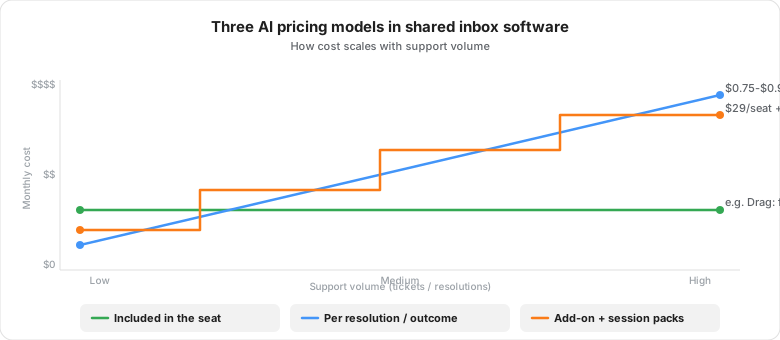
Platform-fee-plus-usage pricing means two meters: the fixed fee you pay before the first conversation, and the per-conversation rate that scales with your busiest month. Model three things before comparing vendors: your real annual volume at a realistic 40 to 70 percent resolution rate (advertised figures run 65 to 86 percent; production data clusters lower), each vendor's exact billable-event definition, and the cost of leaving after deep configuration. The advertised-versus-production gap is documented claim by claim in the resolution-rates audit.
Price is only half the comparison, and quality claims are the other half: Decagon says its AI handles 80% of Duolingo's tickets without a human ever stepping in, Sierra says its agent resolves up to 80% of conversations in its Airtable case study, Fin claims a 76% average resolution rate across 12,000+ customers, and Ada claims 75% customer satisfaction with 42% faster handling. Each is the vendor's own number under its own definition of resolved, which is why the definitions move these numbers by double digits and why no vendor's percentage predicts your queue. The comparison that does: a pilot on your own tickets measured by your definition, which is exactly what eesel's simulation mode packages at the budget tier. On that last point, the category is consolidating: Salesforce is acquiring Fin (signed June 2026, not yet closed) and Zendesk acquired Forethought in 2026, so contract length and data portability are live questions everywhere in this aisle. Model your own numbers in the cost calculator.
Enterprise peers: the like-for-like list
1. Sierra
The highest-profile peer: heavily customized agents across chat and voice, sold on outcomes, with reported economics of roughly $1.50 per resolution on contracts typically starting near $150,000 a year. Deeper customization than Decagon's standardized reliability focus, at a higher reported entry point. Our Sierra alternatives guide covers its aisle in full.
2. Ada
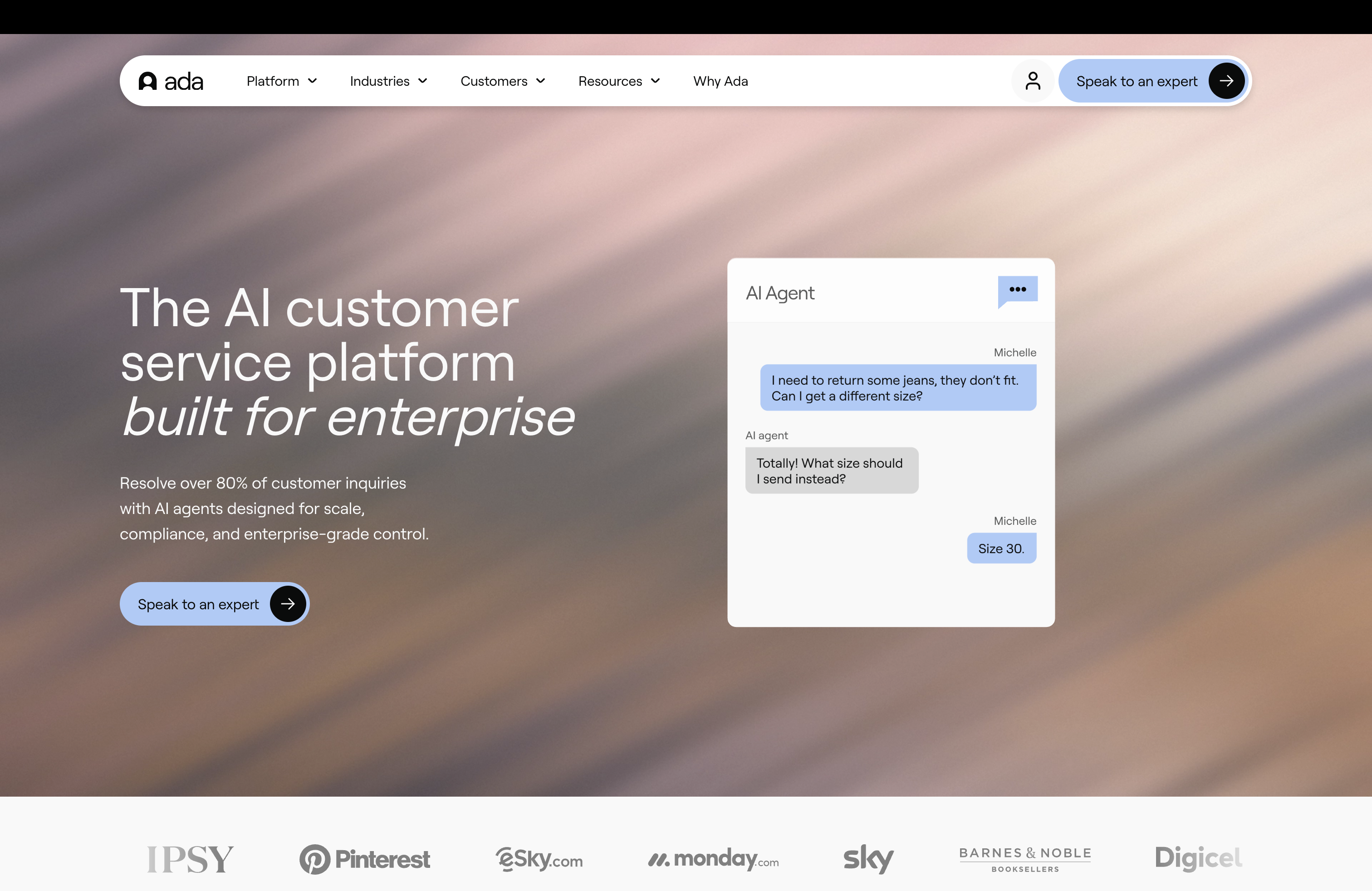
The volume veteran: a decade of containment and deflection work, priced on conversation volume with a reported median contract of $73,500 a year. The standardized-workflow approach overlaps Decagon's positioning most directly of the three peers, which makes Ada the sharpest head-to-head quote to collect.
3. Salesforce Agentforce
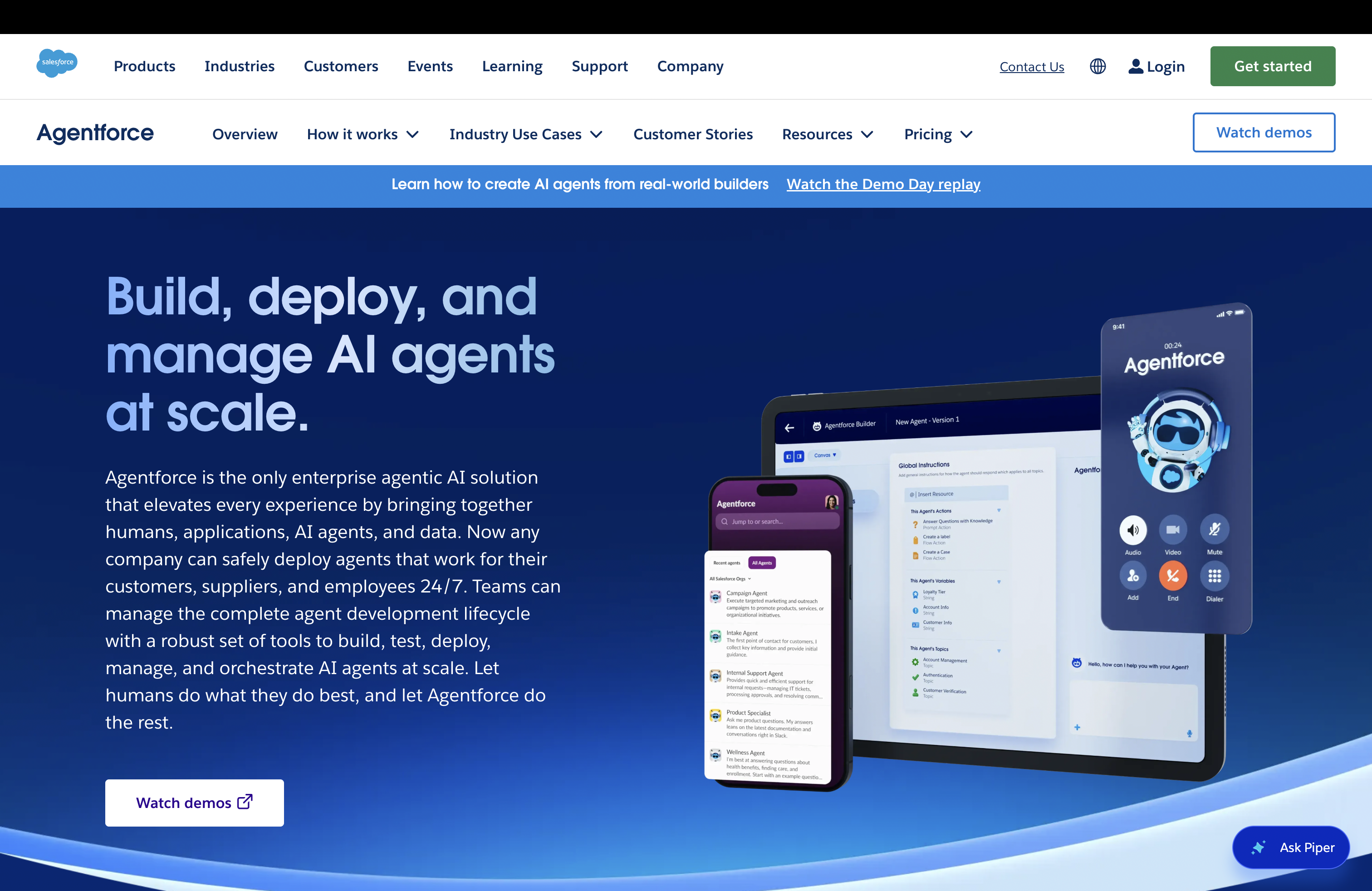
AI embedded in Service Cloud at roughly $2 per conversation plus licensing. If your service org runs on Salesforce the integration case is real, and with Salesforce acquiring Fin, the same house will soon hold both the platform agent and the category's mid-market default.
Drag AI
The inbox your team and your AI work in together
Shared inbox, live chat, and AI in Gmail, with an MCP server your AI tools can drive.
The tier down: the same model, self-serve prices
4. Fin
For teams below platform-fee volume, the first honest comparison: $0.99 per outcome, seats from $29, a 14-day trial, no annual platform minimum, standalone deployment on eight-plus helpdesks, and the largest published results base in the category (it says it resolves 76% of conversations on average across 12,000+ customers). Watch the outcome definition, which includes customers who simply stop replying. The full mid-market tier is covered in our Fin alternatives guide.
5. Parahelp
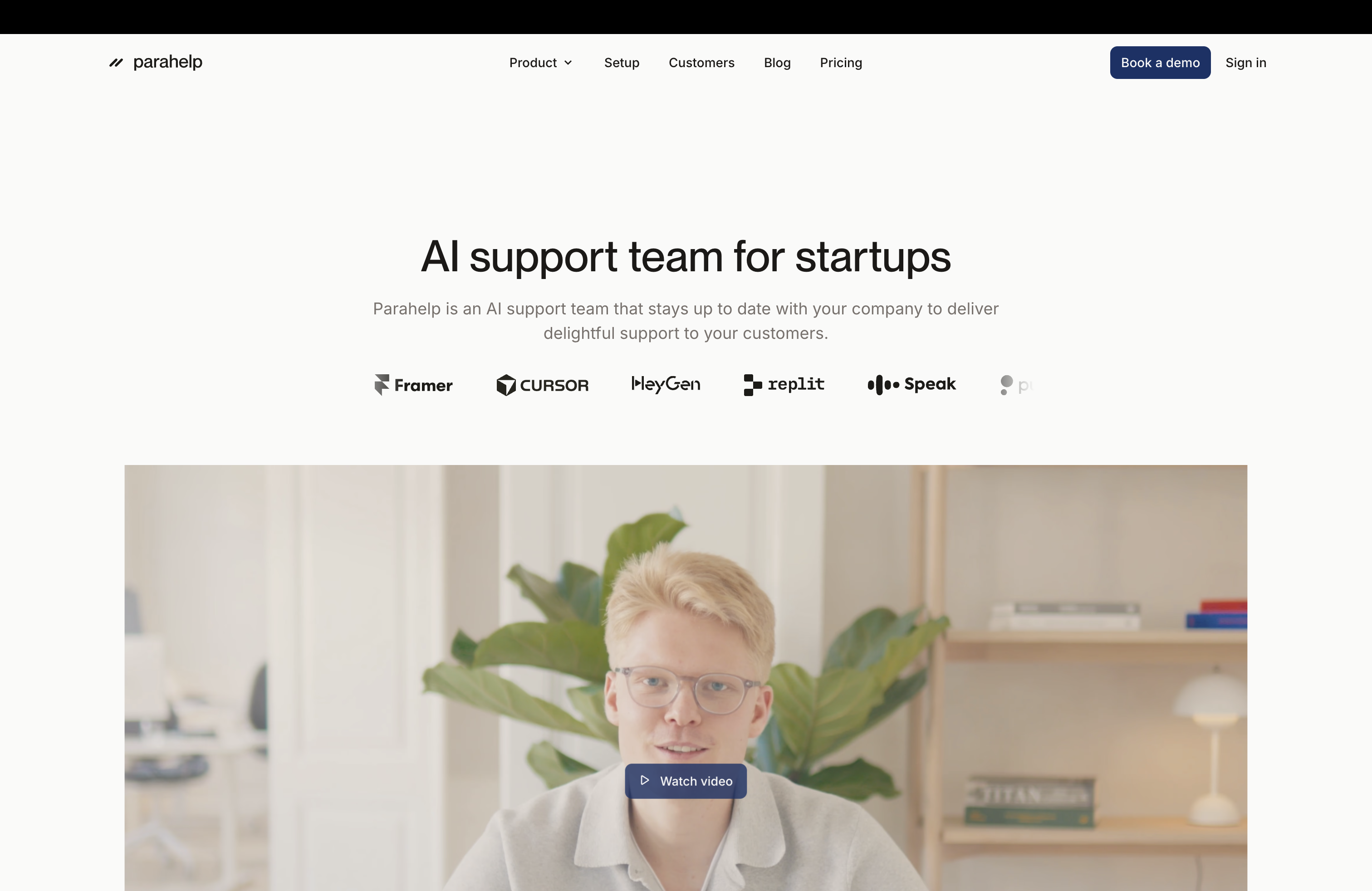
If Decagon's testing-and-reliability pitch is what attracted you, Parahelp delivers a version of that depth without the platform minimum: YC-backed, used by Perplexity and Replit, built for complex technical SaaS tickets, vendor-managed rather than self-serve, at published per-resolution pricing of $1.00 to $1.25.
6. Lorikeet
Lorikeet serves regulated industries (fintech, health) with an escalate-rather-than-guess design stance and audit-friendly operation at custom pricing. If reliability drew you to Decagon because a wrong answer is a compliance event for you, Lorikeet is the specialist built around exactly that risk.
7. eesel AI
eesel plugs into 14+ helpdesks at $0.40 per task, and its simulation mode runs the agent on your historical tickets before you pay anything, which is the cheapest way in the category to learn your true resolution rate before signing anyone's contract, and the closest thing this market has to Decagon's testing discipline at self-serve prices.
8. Hugo (Crisp)
Hugo, Crisp's agent, holds the lowest published rate in the category at roughly $0.05 per conversation via credits inside Crisp plans, MCP-connected and model-agnostic. If these rates cover your volume comfortably, you did not need the enterprise aisle.
A different approach: the whole inbox, not just a bot
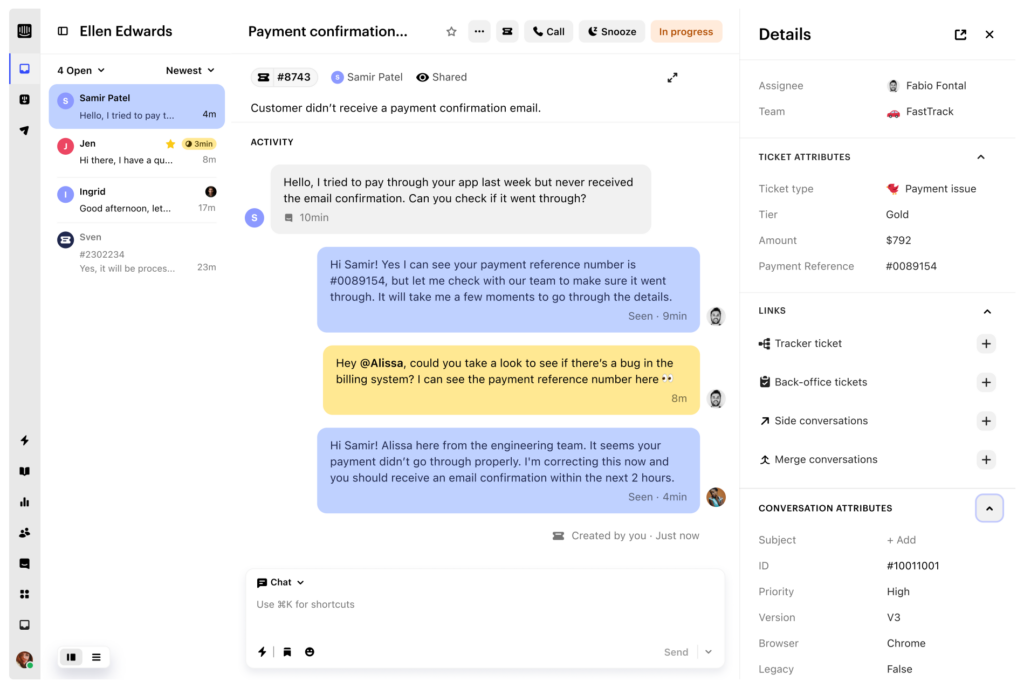
Full disclosure: Drag is our product, and it is not a per-outcome enterprise agent. It is where teams land when the evaluation teaches them their real need: not an autonomous bot behind a platform fee, but AI working inside the team's inbox. Drag turns Gmail into a shared inbox with AI included in the seat from $18: drafting in the team's voice, triage and tagging, thread summaries, with ownership and attribution built in and no meter running. It ships its own MCP server, so assistants like Claude can work the inbox directly, and its Intelligence capability, taking routine conversations through to resolution under the same ownership rules, is rolling out now. Try Drag free for 7 days, no card required.






 When Decagon is still the right choice
Decagon's reliability-and-testing positioning is a real differentiator at enterprise scale, where an agent behaving unpredictably is a brand problem, not a support ticket. If you have the conversation volume to clear the platform fee, engineering resources to own the deployment, and testing discipline is your buying criterion, Decagon belongs on the shortlist next to Sierra and Ada. The alternatives here are for everyone whose volume or budget the platform fee does not fit.
How to choose
Three questions sort the field fast. What would last month's volume have cost at each vendor's billable-event definition and a realistic resolution rate? Does your situation need a platform (Decagon, Sierra, Ada), a sidecar on your existing helpdesk (eesel, Parahelp), or the self-serve default (Fin)? And does your team need a customer-facing bot at all, or AI helping the humans in the inbox, which is a different purchase with different economics? The buyer-segmented roundup maps the whole field, and what is agentic customer support defines the category.
Frequently asked questions
What is the best Decagon alternative?
Ada is the sharpest like-for-like quote to collect, with overlapping volume-deflection positioning and a reported $73,500 median contract; Sierra competes on deeper customization at a higher reported entry point. Below enterprise volume: Fin at $0.99 per outcome, specialists like Parahelp, or a seat-included AI inbox if you do not need an autonomous bot.
How much does Decagon cost?
Decagon publishes no pricing. Reported figures as of August 2026 put it at around a $50,000 annual platform fee plus per-conversation usage, so total cost depends heavily on volume. Collect quotes against modeled volume at a realistic 40 to 70 percent resolution rate rather than advertised benchmarks.
Is Decagon worth it for a small team?
Usually not, on economics alone: the platform fee assumes enterprise conversation volume before the per-conversation meter starts. Smaller teams get the same per-outcome model self-serve from Fin at $0.99, eesel at $0.40 per task, or Hugo at roughly $0.05 per conversation, or skip metering with AI included per seat.
Decagon vs Sierra: which one?
The two lead the same enterprise aisle with different emphases: Decagon sells reliability and testing discipline with standardized deployment, Sierra sells deep per-brand customization across chat and voice at a higher reported entry point. High-volume, repetitive load favors Decagon's approach; complex brand-specific journeys favor Sierra's. Collect both quotes against the same modeled volume.
Is Drag a Decagon alternative?
Not like-for-like: Drag is a Gmail shared inbox with AI included per seat, not a metered enterprise bot. It fits teams that discover they need AI helping the team rather than an autonomous agent behind a platform fee. Its Intelligence capability, resolving routine conversations under the same ownership rules, is rolling out now. Drag costs $12 to $24 a seat, with AI included from $18 and a free 7-day trial.
Where this fits
The Sierra alternatives guide covers the neighboring enterprise aisle, the Fin alternatives guide covers the mid-market tier in full, and the four-agent comparison puts Decagon beside Sierra, Ada, and Fin in detail. For the economics: shared inbox statistics carries the category's verified numbers and the cost calculator turns them into yours.

Co-founder
Building Drag for nearly ten years: shared inboxes, boards, and now the AI and agent layer, all on Gmail, plus HeyHelp for the personal inbox. Writes the honest versions of the comparisons.


