











Crisp charges per workspace, not per seat: cheap at a full workspace, a 111 or 211 percent jump at the next hire. Every plan, the AI credits, and the archives.
Key takeaways
- Crisp's 2026 plans are Free ($0, 2 seats), Mini ($45, 4 seats), Essentials ($95, 10 seats), and Plus ($295, 20 seats, then $10 per extra seat), each priced per workspace per month, with a quote-only Enterprise above.
- Per-workspace pricing means your effective seat price depends on how full your plan is: a full Essentials workspace costs $9.50 a person, but the 5th hire jumps the bill from $45 to $95, and the 11th from $95 to $295. The cliffs are the pricing model.
- AI is metered separately through included monthly credit allowances shown on every paid plan ($5 Mini, $25 Essentials, $75 Plus); Hugo, Crisp's AI agent, draws from that balance, and included credits reset each billing cycle rather than rolling over.
- The archives show Crisp's sticker held flat from 2021 to mid-2024 ($25 entry, $95 top), then one late-2024 repackaging moved everything at once: a $295 Crisp tier on top, entry up 80 percent to $45, and the $95 tier's seats cut from 20 to 10.
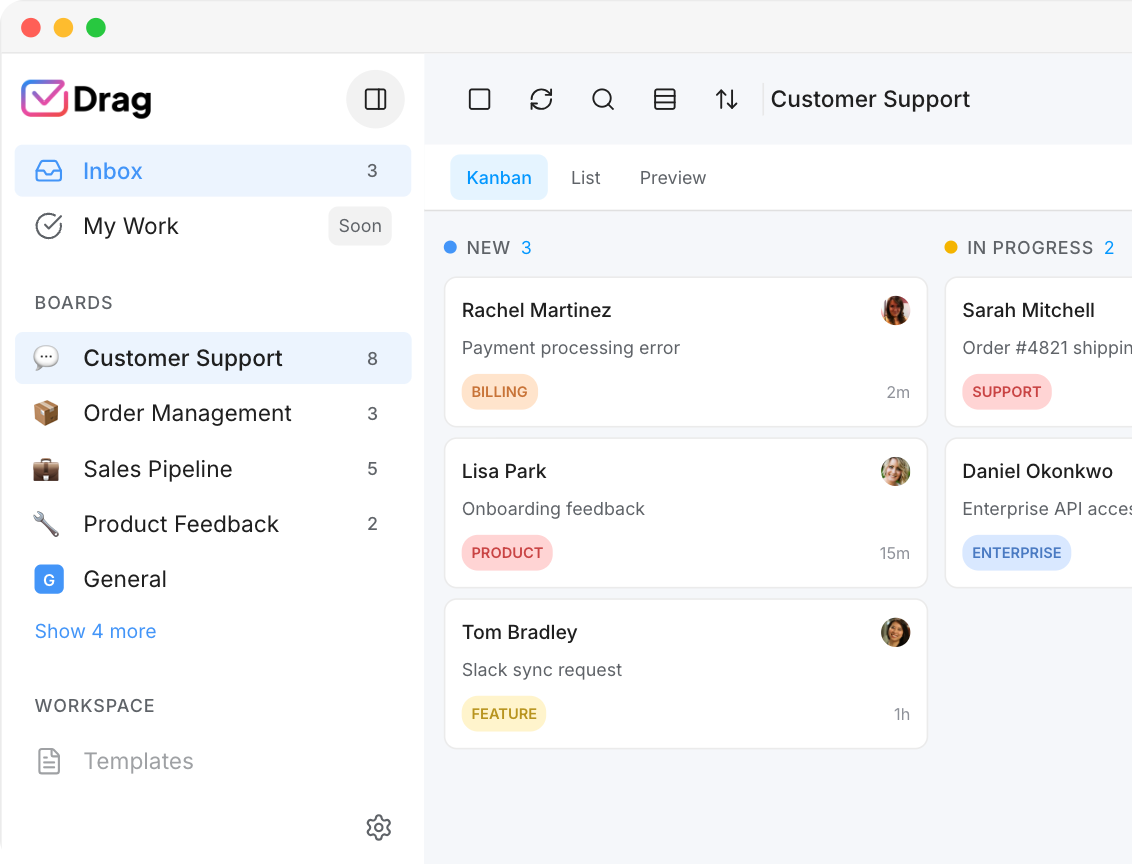
- For comparison, Drag runs $12 to $24 a seat with AI included from $18, unlimited users, and no cliffs: the 11th hire costs exactly what the 10th did.
Table of contents
Crisp pricing in 2026 runs from a durable free plan to $295 a month, but the number on the card is not the number that matters: Crisp charges per workspace, not per seat, so what a person costs depends entirely on how many of them you have. A full ten-person Essentials workspace works out at $9.50 a head, among the cheapest credible support tooling anywhere. The same workspace with an eleventh person costs $295, a tripling triggered by one hire. This page lays out the plans, the two seat cliffs, the AI credit meter that arrived on the cards this year, and the archived history from 2021, because the current structure is one late-2024 repackaging old and the sticker alone will not tell you that. For comparison throughout: Drag, our shared inbox for Gmail, costs $12 to $24 a seat with AI included from $18.
What Crisp costs in 2026
| Plan | Monthly, per workspace | Seats included | AI credits included |
|---|---|---|---|
| Free | $0 | 2 | none |
| Mini | $45 | 4 | $5 /mo |
| Essentials | $95 | 10 | $25 /mo |
| Plus ("Best value") | $295 | 20, then $10 per extra seat | $75 /mo |
| Enterprise | quote only | custom | custom |
Figures verified against Crisp's own pricing page, August 2026. Crisp geo-serves its currency (a UK visitor sees £45, £95, £295); the USD ladder behind the same plans carries the same digits, per the archived captures cited throughout this page. Annual billing exists but the page leads with monthly, and there is no per-seat price anywhere: the workspace is the unit, which Crisp presents as a feature, and for the right team size it honestly is.
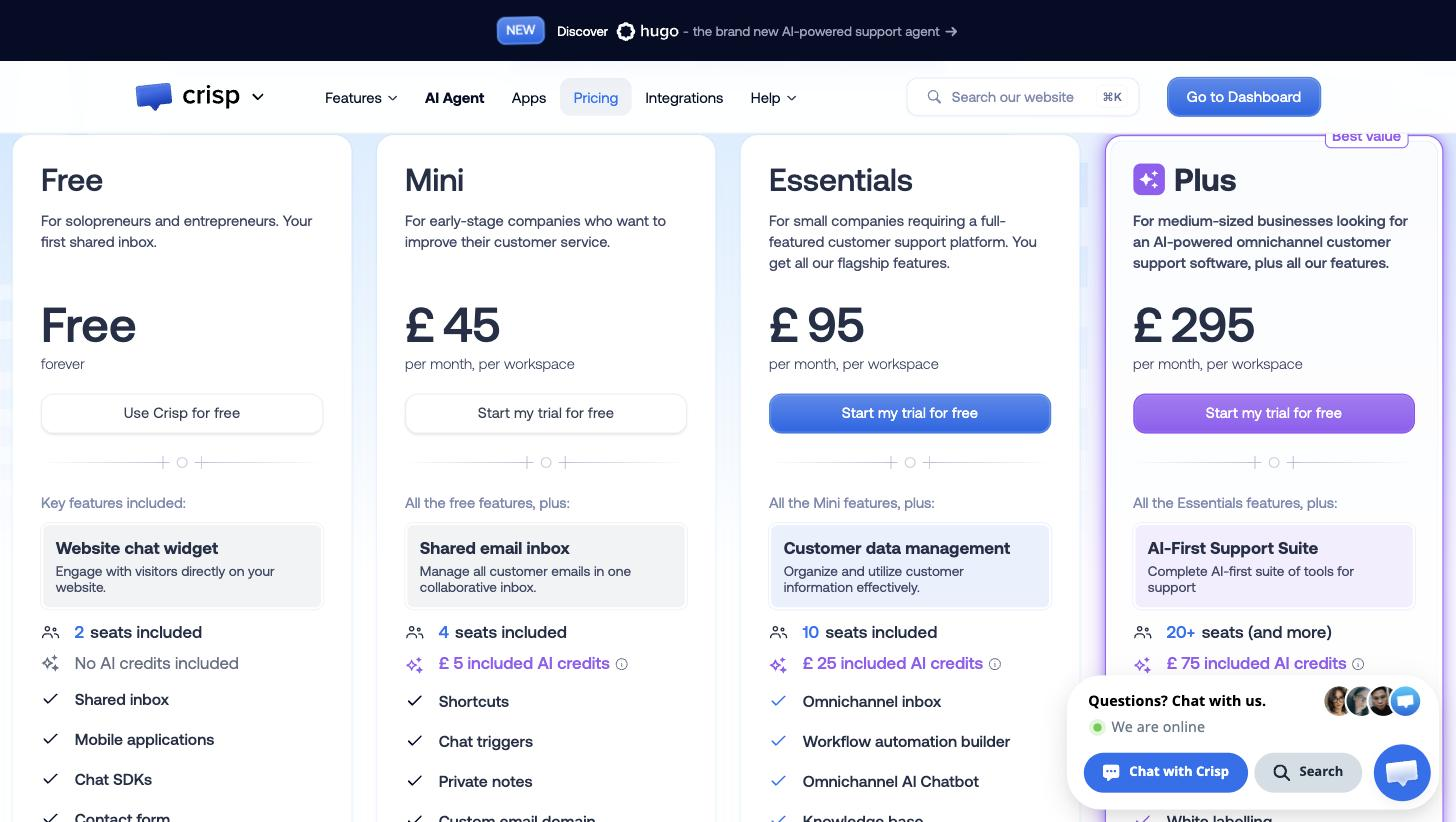
The Free plan deserves its reputation: two seats, the chat widget, a shared inbox, and mobile apps, free forever, and the archives show it has never been withdrawn. As a solo founder's first support tool it is one of the best deals in the category.
The per-workspace math: what a seat really costs
Per-workspace pricing produces a sawtooth that per-seat pricing never shows, and both of its edges matter.
The good edge: full workspaces are cheap. Four people on Mini cost $11.25 each. Ten on Essentials cost $9.50 each. Twenty on Plus cost $14.75 each. A team that happens to sit exactly at a plan's seat count gets support tooling for less than almost any per-seat competitor, ourselves included, and it is only honest to say so.
The bad edge: the cliffs. The plan boundaries are hard seat caps, so growth is billed in jumps rather than steps. The fifth person moves the workspace from $45 to $95, a 111 percent increase for one hire. The eleventh person moves it from $95 to $295, a 211 percent increase, and the one Crisp buyers report discovering by surprise. Only above 20 seats does the pricing finally flatten into per-seat behavior, at $10 for each additional agent on Plus. Between the cliffs, every empty seat you are not using is margin you have already paid for.
The practical read: price Crisp at the team size you will be in a year, not the size you are today. A three-person team quoting itself $45 is really deciding whether hire number five is worth a $50-a-month step and hire number eleven a $200 one.
The AI credit meter, and what changed this year
Every paid plan now carries a monthly AI credit allowance on the pricing card itself: $5 on Mini, $25 on Essentials, $75 on Plus. Hugo, Crisp's AI support agent, draws from that balance as it handles conversations, and this is the part to price carefully: included credits reset every billing cycle (currently on the 4th of the month) rather than rolling over, so a quiet month cannot subsidize a busy one, and a bot that runs past the allowance needs topping up. The Free plan includes no credits at all, so using Hugo requires at least the $45 Mini plan.
This meter is new packaging: the January 2025 capture of the pricing page shows no credit lines on any card, and the August 2026 page shows them on every paid plan. The AI era did not raise Crisp's stickers; it added a second counter beside them. For how every vendor in this category prices its AI layer, see the state of AI support pricing.
Drag · with Varley
The inbox your team and Varley work in together
Shared inbox and live chat for Gmail teams, with Varley, Drag’s AI, included from $18. Plus an MCP server your own AI tools can drive.
Crisp pricing, 2021 to 2026: three flat years, one repackaging
The stickers barely moved for years, and then everything moved at once.
Capture by capture: in 2021 and 2022 the ladder was Basic (free, 2 seats), Pro at $25 for 4 seats, and Unlimited at $95 for 20 seats. It was still exactly that in May 2024. By January 2025 the page shows today's structure: Mini, Essentials, Plus. Verified live in August 2026, the structure holds, with the AI credits newly printed on the cards.
What the late-2024 repackaging actually did:
- The entry price rose 80 percent without a raise announcement. Pro at $25 became Mini at $45 for the same four seats. Renames move prices more quietly than raises do.
- The $95 tier kept its price and halved its seats. Unlimited gave 20 seats for $95; Essentials gives 10 for the same money. The sticker is identical and the price per included seat doubled, which is the single most important line in this history.
- The ladder grew a $295 top. Above the old $95 ceiling now sits Plus at $295, with seats beyond 20 at $10 each, the first place the model behaves per-seat.
- The credits came later. The AI allowances on today's cards are absent from the January 2025 capture, making the meter a 2025-to-2026 addition.
A team comparing Crisp's 2022 reviews against its 2026 pricing is comparing two different products' worth of packaging. The free plan is the one constant: present and free in every capture.
What a 5-person team pays
Costed monthly, at August 2026 prices. Crisp's plan price is the team price, so the comparison is by plan:
| Setup | 5-person team, monthly |
|---|---|
| Crisp Essentials (Mini caps at 4 seats) | $95, with $25 of expiring AI credits |
| Crisp Essentials at full capacity, for scale | $95 covers up to 10 people |
| Drag Starter | 5 × $12 = $60 |
| Drag Plus, AI included | 5 × $18 = $90 |
| Drag Pro | 5 × $24 = $120 |
The honest reading cuts both ways. At five people, Drag Plus and Crisp Essentials cost within $5 of each other, and if that team grows to ten, Crisp holds at $95 while Drag Plus reaches $180: per-workspace genuinely wins the stretch between cliffs. Then the eleventh hire arrives, Crisp jumps to $295, and the same comparison inverts. The model does not have a single answer; it has a sawtooth, and where your headcount sits on it is the whole decision. Model your own numbers in the shared inbox cost calculator.
When Crisp is the better fit
Honestly: when the job is website chat for a team whose size fits a plan. Crisp is an all-in-one messaging platform with an unusually generous free tier, a genuinely broad feature set at Essentials (chatbots, knowledge base, campaigns, co-browsing), and at full workspace capacity it is close to unbeatable on price. A four-person or ten-person chat-led team sits exactly in its sweet spot. The cases to think harder about are the ones between cliffs or growing through one, and teams whose support actually arrives by email: Crisp was born as a chat widget, and email is the grain it works against. If the cliffs are the sticking point rather than the category, the Crisp alternatives guide ranks eleven options and names each one's own cliff honestly.
The Drag comparison, plainly
Drag is not a chat platform, and this page will not pretend it is. It turns the Gmail your team already uses into a shared inbox: assignment, boards, collision detection, automation, and AI assistants included in the seat from $18, with its own MCP server so assistants like Claude can work the queue. The structural difference is the unit again, from the other side: Drag prices the seat, flat, with unlimited users and no cliffs, so the eleventh hire costs exactly what the tenth did, and AI credits a team buys on top never expire. If your support starts on your website and your headcount fits a Crisp plan, Crisp is honest value. If it starts in an inbox, or your team size keeps crossing plan boundaries, from $12 a seat, the Gmail shared inbox guide shows the shape of the alternative, and you can try it free for 7 days, no card. Full disclosure: Drag is ours, which is why every Crisp number above carries a receipt.
Every figure on this page comes from our full five-year support tool pricing history, where the archived captures and the method behind them are laid out in full.
Frequently asked questions
How much does Crisp cost in 2026?
Crisp's plans are priced per workspace per month: Free ($0, 2 seats), Mini ($45, 4 seats), Essentials ($95, 10 seats), and Plus ($295, 20 seats, then $10 per additional seat), with a quote-only Enterprise tier above. Each paid plan includes a monthly AI credit allowance ($5, $25, and $75 respectively) that Hugo, the AI agent, draws from.
Is Crisp really free?
Yes, durably: the free plan appears in every archived capture back to 2021 and has never been withdrawn. It covers 2 seats with the chat widget, a shared inbox, contact forms, and mobile apps, with no AI credits. For a solo founder or a two-person team it is one of the best genuinely free options in the category.
What does per-workspace pricing mean on Crisp?
You pay one flat price for the workspace regardless of how many of its included seats you use: $45 covers up to 4 people, $95 up to 10, $295 up to 20. Full workspaces are cheap ($9.50 a person on a full Essentials) and the boundaries are hard caps, so the 5th person raises the bill 111 percent and the 11th person 211 percent.
How does Crisp's AI pricing work?
Through monthly credit allowances printed on each paid plan: $5 on Mini, $25 on Essentials, $75 on Plus. Hugo, the AI agent, consumes credits as it handles conversations, included credits reset each billing cycle rather than rolling over, and the Free plan carries none, so AI use starts at the $45 plan. The credit lines are new: they do not appear on the January 2025 pricing page.
What is the cheapest Crisp alternative?
It depends on your headcount, because Crisp itself is the cheap option at a full workspace. For teams that keep crossing its seat cliffs, or whose support is email in Gmail rather than website chat, Drag runs $12 to $24 a seat with AI included from $18 and unlimited users. The full Crisp alternatives comparison ranks eleven routes and names every vendor's cliff, including ours.

Co-founder
Building Drag for nearly ten years: shared inboxes, boards, and now the AI and agent layer, all on Gmail, plus HeyHelp for the personal inbox. Writes the honest versions of the comparisons.