













The four AI support agents compared on architecture, pricing, and their own resolution claims, and the question smaller teams should ask before buying one.
Key takeaways
- The four agents split by architecture: Sierra and Decagon are standalone platforms above your help desk, Fin lives inside Intercom's, and Ada runs its own multi-channel layer, and in every case the agent belongs to the vendor.
- Follow the pricing: Fin meters at roughly a dollar per resolution, Ada prices by conversation, and Sierra and Decagon publish no pricing at all, which tells you who these products are built to be sold to.
- There is now a third route beyond buying an agent or using your help desk's AI: connecting the AI your team already pays for to your inbox through open standards, and it changes the math for teams below enterprise volume.
Table of contents
Sierra, Decagon, Fin (by Intercom), and Ada are the four names that dominate every AI support agent shortlist in 2026, and this comparison covers what each actually is, what each actually costs, and what the vendors' own numbers do and do not prove. But it opens with the question most comparisons skip: whether you are this category's buyer at all. Two of the four do not publish pricing, the economics are built for enterprise conversation volume, and if you are a smaller team that arrived here from a pricing page that would not show you a number, the second half of this page is the part written for you.
What this guide covers
- How the four agents compare at a glance
- The pricing transparency table
- The four agents, up close
- What the resolution-rate claims actually tell you
- The question to ask before buying any of them
- Which are you?
- Frequently asked questions
How the four agents compare at a glance
| Agent | Architecture | Pricing model | Deployment | Published results (each vendor's own claim) | Built for |
|---|---|---|---|---|---|
 Sierra Sierra | Standalone agent platform | Unpublished (enterprise contract) | Engineering-led, white-glove | Up to 80% resolution (Airtable), Sierra's own customer page | Enterprises building bespoke branded agents |
 Decagon Decagon | Standalone; plain-English AOPs | Unpublished (enterprise contract) | Engineering-led | 80% deflection (Duolingo), Decagon's own homepage | Mid-market and up wanting behavioral control |
 Fin Fin | Built into Intercom's help desk | $0.99 per resolution, seats from $29 | Turnkey inside Intercom | 76% average across 12,000+ customers, Fin's own | Teams on Intercom with real volume |
 Ada Ada | Multi-channel CX platform | Per conversation (rate via sales) | Turnkey, multi-channel | 75% CSAT, 42% lower handle time, Ada's own homepage | High-volume multi-channel consumer support |
Every percentage in that last column is the vendor's own published claim, measured by the vendor's own definition. The section below covers why that matters and how to read them.
The pricing transparency table
Two of the four will not tell you a price without a sales call. That is not an accident: unpublished pricing is how you sell to procurement departments, and it is also the clearest signal of who a product is for. If the pricing page will not show you a number, you have learned something more useful than the number.
| Agent | Publishes pricing? | Entry economics (verifiable) | What "contact sales" means for you |
|---|---|---|---|
| Fin | Yes | $0.99 per resolution, Essential seats from $29 per month | You can model the meter before you talk to anyone |
| Ada | Partial | Model published as per-conversation; the rate is quoted by sales | Priced for volume; you still need a call for the number |
| Sierra | No | No public pricing; enterprise contract, quoted per deployment | Built to be sold to procurement, not self-serve |
| Decagon | No | No public pricing; enterprise contract, quoted per deployment | Built to be sold to procurement, not self-serve |
Drag · with Varley
The inbox your team and Varley work in together
Shared inbox and live chat for Gmail teams, with Varley, Drag’s AI, included from $18. Plus an MCP server your own AI tools can drive.
The four agents, up close
Sierra
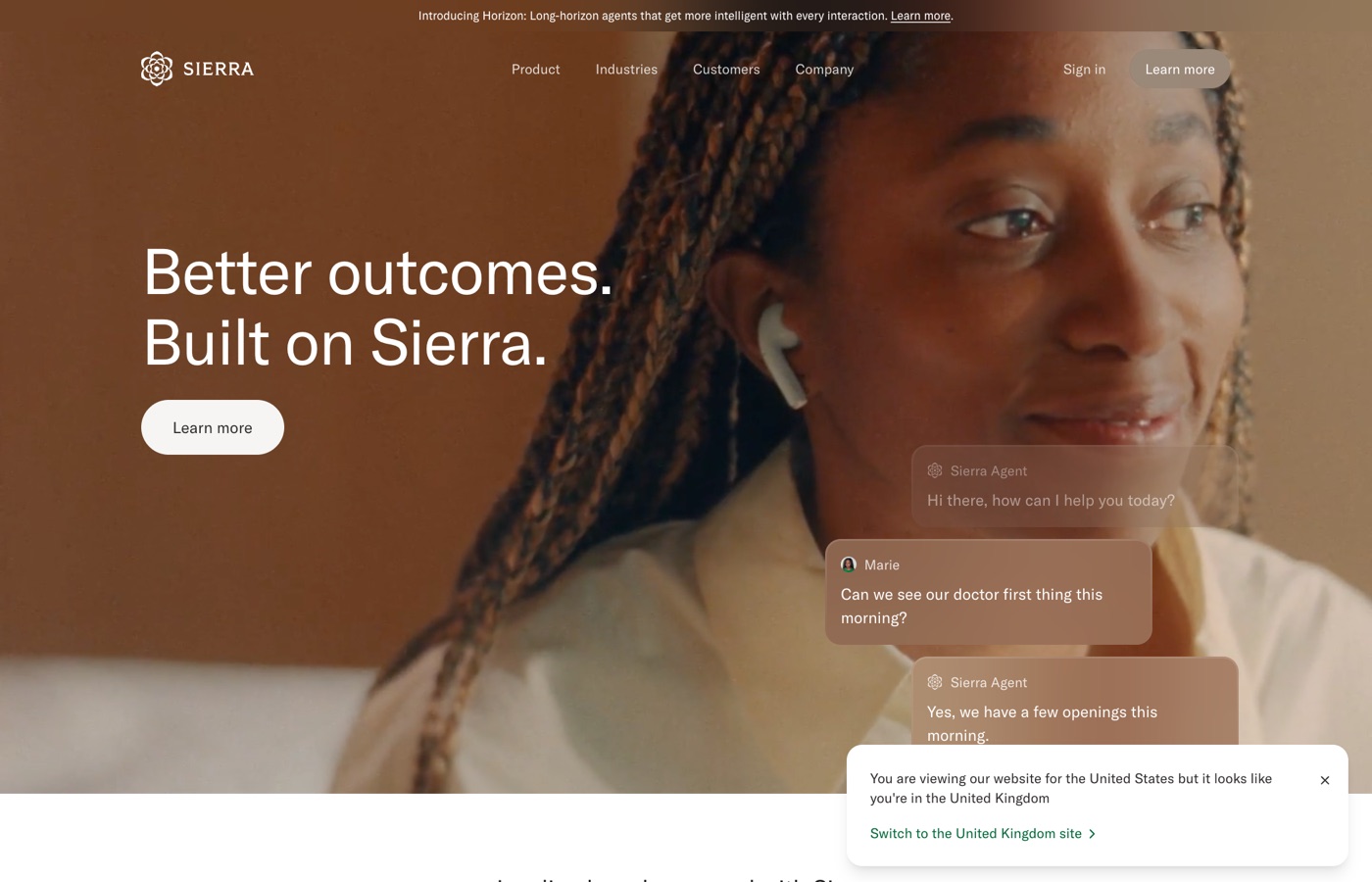
Sierra is the bespoke enterprise choice: an agent platform for building deeply branded autonomous agents across chat, voice, and email, deployed with white-glove service and sold on enterprise contracts with no published pricing. Its founders' pedigree and customer roster are as strong as the category has. It is built for companies with the scale to justify a custom agent, and it is not pretending otherwise. Weighing it against Decagon specifically? The Decagon vs Sierra head-to-head is the dedicated page.
Decagon
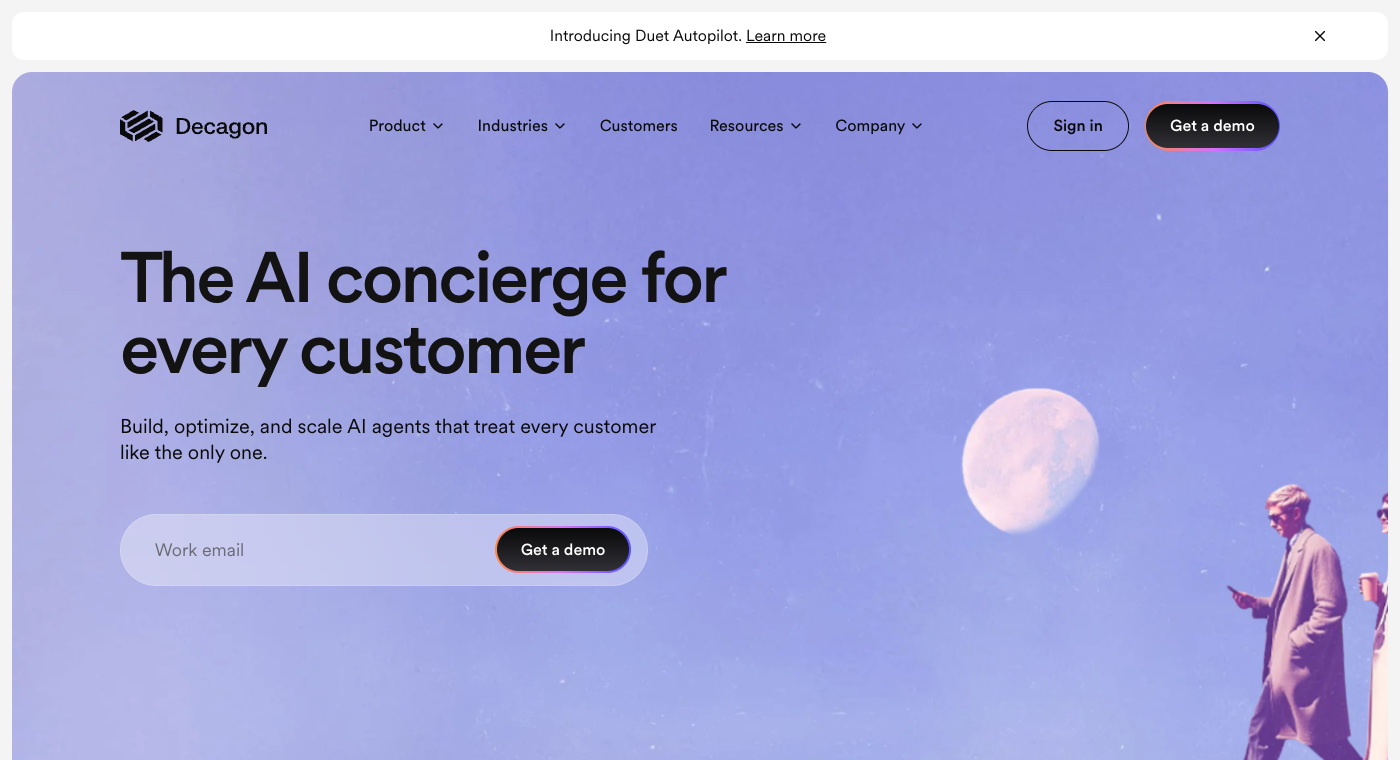
Decagon centers on writing agent behavior as plain-English operating procedures, giving support teams unusual control over exactly how the agent acts, with deployment that still expects engineering up front. Pricing is unpublished and enterprise-shaped. The fit is mid-market-and-up teams that want precise control and can commit to a platform. The full matchup against Sierra lives in the Decagon vs Sierra head-to-head.
Fin
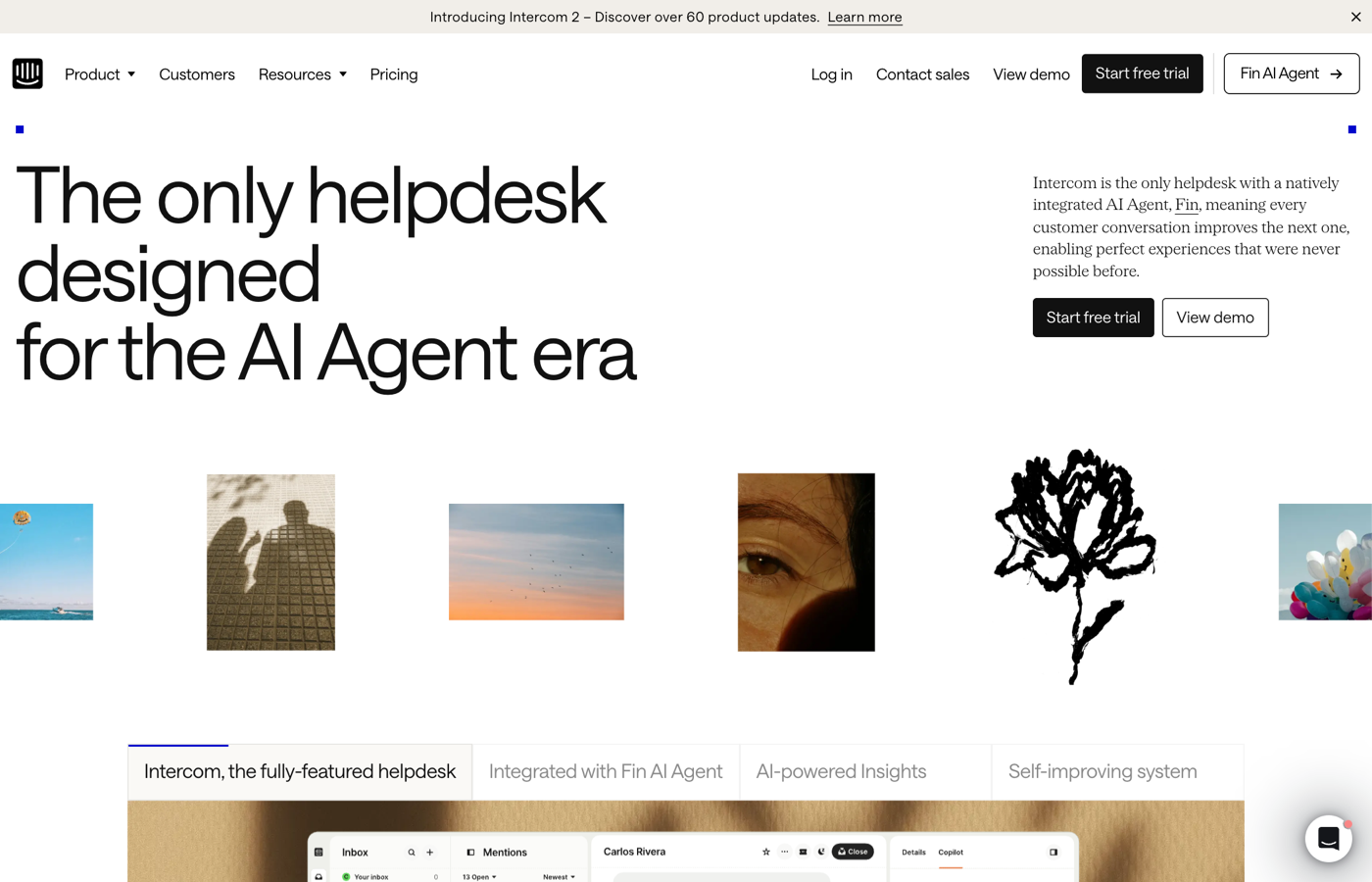
Fin is the proven volume play: an agent built into Intercom's help desk, priced at $0.99 per resolution on top of seats, with the largest published body of results in the category. Two honest notes: the head-to-head numbers most often quoted are Fin's own published comparisons, and per-resolution pricing means a busy month is an expensive month. The fit is teams on Intercom, or open to moving there, with the volume to make the meter worthwhile.
Ada
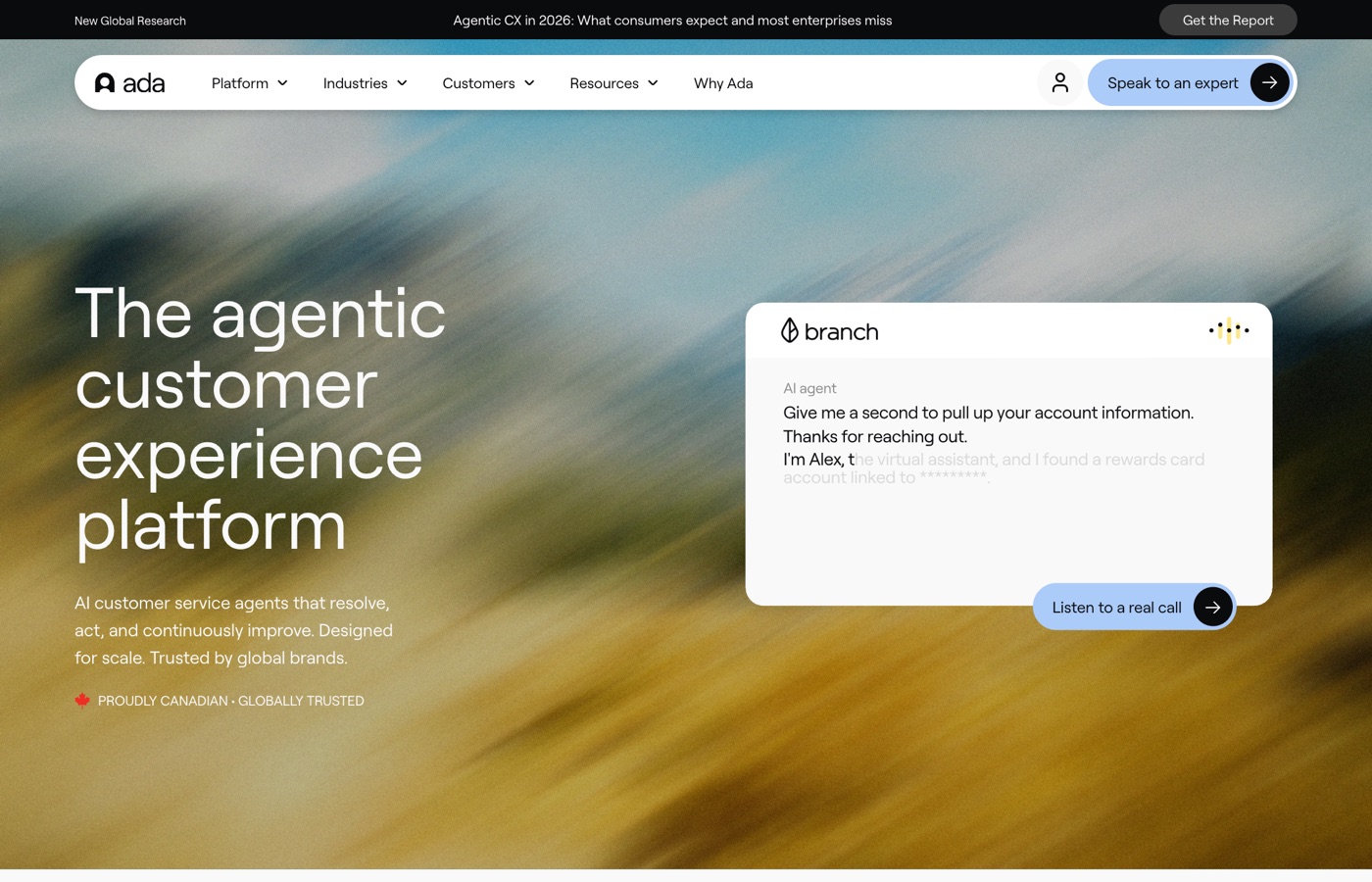
Ada is the multi-channel automation platform of the four, priced by conversation, strongest where support spans chat, email, and messaging in many languages at once. The fit is high-volume consumer-facing operations; the trade is that conversation-based pricing needs the same volume math as every meter on this page.
What the resolution-rate claims actually tell you
Every vendor on this page publishes impressive percentages, and every percentage deserves the same three questions. Who measured it: a vendor's own published test is marketing evidence, not independent evidence, however honest the method. What counts as resolved: the vendors define resolution differently, and the definitions move the number by double digits. And resolved for whom: an ecommerce return flow and a B2B technical queue are different sports. The honest summary is that these products genuinely resolve large fractions of high-volume, well-documented support at enterprise scale, and that no number on any vendor's page tells you what will happen on your queue. Ask every vendor for a pilot on your own tickets, measured by your definition. We keep a standing audit of every major vendor's published resolution claim, each number traced to its source and its definition, if you want the receipts.
The question to ask before buying any of them
There are now three ways to get AI working your support queue, and the right one is mostly decided by your volume. Route one: buy a dedicated agent, everything above, built for tens of thousands of conversations a month, where even metered pricing beats headcount math. Route two: use the AI already inside your help desk, the default for mid-size teams, judge it before paying for a second vendor.
Route three, the newest: bring your own agent. Your team already pays for Claude or ChatGPT, and through MCP, the open standard for connecting AI to software, those assistants can work an inbox that supports it: reading the queue, drafting, acting with your team's permissions, at no meter. For a team whose support lives in a shared inbox, the realistic path is the ladder our agentic support guide describes: AI drafts, humans send, autonomy earned category by category. That is the layer Drag sells, AI included from $18 a seat with its own MCP server, and full disclosure, this comparison is ours, which is exactly why the enterprise verdicts above say plainly when the answer is not us.
Which are you?
| You are | The honest answer |
|---|---|
| Enterprise, 10k+ conversations/mo | a dedicated agent; compare Sierra, Decagon, Fin |
| Already on Intercom | Fin is the natural add |
| Mid-size on a help desk | your help desk's own AI first; judge it before adding a vendor |
| Team in Gmail, growing | AI-assisted shared inbox, ladder to autonomy |
| Team that already lives in Claude/ChatGPT | an MCP-connected inbox, bring your own agent |
Frequently asked questions
What is the best AI support agent in 2026?
At enterprise volume: Sierra for bespoke branded agents, Decagon for precise behavioral control, Fin for proven out-of-the-box resolution inside a help desk, Ada for multi-channel scale. Below enterprise volume, the honest answer is usually none of them yet: AI-assisted humans in a good shared inbox cost seat prices and cover the same ground.
How much do AI support agents cost?
Fin publishes roughly a dollar per resolution on top of Intercom seats, and Ada prices per conversation. Sierra and Decagon publish no pricing, which reliably means enterprise contracts. Whatever the model, the meter is the thing to model: multiply your monthly volume before any demo.
Do these replace my help desk?
Fin comes with one. Sierra, Decagon, and Ada sit above or beside your existing stack, though deployments often reshape it. The newest alternative inverts the question: an MCP-connected inbox lets the AI you already use work inside the tools you already have.
What should a smaller team do instead?
Run the ladder: AI drafting and triage inside your shared inbox with humans approving, then earned autonomy on routine categories. It costs seat prices, needs no engineering, and leaves you free to add a dedicated agent later if your volume ever justifies one.

Co-founder
Building Drag for nearly ten years: shared inboxes, boards, and now the AI and agent layer, all on Gmail, plus HeyHelp for the personal inbox. Writes the honest versions of the comparisons.
