

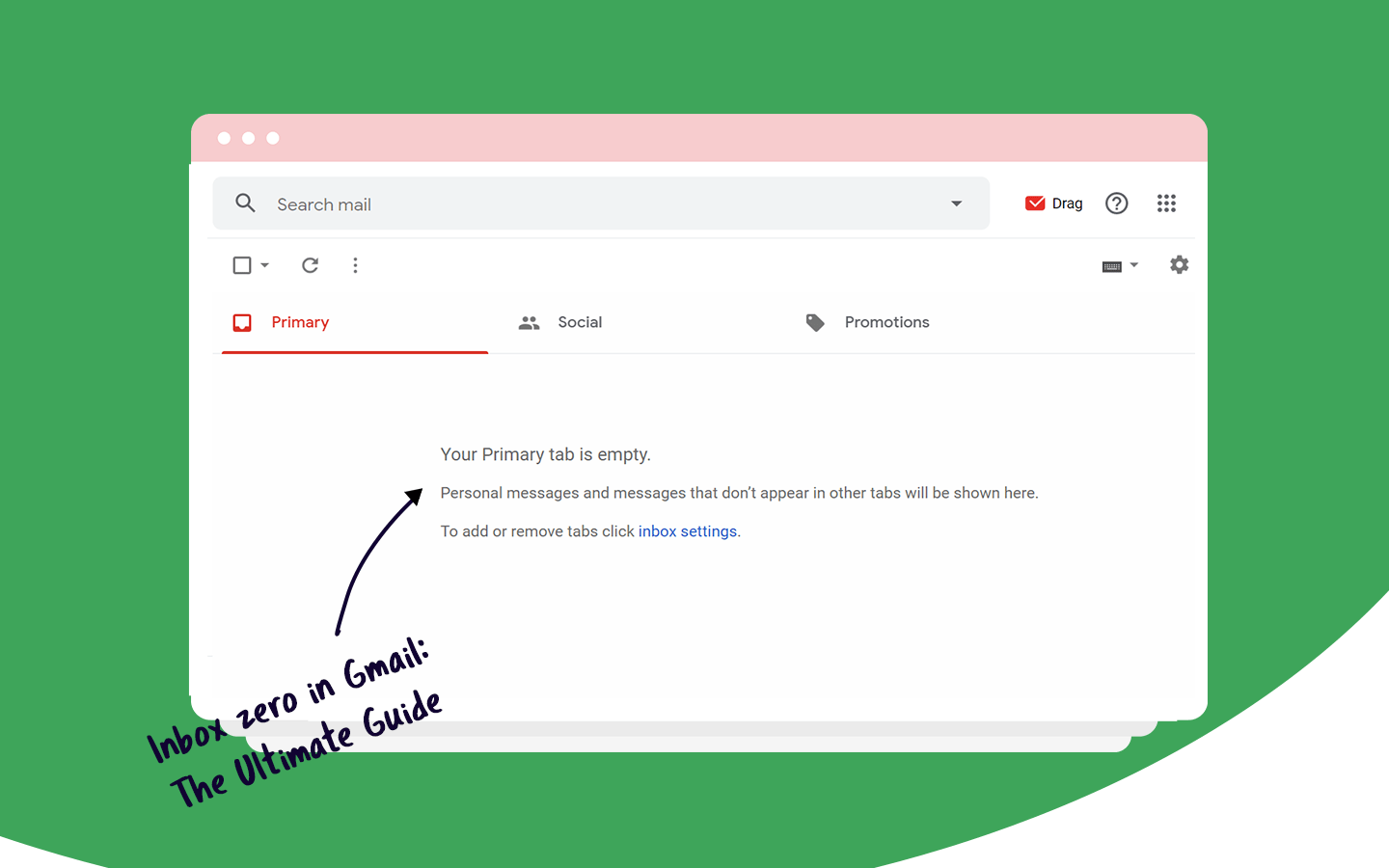
Have you heard of Inbox Zero in Gmail? Hyped up by productivity experts and digital teams alike, this trend has been transformative for workplace productivity.
Inbox Zero is a structured process that involves filtering to clear your email inbox. The idea is to keep distractions at a minimum: each day, you complete your email-based tasks and archive conversations. That way, whenever you log into your inbox, it’s a clean slate.
Learn more about this method and how to apply it in your daily life with this complete guide!
What is Inbox Zero, really?
Email is an essential communication tool for many types of businesses and their teams. However, it can quickly become overwhelming and full of unfinished conversations. Inbox Zero is a productivity method that revisits our perspective on email.
First, it’s important to say that Inbox Zero isn’t about having no emails in your inbox. That clean slate experience is ideal, but not realistic in the long run.
Instead, workers should look at it as a way to ensure every message is read, categorized, responded to, deleted or archived according to workflow priorities. That way, the email inbox remains cleaner and easier to visualize fully.
The Advantages of Inbox Zero in Gmail
Here are three key benefits of Inbox Zero in email-based workflows:
1) Focus on current tasks and projects
The primary advantage of Inbox Zero in Gmail is the ability to reduce clutter, digital and mental. When professionals have to scroll through hundreds of unread emails, it takes extra effort to prioritize tasks and find important communications. That means email fatigue, which can compromise focus and impair decision-making.
Inbox Zero solves this concerns by setting up a standard for email processing. Emails considered irrelevant, like spam, can be deleted automatically, while completed conversations should be archived.
If a message can be answered quickly with a canned response, it should. If a team member isn’t the right person to answer, they need to forward it to the right collaborator, and so on.
Emails that demand more time and effort can be categorized as such so that users can schedule time to address them later without small distractions. That way, inbox management isn’t a series of focus shifts, but a clear, streamlined and actionable list of email-based tasks and projects.
2) Workflow efficiency
An unorganized inbox often leads to wasted time, because users have to keep searching for and re-reading important messages to check pending tasks. According to Gmail stats, most workers deal with around 120 emails per day, which add up.
By applying the Inbox Zero method, the most relevant emails stay visible until users deal with them so that urgent tasks are promptly taken care of to avoid workflow bottlenecks. Meaning: Inbox Zero turns email into a productive system instead of a reason for delays.
3) Less stress
Unread emails often create a sense of unfinished business, especially when they impact customer relationships or cause internal misunderstanding for the team. Inbox Zero reduces this stressful scenario by establishing clear and frequent inbox management rules.
When teams and entrepreneurs get into the habit of Inbox Zero in Gmail, they get a sense of progress with their tasks, avoid letting people down, and create a better work-life balance.
With less email fatigue, people can use their mental energy and time to do innovative work, solve bigger problems, and take on long-term projects.

Turn Gmail into your Team’s Workspace.
- 2.5x faster email responses.
- 20 hours less spent per month, per team member.
- 40% more deadlines achieved and happier teams.
Inbox Zero in 5 steps
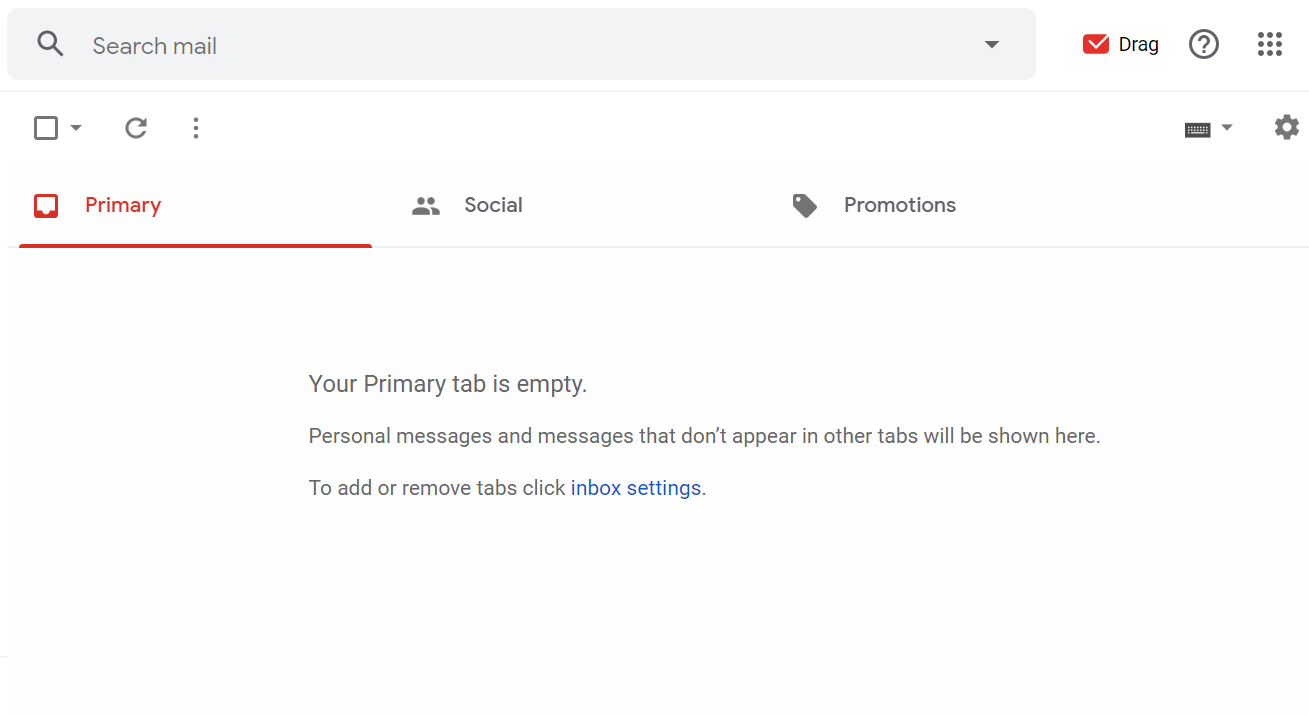 To follow Inbox Zero methods, you need to establish an approach to handle each email in your inbox. You need to analyze and make some small decisions about what you are going to do to those messages: delete, delegate, defer, or do the action required.
You can only delete emails that you’ll never have to come back to look at, and mainly that don’t require an answer. Or you can just archive this message. This way, your inbox gets cleaner, and at the same time, you don’t lose the email, in case you need it someday.
If there’s someone better qualified to answer it, you can just forward the email to this person. Delegation is something that not only managers can do. You know that someone can better solve the issue, so do not hesitate to delegate this kind of email.
In case you need more time to answer the message, it’s better to defer it. Maybe you need some more time to search for the issue presented in the message. Or even to search for media to attach to it. It’s ok to postpone something that will take more than usual, mainly if it’s not urgent.
However, if the email requires a quick message, and can be answered in less than three minutes, take action. Don’t do any of the previous steps, and you will be on the right path to conclude the Inbox Zero process.
One thing you should keep in mind is that if new emails arrive in your inbox, you shouldn’t worry about them. Focus on the existing messages, to keep your “Inbox Zero in Gmail” plan in motion.
The reason behind this is that Inbox Zero is not really about cleaning your entire inbox. The main goal must be speeding your responsiveness so that you can focus on other, more critical activities at work.
5 steps towards your Inbox Zero in Gmail
We gathered five main steps that you can follow to help you conclude Inbox Zero in your Gmail every day.
1. Close the tab with your email
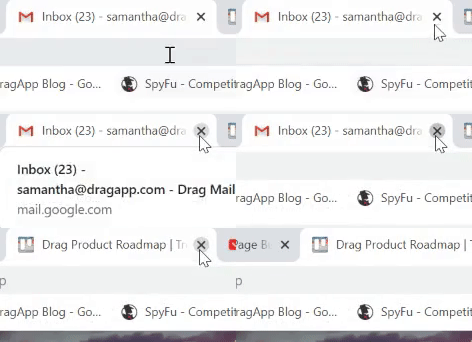
Keep calm! We know that you haven’t been able to close your email tab for a long time. But when you are doing an important task, it’s possible to follow this step.
The truth is that when you keep your email open, with the tab always visible, you can certainly expect a little bit of temptation to look at it. You will probably keep checking it once in a while, stopping other tasks and reducing your productivity.
To avoid getting distracted, only open your email at certain times of the day, then close it again. Or at least finish doing what is essential first.
In addition to that, you end up reducing stress, according to one experimental research in 2015.
It consisted of assigning 124 adults, chosen randomly, to check their emails three times a day for one week. In the next week, they were allowed to check their email at any time they wanted. The limited email use proved to be less stressful than the unlimited one.
So, we advise you to choose times to verify your inbox, such as when you start working, after lunch, and one hour before the end of your business hours.
2. Let the emotions aside
We must repeat it, so you never forget it: Inbox Zero is not something to clear your inbox entirely. It works to clear your head and organize the way you handle your inbox so you can focus on the most critical activities in your work.
Sometimes you may feel anxious when you see dozens of unread emails to deal with in one day. This is why you should start applying the Inbox Zero method in your daily work, so you can set a pace and stop worrying about this specific activity.
But please, let the obsession aside too. Don’t ever let the clearing process take the wrong place in your schedule because it’s not something you should prioritize.
Keep in mind that you won’t achieve zero every day, and it’s ok if it happens once or twice a week. But relax, and let the workflow guide you, not your emotions.
3. Simplify the process
A simple system makes the job in your email a lot easier, that’s why you need to create a routine that works best for you.
When deleting emails, for example, you already know there are some of them you don’t even need to open. Do sorting by the subjects to select a lot of emails at once.
Delegating gets more straightforward and less messy when you have a shared inbox. Yes, you can forward, CC, and BCC in a regular email, but how about those infinite threads? They don’t exist in a collaborative Gmail inbox.
With Drag, for instance, you have shared boards, where you can add specific teams, such as sales@, marketing@, or support@. If you receive an email that someone from another team — or even from your own — can answer it.
You just have to assign it to this person. Or imagine that an email for support arrived at your inbox by mistake, then it’s possible to drag this email to the support team’s board.
4. Focus on the opened email
If you open an email, focus on it. Take action! But never leave it for later without deciding which of the Inbox Zero solutions you will give to this message.
Make sure you don’t need to go back to an email more than it is necessary. Think about the time you lose doing this, letting emails you could either delete or answer later. It’s not worth it.
5. Use software solutions for Inbox Zero in Gmail
With a regular email inbox, you have to take some time to create filters to help you organize emails and follow the Inbox Zero method. You can use the color stars to set each one of the actions you need to take.
If you implement a Gmail shared inbox, however, most of these resources are built-in. This means that you can set up custom rules and automations that help you guide your inbox to its ideal version.
Our solution, DragApp, helps teams redefine their digital workspace by using a collective inbox with collaboration tools. First of all, emails are transformed into tasks and sorted into your pre-existing workflow. Then, you can add due dates and have them show up directly on your collaborators’ task queue.
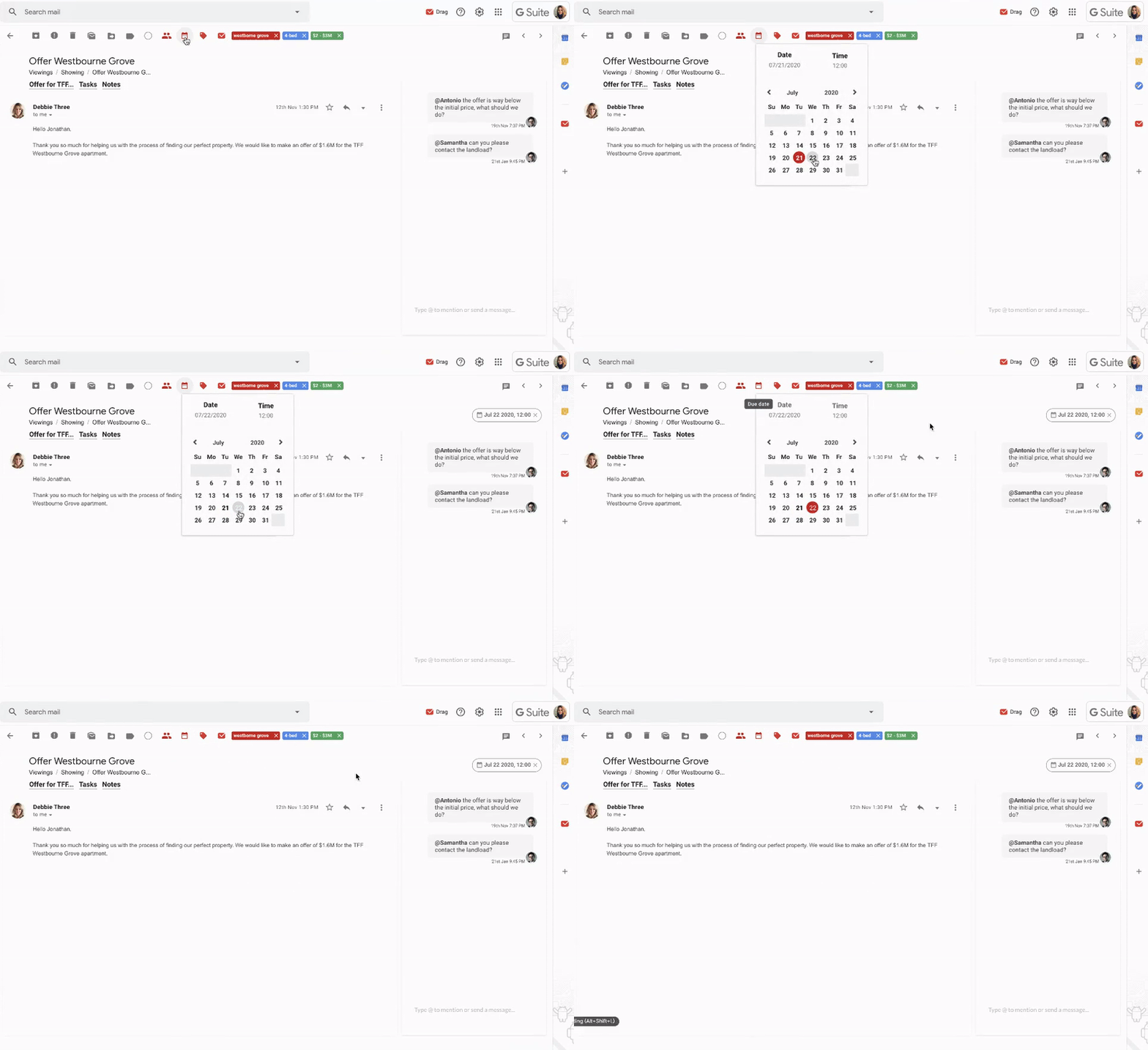 Similarly, Drag includes Google Calendar integration. So when a team is collaborating on a project, all due emails and tasks will show up in a shared calendar, meaning everyone is in the loop.
There are a few other Drag resources that can help you achieve inbox zero, such as:
File uploads and task notes
With Drag, you can add relevant files directly to the task card itself. So when you or a coworker opens, for example, a product development task, they have access to the documentation and images they need.
The same applies to email notes: a tab on task cards where users can add information.
 This is crucial for quick and asynchronous team communication. Instead of emailing back and forth to settle on changelogs and context, the whole team can see what’s being done directly from the card itself.
Fewer emails = closer to inbox zero.
Workspace routing
Often, emails sent to team inboxes, such as support@ or sales@, get lost in the workflow. However, considering that customer service metrics are key to a company’s success, having an established system to deal with external communication helps.
Drag includes a feature called workspace routing. With this tool, you can set up automation rules for your emails. So, for example, when a message hits your IT inbox with a question about errors, it’ll automatically be categorized as such and sent to the appropriate agent’s task list.

Not only does it declutter the team inbox with zero effort, but it also helps with improving email response times across workflows.
Summarizing
Now that you know that Inbox Zero in Gmail isn’t just about an empty inbox, but a collective system to declutter and prioritize incoming mail, you can use it to increase your productivity. These tips will help you start this process, but you must keep doing it for some weeks in a row so that it can become a habit.
And, of course, you can use extra tools to help you with establishing a functional system. A shared inbox, for example, can help with message automation, internal and external communications, and keeping task-related context easily accessible. Then, as your projects grow, you can rest assured they won’t clutter your inbox, making Inbox Zero in Gmail far easier to reach.
Inbox Zero FAQ
- What is Inbox Zero?
Inbox Zero is a productivity tool that enahnces email productivty by establishing a regualr inbox cleanup system. It helps users close finished conversations, avoid inbox clutter, regain focus on relevant tasks and avoid losing important emails.
- Does Inbox Zero mean zero emails?
No, Inboz Zero doesn’t mean you can’t have emails. Instead, users benefit from using inbox rules, such as archiving conversatiosn, adding filters to messages with specific keywords, forwarding email-based tasks to their team and so on. The idea is simply not letting any emails stay in your inbox unless you’re working on them.
- How can I achieve Inbox Zero in Gmail?
You can use Gmail’s filters and tools to achieve Inbox Zero. But to automate your inbox and foster collaboration on email-based workflows, you can also use a dedicated tool, like a shared inbox, to have a better Inbox Zero experience.
With resources like task internal chats and notes, automated assignments, deadlines, and file uploads, Drag keeps your emails to a minimum. Then, you can use its automation tools to declutter your inbox and have emails reach the right people.
Turn Gmail into your Team’s Workspace.
- 2.5x faster email responses.
- 20 hours less spent per month, per team member.
- 40% more deadlines achieved and happier teams.