








Customer engagement tools help your acquire and manage your client base, making sales, marketing and support more efficient. Here's how!
Table of contents
Customer engagement tools are key parts of a company's growth. With them, your team can attract new leads, close deals and maintain a productive relationship with existing customers. But for this to happen, the customer contact and relationship management system should include features that strengthen and facilitate communication. In this article, we'll dive into the industries that benefit the most from customer engagement tools, the resources to look out for before choosing one, and present good options for small and medium-sized businesses. Keep reading to learn more!
When are customer engagement tools useful?
Having a positive relationship with the customer is part of the entire sales funnel, both for new leads and in maintaining an audience. This is true for B2B and B2C companies alike. A good customer engagement tool can, for instance, help the marketing team set up a lead acquisition campaign on social media. From there, the sales team uses WhatsApp to continue the sales flow, using the platform to launch new products, alert existing customers of offers and send personalized quotes. Likewise, a good customer engagement tool can help with troubleshooting. That's because the support team can quickly view and solve tickets received through email, improving your customer service metrics.
What should customer engagement tools include?
In order for software to really help the team with customer engagement tasks, it should include the necessary resources to connect with the company's target audience. That way, all tasks can be done in the same space, fostering organization and productivity. Some of the main things to look out for are:
Multichannel support
First, take a moment to analyze which platforms are (or should be) part of the company's communication strategy. With the increased use of WhatsApp and the need for businesses to have a reliable presence on it, the customer engagement software requires WhatsApp service. Some tools integrate email and WhatsApp, others bring with them chat bots, social media and phone calls. Before you choose one to implement, you need to make sure it meets your team's needs. Related Post: How to integrate WhatsApp and Gmail
Collaboration tools
Smaller businesses need to optimize the time and resources available to them. Therefore, they should opt for customer engagement tools that favor collaboration among the team. They can offer more effective and complete service, both in lead acquisition and ticket solution. Each platform offers its version of collaboration tools, such as task allocation, shared calendars among the team, or internal chats that guide communication during tasks.
Customer history
To improve customer engagement, you need a personalized communication strategy to each customer and their search. In practice, this means having guided dialog, contextualizing the products and/or services that your company offers to each contact's interests and data. However, the process of organizing said data, if done manually, is impractical. Customer engagement tools should include contact organization features, including segmentation lists, customizable tags, and space for team members to add information about their leads. This feature is extra meaningful to B2B companies: sales representatives must have both quantitative and qualitative data on contacts in other companies. Thus, they can offer more suitable opportunities for each segment.
Metrics and data
Finally, the customer engagement strategy, whether to attract new audiences or maintain the relationship with its base, must be periodically reassessed. That's why customer engagement tools should include reports with customizable metrics. That way, you can, for instance, evaluate customer satisfaction survey results, response rates to sales proposals, marketing campaign A/B testing results and so on.
Budget matters!
Before the list, here is what the two most-discussed tools on it actually cost, side by side with Drag:
Drag · with Varley
The inbox your team and Varley work in together
Shared inbox and live chat for Gmail teams, with Varley, Drag’s AI, included from $18. Plus an MCP server your own AI tools can drive.
5 customer engagement tools that can help you
Customer engagement tools, as seen here, make all the difference in your team's productivity and your email-based CRM success rates. Therefore, the next step is to choose which software should be implemented in your company in order to achieve these results. Here are some of the best options in the market:
1) DragApp






DragApp is our shared inbox solution that can be used as a customer engagement tool. Instead of importing and exporting data to a secondary platform, Drag turns your business inbox into a collaborative workspace. That is, all members of your team can see and manage interactions with customers, which allows for collective actions such as creating marketing campaigns and resolving errors. In addition, your messages become task cards, which you can organize through boards as a task management software. Features like email assignments, file uploads, @mentions, and custom tags help you guide your workflow. Beyond emails, Drag offers shared inboxes for WhatsApp turning, another point of contact into a collaborative ecosystem. So your team can use the conversations as a starting point for WhatsApp CRM. Send promotional messages, give information about product launches to specific segments and meet personalized demands, all without leaving your inbox. Related post: How to send bulk messages on WhatsApp Once you've acquired the leads, you should use the right information to target your customer engagement efforts. With Drag's shared contacts management system, your team can share personalized customer lists based on interests, history, demographics, and specific data from your workflow, increasing conversions and optimizing your brand reach. Finally, Drag has customizable reports. They allow managers to monitor team productivity, the volume of interactions per period or channel, and customer satisfaction rates. With this in mind, they can solve communication barriers and, if needed, reset priorities in real time.
According to one Capterra review: "The ability to organize and categorize my emails and tasks in a visual and accessible way helps me focus more on priorities, keep up with obligations, and save my time." Drag is an affordable way for small and medium-sized businesses to get the key features of a customer engagement tool. Plans start at $12/user/month.
2) Front
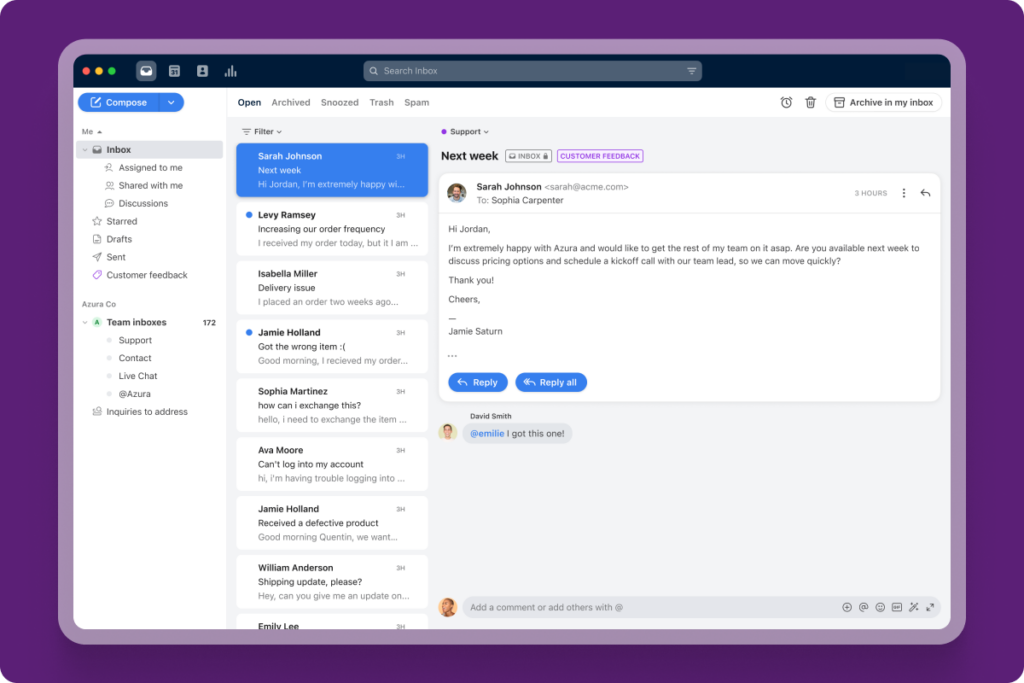 Front is a popular option for a customer engagement platform. With this tool, you can sync the data from your customer interactions (email, WhatsApp, SMS, and social media) with project management workspaces, such as Asana or Trello. That means the software can help you bridge the gap between information and strategy, which can make your teamwork thrive. It also includes analytics, AI-powered resources, and the option to set up a knowledge base, which is useful for customer support teams. Related post: What's the best alternative to Front? According to a Capterra user review, "Front truly is a dynamic tool for teams looking to improve their internal workflows for external-facing communications." While plans start at $25/seat/month, most of the resources require the Professional tier, at $65/seat/month.
3) Lucky Orange
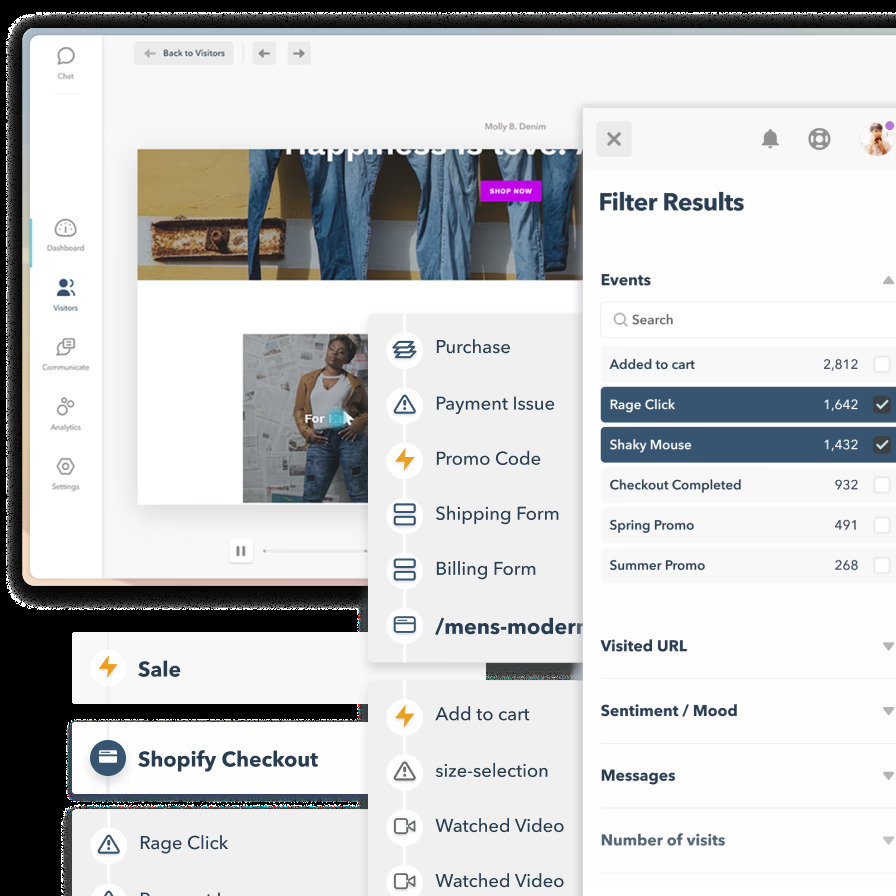 Lucky Orange is a customer-first platform that helps you understand your clients' journeys with your products or services. With features such as dynamic heatmaps, drop-off analysis, and customer surveys, you can see how and why people are interacting with your company to identify potential issues. That way, leaders can use this information as a way to build better service, set up triggers to move customers into the sales funnel and create personalized experiences for different segments. "Lucky Orange was extremely easy to setup. It was also very user friendly so I was able to get started, look at the analytics and watch online visitor sessions almost immediately." says an Capterra user. There's a freemium version for up to 100 sessions a month. Paid plans with additional resources and volume start at $32/month.
4) Intercom
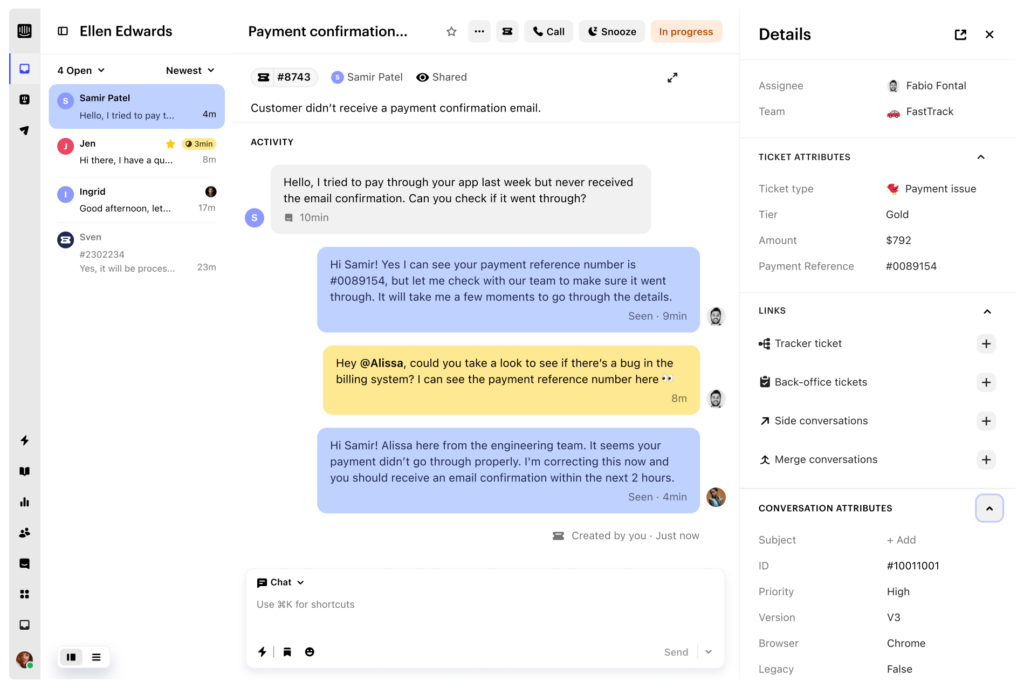 Intercom is one of the main customer engagement tools that focuses on fast, reliable solutions through AI-powered interactions. It supports conversations over email, WhatsApp, social media, live chat, and phone calls. One of the key resources here is outbound support messages. With this tool, you can set up multiple preemptive support guides, such as onboarding emails, checklists on products and in-context tips on your website. That way, your customers have more information about the details they may have missed, but they don't get overwhelmed by everything else. According to an IT professional on Capterra who's been using Intercom for over 2 years: "I like the ability to tag customers who report bugs or request features and send them an update email when we push a release that matches what they brought up to us. It helps us look more responsive to feedback." Plans start at $29/seat/month.
5) CustomerHero
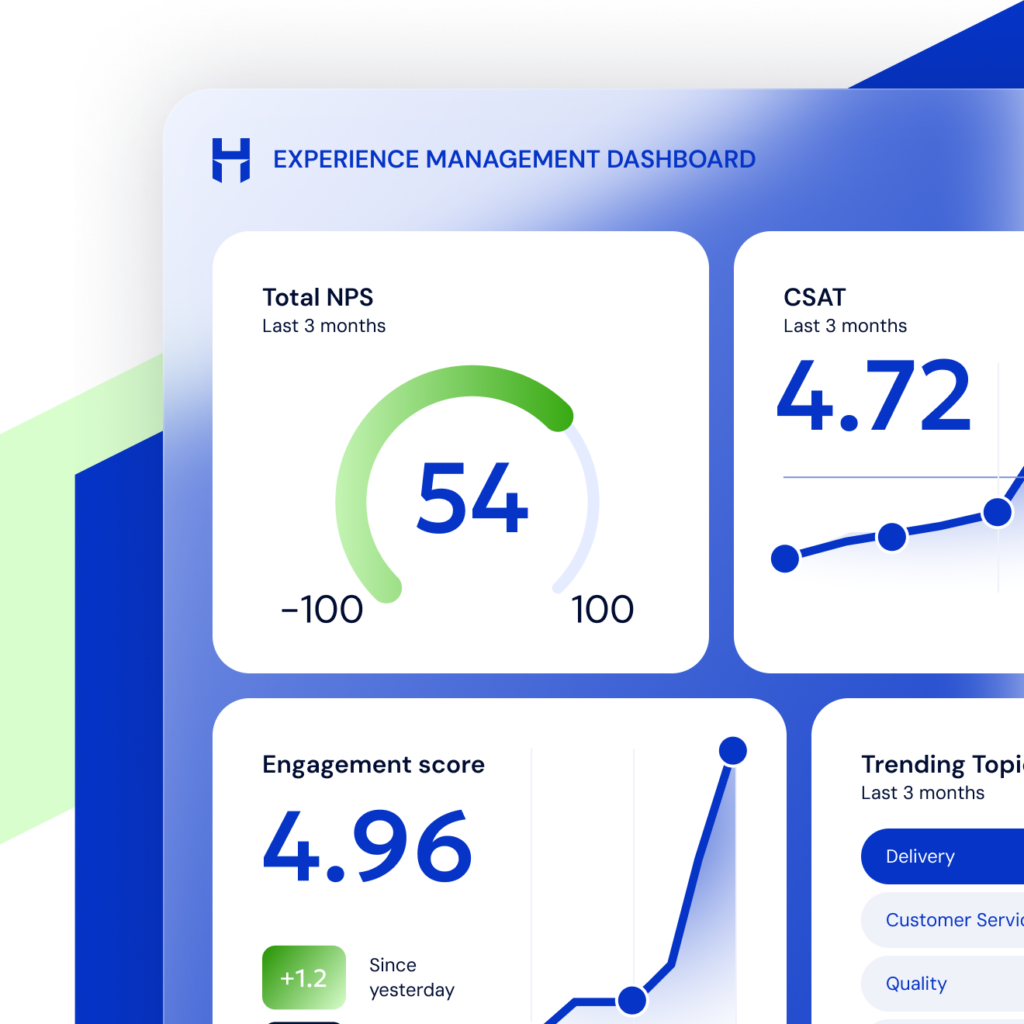 CustomerHero is a customer engagement tool that focuses on feedback and data to provide businesses strategic information on their brand perception. With this tool, you can use omnichannel listening (including social media, direct contact and even offline stores, of applicable) to understand your customers better. It includes AI text analytics to help you filter interactions by mood, all while a close-the-loop system guides your tickieting workflow, making sure no one is left unanswered. Finally, you can create custom CSAT surveys to get the opinion of who truly matters: the customer. Company leaders benefit from its reliable system, including a Capterra reviewer, who says: "I like the analysis capabilities it offers, I can collect data very efficiently and generate detailed reports that help me make decisions based on clients or employees." Plans and pricing are available upon direct request only.
Conclusion
Customer engagement tools are a key piece in lead acquisition, CRM and, of course, company growth. However, in order to choose the best option, you should have a clear vision of what features are essential for your workflow. Leaders should look into multiple options, read reviews from other users and choose the platform that meets their needs in a practical and accessible way.
True or false: customer engagement tools
Frequently asked questions
All customer engagement tools are the same: false!
There are platforms that focus on real-time service, while others offer features to create guided self-service to customers.
Companies should focus on different channels for customer engagement: true!
Each company must take into account the channels that are a priority to their audience. WhatsApp, for example, is great for UK-based businesses, since it reaches over 70% of users. So they should choose software that supports this platform.
Customer engagement tools are hard to use: false!
You can use, for instance, a shared inbox, which includes collaborative resources and contact management capabilities, leading to an organized and productive team in one space.
Customer engagement involves data: true!
To offer an increasingly efficient service to your customers, you should pay attention to the metrics, including productivity and customer satisfaction. With reliable information, you can create data-driven strategies and use customer engagement tools to generate growth.